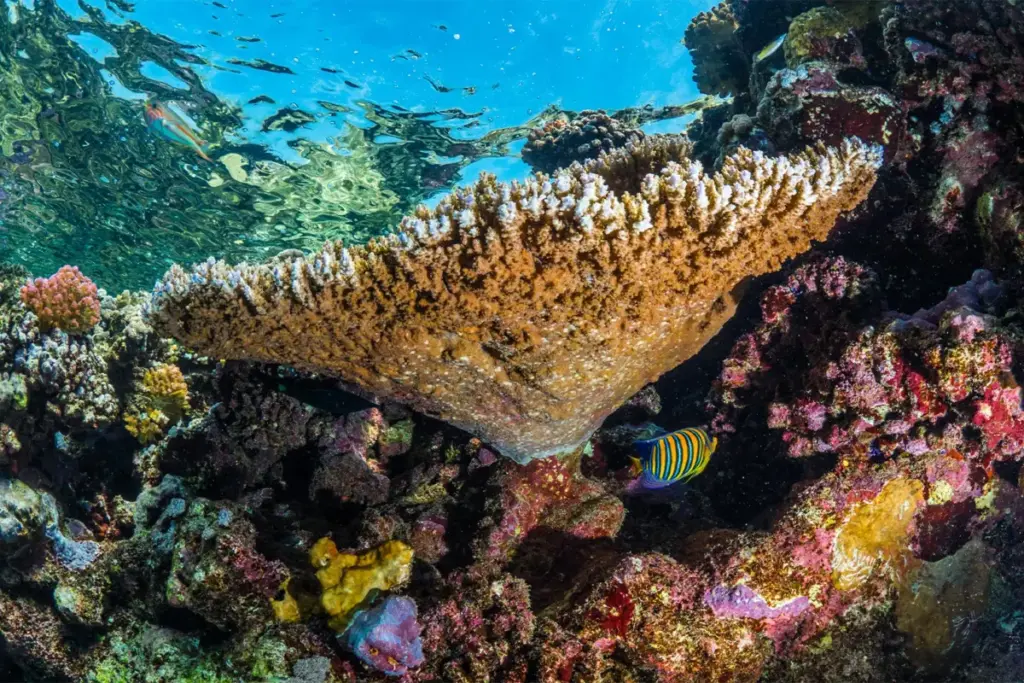
As global greenhouse gas emissions continue to push planetary boundaries, the world’s marine ecosystems face an existential threat. Coral reefs—the vibrant engines of marine biodiversity that provide critical habitats for roughly one-third of all ocean species—are declining at an unprecedented rate. According to the latest assessments from the Global Coral Reef Monitoring Network, warming oceans are shrinking the windows of recovery time for these fragile ecosystems. Scientific projections are stark: if global average temperatures rise by 1.5°Celsius (2.7°Fahrenheit) above pre-industrial levels, between 70% and 90% of the world’s coral reefs will face severe degradation by the end of this century.
Amid this bleak ecological landscape, a team of pioneering marine microbiologists has delivered a breakthrough. In a study published in Cell Reports, researchers at the King Abdullah University of Science and Technology (KAUST) in Saudi Arabia demonstrated for the first time that targeted applications of beneficial microbes can protect wild corals from bleaching during active marine heat waves.
Operating in an underwater living laboratory known as the "Coral Probiotic Village," researchers treated a patch of corals in the Red Sea with specialized bacterial cocktails and their heat-killed counterparts, known as postbiotics. When an intense marine heat wave struck the region in 2022, the treated corals successfully maintained their vibrant color and photosynthetic efficiency, while untreated control specimens suffered accelerated declines in health.
While scientists emphasize that microscopic treatments are not a silver bullet for the global climate crisis, this landmark field experiment marks a critical step forward. It transforms coral probiotics from a theoretical laboratory concept into a tangible, in situ conservation tool, offering a vital "short-term band-aid" to buy time while humanity works to curb carbon emissions.
Detailed Chronology: From Controlled Tanks to the Open Sea
For years, microbial ecologist Raquel Peixoto and her international collaborators have championed an unconventional approach to marine conservation: microbiome manipulation. Rather than trying to artificially cool entire oceans, Peixoto and her team have focused on bolstering the natural defenses of the corals themselves by supplementing their microbiomes with beneficial bacteria isolated from healthy specimens.
Early milestones in this research were achieved primarily within the controlled, predictable environments of laboratory aquariums. Studies led by Peixoto demonstrated that marine probiotics could successfully stave off thermal bleaching and keep corals alive under simulated heat stress. However, skeptics and peers alike pointed out a massive chasm between controlled tank trials and the chaotic, dynamic variables of an open ocean reef.
To bridge this gap, Peixoto established the "Coral Probiotic Village" in 2021 shortly after joining KAUST. Located 15 kilometers (9.3 miles) off the coast of Saudi Arabia, this sheltered underwater enclosure brought together diverse coral species in their natural habitat, creating a dedicated testing ground for marine restoration technologies. Subsequent studies in 2024 confirmed that introducing probiotics to this underwater lab successfully altered the corals’ native microbiomes—increasing beneficial bacterial populations and suppressing potential pathogens—without causing harmful off-target ecological disruptions in the surrounding seawater and sediment.
The ultimate test of the village, however, arrived unexpectedly in the summer of 2022, when a severe heat wave descended upon the Red Sea.
During this thermal anomaly, water temperatures within the underwater lab fluctuated between 30.9°C and 32°C (87.6°F to 89.6°F). This represented a sustained temperature increase of roughly 1.2°C (about 2.2°F) above the local summer average—a threshold known to induce severe physiological stress in reef-building corals.
Moving with urgency, lead author Erika Santoro and her KAUST research team launched an intensive field campaign. Over a 15-day window, the researchers executed eight dives down to the reef system. Using specialized syringes, they meticulously administered bespoke microbial treatments into the water column immediately surrounding Acropora valida corals.
The intervention tested two primary categories of biological treatments:
Live Probiotics: A carefully formulated blend of live bacteria belonging to the Cobetia, Halomonas, Sutcliffiella, and Pseudoalteromonas genera. These strains had originally been isolated from healthy local coral species, including Pocillopora favosa, Stylophora pistillata, Galaxea fascicularis, and members of the Acropora genus.
Postbiotics: Heat-killed versions of the same probiotic bacterial strains. Postbiotics are designed to trigger a protective immune or metabolic response in the host organism without requiring live bacteria to colonize and multiply, making them potentially more stable and cost-effective for large-scale logistics.
Supporting Context, Metrics, and Scientific Findings
The results of the 2022 Red Sea field trial surpassed expectations. Even though the thermal stress event had already begun before the treatments were administered, corals treated with live probiotics and one of the postbiotic formulations successfully maintained their photosynthetic efficiency and coloration. In stark contrast, untreated control corals displayed rapid physiological decline, signaling the onset of the destructive bleaching process.
To understand the biological mechanisms driving this protection, the research team utilized advanced genetic sequencing and metabolomic analyses. The findings revealed that the microbial treatments fundamentally restructured the corals’ internal microbiomes and triggered distinct metabolic pathways.
For instance, corals treated with postbiotic formulations exhibited a marked increase in the presence of Cobetia bacteria—a genus widely associated with enhanced thermal resistance in marine organisms. Furthermore, the different treatment cocktails prompted varied metabolic responses, demonstrating that multiple biochemical pathways can be harnessed to shield corals from heat-induced mortality.
Despite these promising metrics, the researchers are acutely aware of the logistical hurdles ahead. Scaling up these interventions presents a monumental engineering challenge:
Species Specificity: The 2022 trials focused exclusively on Acropora valida. Scientists note that different coral species will likely require bespoke, highly tailored microbial cocktails to achieve similar protective effects.
Labor Intensity: Current application methods rely heavily on manual syringe delivery by scuba-diving researchers—a process that is entirely impractical for broad-scale reef management spanning square kilometers.
Delivery Mechanisms: Since the 2022 study, KAUST researchers have been developing biodegradable beads composed of alginate, a natural gel derived from seaweed. These beads are designed to encapsulate probiotics, keeping them stable during refrigerated storage and releasing them slowly onto reefs over time. However, the exact longevity and field efficacy of these delivery beads are still under evaluation.
Official Statements and Expert Perspectives
The successful translation of probiotic treatments from laboratory aquariums to an open reef ecosystem has drawn widespread acclaim from the global marine science community, alongside prudent warnings regarding the limits of technological interventions.
Highlighting the significance of the Cell Reports publication, Andrea Grottoli, a prominent marine scientist at Ohio State University who was not involved in the research, emphasized the profound difference between controlled environments and wild settings:
"It’s one thing to do experiments in tanks and to say, ‘Look, it helps mitigate coral bleaching effects,’ or ‘It helps corals be healthier.’ And it’s a whole other thing to demonstrate that on the reef… Demonstrating that the [treatments] actually mitigate heat stress in situ, in a real reef situation, is fantastic."
Dr. Raquel Peixoto, the principal investigator of the study, described the fast-paced, high-stakes nature of modern conservation science using a striking analogy:
"We are building the plane as we fly."
Peixoto explained that her team is forced to simultaneously investigate feasibility, large-scale deployment logistics, and foundational protective mechanisms because "corals don’t have a lot of time." While her team continues to push the boundaries of microbiome engineering, she readily acknowledges that probiotics are not a standalone miracle cure. Protecting global coral reefs will necessitate a multifaceted portfolio of location-specific strategies.
Adding further nuance to the discussion, Dr. Grottoli noted that while microbiome enhancements and feeding technologies—such as her own research into improving coral nutrition—offer vital lifelines, they must be viewed realistically:
"The technologies kind of fight against a declining landscape… [They] can’t be a panacea for coral reef survival by the end of this century. All of these approaches are short-term band-aids that buy time to address the root drivers of coral stress, primarily climate change, alongside overfishing and coastal pollution."
Future Outlook: A Race Against Time
The pioneering work at the Coral Probiotic Village represents a paradigm shift in marine conservation. Moving away from passive protection, scientists are actively engineering resilience into marine holobionts—the complex units formed by corals and their associated microorganisms.
Yet, the ultimate fate of the world’s coral reefs hinges on a dual-track approach. On one hand, research into probiotics, postbiotics, alginate delivery beads, and thermal priming must be aggressively accelerated, funded, and scaled. These interventions offer the only immediate hope of keeping key reef structures alive over the next few decades as ocean temperatures continue to spike.
On the other hand, the scientific consensus remains absolute: no amount of microscopic manipulation can save marine ecosystems if global greenhouse gas emissions continue on their current trajectory. Probiotics, postbiotics, and advanced restoration techniques can successfully buy time, but humanity must use that borrowed time to decisively address the systemic drivers of global heating, oceanic acidification, and local anthropogenic degradation.
Without concurrent, sweeping global climate action, even the most advanced microbial guardians will ultimately be fighting a losing battle against a warming tide.