


Executive Overview
Across the globe, the planetary climate system is exhibiting behavior that is simultaneously unprecedented and deeply unsettling. Off the Pacific coast of South America, the periodic band of warm water known as El Niño is mutating into an absolute freak of nature. Hovering at more than 3 degrees Celsius above normal, it stands as the warmest El Niño ever recorded since satellite measurements of sea surface temperatures began half a century ago. Climate models project that this anomaly will not peak for several more months, potentially climbing to a staggering 4 degrees Celsius above baseline by November or December.
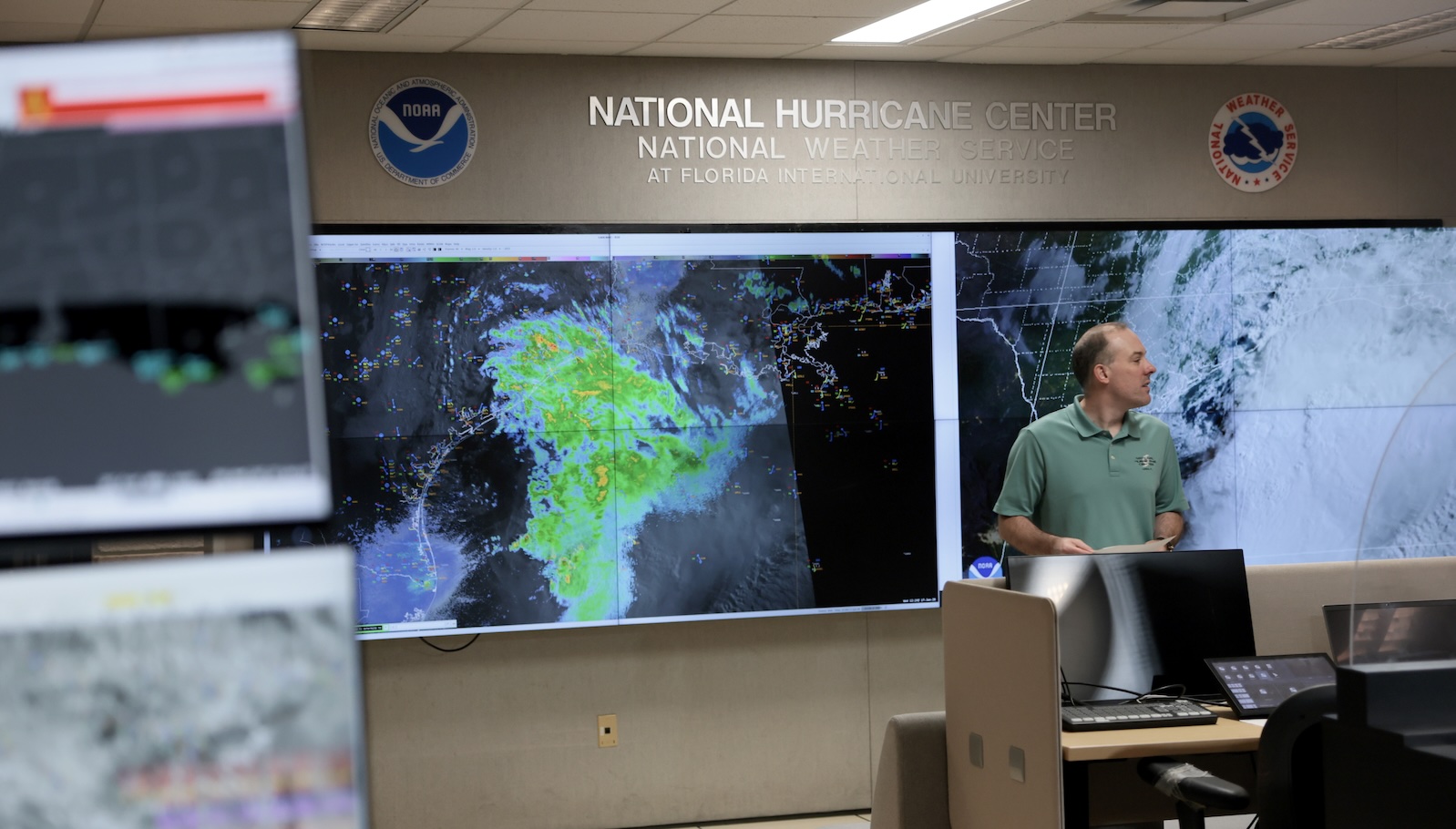
Yet, in a striking meteorological paradox, the Atlantic hurricane season—which traditionally roars to life during the summer months—has spent much of the year shattering records in the exact opposite direction. While a typical year would see roughly four named hurricanes by this stage, including at least two major storms, the Atlantic basin remained eerily, historically dormant well into September, obliterating previous markers for late-season first storms.
These twin meteorological anomalies on opposite sides of the Americas are not isolated events; they are tightly intertwined threads of a single, complex global climate engine. Driven by extreme ocean heat content and amplified by decades of anthropogenic greenhouse gas emissions, this hyper-charged El Niño is simultaneously suppressing Atlantic hurricanes while fueling monstrous, rapidly intensifying cyclones in the Pacific—such as Hurricanes Polo and Nolo. Beyond windstorms, the phenomenon is projected to unleash a cascade of global human and economic crises, threatening hundreds of thousands of lives through extreme heatwaves, compounding agricultural droughts across the Southern Hemisphere, and offering humanity an unvarnished preview of what standard global climates will resemble just two decades from now.
Detailed Chronology: A Season of Extremes
To trace the arc of this extraordinary climate year is to witness the acceleration of Earth’s thermodynamic systems. The warning signs began accumulating early in the year, as ocean surface temperatures in the equatorial Pacific began an unseasonal and aggressive climb.
- Late Spring: Climate monitoring agencies worldwide noted that Pacific waters were warming at a rate that bypassed standard historical curves. By May, it was evident that a standard El Niño phase was transitioning into something vastly more potent.
- June: The official Atlantic hurricane season opened under a cloud of scientific anxiety. Forecasters knew the tropical Atlantic was swimming in record-high heat content—traditionally the high-octane fuel required to spin up catastrophic cyclones. Yet, week after week passed without a single hurricane forming. The barrier holding back the storms was a formidable wall of upper-level wind shear and dry sinking air, directly manufactured by the burgeoning Pacific anomaly.
- Late September: The paradox reached a breaking point. While the Atlantic held its historic silence—pushing the record for the latest first hurricane of the season past the previous September 11 benchmark—the Pacific erupted. Hurricane Polo materialized off the coast of Mexico, executing a terrifying transition from a modest tropical storm into a Category 5 monster in less than 24 hours. Simultaneously, Tropical Storm Nolo spun up toward Hawaii, threatening the islands with torrential multi-foot downpours.
- The Months Ahead: Scientists project that the Pacific El Niño will reach its crescendo late in the fourth quarter, sustaining anomalous global heat impacts well into the following year.
Supporting Context & Metrics: The Mechanics of a Global Disruption
To comprehend how a few degrees of warming in the equatorial Pacific can dictate the weather patterns of the entire planet, one must examine the staggering heat capacity of the world’s oceans.
According to Art Miller, a climate scientist at the Scripps Institution of Oceanography, the physics governing these events are rooted in sheer volume. "The ocean has a lot of heat content—one thousand times more ability to hold heat than the atmosphere—so slight changes in the ocean surface temperatures can actually do a lot for the atmosphere," Miller explains. Because the oceans act as Earth’s primary thermal sponge, minor percentage shifts in sea surface temperatures translate into massive atmospheric dislocations.
The Atlantic Suppression Mechanism
In a normal climate scenario, a warm Atlantic Ocean is a breeding ground for catastrophic hurricanes. Hurricanes function like thermodynamic engines:
- Fuel: Warm ocean water evaporates, sending immense latent energy skyward.
- Moisture: High humidity sustains the storm’s core structure.
- Wind Continuity: Consistent wind directions across altitudes allow the storm structure to remain vertically aligned.
However, the current super El Niño completely disrupts the third requirement. It generates intense wind shear over the Atlantic—a chaotic condition where air moves at wildly different speeds and directions at varying altitudes. Furthermore, El Niño pumps vast sheets of dry, sinking air into the region.
"Hurricanes do not like that," notes Brian McNoldy, a senior research associate specializing in severe storms at the University of Miami. "So if any manage to form, it can limit how strong they get or how long they live. But so far, it’s managed to suppress anything even being able to form in the deep tropics… It’s really, really a suppressed Atlantic hurricane season, basically due to that very strong El Niño that’s taking shape."
Pacific Rapid Intensification and Global Heat Stress
Conversely, the Pacific side of the Americas has borne the brunt of this dynamic. Hurricane Polo’s leap to Category 5 status within 24 hours is a textbook case of rapid intensification—defined as an increase in sustained wind speeds of at least 35 mph within a 24-hour window. Fueled by baseline ocean temperatures already elevated by long-term climate change, and supercharged by the El Niño plume, storms in this basin are finding limitless fuel.
The atmospheric ripple effects extend far beyond wind speeds. Climate models analyzed by health impact researchers indicate that in the first nine months of this El Niño event alone, associated extreme heat spikes could contribute to 451,000 excess deaths globally. Furthermore, the phenomenon scrambles regional precipitation:
- Increased Rainfall & Flooding: California and the American Southwest face heightened risks of severe downpours and atmospheric rivers.
- Severe Drought: Southeast Asia, the Amazon rainforest, and vast swaths of sub-Saharan Africa face dramatic reductions in rainfall, setting the stage for agricultural collapse.
Official Statements & Scientific Consensus
The scientific community views these compounding disasters not as statistical anomalies, but as confirmation of predictive climate modeling operating within a degraded planetary baseline.
"This event is already in record territory," says Zeke Hausfather, a climate scientist at the research group Berkeley Earth. "And every model expects it to keep growing."
Hausfather emphasizes that the human toll of El Niño historically stems not just from coastal storms, but from systemic agricultural shocks. "It’s crop failures in those regions that, at least historically, have driven the biggest economic and human impacts of these events," he notes.
Furthermore, scientists stress that this El Niño is operating on top of an already permanently altered global baseline. Because human-induced greenhouse gas emissions have warmed the planet significantly over the past century, every extreme weather event now occurs in a hotter, more volatile world.
"Everything’s happening on a baseline that’s much hotter than it was a century ago, which makes these impacts correspondingly more severe," Hausfather explains. "It’s a little glimpse of what the planetary climate will look like."
Future Outlook: Preparing for the Permanent "New Normal"
When this current El Niño eventually wanes, global average temperatures may dip slightly, but scientists warn that this event is merely a dress rehearsal. Within just two decades, continuous global warming will elevate baseline temperatures to the point where conditions akin to this super El Niño will represent a normal, average year. Future El Niños layered on top of those elevated baselines will push Earth into uncharted climatic territory.
This reality forces an urgent question upon governments and international bodies: How do we prepare society for compounding, systemic climate shocks?
1. Safeguarding Global Food Security
With severe droughts threatening breadbasket regions and tropical agricultural zones, governments must shift from reactive disaster management to proactive supply chain fortification.
- Food Stockpiling: Nations must build strategic grain and food reserves to cushion against regional crop failures.
- Financial Safety Nets: Establishing robust financial transfer systems can ensure that subsistence farmers—who are disproportionately vulnerable when harvests fail—receive immediate monetary aid to purchase food and survive the lean periods.
2. Wildfire Mitigation and Infrastructure Hardening
As prolonged droughts turn regional landscapes into tinderboxes, fire management must evolve beyond traditional suppression.
- Controlled Burns: Aggressive deployment of prescribed fires clears out dead brush and fuel loads, preventing runaway blazes from obliterating entire ecosystems and residential communities.
- Agricultural Waste Regulation: Many rural economies rely on burning waste biomass, a frequent spark for catastrophic wildfires. Cracking down on and replacing these practices will eliminate preventable ignitions.
- Resource Mobilization: Governments must massively expand investments in firefighting equipment, aerial suppression fleets, and specialized personnel training to handle longer, more destructive fire seasons.
The 2026 El Niño is more than a fascinating meteorological study; it is a blaring siren. The ocean has spoken, and its immense thermal memory is reshaping our weather in real-time. Whether humanity utilizes this stark preview to fortify its global infrastructure will determine our survival in the hotter world of tomorrow.



