Australia is navigating a critical juncture in its energy transition. As the Southern Hemisphere transitions rapidly from spring into summer, the Australian federal government—alongside state and territory administrations—is dramatically accelerating its push for decentralized, renewable energy assets. Recent milestones underscore this momentum: the Australian Renewable Energy Agency (ARENA) has officially surpassed the milestone of 100 community batteries installed nationwide, while simultaneously deploying fresh capital to streamline the complex process of residential fossil-fuel phase-out.
At the same time, the national framework underpinning rooftop solar and home energy storage is undergoing significant revision. The wildly successful "Cheaper Home Battery" scheme has been expanded to encompass much larger industrial-scale deployments up to 1 MW. Concurrently, targeted municipal pilots, such as an innovative single-platform electrification trial in Canberra, aim to eliminate the friction that stops ordinary homeowners from transitioning away from gas.
Yet, these technological and financial milestones unfold against a complex backdrop. Vested utility interests, looming political shifts, and infrastructural demands—such as the massive power consumption expected from future data centers—cast a long shadow over the rollout. This report provides a comprehensive, deep-dive analysis of Australia’s latest clean energy updates, dissecting the funding allocations, regional dynamics, policy frameworks, and the everyday realities of living on a 100% renewable household footprint.
Detailed Chronology: The Evolution of Australia’s Storage and Electrification Rollout
The modern blueprint for Australia’s grid modernization relies heavily on distributed energy resources (DERs). Over the past several years, ARENA has systematically shifted from funding large-scale, utility-only generation to orchestrating localized storage solutions designed to absorb excess rooftop solar generation.
Phase One: The Community Battery Breakthrough
Australia’s solar rooftop miracle—featuring some of the highest per-capita adoption rates globally—created a unique engineering challenge for legacy grid operators. Midday solar generation often causes local voltage spikes, forcing grid operators to curtail renewable generation or risk overloading neighborhood transformers.
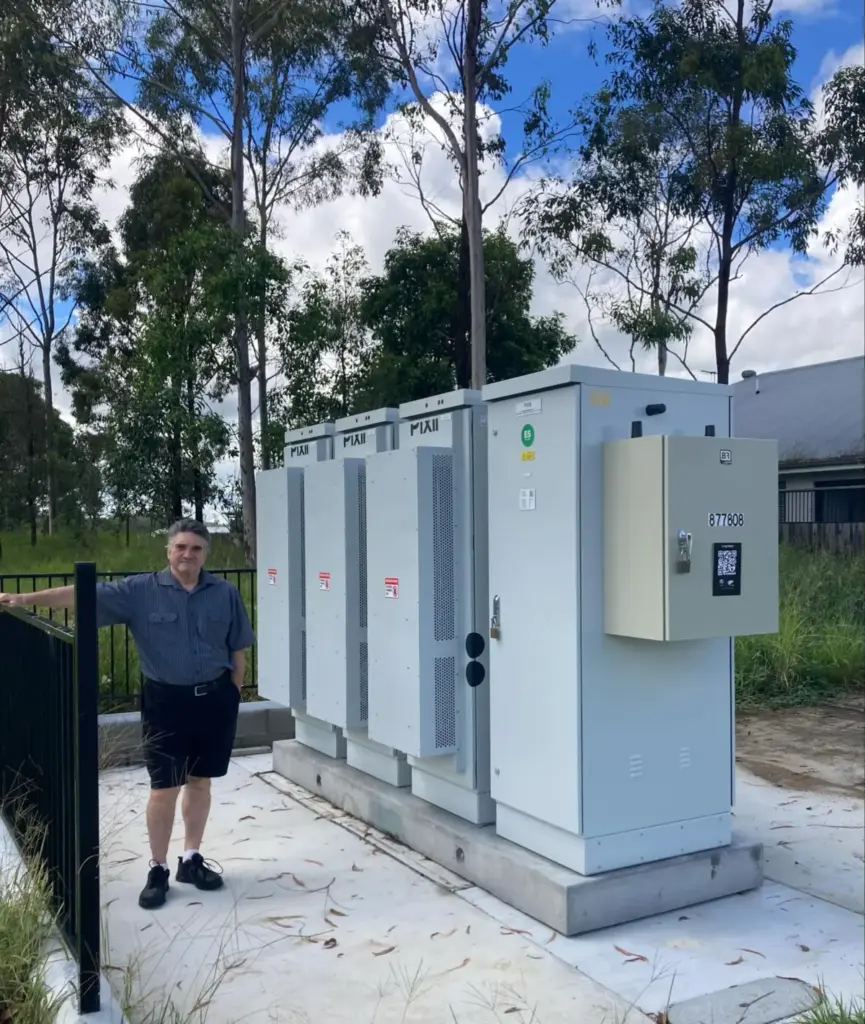
To combat this, ARENA launched its community battery initiative, designed to store excess daytime solar energy locally and inject it back into the grid during peak evening hours. Following initial pilot rollouts, ARENA recently confirmed that the milestone of 100 operational community batteries has been crossed nationwide.
Phase Two: Round Two Funding and Regional Expansion
Building upon this baseline, ARENA announced the release of AU$23 million in Round 2 funding distributed across three major regional and metropolitan projects:
The YES Energy Regional Project: Securing AU$10.29 million, the YES Group is deploying 14 community batteries across regional South Australia and New South Wales. This deployment features a hybrid model: 10 smaller batteries (200 kW each) paired with existing small-scale solar farms on land-lease agreements, and four larger systems (up to 4,980 kW each) situated on agricultural, commercial, and industrial sites. The aggregate capacity for this initiative alone reaches 16,880 kW / 46,876 kWh.
Ausgrid Network (NSW): Receiving AU$8 million to deploy 21 community batteries across densely populated urban and suburban zones including Sydney, the Central Coast, and the Hunter regions.
City of Newcastle Innovative Battery Solutions: Allocated AU$5 million to install 12 community batteries, focusing heavily on urban resilience and localized load-shifting.
Beyond grid-scale and community storage, ARENA has shifted its focus to the residential meter box. Recognizing that home heating, cooking, and hot water represent massive sources of household carbon emissions and fossil-fuel reliance, ARENA announced an AU$8.2 million grant to test streamlined household electrification in Canberra.
Executed in partnership with clean energy service provider Electric Future, the pilot program targets up to 1,000 homes in Canberra’s southern suburbs. By implementing a unified digital platform, the project seeks to strip away the administrative and financial friction that typically paralyzes homeowners attempting to transition away from gas.
Supporting Context & Metrics: Data, Demographics, and Policy Frameworks
To fully grasp the mechanics of Australia’s energy transition, one must examine the underlying metrics driving public policy and private investment.
Canberra: The Epicenter of Early Adoption
The choice of the Australian Capital Territory (ACT) as a testing ground for frictionless electrification is no accident. Canberra enjoys a demographic profile heavily weighted toward well-resourced public servants, highly ambitious territorial climate targets, and a uniquely progressive legislative environment.
The ACT government has cultivated an aggressive ecosystem of financial incentives:
Low-Interest Loans: Up to AU$20,000 for purchasing new or used Battery Electric Vehicles (BEVs) and home charging infrastructure, repayable over a 10-year term.
Stamp Duty and Registration Relief: Emission-based vehicle registration discounts and heavily reduced stamp duty rates for zero-emission vehicles.
Phenomenal EV Penetration: These measures have propelled the ACT’s BEV market share to roughly 44% of all new car sales, with overall fleet penetration sitting at 5%—more than double the national average.
Navigating Extreme Climatic Realities
Canberra’s climate presents a rigorous operational stress test for residential electrification. Winter temperatures routinely plummet to -7°C overnight, struggling to rise past 12°C during daylight hours. Conversely, summer temperatures average 28°C and frequently peak above 35°C.
Consequently, any successful electrification roadmap must prioritize highly efficient reverse-cycle heat pumps capable of providing robust space heating and cooling without triggering catastrophic spikes in household electricity demand. The Electric Future pilot explicitly accounts for these demands, ensuring vulnerable demographics—including renters and low-income households—are not left behind in the transition.
Expanding the Cheaper Home Battery Scheme
On the national front, the federal government’s "Cheaper Home Battery" scheme has fundamentally altered the domestic energy landscape. Having already facilitated the installation of over 500,000 systems representing roughly 14 GWh of capacity across Australian homes, the program is scaling up.
The upper limit for subsidized installations has been dramatically increased. The scheme now offers a 20% discount on massive commercial-grade systems ranging from 100 kWh to 1 MW. Targeted explicitly at farms, manufacturing facilities, community organizations, and commercial enterprises, this expansion is projected to inject an additional 80 GWh of storage capacity into the economy. This localized industrial storage will buffer commercial operations against wholesale price volatility and absorb excess renewable generation before it can destabilize regional substations.
Official Statements and Industry Insights
Key stakeholders across the clean energy sector have emphasized both the achievements and the persistent systemic challenges facing the rollout.
ARENA Acting CEO Chris Faris highlighted the dual technical and educational value of the community battery program:
"Reaching 100 community batteries demonstrates growing confidence in the role these assets can play in Australia’s energy transition. Community batteries help local communities make better use of rooftop solar by storing excess energy during the day and making it available when it is needed most. They can help lower costs, support greater renewable energy uptake, and improve the efficiency of the electricity network.
Importantly, the program is also generating valuable real-world data and insights on battery performance, costs, business models, customer benefits, and grid impacts. These learnings will help accelerate the commercial deployment of community batteries across Australia."
However, market observers and consumer advocates frequently maintain a pragmatic skepticism regarding who captures the economic surplus generated by these network-connected assets. While community batteries protect transformers and flatten local demand curves, critics note that traditional utility companies and energy retailers stand to reap substantial financial rewards by leveraging these distributed assets in wholesale arbitrage markets.
Addressing the consumer-facing barriers to home decarbonization, ARENA CEO Darren Miller noted:
"For many households, the barrier to electrification is not just the technology. It can be knowing where to start, comparing products and quotes, finding trusted installers, navigating rebates and finance, managing upfront costs, and understanding which choices will deliver the best outcome for their home."
Echoing this sentiment, Electric Future Managing Director Nathan Brown praised grassroots mobilization efforts:
"Canberrans are behind renewable energy, now we get to show what’s possible at the household level. This project will help prove that electrification doesn’t have to be complicated, expensive, or out of reach. Canberra is the right place to prove it thanks to the efforts of Rewiring Australia and Electrify Canberra, whose volunteers have spent four years talking to the community and advocating to decision-makers to see this pilot get off the ground."
Future Outlook: Grids, Data Centers, and Political Horizons
As Australia heads deeper into the summer months, the macro-level energy landscape is characterized by both immense promise and emerging structural pressures.
The Data Center Energy Siphon
While the expansion of the Cheaper Home Battery scheme to 1 MW systems and the continued deployment of community storage will inject unprecedented gigawatt-hours of flexibility into the National Electricity Market (NEM), new load demands are appearing on the horizon. Proposed artificial intelligence and hyperscale data centers are queuing up to connect to Australia’s grids. These facilities demand continuous, baseload-equivalent power supplies. Unless strictly managed through dedicated behind-the-meter renewable power purchase agreements (PPAs), the sheer energy appetite of these server farms threatens to absorb much of the surplus capacity generated by recent battery rollouts.
Political Volatility
Compounding these infrastructural challenges is the domestic political climate. As the federal Labor government pushes forward with aggressive decarbonization timelines, the looming prospect of a federal election introduces substantial policy uncertainty. Right-leaning populist factions—such as Pauline Hanson’s One Nation party—continue to leverage populist rhetoric against renewable infrastructure costs. A shift in federal leadership could imperil long-term funding certainty for agencies like ARENA, making the current sprint to lock in capital grants and community installations an urgent race against the political clock.
The Micro-Level Reality
At the household level, however, the technical viability of the transition is already proven. For millions of Australians equipped with rooftop PV arrays, domestic storage batteries, and electric vehicles, the sweet spot of the energy transition has arrived. Operating in the meteorological window between heavy winter heating and intense summer cooling loads, fully electrified households are discovering that their morning routines are powered entirely by yesterday’s sunshine.
Surplus daytime generation fills home batteries before breakfast, feeding excess power back into the grid for financial credits rather than utility bills. While macro-level challenges—from data center power demands to polarized electoral politics—remain formidable, the decentralized foundation of Australia’s clean energy future is increasingly locked in, brick by brick, and battery by battery.