

Executive Overview
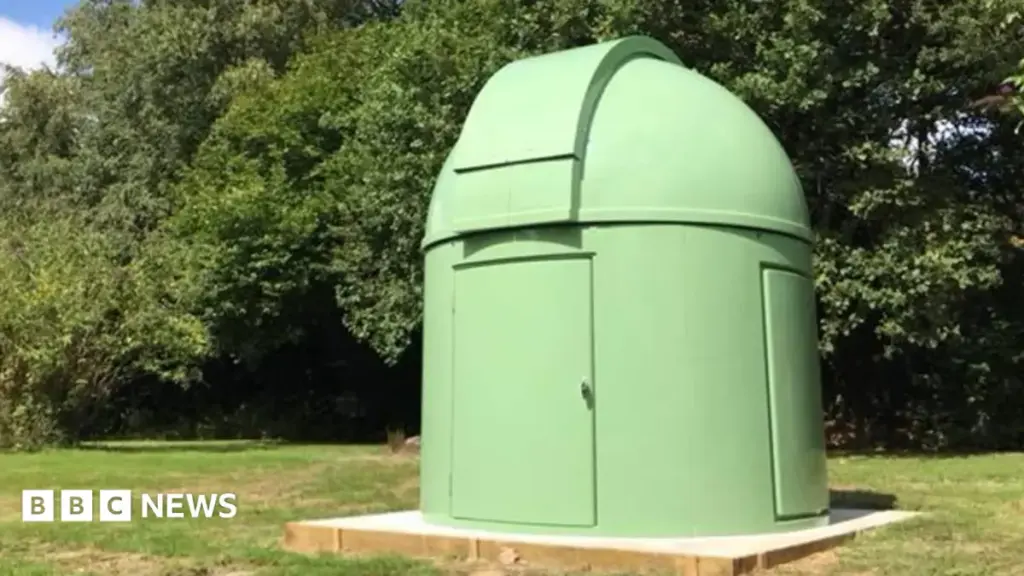
In a milestone development for both local science education and community infrastructure, the Shropshire Astronomical Society (SAS) has officially secured planning permission to establish the county’s first-ever publicly accessible mini-observatory. Approved by planning officials at Telford and Wrekin Council, the project will see a distinctive, curved gloss-white fibreglass dome and telescope—formerly utilized by the Irish Rangers at the Tern Hill army base near Market Drayton—transferred to a new permanent home at Rodington Village Hall, situated just outside Shrewsbury.
For a quarter of a century, the SAS has maintained its operational base at Rodington Village Hall, hosting meetings, indoor lectures, and portable telescope viewings. However, this new initiative represents a dramatic quantum leap in the society’s operational capabilities. By acquiring a decommissioned military-grade dome standing just under 2.7 meters (8 feet 9 inches) tall, the amateur astronomy collective aims to bridge the gap between niche hobbyism and widespread public engagement.
The approval process, navigated successfully through local democratic planning frameworks, highlights a growing municipal appetite for educational diversification and community-led science initiatives. While planning officers initially noted that the domed structure would introduce an "unusual" aesthetic to the village hall site, they ultimately concluded that it would inject a welcome element of "visual interest" while generating negligible environmental disruption. With the purchase agreement finalized earlier in May and bureaucratic hurdles now cleared, the society stands poised to transform Rodington into Shropshire’s premier astronomical hub. This comprehensive report explores the chronology of the project, the broader context of amateur astronomy in the UK, official perspectives from key stakeholders, and a forward-looking analysis of what this facility means for the next generation of stargazers.
Detailed Chronology: From Military Surplus to Village Hall Horizon
The journey toward establishing Shropshire’s premier public mini-observatory is a story of opportunistic preservation, long-term persistence, and strategic municipal navigation. To fully understand the magnitude of this achievement, one must examine the timeline of events that brought the Shropshire Astronomical Society from temporary mobile setups to a fixed, professional-grade installation.
A Quarter-Century Foundation (1999–2023)
For twenty-five years, the Shropshire Astronomical Society operated out of Rodington Village Hall as a nomadic collective of enthusiasts. While the venue proved exceptional for indoor monthly meetings, workshops, and winter lectures, practical stargazing remained at the mercy of unpredictable British weather and the logistical nightmare of transporting heavy, sensitive optical equipment. Members relied on setting up portable Dobsonian and Newtonian reflectors in the village hall car park whenever skies cleared, a process fraught with light pollution limitations and setup delays. Despite these hurdles, the society cultivated a robust, dedicated membership base, quietly fostering a love for the cosmos across rural Shropshire.
The Tern Hill Discovery (Late 2023 – Early 2024)
The catalyst for the current project emerged through an unexpected avenue: military surplus. The Irish Rangers, formerly stationed at the Tern Hill army base near Market Drayton, possessed an out-of-use astronomical dome and housed telescope system. As military assets shifted and facility configurations evolved, the observatory structure became redundant. Recognizing a golden opportunity, members of the SAS initiated informal dialogues regarding the acquisition of the surplus equipment. The dome—a compact, highly durable fibreglass engineering feat—was inspected and deemed to be in remarkably sound condition, presenting an affordable, high-quality solution for an amateur society operating on a tight, member-funded budget.
Securing the Asset and Drafting the Vision (May 2024)
By May 2024, formal negotiations bore fruit when the society reached a binding purchase agreement to acquire the mini-observatory infrastructure from its military custodians. With the physical asset secured, the focus pivoted immediately to logistics and geography. The natural and historical home of the SAS—Rodington Village Hall—was selected as the permanent destination. Society representatives, led by Chairman Philip Osman and contributor Stephen Szwajkun, set about drafting comprehensive architectural and planning submissions for Telford and Wrekin Council. Their core argument was anchored in civic enrichment: transforming a piece of military surplus into an egalitarian educational tool for the wider public.
The Municipal Review and Approval (Late 2024)
The planning application submitted to Telford and Wrekin Council underwent rigorous standard environmental, architectural, and community impact assessments. Planners analyzed potential friction points, including structural footprint, aesthetic integration, traffic generation, and light or acoustic disturbance to neighboring properties.
In a resounding victory for community-led science projects, council officials delivered a glowing assessment. They acknowledged that while the glossy white, curved fibreglass dome would present a strikingly unconventional silhouette against the traditional backdrop of a rural village hall, it would successfully inject unique architectural character and visual intrigue into the locale. Crucially, environmental health and highways departments confirmed that the modest scale of the structure—standing at just under 2.7 meters—would generate zero adverse impacts concerning noise pollution, parking shortages, or vehicular congestion. With the bureaucratic rubber stamp secured, the SAS transitioned from planning theory to operational reality.
Supporting Context & Metrics: The Science, Scale, and Community Impact
To appreciate the significance of the Rodington mini-observatory project, one must contextualize it within the broader landscape of UK amateur astronomy, community science funding, and regional educational metrics.
Overcoming the Light Pollution Barrier
One of the most profound challenges facing modern astronomy—both professional and amateur—is light pollution. As suburban developments expand outward from Shrewsbury, Telford, and surrounding market towns, dark skies are increasingly difficult to find. Rodington Village Hall occupies a strategic middle ground: rural enough to escape the blazing glare of metropolitan centers, yet accessible enough via local transport links to welcome visitors from across the unitary authority area.
The integration of a semi-permanent dome structure offers a massive technical advantage over portable setups. A proper observatory dome protects sensitive optical tubes from wind-induced vibrations, moisture, and dew accumulation—all of which frequently plague British stargazing sessions. Furthermore, the slit-shutter design of the dome significantly cuts down stray peripheral light, allowing astronomers to observe deep-sky objects such as nebulae, distant galaxies, and planetary details with heightened contrast and clarity.
Project Metrics and Spatial Footprint
- Structure Height: Just under 2.7 meters (8 feet 9 inches), ensuring it remains subservient to the main village hall building while remaining tall enough for comfortable interior operation.
- Material Composition: Gloss-white fibreglass, chosen for its exceptional weather resistance, thermal reflectivity (preventing internal solar heat buildup during summer days), and structural longevity.
- Geographic Reach: Serving the entire Telford and Wrekin borough alongside adjacent areas of rural Shropshire, bridging a massive geographic void in regional public science infrastructure.
- Operational Lifespan: Projected for decades of continuous use, effectively future-proofing the SAS’s community outreach capabilities for generations of students and hobbyists.
Educational Deficits and the STEM Imperative
Across the United Kingdom, educational authorities continually emphasize the necessity of robust Science, Technology, Engineering, and Mathematics (STEM) engagement. However, rural regions frequently suffer from a lack of specialized, hands-on scientific facilities compared to major urban centers equipped with universities and science museums.
By introducing the county’s first publicly accessible observatory, the Shropshire Astronomical Society is stepping directly into this educational vacuum. Astronomy serves as a uniquely powerful gateway science; it effortlessly bridges physics, mathematics, history, and computing, capturing the imaginations of young learners in a way textbooks rarely achieve. The new facility will allow local schools, scouts, guides, and youth groups to transition from looking at flat images of Saturn’s rings in classrooms to witnessing them live through a telescope eyepiece.
Official Statements & Stakeholder Perspectives
The project has garnered enthusiastic backing from society leadership, municipal planners, and community representatives. The alignment of vision between civil servants and amateur scientists underscores the universal appeal of astronomical exploration.
The Society’s Vision: Bridging Generations
Speaking on behalf of the organization, SAS Chairman Philip Osman articulated the transformative potential of the newly acquired dome during interviews regarding the project’s progression:
"The dome will be the only publicly accessible observatory in the county, and we hope that this new facility will allow us to broaden our outreach activities and successfully engage with a new generation. For a quarter of a century, our members have driven this society forward through passion and resilience. Having a permanent, dedicated home with proper housing for our telescope changes everything. It encourages active participation and transforms how we interact with the public."
Echoing these sentiments in the official planning documentation, society member and project contributor Stephen Szwajkun emphasized the inclusive, democratic ethos underpinning the application:
"It will be the first public astronomical observatory in the area and provide inspiration for the diverse residents of Telford and Wrekin as well as the wider area. Science belongs to everyone, and this observatory physicalizes that belief right here in Rodington."
Municipal Endorsement: Balancing Aesthetics and Utility
Telford and Wrekin Council’s planning department, often tasked with balancing strict conservation guidelines and structural uniformity against community development initiatives, displayed commendable progressive thinking in their assessment of the SAS proposal.
In their published decision notes, planning officers addressed the unconventional appearance of the structure head-on, transforming a potential critique into a ringing endorsement:
"While the curved gloss white fibreglass dome used to house the telescope would be somewhat unusual in this rural village hall context, it will undoubtedly add a welcome layer of visual interest to the site. Furthermore, rigorous testing of the site logistics confirms that the proposal will not result in unacceptable noise, disturbance, or any other disruption for nearby residents. It is not considered likely to result in a significant increase in traffic or parking demand."
Crucially, the council’s planning committee formally agreed that the initiative represents a highly efficient and valuable utilization of community land, directly enhancing the educational and recreational assets available to local taxpayers without placing financial burdens on the local authority.
Future Outlook: What’s Next for the Shropshire Astronomical Society?
With planning permission locked in and the physical infrastructure secured from its former military home at Tern Hill, the Shropshire Astronomical Society faces an exciting, albeit demanding, transitional phase. As the initiative moves from the drawing board to the construction and installation phase, several key milestones lie ahead.
Logistics, Transport, and Installation
The immediate priority involves the delicate operation of dismantling, transporting, and reassembling the fibreglass dome and optical equipment from Tern Hill to Rodington Village Hall. Because fibreglass domes require precise leveling and mechanical calibration to ensure the shutter mechanisms and rotational tracks operate smoothly, society members with engineering and technical backgrounds will spearhead the installation. A secure concrete or reinforced wooden base must be prepared at the village hall site to anchor the structure securely against high winter winds—a standard engineering requirement for outdoor observatory domes in the UK.
Expanding Community Programming and Public Open Nights
Once installation and optical testing are fully completed, the SAS plans to roll out an ambitious calendar of public events. While monthly indoor meetings will naturally continue, the society intends to host dedicated "Stargazing Live" open-air evenings, coordinated workshops for local schools, and special astronomical observation events aligned with major celestial occurrences—such as meteor showers, lunar eclipses, and planetary oppositions.
Moreover, the accessibility of the new site will be a core focus. By designing viewing sessions that accommodate families, wheelchair users, and individuals with limited mobility, the society aims to tear down the traditional accessibility barriers that have historically kept advanced amateur astronomy locked behind closed society doors.
A Beacon for Regional Science
As light pollution continues to encroach upon the British countryside, grassroots initiatives like the Rodington mini-observatory serve as vital sanctuaries for scientific curiosity. By taking an initiative born of military surplus and repurposing it for public educational enlightenment, the Shropshire Astronomical Society has secured not just a dome and a telescope, but a permanent window to the universe for the people of Shropshire.
As the white dome takes its place on the Rodington skyline, it stands as a testament to what can be achieved when civic cooperation, municipal common sense, and amateur passion unite under a shared canopy of stars.



