In the heart of Norfolk, a quiet market town is locked in an escalating urban standoff. Diss, famed for its picturesque mere and historic charm, is grappling with a modern municipal headache: an expanding, resilient population of feral pigeons. Paving stones along the bustling High Street and Mere Street are routinely coated in droppings and feathers, transforming prime retail corridors into visually unappealing and unsanitary walkways.
Despite deploying an arsenal of deterrents—ranging from high-frequency ultrasonic sound devices to predatory hawks flown by professional falconers—local authorities have found themselves entirely outmaneuvered. Diss Town Council, led by Mayor Declan Craggs, is now calling for a united front, urging business owners and local residents to take collective ownership of the town’s aesthetic hygiene.
However, the path forward is fraught with community division. While some exasperated shoppers and business operators demand drastic measures, including culls, animal welfare advocates and sympathetic locals argue that the birds are being unfairly demonized. This localized clash mirrors a broader regional crisis across Norfolk, notably in Norwich, where city officials have similarly struggled to reconcile public health concerns with the ethical treatment of urban wildlife. As local governments test the limits of humane deterrence, the townsfolk of Diss remain deeply polarized over how to balance civic cleanliness with coexistence.
Detailed Chronology & Escalation
The urban pigeon crisis in Diss did not materialize overnight; rather, it represents the culmination of years of unmitigated roosting, changing high-street architecture, and an abundance of incidental and intentional feeding.
Phase One: The Rise of the Roost
Historically, the architectural makeup of Diss—featuring Victorian and Georgian structures with ornate stonework, deep window ledges, and sheltered cornices—has provided an ideal sanctuary for Columba livia (the rock pigeon). Over the past decade, as commercial footprints shifted and human foot traffic patterns evolved, the local pigeon population steadily expanded. With ample nesting sites aloft and a reliable stream of food scraps dropped by pedestrians or deliberately left out by well-meaning wildlife enthusiasts, the birds firmly entrenched themselves in the town center.
Phase Two: Technological and Biological Interventions
As complaints from business owners and shoppers mounted regarding slippery pavements and the corrosive nature of uric acid on building exteriors, Diss Town Council took direct action.
Ultrasonic Deterrents: The council initially invested in automated high-frequency sound emitters designed to cause auditory discomfort to the birds without harming them. However, pigeons quickly habituated to the frequencies, rendering the equipment largely ineffective.
Falconry Deployment: Seeking a more natural approach, the council enlisted the services of a professional falconer. Hawks were flown over Mere Street to recreate a predatory threat environment. While the raptors successfully scattered the flocks temporarily, the clever birds swiftly learned the routine, returning to the high street the moment the hawks departed.
Phase Three: The Plea for Collective Action
With conventional non-lethal methods exhausted, Mayor Declan Craggs shifted strategy in 2024. Acknowledging that local government resources are finite and that public sentiment heavily opposes a cull, the council launched an awareness campaign. Warning signs were erected across Diss, explicitly urging the public to stop feeding the pigeons. Furthermore, the council issued an open call to Mere Street merchants, recommending the installation of anti-roosting spikes and physical netting on building facades to deny the birds their preferred perches.
Supporting Context & Metrics: The Broader Norfolk Dilemma
The struggle in Diss is emblematic of a wider phenomenon affecting historic towns and cities across East Anglia. Pigeons are remarkably well-adapted to urban ecosystems. A single pair of feral pigeons can produce up to five broods a year under optimal conditions, leading to exponential population growth if food sources remain unchecked.
The Norwich Market Battleground
The challenges faced in Diss pale only slightly when compared to the protracted urban wildlife battle waged in nearby Norwich. Earlier this year, Norwich City Council confronted a massive influx of pigeons infesting its historic central market. Like Diss, Norwich authorities hired falconers with hawks to patrol the market stalls.
However, the Norwich initiative encountered a unique and fierce obstacle: organized public resistance. Animal welfare activists and sympathetic citizens actively undermined the council’s efforts by scattering large quantities of high-grade bird feed directly into the market area while the hawks were active, effectively neutralizing the predators’ psychological advantage.
Faced with public backlash, administrative dead ends, and escalating costs, councils across the county have been forced to rethink their toolkits. Proposals ranging from chemical contraceptives (designed to stunt the reproductive cycles of local flocks) to specialized loft-trapping and relocation programs are being evaluated. Yet, each proposed remedy carries significant financial costs and ethical debates, leaving municipalities trapped in a cycle of temporary fixes.
Official Statements & Stakeholder Perspectives
The debate over how to manage Diss’s pigeon population cuts to the core of community identity, dividing opinion between municipal pragmatism, retail frustration, and wildlife advocacy.
Municipal Leadership
Mayor Declan Craggs has remained steadfast in his appeal for community-wide responsibility, emphasizing that top-down municipal interventions alone cannot solve the crisis.
"It is about taking ownership of the town you live in and the business you run,"Mayor Craggs stated."If everyone did their little bit, I think it would dramatically increase the appearance of Mere Street."
Addressing the reluctance to pursue lethal measures, Craggs noted the delicate ethical balance the council must maintain:
"Some people are of the opinion pigeons have as much of a right to be here as we do, which is why we haven’t taken these steps [to cull them] and are looking at just trying to keep the area tidy on a day-to-day basis."
The Retail and Business Community
For those operating shops along the high street, the reality of the pigeon population is an unglamorous, daily chore.
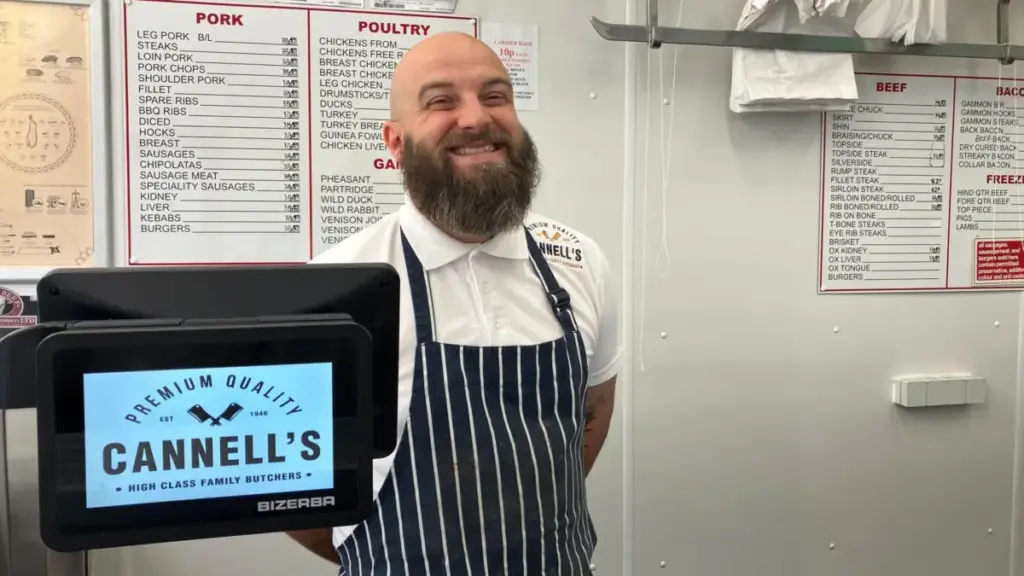
Robert Goodwin, who has spent two decades working behind the counter at Cannell’s Butchers in Diss, acknowledges the severity of the mess while expressing tempered sympathy for local government limitations.
"The situation has definitely gotten worse over time,"Goodwin remarked,"but the council is doing the best job they can with the resources they have got."
Conversely, other retailers hold a deep affection for the birds despite the operational headaches they cause. Kate, an employee at Tatters Boutique on Mere Street, described the situation as a "crisis" while simultaneously defending the animals’ presence.
"Every day when I open the shop there are feathers everywhere,"she said."People get stressed about it, but where are they going to go?"
Public and Visitor Opinions
Visitors to the town are similarly split. Susan French, a 79-year-old resident visiting from nearby Long Stratton, voiced deep frustration over the perceived lack of effective health controls, calling for far more aggressive interventions.
"Something ought to be done, it’s not healthy,"French asserted."In Norwich as well as Diss, it’s horrible."
On the other end of the spectrum, local resident Tarquin James Cooke, 53, offered a philosophical perspective on the urban ecosystem:
"I hope people will learn to love pigeons more and love their neighbours more."
Future Outlook: Sustainable Solutions on the Horizon
As Diss Town Council and neighboring authorities search for viable long-term solutions, the focus is shifting away from reactive scattering techniques toward proactive habitat management and public behavioral modification.
Architectural Proofing: Local planners are increasingly encouraging commercial property developers and heritage building owners to integrate discreet architectural modifications—such as sloped ledge caps, electrical deterrent strips, and heavy-duty netting—during building restorations to permanently eliminate roosting spots.
Strict Enforcement on Feeding: Municipalities are contemplating stiffer penalties and fines for individuals caught intentionally feeding feral pigeons in pedestrian zones, mirroring successful public space protection orders implemented in other UK metropolitan areas.
Contraceptive Trials: As pioneered in select European cities and explored by Norwich City Council, the implementation of specialized grain-based contraceptives holds theoretical promise. By managing fertility rates rather than adult mortality, towns can achieve a gradual, self-sustaining reduction in flock sizes without sparking fierce ethical backlash.
Until a breakthrough strategy is successfully implemented, the merchants and residents of Diss will continue their daily cleanup routine—sweeping feathers and washing away the physical reminders of a feathered population that refuses to be evicted.