

Executive Overview
The stately country houses, meticulously manicured gardens, rugged moorlands, and ancient abbeys that define the British cultural landscape face an existential crisis. For generations, the primary mandate of heritage conservation has been absolute preservation: freezing historic sites in time, maintaining pristine aesthetics, and guarding against the slow, predictable degradation of the centuries. Today, however, that foundational philosophy is being fundamentally upended by the accelerating forces of anthropogenic climate change.
According to senior management within the National Trust—the United Kingdom’s premier conservation charity—protecting every single historic site from the ravages of extreme weather "just may not be possible." This stark admission marks a watershed moment in British conservation history. It signals a painful transition from a strategy of absolute defense to one of calculated triage, forced adaptation, and, ultimately, acceptance of permanent loss.
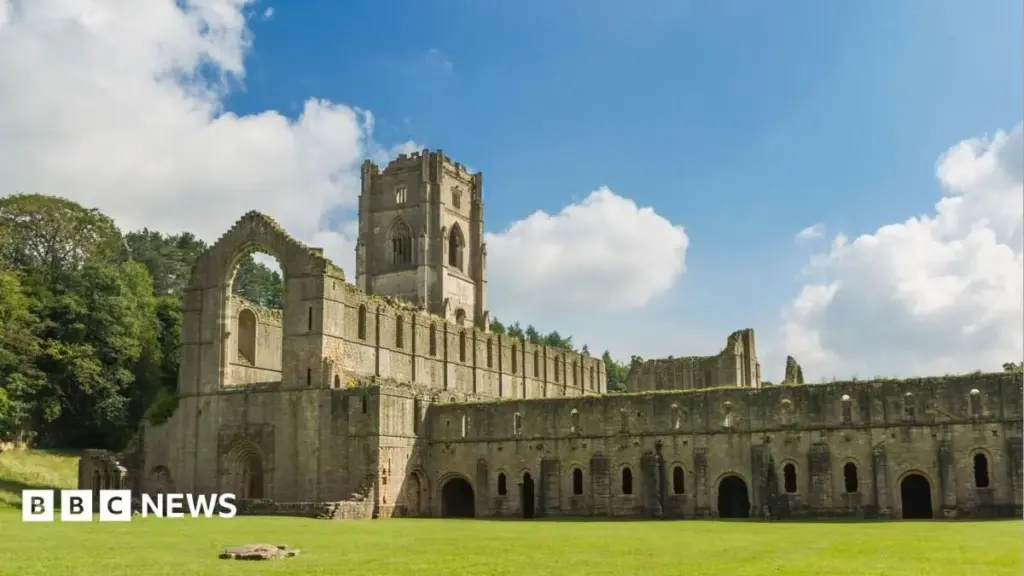
Justin Scully, the General Manager of the UNESCO World Heritage site Fountains Abbey and Studley Royal in North Yorkshire, has emerged as a vocal proponent of this hard-nosed realism. Recent summers, characterized by unprecedented heatwaves, torrential downpours, and tinder-dry moorlands, have driven the message home with alarming clarity. Climate change is no longer a theoretical projection discussed in distant academic symposiums; it is an active, destructive force dismantling the physical fabric of the nation’s heritage right now.
This comprehensive report examines the multifaceted threats facing Britain’s architectural and natural treasures, detailing the mechanical and environmental degradation caused by volatile weather patterns. It explores the proactive yet sobering planning frameworks being adopted by the National Trust, unpacks the profound philosophical shifts required in garden management and public expectation, and investigates the wider implications for global heritage preservation in an era of rapid planetary heating.
Detailed Chronology: The Accelerated Impact of Extreme Weather
The realization that heritage assets are fundamentally vulnerable to modern weather patterns has not occurred overnight. Rather, it is the culmination of a rapidly escalating timeline of environmental extremes that have battered British landscapes and historic structures over the past decade.
The Warning Signs of the 2010s
Throughout the early and mid-2010s, conservation scientists and property managers began registering anomalies in structural monitoring data. Winters were becoming wetter and milder, while summers alternated between washout downpours and sudden, stifling dry spells. While these variations were frequently dismissed as statistical anomalies or standard British weather variability, maintenance logs across National Trust properties revealed an insidious uptick in recurring problems: blocked drainage channels, persistent damp patches in medieval stonework, and unseasonal timber movement in historic roofs.
The Turning Point: The Summers of 2021 and 2022
The threshold from latent concern to active crisis was decisively crossed during the summers of 2021 and, most notably, 2022. The summer of 2022 shattered temperature records across the United Kingdom, with the mercury topping 40°C for the first time in recorded history.
For the National Trust, these summers served as a brutal stress test. Historic moorlands transformed into tinderboxes, sparking devastating wildfires that threatened rare habitats and archaeological landscapes. Simultaneously, ancient trees in historic parks withered under severe drought stress, while historic buildings experienced unprecedented ground movement as clay-rich soils shrank away from foundations.
"These last two summers have really brought this home to ourselves and to our visitors," Justin Scully reflects. "Climate change isn’t a thing that’s happening out there to other people, it’s actually impacting ourselves and the places we love. The threat is tangible."
The Present Day: Managing the Constant Cascade
Today, the timeline of threat is continuous. Property managers no longer prepare for discrete seasonal challenges; instead, they manage a relentless, overlapping cascade of environmental stressors. Heavy rainfall events regularly overwhelm drainage systems designed centuries ago, driving water deep into historic masonry. This is immediately followed by intense periods of baking heat that lock moisture inside walls, setting the stage for structural spalling and catastrophic decay when winter frosts inevitably arrive.
Supporting Context & Metrics: The Science of Decay
To understand why the National Trust is being forced to reconsider its preservation mandate, one must examine the specific, interrelated physical mechanics through which climate change attacks historic fabric. The damage is rarely caused by a single weather event; rather, it is the cumulative result of severe environmental volatility acting upon aging, fragile materials.
Hydrological Stress: Deluges and Drainage Failures
Precipitation patterns in the UK have shifted decisively toward intensity. While total annual rainfall has not universally skyrocketed, the frequency of high-intensity cloudbursts has risen dramatically.
- Overwhelmed Infrastructure: Historic drainage networks—comprising clay tile pipes, open lead gullies, and stone-lined culverts—were engineered for historical rainfall norms. When a month’s worth of rain falls in a matter of hours, these systems are instantly overwhelmed.
- Penetrating Damp and Erosion: Overflowing water cascades down exterior facades, pooling against foundations and penetrating porous lime mortar, sandstone, and brickwork. Once moisture breaches the outer envelope, it dissolves internal salts, which recrystallize as the water evaporates, exerting internal pressure that shatters stone from within.
- Foundation Undermining: Rapid surface runoff causes severe soil erosion around historic structures, destabilizing foundations and leading to differential settlement, structural cracking, and wall distortion.
Thermal and Geotechnical Stress: Wetting, Drying, Freezing, Thawing
The cyclical nature of modern weather is particularly punishing to ancient masonry and surrounding geology.
- The Freeze-Thaw Cycle: Water trapped within porous building materials expands by approximately 9% when it freezes. In the past, prolonged cold snaps kept water frozen, limiting the frequency of the cycle. Today’s climate swings frequently alternate between heavy rain and sudden overnight frosts, causing rapid, repeated freeze-thaw cycles that pulverize historic stonework.
- Subsidence and Soil Shrinkage: Prolonged dry, hot conditions strip moisture from clay-heavy soils, causing them to shrink dramatically. For buildings founded on shallow historic footings, this results in severe subsidence, shearing walls and tearing apart centuries-old joinery.
- Wildfire and Moorland Degradation: Higher temperatures and prolonged droughts have exponentially increased the risk of moorland and parkland wildfires. These fires do not merely destroy contemporary flora; they incinerate peat layers that preserve invaluable archaeological records dating back millennia, while destabilizing hillslopes and setting the stage for massive post-fire mudslides.
Official Statements and Strategic Pivots
Faced with these compounding pressures, the leadership of the National Trust is spearheading a profound philosophical and operational pivot. The era of unquestioned, blanket preservation is giving way to a pragmatic framework of managed adaptation and strategic triage.
Moving from Reaction to Anticipation
Speaking on the operational strategy being deployed across the Trust’s vast portfolio, Justin Scully emphasizes the necessity of long-range, worst-case planning. The organization is actively modeling how its properties and landscapes will look and function over a 40-year horizon.
"We’ve got to think about what could be the worst possible outcome and then work backwards from that," Scully explains.
This forward-looking methodology requires property managers to abandon traditional baseline assumptions. Historical weather data is no longer a reliable guide for future risk management. Instead, planners must utilize high-resolution climate projections to anticipate localized flooding, heat stress, and wind damage, designing interventions that can withstand conditions far exceeding anything experienced in the past three centuries.
Engineering Interventions: Fountains Abbey as a Case Study
At Fountains Abbey and Studley Royal—a magnificent fusion of 12th-century Cistercian ruins and an 18th-century Georgian water garden—the physical reality of climate adaptation is already taking shape.
To combat the threat of increasingly severe rainfall, the Trust is reviewing and upgrading the site’s water management infrastructure. This involves not only clearing and expanding underground drainage capacity but also redesigning surface-level water collection systems. Gutters, downpipes, and masonry channels are being enlarged to capture and safely divert massive volumes of water away from vulnerable medieval ruins before it can penetrate the ancient limestone structure.
Redefining Perfection: The Horticultural Paradigm Shift
Perhaps the most visible and emotionally resonant shift required by climate change lies not in stone buildings, but in living gardens. For generations, the National Trust has set the gold standard for British horticulture: immaculate lawns, razor-sharp box hedges, vibrant seasonal bedding, and pristine, weed-free borders.
Scully notes that this hyper-manicured aesthetic is rapidly becoming untenable, both ecologically and practically. Maintaining water-thirsty exotic plants during severe summer droughts requires unsustainable irrigation, while strict horticultural maintenance consumes labor and resources better directed toward structural defense.
"People expect things to look perfect and crisp," Scully acknowledges. Yet, the Trust must become "more open to how we would adapt."
This openness translates to a fundamental reimagining of historic planting schemes. Gardens may increasingly feature drought-tolerant native species, unmanicured meadows, and wilder, more resilient landscapes that can survive without constant human intervention. Lawns may be allowed to brown and go dormant during dry spells, and historic vistas may be re-planted with species better adapted to a warmer, drier British climate. Crucially, this requires a massive public relations and educational effort: shifting visitor expectations so that a slightly wilder, less manicured garden is understood not as a failure of maintenance, but as a triumph of ecological resilience.
Future Outlook: The Hard Choices Ahead
As the National Trust looks toward the mid-21st century, the implications of Scully’s warnings extend far beyond the gates of Fountains Abbey. They pose profound questions for the entire global heritage community.
The Geography of Triage
If protecting every site is mathematically and financially impossible, hard decisions loom. How does an institution decide which properties receive capital investment for flood defenses and structural reinforcement, and which are allowed to transition, decay, or be abandoned to the elements?
Conservation bodies will increasingly be forced to utilize weighted decision-making matrices, balancing architectural significance, historical rarity, community value, and the physical feasibility of defense. Some low-lying coastal properties or remote structures facing relentless erosion may ultimately need to be recorded via 3D digital scanning and archaeological excavation before being systematically decommissioned, allowing nature to reclaim the site.
Engaging the Public in the Reality of Loss
Perhaps the greatest challenge facing the National Trust is not technical or financial, but cultural. Modern society has grown accustomed to the permanence of heritage. Castles, abbeys, and stately homes are viewed as permanent anchors in a rapidly changing world.
Confronting the public with the reality of climate-induced loss requires immense institutional courage. It means transforming heritage sites from static museums of the past into dynamic educational centers for the future—living laboratories where visitors can witness firsthand the consequences of a warming planet and understand why adaptation requires compromise.
Conclusion
The warning issued by Justin Scully and echoed by conservationists across the globe is a clarion call. Climate change is no longer an abstract environmental crisis restricted to polar ice caps or distant rainforests; it is actively rewriting the physical reality of our shared cultural history.
By acknowledging that saving everything "just may not be possible," the National Trust is not surrendering to climate change. Rather, it is arming itself with the realism required to save what matters most. Through strategic engineering, horticultural reinvention, and honest public engagement, the organization is laying the groundwork to ensure that while the appearance of our heritage may inevitably change, its core spirit and historical memory will endure against the storms of a warming world.



