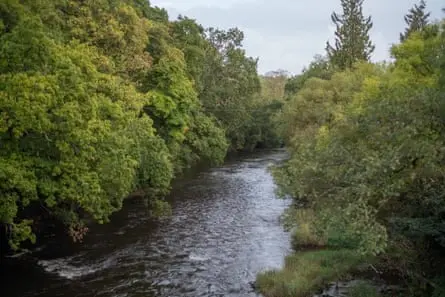
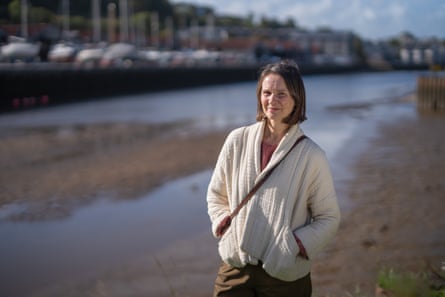
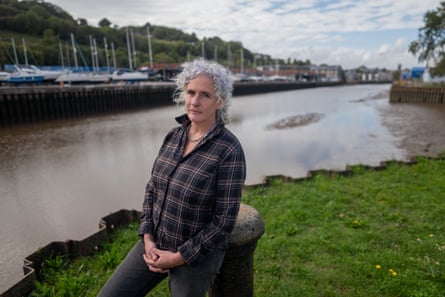
For generations, the River Dart has flowed from the rugged, heather-clad expanses of Dartmoor down to the bustling market towns and cherished tourist hotspots of Devon, serving as the lifeblood of the local ecosystem, economy, and community identity. However, in recent years, this idyllic waterway—like so many others across the United Kingdom—has become a flashpoint in the escalating national crisis over water quality, chronic underinvestment, and systemic ecological degradation.
Rather than succumbing to fatigue or resigned frustration over the persistent sewage spills blighting their beloved waterway, a group of citizen environmentalists in Devon decided to take matters into their own hands. Operating under the banner of Friends of the Dart (FOD)—an independent, not-for-profit organization—these grassroots campaigners have engineered a pioneering online platform known as the River Hub.
Billed as the first digital tool of its kind, the River Hub pulls together granular, overflow-by-overflow data to map out how Britain’s rivers are being polluted in near real-time. By systematically aggregating public records, filing freedom of information (FOI) requests, and cross-referencing meteorological data with discharge logs, the platform identifies repeatedly polluted hotspots, exposes infrastructural bottlenecks, and maps out where remedial infrastructure work is scheduled—and, crucially, where it is conspicuously absent.
The launch of the River Hub arrives at a pivotal juncture in British public life. It coincides with a wave of mounting public fury over water company performance, underscored by a landmark court ruling resulting in a record-breaking multi-million-pound fine against South West Water (SWW) for illegal sewage discharges across Devon and Cornwall. Furthermore, the platform’s debut intersects with intense political debates surrounding the future of privatization in the UK utilities sector, proving that communities are no longer willing to wait for slow-moving institutional regulators to deliver transparency.
Detailed Chronology & Genesis of the Crisis
From Grumbling to Groundwork: The Birth of River Hub
For the residents, swimmers, and business owners living along the banks of the River Dart, the physical consequences of unchecked sewage pollution have transitioned from an abstract environmental concern into an immediate public health emergency. Historic towns like Totnes, nestled along the river’s lower reaches, are surrounded by designated bathing water spots. Yet, visiting these areas often comes paired with an unwritten local warning: swim at your own risk.
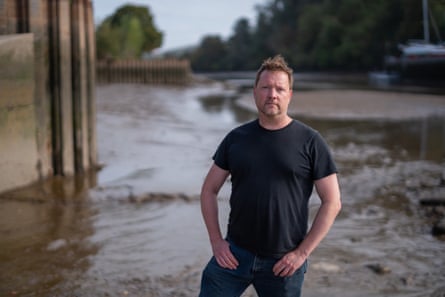
Rob Worthington, a business analyst by day, spent his evenings and weekends collaborating with fellow FOD members to construct the River Hub. Sitting on a wooden bench at Steamer Quay in Totnes, Worthington reflects on the rationale behind the platform.
"We built River Hub to help channel that [anger] constructively," Worthington explains. "To show where the problems are and why, so communities can help decide what gets fixed first."
Worthington and founding director Hannah Pearson—alongside a dedicated collective of healers, coaches, and local advocates—recognized that while existing mapping tools like Top of the Poops provided high-level national overviews of sewage discharges, there was a glaring absence of localized, hyper-detailed accountability. The goal was never merely to complain about a broken system, but to dissect its mechanics and present an undeniable digital ledger of institutional failure.
Real-Time Monitoring and the Phenomenon of "Dry Spills"
The River Hub’s interface is designed to demystify complex environmental datasets. Among its core features is an active tracking page that allows users to instantly check where sewage overflows are actively discharging or where they have occurred within the preceding 12 hours.
Crucially, the platform tracks "dry spills"—discharges that occur during periods of minimal or zero rainfall. Under UK regulatory frameworks, storm overflows are legally permitted to operate only during exceptional weather events, such as heavy downpours, to prevent sewer systems from backing up into homes and streets. However, the proliferation of dry spills points to a systemic failure: wastewater treatment works processing sewage long before stormwater enters the network, or infrastructure operating well beyond its design capacity.
By incorporating localized meteorological data into its methodology, the River Hub exposes instances where water companies have discharged untreated human waste into dry riverbeds, entirely violating the legal thresholds of their environmental permits.
Supporting Context & Metrics: Human Toll and Infrastructure Failures
The Toll on Human Health: E. Coli and Beyond
The ecological degradation of the River Dart is not measured merely in statistical overflows; it is written in the medical charts of local residents who dared to enjoy the water.
Emma Roberts, an interfaith minister and theatre director living near the Dart, recounts a chilling experience after a routine swim in the river. What began as a refreshing dip quickly escalated into a severe medical crisis, ending with her hospitalization due to a dangerous E. coli bacterial infection.
"It’s shocking really," Roberts says. "The river is alive and we should all be protecting it, not putting poo into it."
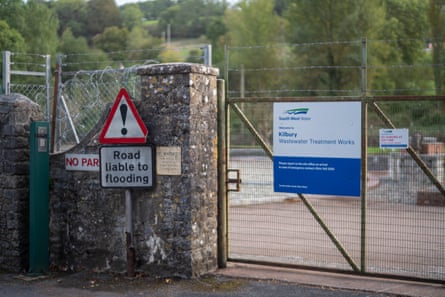
Roberts is not formally affiliated with Friends of the Dart, but she views the River Hub as an indispensable weapon in the fight for accountability. "The more information people have, the more pressure that we can put on," she notes. A brief query into the River Hub’s mapping system reveals that the location where Roberts contracted her infection sits downstream from a wastewater treatment plant that FOD’s analysis suggests operates well below the population capacity required by the surrounding area.
The health risks extend across generations. Olivia Doherty, a children’s rights and participation worker, shares similar anxieties regarding her 17-year-old son, Seamus, who recently suffered lingering stomach ailments after swimming in the Dart. Highlighting international standards, Doherty points out that the United Nations recognizes young people’s fundamental right to safe, clean public spaces.
"For me that includes our rivers," Doherty asserts. "Getting into the river is a big thing for children here. It’s so wrong if they miss out because it’s too dirty."
Economic and Recreational Fallout
The crisis also threatens local micro-economies reliant on clean water. Ben Brierley, who operates guided kayak tours and water sports courses on the Dart, relies entirely on a healthy river for his livelihood. While the River Hub helps him navigate when and where it is safe to lead clients into the water, Brierley expresses profound frustration at the slow pace of government-mandated cleanups.
Current UK government timelines grant water companies a deadline of 2035 to drastically reduce sewage discharges into bathing waters and ecologically sensitive zones, and a staggering 2050 for all other water bodies across England.
"It’s bonkers that we’ll be putting sewage into our rivers until 2050," Brierley remarks.
Official Statements and Institutional Pushback
The Legal and Regulatory Backdrop
The launch of the River Hub aligns with a tumultuous period for the UK water industry. South West Water (SWW) recently faced a landmark judicial penalty, handed a near-£8 million fine for a multitude of illegal sewage spills across Devon and Cornwall—including pollution incidents on Cornwall’s River Camel, which shares a similar geographical profile to the Dart by rising on high moorlands before plunging toward heavily visited tourist zones.
Concurrently, the political landscape is shifting. High-profile political figures have seized upon the state of Britain’s waterways as a prime symptom of systemic infrastructure decay, fueling national debates over whether to unwind the 1980s privatization of water utilities and return them to public stewardship.
South West Water’s Response
In response to the launch of the River Hub and the broader wave of community scrutiny, South West Water issued a defensive yet conciliatory statement. A company spokesperson maintained that SWW welcomes public engagement regarding river health:
"Our WaterFit Live site provides customers with a wide range of information, including near real-time storm overflow data, bathing water information and details about investment programmes. We are committed to making information accessible and continue to develop the platform to help customers better understand our work to improve river health."
However, citizen scientists remain skeptical of corporate transparency portals, arguing that utility-run platforms often obscure the full picture of systemic under-capacity through corporate spin and delayed disclosures.
The Environment Agency’s Position
The Environment Agency (EA) has similarly acknowledged the initiative, praising local communities for deploying data-driven oversight to elevate environmental standards. An EA spokesperson defended the regulator’s ongoing enforcement actions:
"100% of storm overflows are now monitored and the data is publicly available. As part of the government’s storm overflows reduction plan, a record £10.2bn is also being invested over the next five years to improve more than 2,500 storm overflows in England. We will continue to hold water companies to account where performance falls short."
Despite these assurances, grassroots organizers argue that regulatory bodies remain severely under-resourced, making independent platforms like the River Hub an absolute necessity for real-time enforcement.
Future Outlook: Scaling the Grassroots Model Nationally
"Taking Responsibility" Rather Than Complaining
As the River Hub goes live, its creators are already looking beyond the banks of the Devon waterway. Recognizing that incomplete data sets and occasional inaccuracies are inevitable when building an open-source platform from scratch, Worthington and his team have maintained an open-door policy for corrections and community contributions.
More importantly, Friends of the Dart has made the architectural and methodological model of the River Hub freely available to other community groups, river trusts, and environmental campaigners across the United Kingdom who wish to replicate the system for their local waterways. Initial interest from kindred organizations has already surged, signaling the potential for a decentralized, nationwide network of citizen-led pollution trackers.
Hannah Pearson, reflecting on the philosophy underpinning the project, emphasizes that the initiative represents a profound cultural shift from passive protest to active stewardship:
"We’re not saying: ‘This is terrible.’ We’re taking responsibility and saying: ‘What can we do?’"
By bridging the gap between raw public data and accessible, hyper-localized digital mapping, the citizens of the River Dart have forged a powerful blueprint for environmental resistance. As political pressure mounts and public intolerance for polluted waterways reaches a boiling point, the River Hub stands as both an indictment of current regulatory failures and an inspiring testament to what communities can achieve when they refuse to let their rivers drown in neglect.