

Executive Overview
In an era where digital communication shapes global environmental action, ocean conservation organizations face a complex dilemma: balancing the imperative to reach broad audiences with the ethical responsibility to safeguard the integrity of science. This delicate balancing act recently reached a definitive turning point for Mission Blue, the global marine conservation foundation founded by legendary oceanographer Dr. Sylvia Earle.
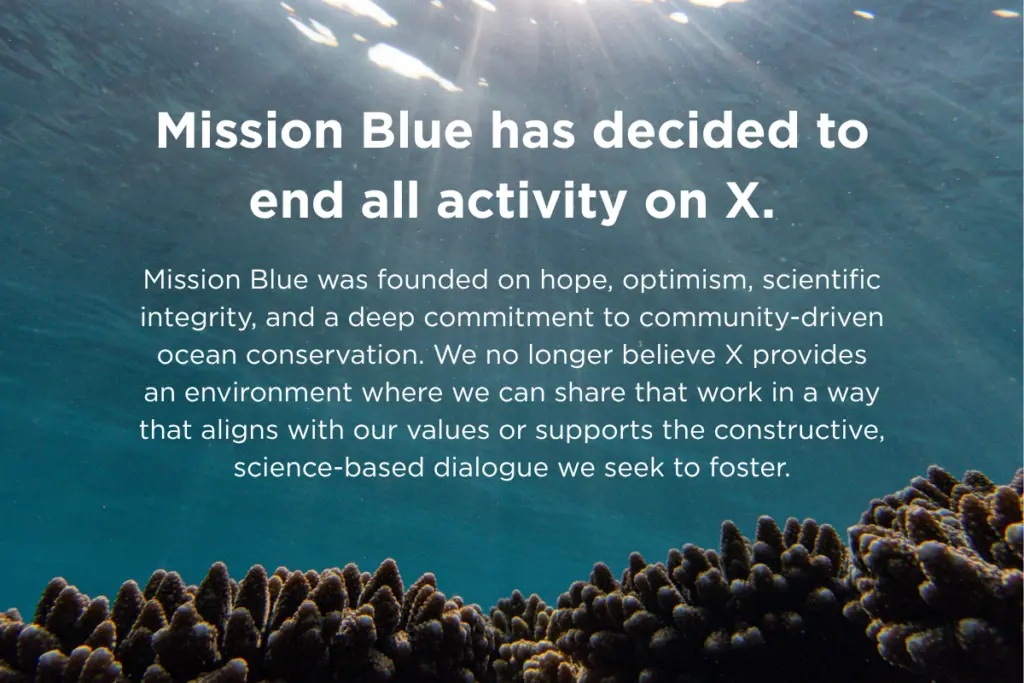
In a decisive strategic pivot, Mission Blue announced its official departure from X (formerly Twitter). Citing a progressive deterioration in the platform’s discourse—characterized by a surge in science denialism, hostility, and unmitigated misinformation—the organization has chosen to shutter its active presence on the microblogging site. While the legacy account will remain online as a read-only archive, the foundation will redirect its digital energy and resources toward platforms it deems more aligned with constructive, solutions-oriented engagement: Instagram, Facebook, LinkedIn, and YouTube.
This move is far more than a simple corporate social media housekeeping update. It reflects a growing institutional disenchantment with the architectural and cultural shifts that have transformed X under its current ownership. For Mission Blue, a movement anchored in what Dr. Earle terms "hope spots"—vital marine areas critical to the health of the global ocean—the digital ecosystem hosting their message matters profoundly. When online discourse devolves into toxicity and the active undermining of empirical science, the medium ceases to serve the message.
This comprehensive report examines Mission Blue’s departure from X, tracking the chronological trajectory of the decision, contextualizing it within the broader migration of scientific and environmental institutions away from toxic digital forums, and analyzing the metrics and future outlook for the foundation’s digital outreach strategy.
Detailed Chronology: From Early Adoption to Strategic Exit
To fully understand Mission Blue’s exit from X, one must trace the timeline of the platform’s evolution alongside the foundation’s digital maturation.
Phase 1: The Early Years of Optimism (2009–2018)
When Mission Blue first established its presence on Twitter, the platform was widely viewed by the non-profit sector as a democratizing force for good. In its formative years, Twitter functioned as a rapid-fire networking tool for field scientists, marine researchers, conservationists, and passionate ocean advocates. For Mission Blue, the platform offered an unprecedented capability to broadcast live updates from marine expeditions, coordinate global advocacy campaigns, and rally support for newly designated Hope Spots in real-time.
During this era, the platform’s algorithms and community guidelines largely rewarded concise, informative updates and fostered direct engagement between experts and the public. Mission Blue utilized the platform to bridge the gap between complex marine biology and public consciousness, building a vibrant digital community united by a shared passion for protecting the blue heart of the planet.
Phase 2: The Shift in Platform Dynamics (2019–2022)
As the years progressed, subtle shifts in platform governance, algorithmic weighting, and cultural norms began to alter the user experience. Content that provoked outrage, division, and emotional reactivity steadily gained algorithmic preference over measured, nuanced scientific discourse. For environmental organizations, this shift introduced friction. Complex ecological realities—such as climate change impacts, overfishing, and coral bleaching—do not lend themselves well to soundbite-driven polarization.
Despite these early warning signs, Mission Blue persevered, striving to maintain an educational beacon amid an increasingly noisy digital sea. The foundation continued to amplify the voices of its global network of Champions—scientists, explorers, and local activists dedicating their lives to protecting marine ecosystems.
Phase 3: The Tipping Point and Final Departure (2023–Present)
The acquisition of the platform by billionaire Elon Musk and its subsequent rebranding to X marked a profound transformation. Structural changes, including the dismantling of legacy verification systems, significant reductions in content moderation staff, and altered algorithmic priorities, created an environment where misinformation could proliferate unchecked.
For Mission Blue, the breaking point arrived as science denialism and hostile interactions became mainstream features of the platform’s daily ecosystem. Environmental advocacy, long a target of skepticism, increasingly met coordinated campaigns of bad-faith attacks, harassment, and climate misinformation.
Recognizing that this hostile digital climate fundamentally conflicted with its foundational ethos of hope, optimism, and respectful community-building, leadership made the definitive choice to walk away. Rather than continuing to pour resources into an environment actively undermining scientific consensus, Mission Blue leadership chose to pivot, formalizing their exit and outlining a clear path forward on healthier digital shores.
Supporting Context & Metrics: The Mass Exodus of Science from X
Mission Blue is far from an isolated actor. Its departure mirrors a broader, structural migration of academic, scientific, and environmental institutions away from X as the platform’s safety and moderation standards have degraded.
The Erosion of Digital Trust
In the wake of sweeping industry changes, independent researchers and data scientists have tracked a marked increase in the visibility of climate change denialism and anti-science rhetoric on X. Studies from digital watchdog organizations indicate that content questioning established environmental science frequently receives algorithmic boosts, creating a skewed perception of public consensus.
For conservation organizations whose credibility depends entirely on empirical data, peer-reviewed science, and transparent communication, maintaining an active presence on a platform that normalizes the suppression or ridicule of science poses an existential reputational risk. Organizations must weigh the value of audience reach against the reputational cost of validating a compromised digital town square.
Comparative Engagement Metrics
While X historically offered high visibility through rapid retweeting, non-profit digital strategists increasingly note that alternative platforms deliver higher-quality, deeper engagement.
- Instagram & YouTube: These visual-first platforms align naturally with marine conservation. High-definition underwater footage, compelling documentaries, and visually driven Hope Spot updates resonate profoundly with audiences, generating sustained educational engagement rather than fleeting ideological friction.
- LinkedIn: As a professional network, LinkedIn has seen a surge in environmental, social, and governance (ESG) discourse. For Mission Blue, LinkedIn offers an invaluable bridge to corporate partners, policymakers, institutional donors, and marine professionals who engage in constructive, solutions-oriented dialogue.
- Facebook: Despite its own moderation challenges, Facebook’s robust group infrastructure allows Mission Blue to cultivate localized, highly dedicated communities of ocean advocates who share actionable conservation strategies.
By reallocating resources away from X’s fractured ecosystem, Mission Blue is optimizing its digital return on investment, focusing energy where communities are genuinely receptive to constructive environmental stewardship.
Official Statements and Institutional Philosophy
At the heart of Mission Blue’s decision lies a deeply held commitment to constructive, science-backed optimism. The foundation’s leadership has articulated this philosophical stance clearly, emphasizing that the medium must reflect the message.
Upholding the Spirit of Hope
Founded with the explicit mission to spark a public wave of awareness about the ocean’s plight, Mission Blue has always championed a philosophy of constructive engagement. In its official departure announcement, the organization reflected on its origins:
"Mission Blue was founded with a spirit of hope, optimism, and dedication to community-driven ocean conservation. When we first started our Twitter account, it offered a great way to connect with our Champions, scientists in the field, and an audience of people who love the ocean."
This commitment to hope is not merely stylistic; it is strategic. Conservation psychology demonstrates that fear-based or hostile messaging can induce fatalism, whereas constructive, solutions-oriented communication empowers individuals to take meaningful action.
Rejecting Toxicity and Misinformation
The contrast between the foundation’s core values and the reality of X’s current environment ultimately rendered their continued presence untenable. Mission Blue leadership noted:
"Over time, however, the environment on X has changed significantly. We have become increasingly concerned about the prevalence of misinformation, hostility, and divisive content on the platform, including content that undermines science and constructive dialogue around environmental issues. We do not believe this environment is aligned with the kind of informed, respectful, and solutions-oriented community Mission Blue seeks to foster."
Furthermore, the organization emphasized its ethical boundaries regarding digital citizenship:
"We are all connected to the same ocean. Through our digital strategy, we seek to build a curious, welcoming online community. We cannot, in good faith, continue to use the X platform."
By refusing to normalize or financially support a compromised digital ecosystem through their engagement, Mission Blue has established a benchmark for ethical non-profit digital governance.
Future Outlook: Charting a Course for Digital Conservation
As Mission Blue closes the digital chapter on X, the organization is looking forward with a renewed focus on multi-channel community building and direct audience engagement.
Strengthening Alternative Digital Pillars
The foundation’s future digital strategy relies on deepening connections across platforms that prioritize visual storytelling, education, and professional collaboration.
- Expanding Video Outreach on YouTube: Recognizing the immense power of immersive media, Mission Blue plans to scale its video production. Documenting Hope Spot expeditions, highlighting local conservation victories, and sharing expert interviews will bring viewers directly beneath the waves.
- Deepening Community Roots on Instagram and Facebook: Through visually striking carousels, educational reels, and interactive features, Mission Blue will continue to mobilize its global grassroots network, translating ocean awareness into localized conservation action.
- Cultivating Strategic Partnerships on LinkedIn: By engaging with corporate leaders, marine policy experts, and academic institutions on LinkedIn, the foundation aims to secure institutional backing and drive systemic policy changes necessary for large-scale marine protection.
Direct-to-Audience Communication: The Power of the Newsletter
In an age where social media algorithms are increasingly volatile and monetized, Mission Blue is placing renewed emphasis on direct communication channels, chief among them being its official newsletter.
By inviting followers to subscribe directly, the foundation ensures an unbroken line of communication free from algorithmic interference, censorship, or platform-level toxicity. Subscribers receive curated Hope Spot updates, exclusive ocean stories, and concrete, actionable steps they can take to protect marine ecosystems.
A Lasting Legacy on X
While no new content will be published to the handle, the Mission Blue account on X will remain accessible as a static archive. This ensures that historical records of past marine campaigns, educational threads, and early milestones remain preserved for anyone seeking to look back at the foundation’s digital history, even as the organization sails forward into healthier, more constructive digital waters.
Conclusion
Mission Blue’s departure from X marks a significant milestone in the evolution of digital environmentalism. It serves as a powerful reminder that organizations dedicated to the preservation of the natural world must also protect the integrity of their communicative environments. By walking away from a platform marred by hostility and science denial, and by redirecting their energy toward constructive, community-driven channels, Mission Blue has reaffirmed its core mission: to serve as an uncompromising beacon of hope for the global ocean.
For ocean advocates, supporters, and scientists worldwide, the message is clear: the journey to save the blue heart of our planet requires steadfast dedication, mutual respect, and a refusal to engage with noise that distracts from the vital work at hand. Mission Blue invites all members of its global community to join them in this vital mission across their remaining active channels, ensuring that the dialogue surrounding our oceans remains as deep, clear, and enduring as the seas themselves.



