

Executive Overview
For two decades, the Biodiversity Heritage Library (BHL) has served as the world’s most comprehensive open-access digital archive for life sciences literature, preserving the fragile documentary record of Earth’s biodiversity. Spanning over 64 million pages of historical texts, field notes, and artistic plates, the library does more than safeguard dusty volumes—it chronicles the precise historical moments when humanity first encountered, classified, and, in too many tragic instances, unmade the natural world.
On Australia’s National Threatened Species Day, the gravity of this digital repository comes into sharpest focus. Australia occupies a uniquely precarious position in global conservation history. Isolated for millions of years as an island continent, its endemic fauna evolved without evolutionary defenses against modern placental predators and competitors. Following British colonization in 1788, the rapid introduction of invasive species—exacerbated by nineteenth-century acclimatization societies and systemic habitat destruction—ignited the highest rate of mammalian extinctions anywhere on Earth.
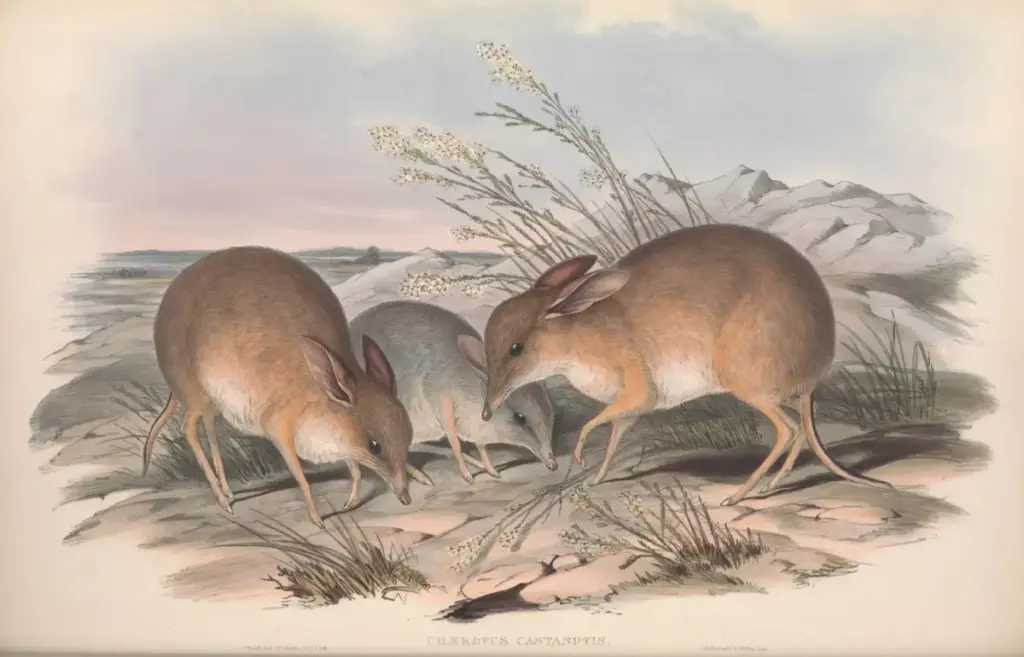
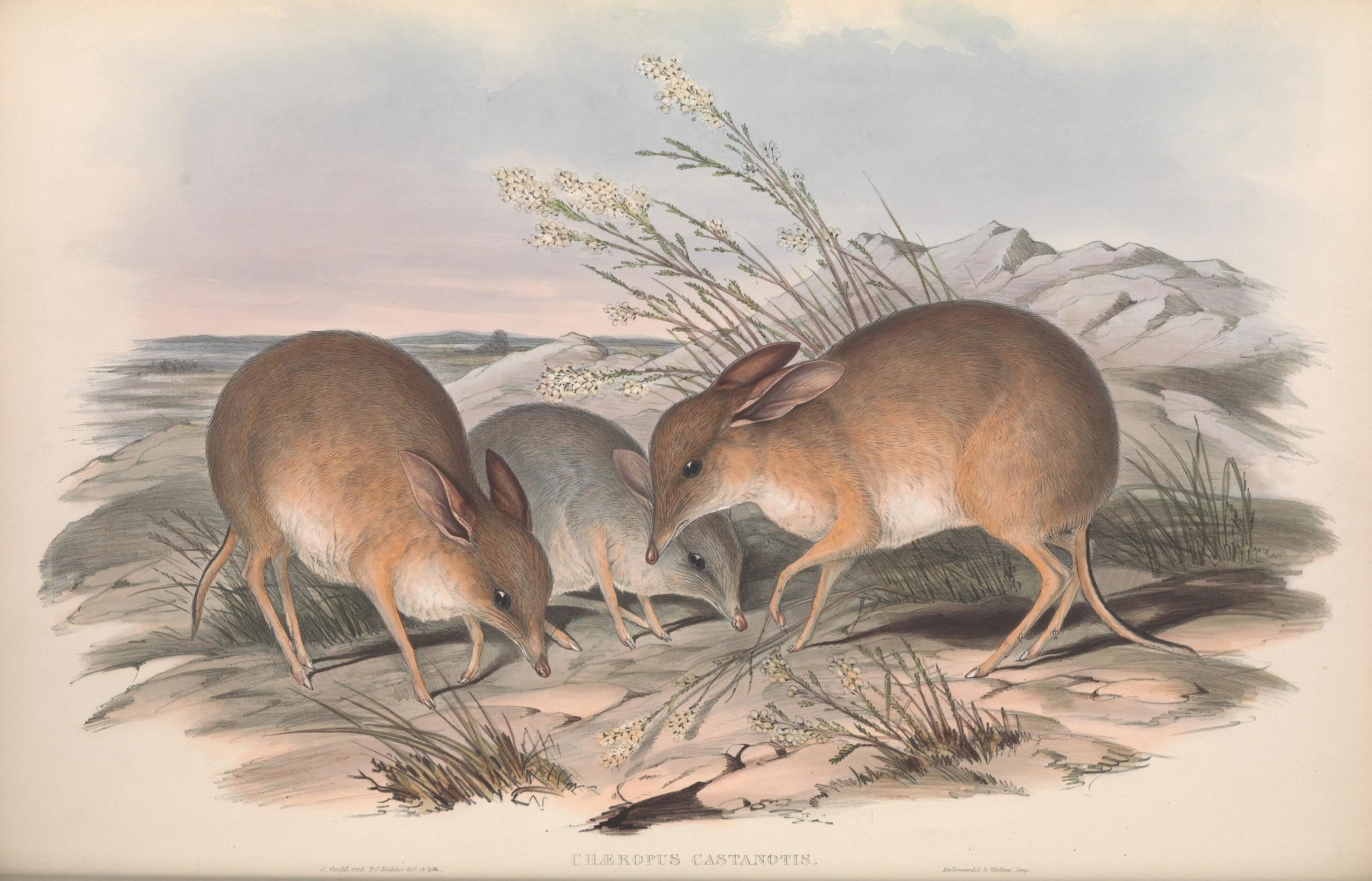
Within the BHL archive lies a sobering paper trail of this ecological collapse. The collection houses the initial scientific debuts and vibrant illustrations of creatures that flickered into the literature only to be extinguished shortly thereafter, including the Pig-footed Bandicoot, the Lesser Bilby, the Crescent Nail-tail Wallaby, and the iconic thylacine (Tasmanian tiger). Yet, the library’s archives also hold stories of redemption and resilience, such as the miraculous rediscovery of the Leadbeater’s possum. As BHL celebrates its 20th anniversary, its vast repository of historical literature stands not merely as a monument to past losses, but as an urgent, data-rich navigational tool designed to prevent contemporary conservation failures.
Detailed Chronology: A Timeline of Discovery, Persecution, and Loss
The narrative arc of Australian mammalian documentation by European naturalists is defined by an initial wave of intense wonder, followed swiftly by systematic eradication and, eventually, profound retrospection.
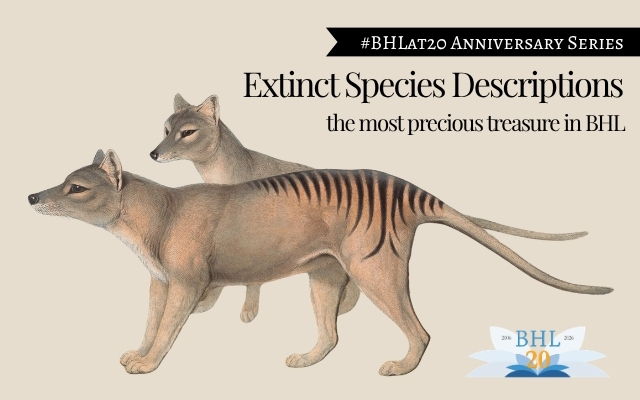
1788–1808: The First Encounters and the Debut of the Thylacine
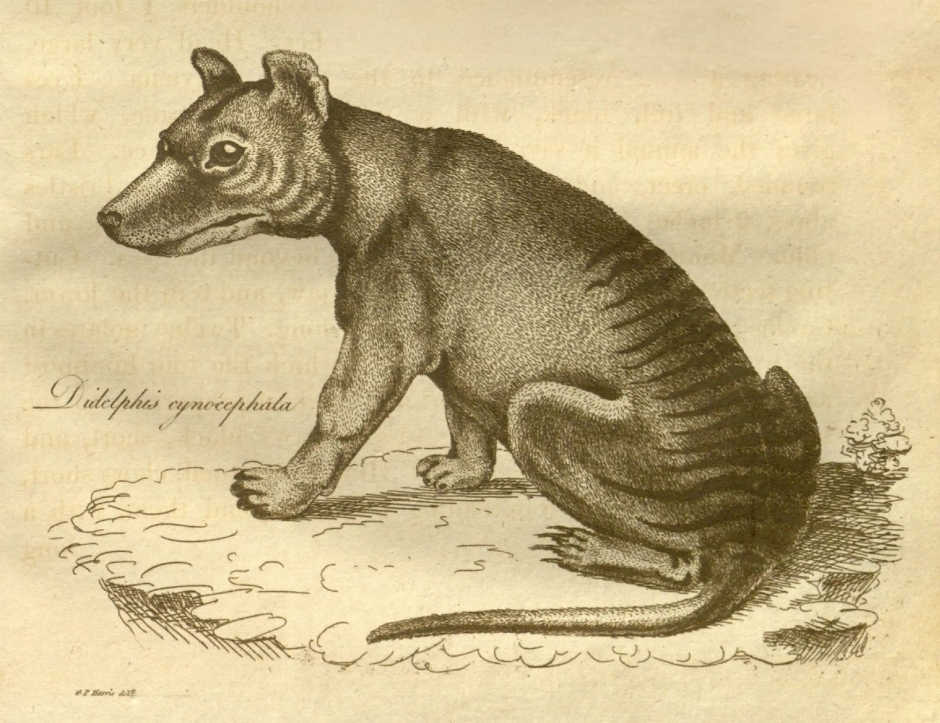
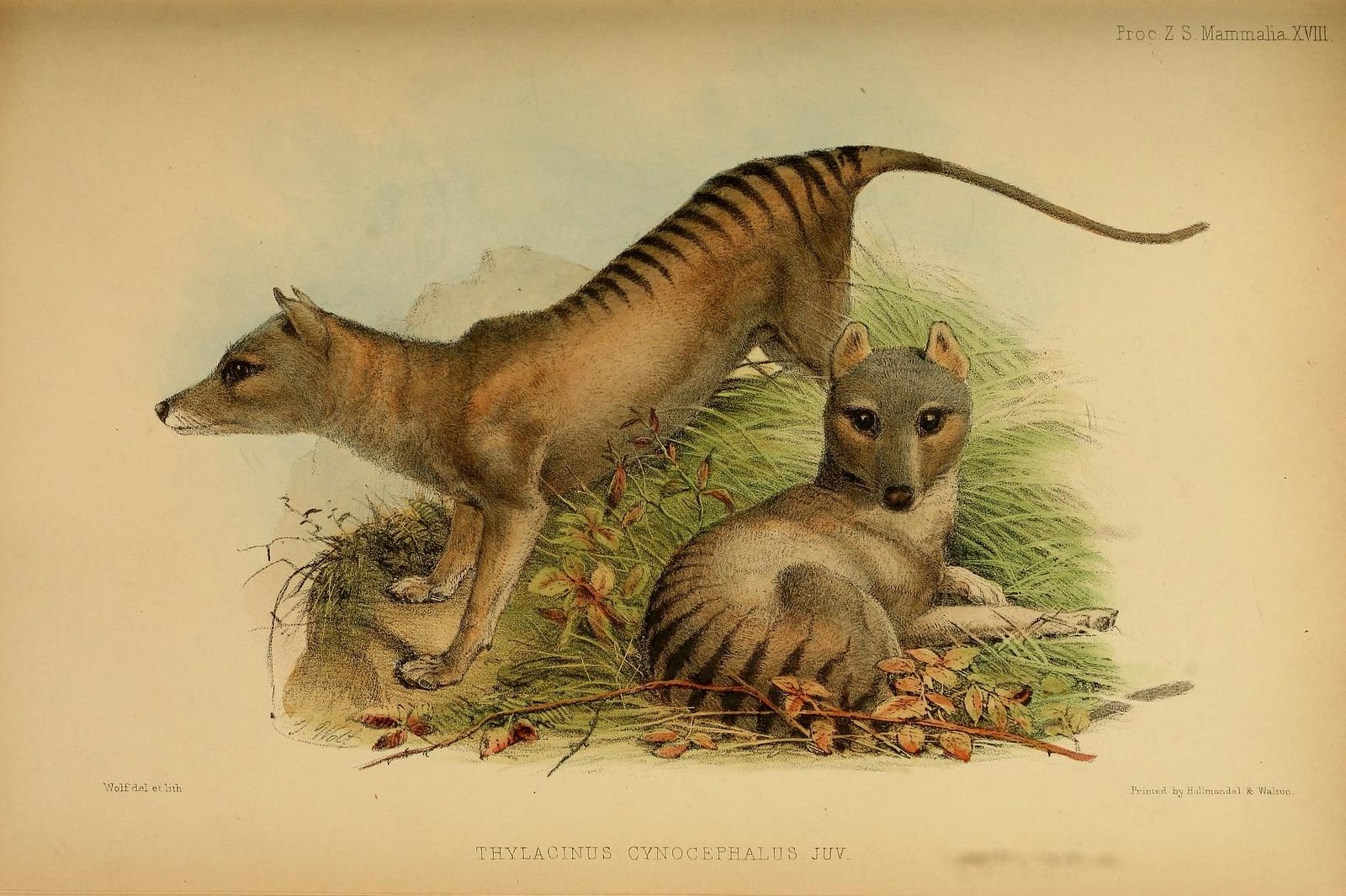
Following the establishment of the British colony at Port Jackson in 1788, European naturalists were confronted with a suite of unfamiliar, morphologically bewildering marsupials and monotremes. Early accounts were characterized by awe; researchers struggled to reconcile these peculiar lifeforms with the Linnaean framework. Among the most consequential early documentations was the formal description of the thylacine (Didelphis cynocephala, or the "dog-headed opossum"). Published in 1808 by George Prideaux Robert Harris in the Transactions of the Linnean Society of London, the description portrayed the carnivorous marsupial with large black eyes giving a "savage and malicious appearance," drawing direct, ominous comparisons to wolves and hyenas.
1838–1863: Escalating Conflict and Prophetic Warnings
As European pastoralism expanded across Tasmania and mainland Australia, competition with livestock brought native carnivores into direct conflict with settlers. In 1838, naturalist Ronald Campbell Gunn documented thylacines raiding sheepfolds at night, noting their formidable size and strength. By 1871, Johan Ludwig Gerhard Krefft codified the animal’s reputation as "a dangerous creature" and the largest mammalian carnivore in Australia.
Despite the prevailing hostility, nineteenth-century naturalists and artists began issuing stark warnings regarding the species’ trajectory. In 1850, zoologist Philip Lutley Sclater, writing alongside illustrations by Joseph Wolf of captive thylacines at the London Zoo, warned that the "determined persecution" by shepherds "must eventually lead to its extinction." These alarms were reinforced in 1863 by John Gould and illustrator Henry Constantine Richter in The Mammals of Australia. Gould predicted with chilling accuracy that as Tasmania’s population grew and its forests were fragmented, the thylacine would be relegated to "an animal of the past"—a prophecy fulfilled precisely seventy-three years later.
1936: The End of an Era
The systematic bounty hunting, trapping, and habitat fragmentation engineered against the thylacine culminated in total collapse. The final known individual died in captivity at the Beaumaris Zoo in Hobart on September 7, 1936—tragically, just two months after the species was granted official, albeit belated, legal protection. This dark anniversary now anchors Australia’s National Threatened Species Day.
1867–1961: The Description, Disappearance, and Resurrection of the Fairy Possum
While the thylacine’s story ended in absolute loss, other species experienced a reprieve from the brink. In 1867, Frederick McCoy, founding director of the National Museum of Victoria, formally described the Leadbeater’s possum (Gymnobelideus leadbeateri) as a new genus and species, based on a specimen collected by museum taxidermist John Leadbeater. Captured through magnificent full-color lithography in McCoy’s Prodromus of the Zoology of Victoria (1885), the species subsequently vanished from recorded observation for over half a century. Presumed extinct following a fifty-year silence, a small, resilient colony was miraculously rediscovered near Marysville in 1961, offering a rare second chance at survival that conservationists continue to fight for today.
Supporting Context & Metrics: The Ecological Vulnerability of an Island Continent
To understand the immense value of the literature preserved within the Biodiversity Heritage Library, one must examine the macro-level metrics governing Australian biodiversity loss:
- Global Extinction Epicenter: Australia currently holds the highest rate of mammal extinctions in the modern world. This vulnerability stems from millions of years of geographic isolation, which left endemic marsupials and monotremes entirely naïve to placental competitors and predators.
- The Impact of Invasive Species: The deliberate and accidental introduction of foreign fauna—accelerated by nineteenth-century acclimatization societies intent on Europeanizing the Australian landscape—unleashed devastating predators, most notably the European red fox (Vulpes vulpes) and feral cats (Felis catus).
- Scale of the BHL Digital Repository: Spanning over 64 million digitized pages, BHL provides researchers globally with unhindered access to rare monographs, field journals, and institutional transactions. These documents capture critical baseline data regarding historic population distributions, behavioral ecology, habitat types, and indigenous or early settler interactions that modern museum bone fragments and genetic samples alone cannot supply.
Official Perspectives from the Biodiversity Heritage Library Community
Leaders within the BHL infrastructure emphasize that the digital library functions far beyond a historical archive; it is an active instrument for modern conservation science.
Reflecting on her tenure as Communications Director and Manager of BHL Australia, leadership notes the profound emotional and scientific resonance found within original species descriptions:
"My favorite treasures in BHL are the very first scientific descriptions of new species… I like to think of these descriptions as a species’ international debut in the literature. Reading the awe and curiosity of those early naturalists as they tried to fit Australia’s truly perplexing creatures into their existing understanding of the natural world is fascinating."
Addressing the dual legacy of documented loss and precarious survival, BHL representatives stress the didactic imperative of historical literature:
"Scattered throughout BHL are descriptions, field observations, and illustrations of Australian species that have since disappeared… These depictions of once-living animals are now invaluable records of species that will never be observed again. It is our hope that by making this historic literature accessible and discoverable, we may learn from the past, and help prevent more species from becoming records of what has been lost."
Future Outlook: Translating Historical Data into Modern Conservation Action
As the Biodiversity Heritage Library marks its 20th anniversary, the institution’s strategic focus pivots aggressively toward future utility. Historical literature is no longer viewed as static history, but as dynamic ecological baseline data.
Modern conservation biologists, climate scientists, and wildlife managers increasingly utilize open-access historical archives to map historical ranges, assess long-term ecological shifts, and understand how native species interacted with their environments prior to intensive anthropogenic fragmentation. By analyzing the warnings issued by nineteenth-century naturalists regarding the thylacine, contemporary researchers gain insight into the socio-political and ecological velocity of systemic eradication.
Conversely, ongoing survival efforts for critically endangered species like the Leadbeater’s possum—which remains heavily threatened by modern industrial logging, catastrophic bushfires, and climate change—demonstrate that historical baseline data can inform active habitat protection and captive breeding protocols.
Entering its third decade, the Biodiversity Heritage Library remains committed to keeping its tens of millions of pages freely accessible to researchers, policymakers, and conservationists worldwide. By illuminating the exact contours of what has been lost, BHL provides humanity with the empirical foundation required to protect the vulnerable fauna that remains.



