

Executive Overview
In an era where digital platforms serve as the primary lifeblood for global advocacy, non-profit organizations face an increasingly complex calculus regarding where they invest their digital footprint. For ocean conservation heavyweights, visibility is not merely a metric of brand awareness; it is a vital mechanism for driving policy change, mobilizing grassroots support, and safeguarding vulnerable marine ecosystems. Yet, as the digital landscape evolves, so too do the ethical dilemmas associated with hosting public discourse on commercial social media networks.
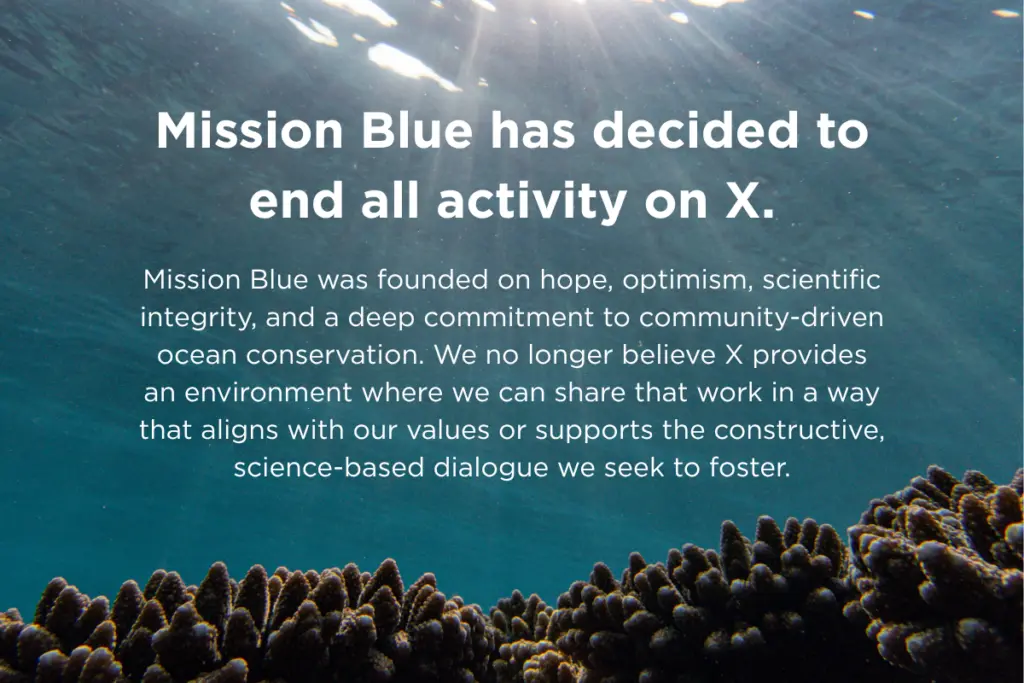
Mission Blue—the globally renowned marine conservation foundation founded by legendary oceanographer Dr. Sylvia Earle—has officially announced its departure from the platform formerly known as Twitter, now rebranded as X. In a decisive strategic pivot, the organization has chosen to shutter its active engagement on the platform, citing a toxic confluence of mounting hostility, unmitigated misinformation, and an ideological environment fundamentally incompatible with scientific integrity and constructive dialogue.
This strategic retreat marks a significant milestone in a broader, ongoing corporate and non-profit exodus from X. Over the past two years, an array of academic institutions, human rights organizations, public health entities, and environmental advocacy groups have reassessed their presence on the platform. Driven by policy shifts under billionaire owner Elon Musk—including the dismantling of legacy verification systems, the reinstatement of banned accounts, and the reduction of Trust and Safety teams—organizations dedicated to empirical truth are finding themselves at odds with the architecture of the platform.
For Mission Blue, a foundation built on the foundational ethos of "Hope Spots" and community-led marine protection, the decision was not made lightly. For years, the platform served as a dynamic, real-time conduit connecting field scientists, passionate divers, institutional donors, and everyday ocean advocates. However, as the digital tide shifted toward sensationalism and climate skepticism, the organization drew a definitive line in the sand.
Rather than continuing to validate an ecosystem marred by polarization and anti-science rhetoric, Mission Blue is redirecting its intellectual and creative capital toward platforms it perceives as more aligned with its mission of fostering an informed, respectful, and solutions-oriented community. As the digital sphere grapples with the fallout of fractured online communities, Mission Blue’s exit serves as a high-profile case study in institutional values superseding algorithmic reach.
Detailed Chronology: The Evolution of Mission Blue’s Digital Strategy
To understand the weight of Mission Blue’s departure from X, one must examine the arc of the organization’s digital engagement and the concurrent transformation of the social media landscape.
The Early Years: Building a Digital Armada for the Sea
When Mission Blue first established its presence on Twitter, the platform was widely championed as a democratic town square capable of collapsing geographic distances in the name of urgent global causes. For an organization dedicated to identifying and protecting fragile marine environments—dubbed "Hope Spots"—the platform offered unprecedented utility.
During this initial phase, the digital strategy was characterized by high-yield collaboration and real-time scientific communication. Marine biologists operating in remote oceanic outposts could broadcast discoveries directly to marine policy experts, journalists, and global donors. Twitter served as an agile digital nervous system for the ocean conservation community. Hashtags related to marine protected areas (MPAs), illegal, unreported, and unregulated (IUU) fishing, and plastic pollution frequently trended, allowing grassroots organizations to punch well above their weight class against well-funded industrial lobbies.
Mission Blue leveraged this environment to amplify the voices of its "Champions"—the indigenous leaders, scientists, and explorers spearheading conservation efforts across the globe. Threads detailing fragile coral reef ecosystems, whale migration corridors, and deep-sea mining threats routinely garnered robust engagement, fostering a sense of shared stewardship and collective urgency.
The Turning Point: Shifts in Platform Governance
As the years progressed, structural transformations within the platform began to erode the foundations of this vibrant scientific community. Following the acquisition of the platform by Elon Musk in late 2022, sweeping operational changes fundamentally altered the user experience and content moderation frameworks.
The dismantling of legacy verification protocols, combined with sweeping layoffs across Trust and Safety, engineering, and policy compliance departments, created a vacuum. For organizations committed to rigorous, peer-reviewed science, the immediate consequence was a sharp rise in the visibility of unverified, inflammatory, and deceptive content.
Concurrently, algorithms were retooled to reward high-engagement controversy over nuance and accuracy. For environmental advocates, this meant that posts detailing empirical climate data, ocean acidification metrics, and biodiversity loss were routinely met with orchestrated campaigns of denialism, harassment, and bot-driven hostility. The digital town square increasingly resembled an ideological battleground where constructive debate was drowned out by polarizing noise.
The Final Straw: The Decision to Archive
By mid-2024, the internal calculus at Mission Blue had reached a tipping point. The leadership team, in consultation with communications strategists and digital advisors, evaluated the return on investment of maintaining an active presence on X against the reputational and operational risks.
The findings were stark. The platform’s changing cultural environment was no longer serving as a net positive for ocean advocacy. Instead, it demanded resources to monitor and mitigate hostility that could otherwise be dedicated directly to marine conservation initiatives.
Rather than engaging in a perpetual battle against algorithmic headwinds and pervasive misinformation, Mission Blue leadership enacted a clean break. The organization officially announced that it would cease all active publishing on X, transitioning the account into a static, read-only digital archive. This strategic closure signals that for organizations whose core capital is trust and scientific truth, maintaining a presence on a compromised platform is an untenable compromise.
Supporting Context & Metrics: The Broader Exodus from X
Mission Blue’s departure is far from an isolated incident. It is part of a systemic, macroeconomic and cultural realignment among mission-driven institutions regarding their digital dependencies.
The Scale of Institutional Attrition
Since late 2022, a broad spectrum of organizations has systematically reduced or entirely eliminated their footprint on X. Academic institutions, municipal transit authorities, public health agencies, and major non-profits have pointed to several converging factors:
- Rise of Hate Speech and Harassment: Independent analyses by organizations like the Center for Countering Digital Hate (CCDH) and the Anti-Defamation League (ADL) documented sharp surges in slurs, targeted harassment, and toxic content following ownership changes.
- Proliferation of Climate Denialism: Climate scientists and environmental organizations have noted a systematic amplification of climate change denial, with algorithms frequently surfacing debunked talking points over consensus-backed empirical data.
- Erosion of Institutional Trust: The monetization of the verification badge (formerly the blue checkmark) led to a proliferation of impersonator accounts, making it extraordinarily difficult for legitimate scientific and non-profit bodies to authenticate their communications.
Major global entities—including NPR, PBS, the The Guardian, and various European public service broadcasters—have either suspended posting entirely or drastically curtailed their activity, citing similar concerns regarding platform governance and editorial integrity.
The Economics of Non-Profit Digital Strategy
For non-profits, resource allocation is a zero-sum game. Every hour spent managing hostile comment sections, combating bad-faith actors, or navigating erratic algorithmic shifts is time and capital diverted away from core programmatic work—in Mission Blue’s case, lobbying governments for MPA designations, funding expeditions, and supporting local ocean guardians.
Data analytics within the non-profit sector indicate a growing trend toward "platform diversification and owned media." Rather than building digital houses on rented land subject to the whims of billionaire tech executives, organizations are aggressively investing in owned channels:
- Direct-to-Consumer Channels: Robust email newsletters, proprietary mobile applications, and direct SMS alert systems.
- Value-Aligned Communities: Migrating to platforms with more stringent, community-centric moderation policies, such as LinkedIn (for professional stakeholder engagement) and Instagram/YouTube (for visually driven storytelling).
Mission Blue’s pivot reflects this sophisticated understanding of modern digital ecosystems. By doubling down on Instagram, Facebook, LinkedIn, YouTube, and its direct newsletter subscriptions, the foundation is prioritizing deep, values-aligned community engagement over raw, volatile reach.
Official Statements and Institutional Philosophy
The philosophy underpinning Mission Blue’s exit is inextricably linked to the worldview of its founder, legendary oceanographer Dr. Sylvia Earle. Often referred to simply as "Her Deepness," Dr. Earle has long championed the concept of radical hope paired with uncompromising scientific rigor.
The Voice of Mission Blue
In its formal announcement, the organization articulated the core conflict driving its departure with striking clarity:
"Mission Blue was founded with a spirit of hope, optimism, and dedication to community-driven ocean conservation. When we first started our Twitter account, it offered a great way to connect with our Champions, scientists in the field, and an audience of people who love the ocean… Over time, however, the environment on X has changed significantly. We have become increasingly concerned about the prevalence of misinformation, hostility, and divisive content on the platform, including content that undermines science and constructive dialogue around environmental issues."
This statement underscores a vital philosophical distinction: Mission Blue views its digital channels not merely as megaphones for broadcasting noise, but as sacred spaces for cultivating community. The foundation explicitly stated that the prevailing culture on X is fundamentally incompatible with the kind of "informed, respectful, and solutions-oriented community" required to address planetary-scale environmental crises.
The Power of "Hope Spots"
To appreciate why Mission Blue values respectful, constructive dialogue, one must examine the Hope Spots initiative itself. Hope Spots are special places that are critical to the health of the ocean—the "blue heart" of the planet. Around 150 such spots have been designated globally, ranging from pristine coral reefs in the high seas to heavily impacted coastal zones awaiting rehabilitation.
Achieving formal protection for these areas requires delicate, multi-stakeholder coalitions involving indigenous communities, commercial fisheries, local governments, international policymakers, and philanthropic donors. Building these coalitions demands nuanced communication, active listening, and rigorous scientific data presentation.
An algorithmic environment that rewards outrage, simplifies complex marine biology into polarized soundbites, and amplifies anti-science rhetoric actively undermines the diplomatic and educational groundwork required to secure marine reserves. By walking away from X, Mission Blue is protecting the integrity of its brand and ensuring its messaging remains tethered to empirical truth and constructive hope.
Future Outlook: Charting a Course in a Fragmented Digital Sea
As Mission Blue fully integrates its operations into alternative digital ecosystems, the organization’s move points toward a broader transformation in how environmental advocacy will operate in the latter half of the 2020s.
The Pivot to Visual and Professional Networks
Mission Blue’s strategic redirection highlights a deliberate choice of digital tools tailored to specific facets of marine conservation:
- Instagram and YouTube (Visual Storytelling): The ocean is inherently visual. From breathtaking footage of humpback whales breaching to microscopic imagery of phytoplankton, visual media remains the most potent tool for eliciting emotional connection and empathy for marine life. By focusing on Instagram and YouTube, Mission Blue is doubling down on cinematic storytelling, short-form educational reels, and long-form documentary content that showcases the beauty and fragility of Hope Spots.
- LinkedIn (Institutional and Policy Engagement): Protecting the ocean requires high-level policy intervention, corporate accountability, and international treaties (such as the landmark UN High Seas Treaty). LinkedIn provides a professional, corporate, and academic environment where Mission Blue can engage directly with policymakers, marine economists, institutional donors, and corporate sustainability officers without the disruptive noise of consumer-grade culture wars.
- Facebook (Broad Community Mobilization): Despite its own historical controversies, Facebook remains a powerful utility for localized community organizing, event coordination, and reaching diverse demographic cohorts who are deeply invested in local conservation initiatives.
- Owned Media (The Newsletter): Perhaps most importantly, Mission Blue is directing followers to subscribe directly to its newsletters. In an age of algorithmic volatility, direct-to-inbox communication represents the gold standard of digital sovereignty, ensuring that the organization retains an unbroken line of communication with its most dedicated supporters.
A Watershed Moment for Scientific Advocacy
Mission Blue’s departure from X is symbolic of a maturing digital strategy across the global scientific community. As commercial social platforms increasingly prioritize engagement metrics derived from conflict and polarization over empirical accuracy and civil discourse, science-based organizations are recognizing that physical and digital survival requires setting boundaries.
The ocean is facing unprecedented existential threats: escalating marine heatwaves, deoxygenation, rampant overfishing, deep-sea mining proposals, and suffocating plastic pollution. Confronting these crises requires absolute clarity of purpose, unwavering scientific integrity, and collaborative global action.
By stepping away from a platform that no longer supports these values, Mission Blue has sent a powerful message to the digital world: when the noise threatens to drown out the science, true conservationists have the courage to change the channel. As the foundation steers its digital community toward more welcoming waters, it reinforces the timeless truth articulated by Dr. Sylvia Earle—that our survival is inextricably linked to the health of the blue heart of our planet, and safeguarding it requires protecting not only our physical oceans, but the integrity of the conversations we have about them.



