

Executive Overview
For decades, environmental journalism has read like an obituary for the planet. Every biennial iteration of the Living Planet Report—published jointly by the World Wide Fund for Nature (WWF) and the Zoological Society of London (ZSL)—has historically delivered a devastating indictment of human stewardship. The data has consistently pointed toward an accelerating unraveling of the natural world: ecosystems pushed past tipping points, and global vertebrate populations decimated by historic margins.
Yet, the release of the latest Living Planet Report, sub-titled The Science of Hope, introduces a jarring, yet desperately needed, narrative shift. While it does not shy away from the catastrophic losses still occurring globally—such as the continuing downward trajectory of biodiversity in specific regions and the relentless frequency of extreme weather events—it presents an unexpected counter-narrative. Conservation targets are being met in surprising places. Species once written off as biological dead ends are staging dramatic comebacks. The global energy sector, historically the primary engine of greenhouse gas emissions, has crossed a critical psychological and infrastructural threshold, with renewable integration snowballing and coal consumption entering structural decline across major economies.
This report challenges conservationists, policymakers, and the public to rethink a fundamental question: What is the nature of hope in an age of crisis? Far from being a passive opiate or naive optimism—often derided as "hopium"—pragmatic hope is defined by psychological rigor. It requires clearly articulated goals, concrete pathways for achievement, individual agency, and, crucially, institutional transparency.
However, this emergent paradigm of actionable hope collides sharply with political obfuscation. Recent decisions by governments, such as the initial suppression of comprehensive national security assessments regarding global biodiversity loss, demonstrate that authorities are still reluctant to provide citizens with the full map of the ecological crisis. This article examines the dual imperatives of our current ecological moment: confronting the unvarnished realities of ecosystem destabilization while mobilizing the resilient, evidence-based frameworks required to reverse them.
Detailed Chronology: From Despair to the Evolution of Pragmatic Conservation
To understand how modern conservation reached this pivotal juncture, it is essential to trace the arc of ecological monitoring and environmental response over the last half-century.
The Era of Decline (1970s–2010s)
For generations, ecological reporting focused almost exclusively on tracking catastrophic loss. The baseline set by early scientific assessments painted an increasingly grim picture of industrial expansion, habitat fragmentation, and unchecked resource extraction. By the time the 2024 Living Planet Report was released, showing that global wildlife populations had plummeted by an average of 73% over the preceding 50 years, the psychological toll on environmental scientists, journalists, and activists was palpable. The prevailing public reaction swung between paralyzing eco-anxiety and outright apathy.
The Turning Point in Energy Systems (Early 2020s)
While biodiversity indicators continued to flash red, structural transformations began taking place beneath the surface of the global economy. The energy sector, responsible for roughly 75% of global greenhouse gas emissions, began an irreversible pivot. Driven by plummeting technology costs, regulatory pressures, and shifting market economics, renewable energy generation expanded exponentially. By the mid-2020s, carbon-intensive baseload power generation began to buckle in wealthy industrialized nations, proving that systemic infrastructural transitions are possible even when political consensus lags.
The Rise of the "Geeky Hope" Paradigm (Mid-2020s)
As the limits of pure catastrophism became apparent—often leading to political paralysis rather than mobilization—psychological researchers and conservation biologists began championing a different framework. Grounded in the decades-old theories of American psychologist Charles "Rick" Snyder, this approach reframed hope not as an emotional state, but as a cognitive process.
This conceptual evolution birthed targeted success stories that defied deterministic decline. The most striking illustration of this era is the recovery of New Zealand’s kākō—the world’s heaviest, flightless, and critically endangered parrot. Driven to the absolute brink of extinction by non-native mammalian predators by the mid-1990s, the species numbered a mere 51 individuals in 1995. Rather than resigning themselves to the bird’s extinction, conservationists initiated an unprecedented, highly technical recovery program.
[1995: 51 Kākāpō]
       │
       ├─► Relocation to predator-free offshore islands
       ├─► Intensive technological monitoring (smart transmitters)
       ├─► Experimental breeding interventions (hand-rearing, AI)
       └─► Genomic mapping of the entire living population
       │
[Present Day: 324 Kākāpō] (A fighting chance secured)
By the late 2020s, through meticulous pathway engineering, adaptive management, and the genomic sequencing of virtually every surviving bird to optimize breeding pairs, the kākāpō population rebounded to 324. While not entirely out of the woods, the species transformation serves as the archetype for modern, hands-on resilience.
Supporting Context & Metrics: The Dual Realities of the Anthropocene
Evaluating the current state of the planet requires holding two conflicting truths in sharp focus: systemic environmental degradation remains acute, yet targeted interventions yield undeniable victories.

Biodiversity Metrics: The Good, The Bad, and The Restored
The Living Planet Report: The Science of Hope categorizes global biodiversity not as a monolith, but as a mosaic of regional outcomes.
- The Persistent Crisis: Broad-scale ecosystem collapse threatens tropical rainforests, coral reefs—exemplified by the Great Barrier Reef suffering its largest annual drops in live coral cover on record following successive bleaching events—and freshwater systems. Global vertebrate indices continue to reflect severe underlying stress.
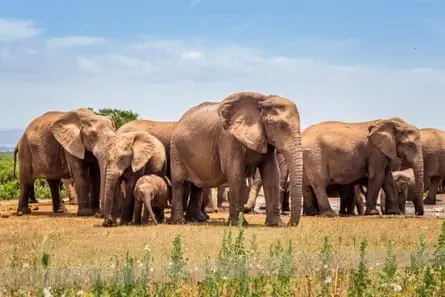
- The Conservation Victories: Rigorous global assessments indicate that coordinated conservation efforts have successfully prevented the extinction of 32 bird species and 16 mammal species since 1993. Furthermore, active management programs have stabilized or expanded wild populations of flagship species, including South African elephants, tigers, and sea otters.
Psychological Metrics of Engagement
Environmental psychology offers vital insights into how these disparate narratives influence human behavior. A landmark 2023 meta-analysis published in psychological literature illuminated a critical behavioral distinction:
- Constructive Hope: Individuals whose hope is anchored in personal and collective agency—the belief that their actions, policies, and systemic shifts can make a measurable difference—are significantly more likely to engage in pro-environmental behaviors. They seek out information, support stringent climate policies, and modify everyday consumption patterns.
- Defensive Optimism/Hopium: Conversely, hope grounded in the denial of a problem (e.g., believing climate change is not anthropogenic or catastrophic) correlates strongly with lower civic engagement and political complacency.
True ecological literacy demands that hope must be co-joined with realism. Sugar-coating systemic threats breeds complacency; endless doom breeds resignation.
Official Statements and Institutional Censorship: The Battle for Transparency
While conservationists argue for pragmatic, evidence-based hope rooted in transparency, governments frequently struggle with the political fallout of full disclosure. A striking case study in this tension involves the handling of national security assessments regarding environmental collapse.
The Suppressed Joint Intelligence Committee Report
In the United Kingdom, the decision by the government to initially withhold the full national security assessment on global biodiversity loss generated intense criticism from environmental advocates and policy analysts. While an abridged, 14-page public version was eventually released, the comprehensive intelligence document—produced by the elite Joint Intelligence Committee—was kept under wraps.
The withheld document posed a stark, foundational question: What would wholesale ecosystem collapse mean for national security and societal continuity?
According to leaked summaries and expert analyses, the implications outlined by the intelligence community are severe:
- Critical Infrastructure and Supply Chains: Unprecedented disruptions to domestic and international food and water supplies.
- Geopolitical Instability: Heightened risks of resource scarcity driving regional conflicts, state fragility, and cross-border resource competition.
- Migration Pressures: A dramatic surge in irregular, climate-induced migration as habitable zones shrink globally.
Critics of the decision argue that suppressing such assessments represents a profound governance failure. When governments conceal the true scale of ecological risk from the public under the guise of security management, they perform a double disservice. They deny citizens the clear map required to navigate the crisis, and in doing so, they dismantle the foundations of genuine, reality-based hope.
As environmental journalist and institutional watchdog groups have emphasized, an informed public is an empowered public. Without access to unvarnished risk assessments, societies are left blind, forced to navigate systemic ecological disruption without understanding the magnitude of the challenges ahead.
Future Outlook: Navigating the Road Ahead
As we look toward the middle of the 21st century, the trajectory of human civilization and planetary health will be determined by our willingness to embrace a mature, unromanticized relationship with the natural world.
- Abandoning False Binaries: The false choice between unbridled techno-optimism and paralyzing doomerism must be discarded. The future will not be saved by passive wishing, nor is it sealed by inevitable doom.
- Institutional Accountability: Governments and international bodies must align their public communications with scientific reality. Transparency regarding national security risks, biodiversity loss, and climate projections is not a threat to stability; it is the prerequisite for building societal resilience.
- Scaling What Works: The successes seen in species recoveries—such as the kākāpō, tigers, and sea otters—prove that targeted, well-funded conservation works. These frameworks must be replicated and scaled globally, backed by robust legal protections and indigenous-led stewardship.
- Energy Transition Momentum: The positive tipping points reached in the global energy sector must be accelerated, moving beyond wealthy nations to ensure equitable, rapid decarbonization across the developing world.
In the final analysis, hope is not a prediction of guaranteed success. It is a strategic orientation. As the lessons from both psychology and conservation demonstrate, the opposite of hope is not despair—it is inaction. By combining a clear-eyed assessment of our planetary vulnerabilities with the gritty, practical determination to fix them, humanity can secure a fighting chance for the fragile ecosystems that sustain us all.



