

Executive Overview
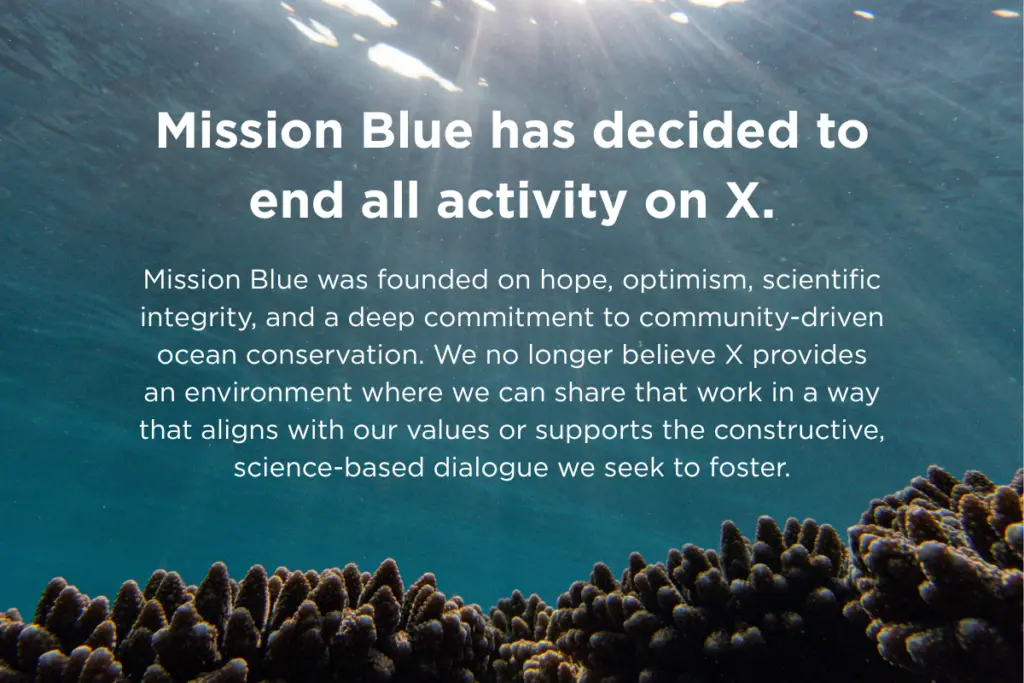
In an era defined by rapid digital transformation and shifting communication paradigms, organizations dedicated to global advocacy face complex decisions regarding their online real estate. On [Date not specified in source], ocean conservation heavyweight Mission Blue—founded by legendary oceanographer Dr. Sylvia Earle—made a definitive and highly symbolic break from the digital platform formerly known as Twitter, now rebranded as X. Announcing that it would cease all active publishing on the platform, the organization pointed to a fundamental misalignment between its core values of hope, scientific integrity, and constructive dialogue, and the increasingly hostile, misinformation-rife ecosystem cultivated on X.
This strategic pivot is far more than a routine social media housekeeping exercise; it represents a growing institutional reckoning. Across the globe, environmental NGOs, scientific bodies, academic institutions, and public health organizations are increasingly weighing the diminishing returns of engagement on X against the toxic exposure and reputational risks of remaining there. For Mission Blue, a global initiative tasked with protecting the world’s fragile marine ecosystems through its network of "Hope Spots," the digital environment must reflect the oceans it seeks to protect: interconnected, transparent, and life-sustaining.
By redirecting its digital footprint toward platforms like Instagram, Facebook, LinkedIn, and YouTube, Mission Blue is signaling that the quality of community engagement supersedes sheer algorithmic reach. This report provides a comprehensive examination of Mission Blue’s departure from X, contextualizing the decision within broader digital trends, analyzing the operational shifts required for marine conservation advocacy in the 21st century, and outlining the organization’s strategic future roadmap.
Detailed Chronology: The Evolution and Exit from X
To understand Mission Blue’s recent departure from X, one must first trace the trajectory of its relationship with the platform, charting how the digital town square transformed from a collaborative hub into a contentious battleground.
Phase One: The Era of Optimism and Scientific Discovery (Early 2010s)
When Mission Blue first established its presence on the platform—then universally known as Twitter—the digital landscape was defined by an idealistic vision of real-time global connectivity. For an organization operating on the front lines of marine science, the platform offered unprecedented utility.
- Field-Level Dispatches: Marine biologists, oceanographers, and conservationists out at sea could easily post live updates, share photographs of newly discovered marine species, and report illegal fishing activities directly from remote vessels.
- Direct Access to "Champions": Mission Blue was able to bypass traditional media gatekeepers, connecting directly with a passionate global community of ocean lovers, policy-makers, and high-profile environmental advocates (affectionately termed "Champions").
- Amplifying Hope: True to Dr. Sylvia Earle’s lifelong philosophy that conservation must be driven by hope rather than pure eco-gloom, the early Twitter community served as an amplifier for success stories, highlighting successful Hope Spot designations and community-led marine protected areas (MPAs) from the Galapagos to the Mediterranean.
Phase Two: The Great Cultural and Algorithmic Shift (Late 2010s to 2022)
As the years progressed, structural shifts began to occur within the platform’s architecture. Algorithmic sorting increasingly prioritized high-engagement emotional triggers—chief among them outrage, controversy, and polarization. While general news occasionally found a home, nuanced, peer-reviewed scientific discussions began to struggle for visibility against sensationalized claims.
For conservation organizations, this period marked the beginning of friction. Discussions surrounding climate change, marine biodiversity loss, and industrial overfishing frequently attracted coordinated campaigns of skepticism, denialism, and personal hostility directed at scientists and advocates alike.
Phase Three: The Tipping Point and the Decision to Exit (Post-2022)
Following the corporate acquisition of the platform and its subsequent rebranding to X, the internal operational culture, content moderation protocols, and public perception shifted dramatically. For Mission Blue leadership, the tipping point was reached when the platform’s environment became fundamentally incompatible with the organization’s mission statement.
According to institutional communications, the tipping point was defined by:
- The Rise of Unchecked Misinformation: A marked increase in the dissemination of unverified claims, particularly those directly undermining empirical climate science and environmental consensus.
- Hostility and Divisive Discourse: The proliferation of toxic interactions, bad-faith arguments, and polarized rhetoric that drowned out constructive environmental policy debates.
- Brand Alignment Deficits: The realization that maintaining an active profile on X inadvertently lent credibility to a digital ecosystem that actively undermines informed, respectful discourse.
Consequently, leadership made the definitive call: active publishing would cease immediately, and the account would be permanently transitioned into a static, read-only historical archive.
Supporting Context & Metrics: The Mass Exodus of Science from X
Mission Blue’s departure does not occur in a vacuum. It is part of a broader, systemic migration of academic, environmental, and public-interest institutions away from X as the platform’s infrastructural and cultural landscape undergoes seismic changes.
The Erosion of the Digital Public Square
For over a decade, academic researchers, meteorologists, oceanographers, and conservationists relied on the platform to form an informal yet powerful peer network colloquially known as "SciTwitter." This community allowed for rapid peer-to-peer collaboration, public science communication, and real-time disaster response monitoring.
However, independent digital studies and data analytics reports indicate a profound deterioration in the health of these networks. Key factors driving this exodus include:
- Dismantling of Verification Systems: The replacement of legacy verification badges with paid subscription models has made it remarkably difficult for the public to distinguish between accredited scientific institutions and malicious actors spreading climate misinformation.
- Reduction in Moderation Capabilities: Cuts to trust-and-safety teams have led to a documented surge in hate speech, harassment, and organized campaigns targeting environmental scientists—particularly women and minority researchers leading conservation efforts.
- Algorithmic Promotion of Contention: Studies by digital rights organizations consistently show that climate science denialism and anti-environmental rhetoric receive disproportionate algorithmic elevation compared to nuanced, solutions-oriented scientific updates.
The Comparative Landscape: Why Other Platforms Win
As Mission Blue scales back on X, it is doubling down on alternative digital environments that better serve its community-building ethos. The organization has explicitly directed its audience to four primary platforms, each fulfilling a unique strategic function:
| Platform | Strategic Role for Mission Blue | Content Focus |
|---|---|---|
| Visual Storytelling & Emotional Connection | High-resolution marine photography, short-form reels of Hope Spots, direct engagement with younger demographics. | |
| Community Building & Grassroots Organizing | Detailed discussions, localized conservation updates, community group coordination, and event mobilization. | |
| Professional Networking & Policy Advocacy | Connecting with corporate partners, policy-makers, institutional donors, and marine science professionals. | |
| YouTube | Deep-Dive Education & Documentary Storytelling | Long-form video essays, mini-documentaries featuring Dr. Sylvia Earle, expedition footage, and webinar recordings. |
By diversifying across these channels, Mission Blue ensures that it is not overly reliant on a single algorithm, insulating itself from the whims of corporate social media restructuring while fostering safer, more constructive digital spaces.
Official Statements and Institutional Philosophy
At the heart of Mission Blue’s strategic retreat from X is a steadfast commitment to its foundational ethos: hope, optimism, and community-driven action.
The Philosophy of "Ocean Hope"
Founded by Dr. Sylvia Earle—dubbed "Her Deepness" by Time magazine—Mission Blue approaches ocean conservation not through a lens of apocalyptic despair, but through strategic empowerment. The organization identifies critical marine habitats across the globe, dubbing them "Hope Spots," and rallies local communities, governments, and scientists to secure legal protection for these vital blue regions.
In an official statement addressing the platform transition, the organization emphasized this philosophical alignment:
"Mission Blue was founded with a spirit of hope, optimism, and dedication to community-driven conservation… We are all connected to the same ocean. Through our digital strategy, we seek to build a curious, welcoming online community. We cannot, in good faith, continue to use the X platform."
Rejecting Toxicity for Constructive Dialogue
The decision underscores a maturing perspective among non-profit leaders regarding digital engagement metrics. For years, social media strategies were dictated by raw metrics: impressions, follower counts, and viral reach, regardless of the emotional tone of that reach. Mission Blue’s pivot represents a qualitative turn in digital communications—prioritizing the quality of engagement over the quantity of noise.
The institutional rationale rests on three core pillars:
- Scientific Integrity: Environmental science requires nuance, peer review, and good-faith debate. An environment optimized for snappy, polarized, and often anti-science vitriol is fundamentally toxic to public scientific literacy.
- Community Well-being: Followers and supporters seeking inspiration and actionable ways to save the ocean should not be subjected to hostile rhetoric, abuse, and inflammatory content upon visiting an official conservation page.
- Action-Oriented Focus: Every minute spent managing toxic comment sections or fighting bad-faith actors on X is a minute diverted from actual conservation work, grant writing, expedition planning, and Hope Spot advocacy.
Future Outlook: Charting a Course for Blue Digital Horizons
As Mission Blue closes the chapter on X, the organization is looking forward, deploying an expanded, multi-channel digital strategy designed to deepen engagement, educate a broader public, and mobilize direct action for global marine conservation.
Deepening Roots on Visual and Community-Centric Platforms
The immediate future of Mission Blue’s digital outreach will center on immersive visual storytelling. Because the ocean’s beauty, fragility, and ecological complexity are best communicated through evocative imagery and compelling narratives, platforms like Instagram and YouTube will serve as the primary engines for public awareness.
- Expanded Video Content on YouTube: Audiences can expect more deep-dive video content chronicling expeditions to remote Hope Spots, interviews with frontline marine biologists, and educational resources designed for classrooms around the world.
- Targeted Professional Outreach on LinkedIn: By leveraging LinkedIn, Mission Blue aims to forge deeper partnerships with sustainable corporations, marine tech innovators, and international policy-makers who hold the keys to large-scale ocean governance and funding.
- Grassroots Mobilization on Facebook and Instagram: Day-to-day advocacy, petition drives, clean-up initiatives, and direct calls to action will find a welcoming, engaged home among followers who are genuinely invested in environmental solutions.
The Power of the Direct Line: The Mission Blue Newsletter
Recognizing that third-party social media algorithms can change overnight—limiting reach or altering platform policies at whim—Mission Blue is also reinforcing its owned media channels. Chief among these is its direct-to-consumer email newsletter.
By encouraging followers to subscribe directly via their website, Mission Blue ensures an unmitigated line of communication. Subscribers receive curated updates regarding:
- Real-time Hope Spot status updates and government protections.
- Exclusive behind-the-scenes stories from marine expeditions.
- Concrete, actionable steps everyday citizens can take to reduce their marine footprint and advocate for ocean health.
Conclusion: A Compassionate Compass for the Digital Age
Mission Blue’s departure from X serves as a bellwether for the non-profit and scientific sectors. It demonstrates that organizations with moral authority and mission-critical objectives do not have to compromise their values for the sake of legacy social media metrics.
By stepping away from a platform that fosters division and walking toward digital spaces that cultivate community, respect, and shared optimism, Mission Blue is practicing what it preaches. Just as the global ocean requires clean, circulating currents to sustain life, the digital ecosystem surrounding marine conservation must be cleared of toxic pollutants to allow true hope and science to thrive.
As the organization charts its course across Instagram, Facebook, LinkedIn, YouTube, and its direct newsletter, it invites its global community of Champions to join them—not in the noise and fury of a broken town square, but in the purposeful, hopeful work of protecting the blue heart of our planet.



