VALENCIA, SPAIN — In an era where climate dissent is increasingly met with the full force of the penal system, a Spanish court has delivered a resounding victory for environmental defenders. On October 6, 2026, a Valencia court officially rejected severe charges against 11 Greenpeace activists who faced up to five years in prison following a high-profile, non-violent blockade of a fossil gas shipment at the Port of Sagunto in October 2021.
The ruling is more than a localized legal acquittal; it is a critical benchmark in a broader global struggle over civil liberties, corporate accountability, and the criminalization of peaceful protest. As governments and powerful energy conglomerates lean heavily on punitive measures to silence dissent, the Sagunto case underscores a fundamental legal truth: activism is not a crime.
Executive Overview
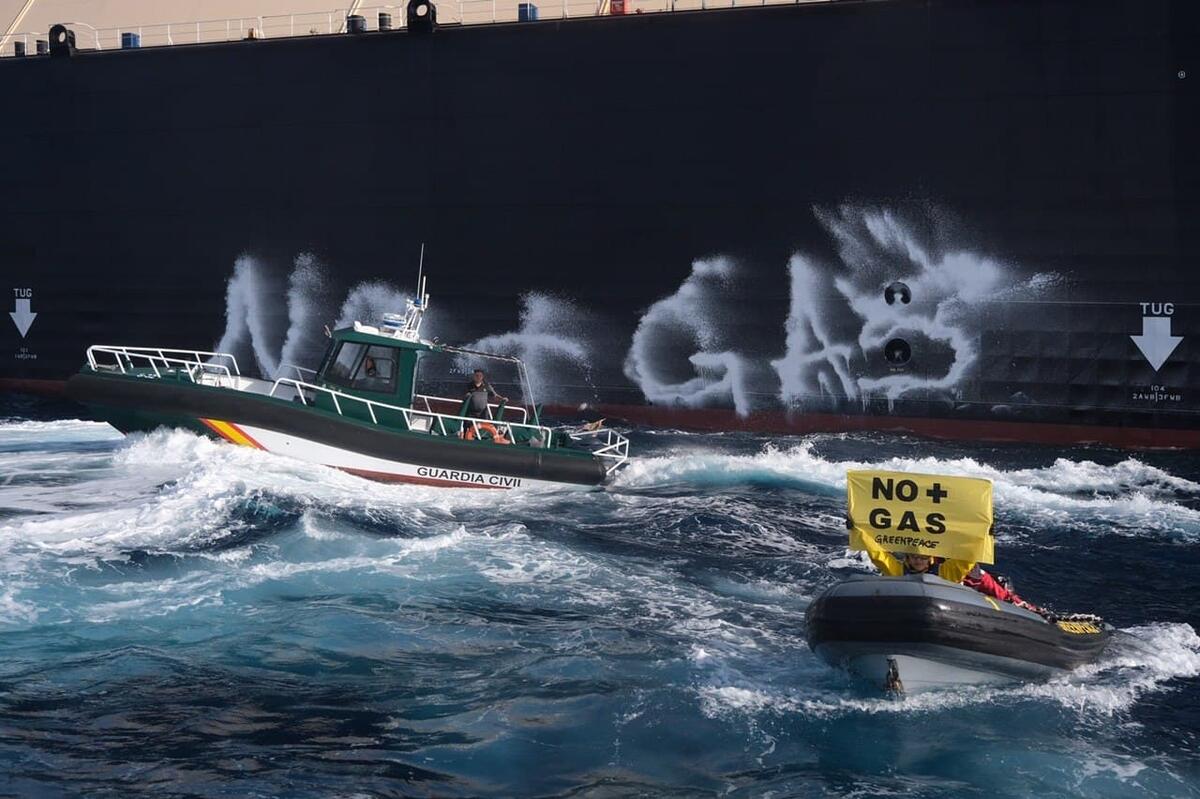
The legal ordeal began following a carefully coordinated protest on October 24, 2021. Utilizing Greenpeace’s flagship vessel at the time, the MY Esperanza, activists from 18 different nationalities intercepted the Merchant, a massive Liquefied Natural Gas (LNG) tanker carrying 138,000 cubic meters of fracked fossil gas from the United States.
What followed was a peaceful, 12-hour maritime standoff designed to highlight the immense environmental and climate hazards of importing fracked gas amid a surging European energy crisis. While the protest was entirely non-violent and executed with meticulous communication alongside local maritime authorities, the fallout was extraordinary.
Initially hit with heavy administrative fines exceeding €160,000, the defendants later faced an unprecedented escalation when the Public Prosecutor’s Office slapped them with charges of aggravated public disorder. Prosecutors initially demanded five-year prison sentences—one of the harshest punishments ever sought in Europe for environmental civil disobedience. Although the demand was reduced to two and a half years during the trial, the threat of lengthy incarceration loomed heavily over the activists until the presiding judge threw out the core charges.
The ruling has drawn international praise from human rights advocates, including United Nations special rapporteurs, who view the verdict as a vital pushback against the global shrinking of civic space and the rise of corporate intimidation tactics.
Detailed Chronology of Events
To understand the weight of the Valencia court’s decision, one must trace the arc of the action from its inception on the open water to the courtroom battles that followed.
October 2021: The Sagunto Port Blockade
In the autumn of 2021, European energy ministers were holding extraordinary meetings in Luxembourg to grapple with skyrocketing energy prices and market volatility. Against this backdrop, Greenpeace Spain executed a direct action in the Mediterranean.
The MY Esperanza entered the Port of Sagunto alongside inflatable boats carrying international activists. Their target was the Merchant, an LNG carrier hauling the energy equivalent of 41 Olympic swimming pools of compressed methane derived from fracking—widely recognized as one of the most environmentally destructive extraction techniques on earth.
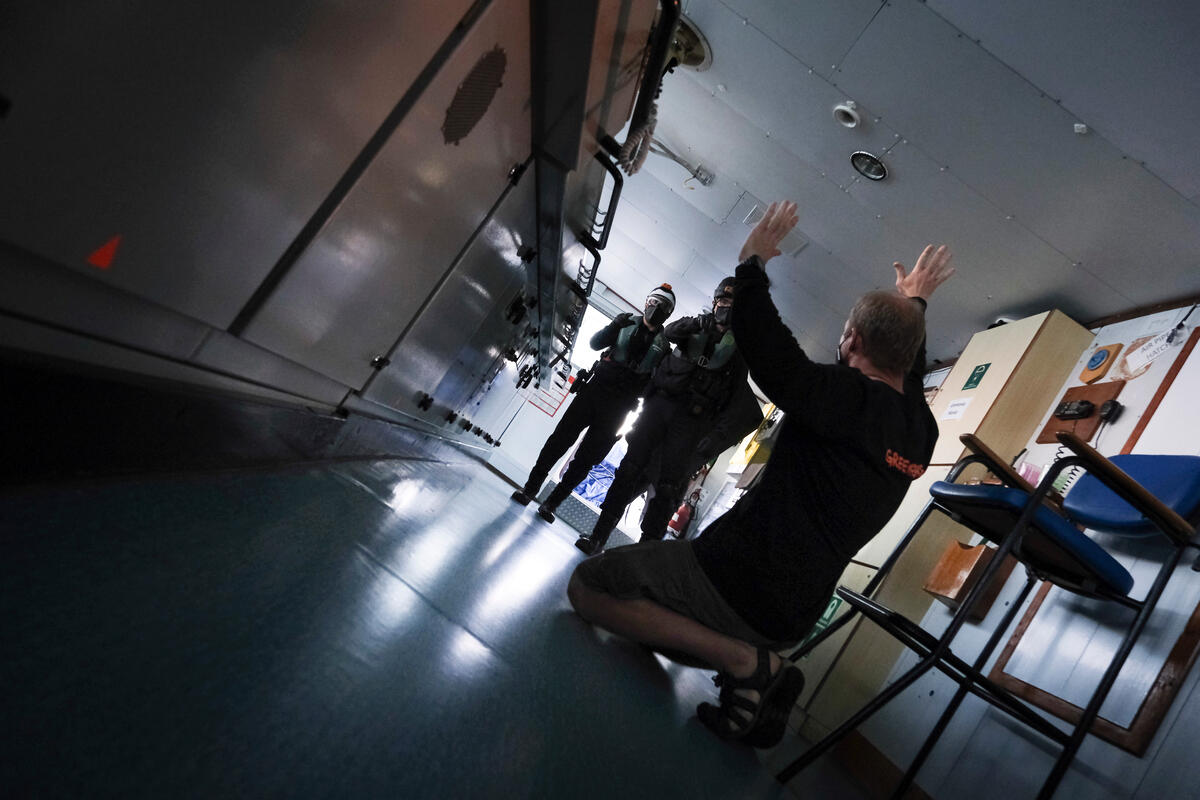
During the operation, an activist chained himself to the Esperanza’s anchor to delay the tanker’s entry, holding his position for 12 hours. Throughout the action, participants maintained a disciplined posture, communicating clearly with port authorities. No injuries were reported. Ultimately, Spain’s Civil Guard boarded the vessel, cut the anchor chains, and forced the ship into port.
The Administrative Crackdown (2022)
In the immediate aftermath, the Spanish government moved swiftly to penalize the organization and its participants. Authorities levied administrative fines totaling over €160,000 against Greenpeace and the vessel operators for obstructing maritime traffic and failing to request specific pilotage and towing services. These administrative penalties remain under active legal appeal.
The Escalation to Criminal Charges
What began as a matter of regulatory fines escalated dramatically when the Public Prosecutor’s Office intervened. Charging the 11 activists with aggravated public disorder, the state demanded a staggering five-year prison sentence. Legal experts across Europe immediately flagged the demand as disproportionate, noting it was intended to serve as a chilling deterrent against future climate action.
The September Trial and October Verdict (2026)
On September 23, 2026, the case went to trial before a single judge in Valencia. The courtroom proceedings featured testimony from all 11 defendants, alongside statements from police officers and shipping agents confirming that the protest had indeed been peaceful. Furthermore, the prosecution conceded during the proceedings that the initial demand for five years in prison was an error, as it exceeded the maximum statutory penalty applicable under the legal framework in force in 2021 (the law was subsequently amended in 2023).
On October 6, 2026, the court delivered its judgment. The judge formally rejected the charge of aggravated public disorder, ruling that the prosecution had failed to establish any credible evidence of violence, intimidation, or disruption of the public peace.
Supporting Context and Metrics: The Anatomy of Climate Criminalization
The Sagunto trial did not occur in a vacuum. It represents a focal point in a worldwide phenomenon where judicial and legislative systems are co-opted to suppress environmental defense.
The Scale of Repression in Spain: The case is part of a wider trend in Spain, where more than 30 Greenpeace activists currently face various criminal proceedings for participating in peaceful climate demonstrations.
Global Precedents: The tactics mirror international actions, such as the infamous "Arctic 30" case, where activists were held in pre-trial detention for two months in Russia following a non-violent protest against offshore drilling.
Corporate Intimidation (SLAPPs): Environmental organizations increasingly face Strategic Lawsuits Against Public Participation (SLAPPs)—abusive legal actions filed by powerful corporate entities and fossil fuel conglomerates designed to drain financial resources and exhaust the psychological resilience of activists. Greenpeace entities, for instance, have faced multi-million-dollar lawsuits from energy infrastructure corporations seeking to bankrupt dissenting voices.
According to Daniel Simons, Greenpeace International Senior Legal Counsel for Strategic Defence, the escalation in criminal charges reflects a desperate response from industries whose business models are threatened by climate truth.
"Industries that have a lot at stake know that protest works," Simons notes. "They invest heavily in curbing dissent, reframing protesters as a security threat, and shaping laws so that peaceful but disruptive protests can be heavily prosecuted."
Official Statements and Expert Perspectives
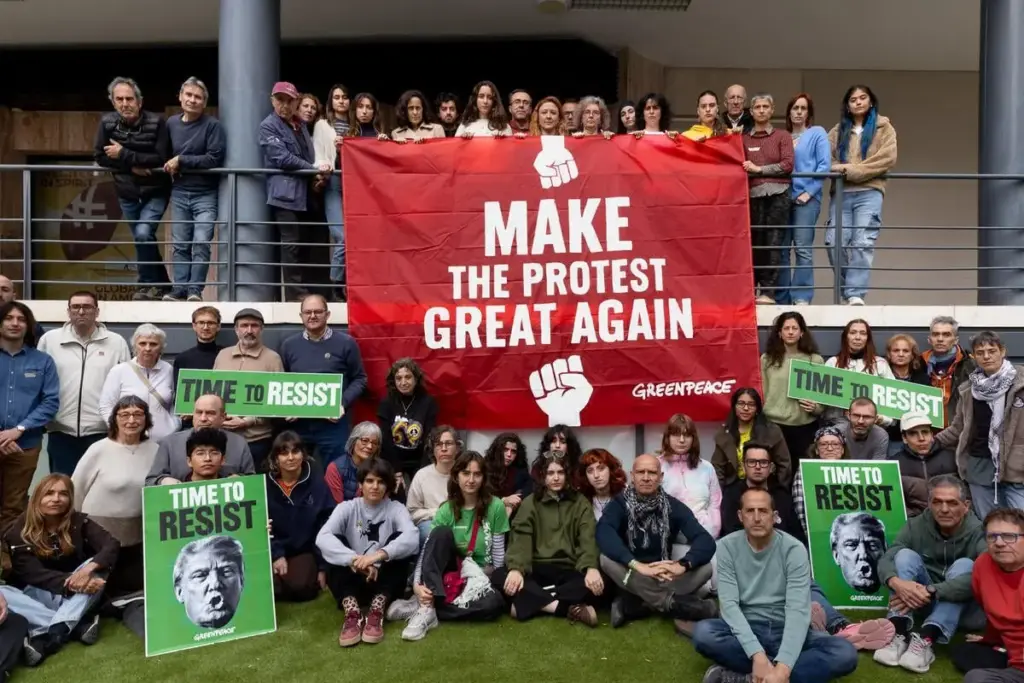
The trial attracted significant international observation, drawing delegations from Greenpeace International, crews from the icebreaker Arctic Sunrise, international journalists, and human rights monitors.
Gina Romero, the United Nations Special Rapporteur on the Rights to Freedom of Peaceful Assembly and of Association—who dispatched a representative to monitor the Valencia hearings—highlighted the global implications of the case:
"The Sagunto case demonstrates how easily the legal system can be used to deter people from exercising a fundamental right, even when the law agrees in the end they did nothing wrong. It’s part of a broader, global pattern of using the legal system, criminal charges, punitive fines, and restrictive laws to shrink civic space. I will continue to raise the alarm and raise my voice to ensure that peaceful protest is not treated as a crime — in Spain or anywhere else."
Simons echoed these sentiments, emphasizing that the aggressive posture of the prosecution was fundamentally out of step with democratic norms:
"By the conclusion of the trial, it was clear that there was no basis for the unprecedented punishment sought. Not only did police officers and the shipping agent describe the action as peaceful, but the prosecutor even conceded that the demand for five years’ imprisonment was a legal error."
Future Outlook: What Lies Ahead?
While the October 6 acquittal is a monumental relief for the 11 defendants and a major victory for civil liberties, the legal battle is not definitively over.
Potential Prosecution Appeals: The Public Prosecutor’s Office retains the legal right to appeal the acquittal to a higher court. Legal teams at Greenpeace have stated they are fully prepared to defend the activists through any subsequent appellate proceedings.
Ongoing Administrative Battles: The separate administrative fines exceeding €160,000 stemming from the 2021 port blockage are still winding their way through separate appellate channels.
The Global Defense of Civic Space: As democratic societies increasingly grapple with the intersecting crises of climate breakdown and democratic backsliding, the outcome in Valencia serves as an essential legal precedent. It reaffirms that domestic courts can—and must—act as a bulwark against executive overreach and corporate bullying.
For over half a century, civil disobedience has been an indispensable engine of social progress, challenging unsustainable status quos and demanding urgent action for the planet. As governments face what psychologists and sociologists term the "Cassandra complex"—punishing those who deliver uncomfortable, science-based truths about ecological collapse—rulings like the one in Valencia light a path forward.
Activism is not a crime; it is an obligation to the future. And as the legal dust settles in Spain, the message to corporate polluters and overzealous prosecutors remains clear: civil society will continue to stand its ground.