

Executive Overview
The American renewable natural gas (RNG) and biogas sectors are undergoing a structural evolution, balancing legacy waste-management approaches with cutting-edge infrastructure modernization. According to a landmark industry analysis released by the American Biogas Council (ABC), wastewater treatment plants remain the dominant force in the domestic biogas landscape, commanding nearly half of all operational anaerobic digesters nationwide.
At the same time, private enterprise is aggressively scaling up operations across multiple fronts. From multi-million-dollar agricultural waste investments in North Carolina to expansive landfill-gas-to-energy initiatives across the Midwest, Northeast, and West Coast, the industry is transitioning from baseline power generation toward high-value end products such as upgraded pipeline-quality RNG, combined heat and power (CHP) systems, and sustainable organic fertilizers.
This dispatch examines the latest developments across the North American biogas ecosystem, analyzing regulatory market benchmarks, strategic corporate updates from key players like Montauk Renewables, Waga Energy, and Opal Fuels, and the vast untapped potential remaining within municipal wastewater systems.
Detailed Chronology: September Sector Highlights
The month of September 2026 underscored the rapid pace of capital deployment, partnership formations, and regulatory alignment driving the biogas and RNG sectors forward.
Mid-September: Montauk Renewables Launches Swine Waste Facility
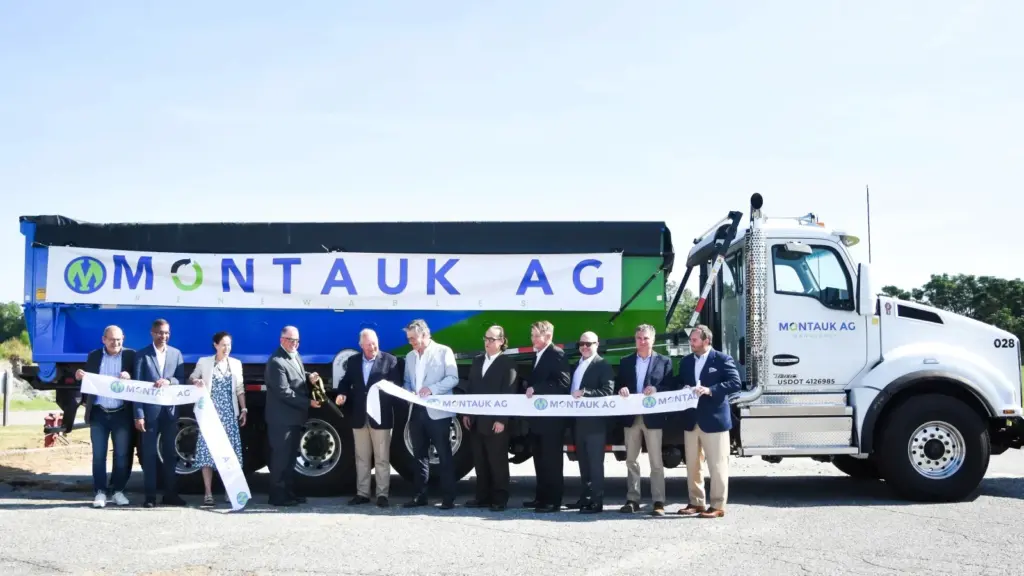
On September 15, 2026, executives from Montauk Renewables, alongside local dignitaries, officially inaugurated a major anaerobic digestion facility in Turkey, North Carolina. Representing a substantial $200 million capital investment by Montauk, the project is engineered to harvest methane-rich manure biogas from surrounding agricultural operations to generate utility-scale electricity.
The project relies on deep roots within the local agricultural community, backed by long-term feedstock supply agreements spanning more than 80 individual farming locations. To ensure commercial viability, Montauk has secured a 10-year power purchase agreement to sell the facility’s electrical output, alongside a complementary agreement to market approximately one-third of the facility’s generated renewable energy certificates (RECs) to Duke Energy. At maximum operational capacity, the Turkey facility is projected to yield up to 41 megawatt-hours (MWh) of electrical power annually, while concurrently producing roughly 870 tons of high-grade organic fertilizer alternatives.
Mid-September: Waga Energy Secures LRS Partnership in Illinois
In a notable expansion of its footprint in the American Midwest, French RNG developer Waga Energy announced on September 15 that Lakeshore Recycling Systems (LRS) had selected the firm to engineer, finance, own, and operate a state-of-the-art RNG facility at the Eco-Hill Landfill. Located in Atkinson, Illinois, the landfill is a key infrastructure asset for LRS, servicing the greater Chicago metropolitan market.
Under the terms of the agreement, the facility will boast an initial processing capacity of 3,000 standard cubic feet per minute (scfm), with a projected annual yield of up to 610,000 million British thermal units (mmBtus) of pipeline-quality RNG. LRS is slated to receive a lucrative revenue-sharing percentage derived from the commercial sale of the gas. Construction is currently underway, with commercial commissioning anticipated in 2028.
Early September: Casella Waste Systems and Waga Energy Advance Partnership
Building on an established multi-site framework, Waga Energy and Casella Waste Systems jointly announced the commercial startup of their third collaborative landfill gas project on September 3. Situated at Casella’s McKean Landfill in Mount Jewett, Pennsylvania, the facility is engineered to process 2,000 scfm of raw landfill gas, translating to a production capacity of up to 407,000 mmBtus of RNG annually upon reaching full commercial run rates.
This project anchors a broader three-site partnership model wherein Waga Energy funds 100% of project capital expenditures, retaining ownership and operational responsibility for a 20-year term, while sharing incoming commodity revenues with Casella. Production at the McKean site is actively ramping up through the autumn quarters.
Mid-September: Opal Fuels Solidifies California Municipal and Commercial Footprint
Opal Fuels executed two major operational maneuvers in California during September to reinforce its market position. On September 16, the company announced a five-year contract renewal with the City of San Diego to continue operating its long-standing landfill-gas-to-energy installation at the Miramar Landfill. Operating continuously since 1998, the Miramar facility captures and converts methane into approximately 400,000 MWh of electricity annually.
This municipal renewal followed closely on the heels of an August-into-September operational upgrade completed at Opal’s compressed natural gas (CNG) fueling station in Goshen, California. Following an extensive capital renovation, the Goshen station expanded its throughput capacity by 1.7 million gasoline gallon equivalents (GGE), integrating dedicated RNG supply into its commercial fuel mix. These assets form part of Opal’s broader capital expenditure strategy, which saw the company deploy $52.7 million across its national project portfolio during the first half of the year.
Supporting Context & Metrics: The Wastewater Advantage
While private developers focus heavily on agricultural and landfill assets, municipal wastewater treatment plants (WWTPs) remain the foundational backbone of the North American biogas sector.
According to the American Biogas Council’s 2026 Wastewater Report, WWTPs operate an impressive 47% of all installed anaerobic digesters in the United States. Since 2020 alone, 29 new municipal digester facilities have come online, bringing the national total to 1,213 operational plants. Despite this leadership position, substantial growth potential remains largely untapped. Industry standards dictate that WWTPs handling average flow rates of at least 1 million gallons per day (MGD) are prime candidates for anaerobic digestion. Currently, only 24% of these qualified facilities operate active digesters.
+-----------------------------------------------------------------+
|              U.S. Anaerobic Digester Distribution               |
+-----------------------------------------------------------------+
| Wastewater Treatment Plants (WWTP): 47% (1,213 facilities)      |
| Agricultural & Landfill Operations: 53%                         |
+-----------------------------------------------------------------+
| Qualified WWTPs with Digesters:       24%                       |
| Qualified WWTPs Lacking Digesters:    76% (Massive Growth Room) |
+-----------------------------------------------------------------+
Environmental Commodity Market Benchmarks
Navigating the regulatory and financial architecture of the biogas industry requires close tracking of credit pricing mechanisms. Market snapshot data compiled by EcoEngineers as of October 7, 2026, highlights the prevailing values for key compliance credits:
- D3 RIN Prices (Cellulosic Biofuel): $2.294 (experiencing a slight contraction from $2.380 in 2025).
- D5 RIN Prices (Advanced Biofuel): $2.085 (reflecting a modest year-over-year increase from $2.060 in 2025).
- Oregon Clean Fuels Program: $81 per metric ton of carbon dioxide equivalent ($/MT CO2e).
- California Low Carbon Fuel Standard (LCFS): $88 per metric ton of carbon dioxide equivalent ($/MT CO2e).
These pricing tiers continue to dictate project economics, guiding developers’ decisions on whether to monetize gas via federal Renewable Identification Numbers (RINs) or regional state-level clean fuel credits.
Official Statements and Industry Insights
The strategic direction of the biogas sector is heavily informed by executive leadership and empirical research. Patrick Serfass, Executive Director of the American Biogas Council, emphasized the dual imperative of expansion and efficiency in his commentary accompanying the new wastewater report:
"Our survey shows there are opportunities to do more — by expanding anaerobic digestion where it makes sense and getting more value from the digesters already in place."
Serfass underscored that modern wastewater facilities are shedding their historic identity as mere compliance-driven waste-disposal nodes. Instead, they are transforming into sophisticated energy-generation and resource-recovery hubs.
Echoing this sentiment, Montauk Renewables CEO Sean McClain highlighted the cooperative framework required to unlock complex agricultural assets. Discussing the firm’s $200 million North Carolina swine waste initiative, McClain pointed to the critical importance of multi-party alignment—spanning independent farm owners, regional electric utilities like Duke Energy, and long-term offtakers—as the blueprint for scaling agricultural biogas solutions nationwide.
Future Outlook: The Next Frontier for Biogas
As the North American biogas industry looks toward the late 2020s, several transformative trends are poised to redefine the market landscape:
- Transition Beyond Power Generation: Historically, municipal digesters focused primarily on generating baseline electricity for internal plant use or local grid injection. However, data indicates a pronounced shift since 2018 toward upgrading raw biogas into pipeline-grade RNG, deploying combined heat and power (CHP) systems, and implementing codigestion (combining municipal wastewater sludge with high-strength organic industrial waste).
- Closing the Landfill Gas Gap: With several of the nation’s largest publicly traded waste management corporations nearing the completion of their initial multi-year landfill-gas-to-RNG development commitments, the industry is shifting strategic focus. Developers are actively exploring secondary and tertiary end-uses for methane, optimizing extraction efficiencies at aging landfills, and forging advanced partnerships with merchant developers like Waga Energy and Opal Fuels.
- Unlocking Untapped Municipal Capacity: The ABC estimates that if the remaining 76% of qualified wastewater treatment plants with flows exceeding 1 million gallons per day adopt anaerobic digestion, the sector could capture an additional 70 billion cubic feet of biogas annually—piling on top of the 100+ billion cubic feet already captured each year. Achieving this expansion will rely heavily on targeted federal infrastructure grants, streamlined state-level permitting, and stable long-term credit markets under programs like California’s LCFS and the federal Renewable Fuel Standard (RFS).
Ultimately, the biogas sector is maturing from an alternative energy niche into an indispensable pillar of the circular economy, providing critical waste management solutions while simultaneously securing domestic, low-carbon energy supplies for decades to come.



