

Executive Overview
The landscape of American municipal waste management is undergoing its most radical transformation in decades, driven by a convergence of public health imperatives, aggressive urban sanitation mandates, and severe labor shortages. At the epicenter of this paradigm shift is Don Ross, a seasoned waste industry veteran and chairman of the National Waste & Recycling Association’s (NWRA) board of trustees. Ross has stepped into the leadership of a newly established U.S. base of operations for Kollekt, an innovative heavy-duty truck manufacturer poised to redefine how densely populated metropolitan areas handle residential trash.
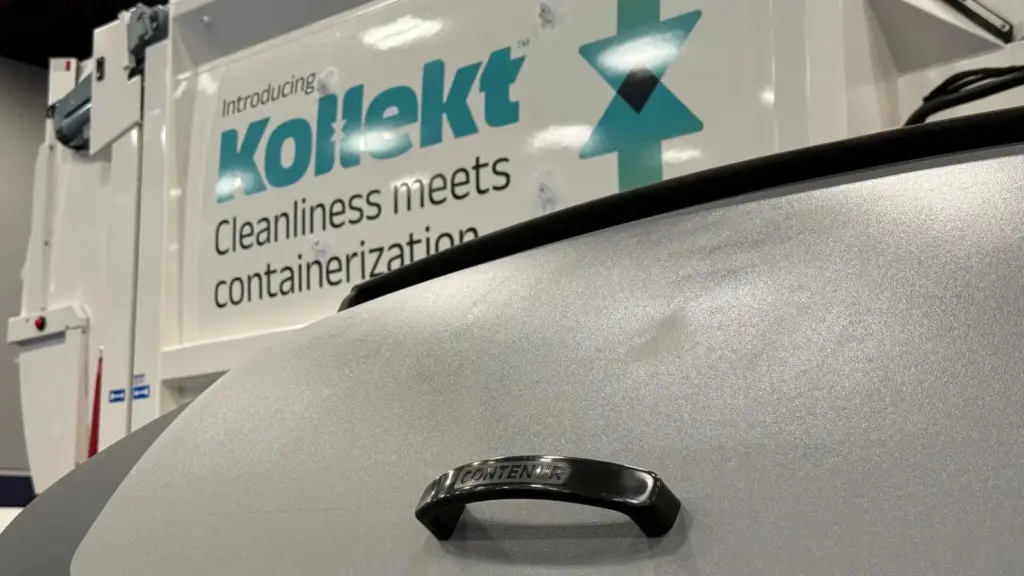
Kollekt enters the North American market backed by the financial and operational strength of the Kirchhoff family of companies. The firm leverages sophisticated, proven technology originally developed by an Italian truck manufacturer. Its flagship offering is an advanced automated side-loading collection vehicle specifically engineered to interface with large-scale Empire Bins—manufactured by Contenur—which are currently being deployed in high-stakes municipal pilot programs, most notably in New York City.
This strategic market entry aligns precisely with a historic sanitation policy shift in the nation’s largest city. Under mayoral leadership, New York City has committed to fully containerizing all residential trash by the end of 2031. While this monumental transition promises cleaner sidewalks, a dramatic reduction in the city’s notorious rat population, and modernized municipal aesthetics, it simultaneously introduces immense logistical challenges. The New York City Department of Sanitation (DSNY) estimates that the transition to containerized collection could add up to 1.2 million more vehicle miles annually, requiring specialized equipment capable of servicing thousands of heavy-duty bins across the city’s complex urban fabric.
For Kollekt and Don Ross, this environment presents an unprecedented commercial opportunity. By introducing specialized automated side-loaders that have a proven 25-year track record in Europe but remain largely foreign to North American fleets, the company aims to bridge a critical technological gap. Furthermore, as the waste industry wrestles with an aging demographic of commercial drivers and persistent recruitment hurdles, Kollekt’s automated approach promises to alleviate the grueling physical demands of municipal waste collection, preserving the workforce while maximizing operational efficiency.
Detailed Chronology of the Initiative
To understand how Kollekt arrived at the forefront of the American waste-tech conversation, it is essential to trace the chronological developments that have shaped the urban containerization movement and Don Ross’s involvement.
The European Foundation and Technological Roots
Long before establishing a U.S. presence, the core technology powering Kollekt’s specialized trucks was forged in Europe. The vehicle model at the heart of the company’s offering debuted on European streets in 1997. Over the subsequent decades, it evolved into a standard-bearer for efficient, automated urban waste collection in densely populated continental cities where curb space is at a premium and municipal authorities demand high levels of sanitation. Despite its proven efficacy overseas, the technology remained underutilized in the United States, where waste collection infrastructure historically relied on manual or semi-automated rear-loaders and traditional residential dumpsters.
Leadership Transition and Strategic Alignment
The catalyst for bringing this European technology to North America arrived when Don Ross assumed leadership of Kollekt’s new U.S. operations. Ross brings a wealth of industry pedigree to the venture. Prior to his current role, he served as the chief sales officer at New Way Trucks, successfully guiding the company through its strategic acquisition by Federal Signal. His extensive resume also includes prominent leadership roles at Waste Management (WM). Having spent decades navigating the operational bottlenecks of the American waste sector, Ross recognized that traditional vehicle configurations could not adequately service the emerging wave of high-capacity street-level containers.
The New York City Pilot Program
The testing ground for Kollekt’s market strategy is inextricably linked to New York City’s aggressive sanitation timeline. The journey toward total containerization accelerated significantly as municipal leaders sought to eradicate the iconic, unsightly mountains of black trash bags that line city sidewalks overnight.
- The Mandate: New York City officials formally established a target to containerize all residential waste by the end of 2031.
- The Equipment Selection: To service multi-family residential buildings—which pose the greatest volume challenge—the city selected the Contenur-manufactured Empire Bins for initial pilot programs.
- The Rollout Schedule: Following initial trials, the city detailed concrete plans to expand the infrastructure by rolling out 6,500 specialized bins across designated districts.
The RCon Debut and Commercial Strategy
In October, at the annual RCon industry gathering in St. Louis, Don Ross officially unveiled Kollekt’s strategic value proposition to the broader waste management community. Rather than pursuing direct, cumbersome municipal contracts with entities like the DSNY, Kollekt adopted a flexible dealer-network model. By partnering with established regional dealers, the company is positioning itself to scale organically as municipalities across the U.S. and Canada scramble to acquire hardware capable of servicing heavy-duty containment systems.
Supporting Context & Metrics: The Mechanics of Modern Sanitation
The viability of Kollekt’s operational model is best understood through the lens of hard data, demographic realities, and the unique infrastructure demands of modern municipal waste streams.
The Workforce Crisis in Commercial Driving
The American waste management industry has long faced structural human resources challenges. According to demographic data compiled by the Federal Motor Carrier Safety Administration (FMCSA), holders of Commercial Driver’s Licenses (CDLs) are, on average, significantly older than the broader national workforce. Attracting younger generations to traditional waste collection jobs has proven persistently difficult, largely due to the perception and reality of grueling, repetitive physical labor.
+-----------------------------------------------------------------+
|               CDL Workforce Demographics (FMCSA)                |
+-----------------------------------------------------------------+
|  [ Older Average Age ]  ======>  [ Recruitment Hurdles ]        |
|            ||                                                   |
|            /                                                   |
|  [ Physical Strain ]    ======>  [ High Turnover Rates ]        |
+-----------------------------------------------------------------+
Traditionally, collection workers on non-automated routes spent their shifts manually lifting and tossing heavy, unpredictable bags of trash into the rear hoppers of collection vehicles. This physical toll frequently leads to high turnover rates, musculoskeletal injuries, and accelerated career burnout.
Automation as a Workforce Preserver
Kollekt’s automated side-loading technology directly addresses this human capital crisis. By utilizing advanced mechanical arms operated from the safety and comfort of an ergonomic truck cab, the physical burden of waste handling is virtually eliminated.
Don Ross emphasizes that this technological shift serves a dual purpose:
- Retention: It enables older, highly experienced drivers to extend their careers comfortably, delaying retirement and preserving institutional knowledge within fleet operations.
- Recruitment: It broadens the labor pool by making the profession accessible to individuals who may not possess the physical stature or endurance required for traditional manual loading.
While automated side-loaders have become standard on single-family suburban routes over the past two decades, high-density multi-family residential complexes—particularly those in urban centers like New York City—have historically relied on loose bags or communal dumpsters serviced by manual crews. Kollekt’s vehicle bridges this exact technological divide.
Logistical Realities and Fleet Mileage
Containerization, while aesthetically and sanitarily superior, introduces complex logistical equations for municipal departments. The DSNY’s projection that containerized collection could add up to 1.2 million additional vehicle miles annually highlights the urgent need for maximum vehicle uptime, rapid cycle times, and fuel-efficient engineering.
Furthermore, the physical specifications of the equipment are exacting. The Contenur Empire Bins deployed in New York City are massive, heavy-duty receptacles designed to contain high volumes of multi-family waste safely. Servicing these bins requires a specialized interface—a capability that, according to Ross, makes Kollekt’s imported technology uniquely qualified in the current North American marketplace.
Official Statements and Industry Perspectives
The introduction of Kollekt to the North American market has generated significant discussion among industry leaders, municipal planners, and equipment manufacturers.
Speaking at RCon, Don Ross articulated the broader vision driving the enterprise:
"This is a great opportunity for us to showcase a different kind of collection… This is another type of automated product addressing a part of the waste stream we’ve never been able to get to."
Ross underscored that the commercial success of the vehicle is tied directly to the municipal momentum toward containerization. Rather than attempting to force a market, Kollekt is positioning itself as an essential infrastructure partner.
"As they scale, we’ll scale," Ross noted regarding municipal expansions like New York City’s rollout.
From a manufacturing standpoint, the company has adopted a hybrid operational model designed to ensure quality while laying the groundwork for localized expansion. Currently, the vehicle’s specialized body is manufactured in Italy and subsequently mounted onto a heavy-duty chassis within the United States. However, Ross confirmed that as North American demand solidifies, the company intends to establish a dedicated manufacturing base on the continent. Concurrently, his team is building a robust parts distribution and technical support infrastructure to guarantee fleet managers minimal downtime and seamless servicing capabilities.
Reflecting on his storied career—from leading sales at New Way Trucks to executive positions at WM and his current leadership of the NWRA board of trustees—Ross views Kollekt as the defining capstone of his professional legacy.
"I think this is a technology that has meaningful purpose," Ross reflected. "That’s how I’d want to go out and be remembered, as someone who made a difference."
Future Outlook: The Road to 2031 and Beyond
As North American municipalities look toward the next decade, the pressure to modernize municipal infrastructure will only intensify. New York City’s 2031 deadline for total residential trash containerization serves as a bellwether for other major metropolitan areas across the United States and Canada that are currently grappling with urban density, pest control, and public cleanliness.
Expanding Beyond New York
While New York City functions as the ultimate proving ground and high-profile showcase for Kollekt’s trucks, the company’s strategic roadmap extends far beyond the five boroughs. Municipalities in the Pacific Northwest, the Northeast corridor, and major Canadian urban centers are actively evaluating containerization strategies to replace aging, unsanitary curbside collection methods. Each of these cities represents a prospective market for specialized automated side-loaders capable of managing high-capacity bins.
Supply Chain and Manufacturing Evolution
The immediate future will require Kollekt to carefully manage its trans-Atlantic supply chain. By initially manufacturing the vehicle bodies in Italy and mating them with domestic chassis, the company has bypassed the immediate capital expenditure of building a greenfield factory. However, scaling to meet anticipated municipal demand will necessitate localized North American manufacturing capabilities. Setting up domestic fabrication plants, alongside a comprehensive network of regional parts depots and certified dealer service centers, will be the primary operational milestones for Ross and his team over the next 24 to 36 months.
Transforming the Industry Standard
Ultimately, Kollekt’s entry into the U.S. market represents more than just a new truck model; it signals a fundamental evolution in municipal sanitation philosophy. As labor shortages persist and urban populations demand cleaner, more hygienic public spaces, the marriage of automated heavy machinery and large-scale waste containerization will cease to be an experimental luxury and become an urban necessity.
Under the stewardship of industry veterans like Don Ross, backed by robust European engineering and corporate support from the Kirchhoff family, Kollekt is well-positioned to write the next chapter in North American waste management history—turning the vision of clean, efficient, and dignified urban sanitation into a daily reality.



