

By Jonathan Morris | South West Bureau
Executive Overview
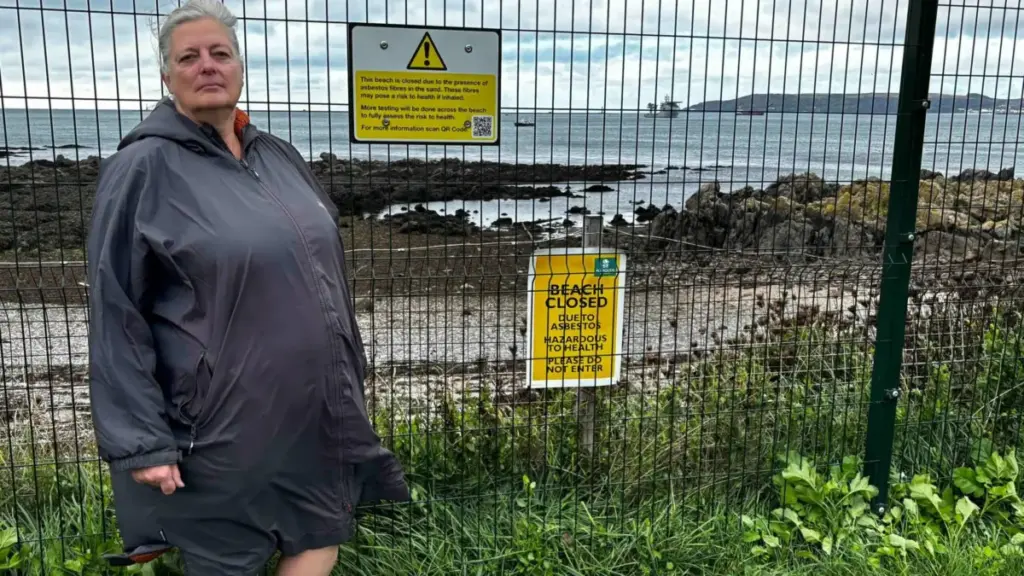
For more than six years, a toxic legacy from the 20th century has been washing ashore on one of Plymouth’s most cherished coastlines, turning a thriving hub of community recreation into the epicenter of a complex environmental mystery. Mount Batten Beach—situated on the striking waters of Plymouth Sound—has been completely fenced off to the public since the summer, with access severely restricted across remaining stretches of the peninsula.
The emergency closures were triggered following a series of alarming environmental surveys conducted in April and July. These tests revealed the presence of hazardous asbestos fibres embedded directly within the sand at concentrations substantial enough to pose genuine health risks if disturbed and inhaled. While airborne testing has thus far yielded negative results, the discovery of loose fibres has forced local authorities to take drastic precautionary measures, shuttering a vital local asset.
The crisis has cast an awkward shadow over Plymouth’s proud identity as "Britain’s Ocean City" and the home of the UK’s very first National Marine Park. As local business revenues plummet, a tight-knit community of year-round sea swimmers is left fractured, and politicians clash over the speed and scope of the official response, the fundamental question remains unanswered: Exactly how much longer must the public wait for a safe, definitive solution to a toxic tide that shows no signs of receding?
Detailed Chronology of an Escalating Environmental Hazard
The modern crisis at Mount Batten Beach did not appear overnight, though its longevity has stunned both residents and municipal leaders alike. The timeline of discovery, mitigation, and eventual closure highlights the compounding nature of coastal pollution when it intersects with buried historical waste.

2019: The Initial Discovery
The first major warning sign emerged in 2019, when a staggering 500 kilograms (1,100 pounds) of material containing toxic asbestos was cleared from the Mount Batten shoreline in a single sweep. At the time, Plymouth City Council treated the incident as an isolated contamination event. Temporary restrictions were put in place, clean-up operations were executed, and officials optimistically assumed that tidal action would naturally flush out any remaining fragments, causing the volume of washing-up material to dwindle over time.
2021–2023: Persistent Interventions
That initial optimism proved misplaced. Month after month, beach collections and routine patrols continued to recover hazardous debris. Instead of diminishing, the supply of contaminated material remained steadfast. In total, more than 1.5 tonnes of asbestos-containing material—encompassing both commercial white asbestos and the far more dangerous blue varieties—have been systematically hauled away from the beach and its immediate vicinity. Despite these ongoing clearances, warning signs were erected, and visitors were simply advised to exercise caution and steer clear of identified hotspots.
Spring and Summer 2024: The Breaking Point
The situation shifted from a manageable nuisance to an urgent public health crisis in early 2024. Comprehensive sand sampling initiatives carried out in April and July detected microscopic asbestos fibres interspersed within the beach sand itself. Unlike larger, visible chunks of roofing sheets that could be manually picked up and bagged, microscopic fibres in the sand represent an entirely different category of risk. Confronted with these findings, Plymouth City Council made the difficult decision to erect security fences and completely close Mount Batten Beach to the public, restricting access across the wider peninsula to protect human health.
Supporting Context & Metrics: History, Geography, and Health
To understand the mechanics of the contamination at Mount Batten, one must look both backward into the region’s military history and inward at the science of coastal erosion.
The Shadow of the Former RAF Base
Local residents, historical experts, and environmental campaigners have long pointed a finger at the peninsula’s military past as the primary source of the pollution. For much of the 20th century, the Mount Batten peninsula played a pivotal role in British defense infrastructure, operating as one of the nation’s premier flying boat bases. During the height of World War Two, RAF Mount Batten served as a strategic station where Sunderland flying boats launched vital anti-submarine patrols and perilous air-sea rescue missions over the Atlantic and the English Channel.

When the base was finally decommissioned in 1992, decades of infrastructure development, maintenance, and demolition left behind a legacy of buried construction and roofing waste. Today, little of the operational base remains beyond weathered seaplane hangars, slipways, and solemn war memorials.
However, maritime archaeologist Mallory Haas, director of the Ships Project CIC in Plymouth, believes that the past is literally unearthing itself. According to Haas, historical disposal practices—common for the era—saw construction debris, including asbestos-containing insulation and corrugated roofing materials, buried within the coastal margins of the base. Now, relentless coastal erosion, driven by rising sea levels and powerful winter storms, is actively undercutting these banks.
"If you look at what’s on the beach, and if you also look at the deposits behind the staircases when you walk down to the beach, you can see it eroding out of the land there," Haas explains, emphasizing the vulnerability of the local ecosystem.
The National Marine Park Paradox
The timing and location of the closure have created a public relations and philosophical dilemma for Plymouth. Promoted aggressively as the UK’s flagship National Marine Park, Plymouth Sound aims to showcase the absolute best of British marine conservation, ecological health, and sustainable coastal recreation.
Yet, the park has faced a barrage of bad news in recent years. In addition to the ongoing asbestos crisis at Mount Batten, environmental groups and divers have flagged severe infrastructural challenges elsewhere in the sound, including hundreds of abandoned vehicle tyres discovered littering the seabed and recurring controversies surrounding untreated sewage spills. For critics, a fenced-off, toxic beach sitting squarely within a designated Marine Protected Area (MPA) undermines the very ethos of the National Marine Park designation.

Understanding the Asbestos Threat
Asbestos is a naturally occurring silicate mineral that gained widespread industrial popularity throughout the 19th and 20th centuries due to its remarkable tensile strength, fire resistance, and insulating properties. It was extensively utilized in building insulation, marine vessels, boiler systems, brake linings, floor tiles, fire-retardant boards, and corrugated cement roofing sheets.
Recognizing its devastating long-term health consequences, the United Kingdom enacted a progressive series of legislative bans:
- 1985: The import and use of blue (crocidolite) and brown (amosite) asbestos were legally banned.
- 1999: The ban was expanded to encompass white (chrysotile) asbestos, prohibiting its use entirely.
Health Risks and Pathology
When materials containing asbestos are damaged, weathered, or pulverized, microscopic fibres can be released into the air or mixed into surrounding matrices like soil and sand. If these fibres are inhaled, they can become permanently trapped in the lung tissue, leading to severe, chronic medical conditions decades after the initial exposure event.
- Asbestosis: A chronic, progressive scarring of the lung tissue that causes severe shortness of breath, persistent coughing, and irreversible respiratory decline.
- Lung Cancer and Mesothelioma: Inhalation significantly elevates the long-term risk of developing aggressive malignancies, including mesothelioma—a rare and aggressive cancer affecting the lining of the lungs and abdomen.
Public health authorities note that asbestos-related diseases possess a notoriously long latency period, often taking 20 to 30 years for symptoms to manifest. While recent environmental tests at Mount Batten have found no evidence of asbestos fibres suspended in the air, the presence of loose fibres in the sand represents a localized inhalation and ingestion hazard if the substrate is dried out and disturbed by wind or recreational activity.
Official Statements and Institutional Friction
The ongoing closure has sparked intense friction between local community representatives, parliamentary figures, and the municipal administration tasked with managing the crisis.

Public Health and Municipal Priorities
Defending the decision to implement the total closure, Professor Steve Maddern, Plymouth’s Director of Public Health, emphasized that safety left the council with no viable alternative.
"We understand the disappointment this will cause, but the latest sand samples are concerning and we must prioritise the safety of the public," Maddern stated during the summer rollout of the fencing.
A spokesperson for Plymouth City Council echoed this sentiment, acknowledging that reopening the beach remains a "high priority" while conceding that the operation is exceptionally complex.
"This critical work needs to be robust and comprehensive, but our aim is for it to be carried out as rapidly as possible as we fully understand—and share—the frustrations of those who want the beach to re-open as soon as possible," the council spokesperson noted. Officials stress that identifying the definitive, localized source of the contamination and appointing specialized contractors to engineer a permanent remediation strategy remain paramount.
Community Backlash and Economic Strain
For the local residents, however, the official pace of progress is deeply frustrating. Councillor Grace Stickland, an avid sea swimmer who has frequented Mount Batten for years, painted a vivid picture of the social toll exacted by the fences. She noted that community sea-swimming groups regularly attracted dozens of participants daily, with festive winter dips drawing crowds of up to 80 people.

"It was a really popular little beach and everybody loved it," Stickland said. "All the swimmers feel as though they’ve been evicted from their homes."
She highlighted that the beach was uniquely prized by older swimmers and individuals with mobility challenges due to its gentle slope and relative shelter, making the loss a direct blow to local social cohesion.
The economic fallout is equally tangible. Local commercial enterprises that rely heavily on beachgoers, paddleboarders, and coastal walkers are suffering financially. Notably, The Bridge restaurant, a popular local hospitality venue overlooking the sound, was forced to close its doors permanently in September, citing the ongoing beach closure and subsequent drop in foot traffic as a primary catalyst for its demise.
Political Pressure
The crisis has also drawn the attention of regional parliamentary representatives. Rebecca Smith, Conservative MP for South West Devon, has launched a blistering critique of the council’s handling of the situation, pressing municipal leaders for definitive timelines and accountability during packed public meetings attended by over 140 concerned constituents.
Smith argued that the existence of a toxic, closed beach directly undermines Plymouth’s national marketing as a premier coastal destination.

"You can’t be the National Marine Park on one side of the peninsula and have a closed beach on the other side of the peninsula," Smith asserted. "I will find it incredibly difficult to stand up in Parliament and talk about the National Marine Park if that beach remains closed."
Challenging the council’s financial and logistical constraints, Smith pointed to the local authority’s otherwise robust track record of securing substantial external grant funding for major civic projects. She insisted that the same strategic capability must be leveraged to resolve the Mount Batten contamination.
"There’s a will, there’s a way. They need to be using that track record and that skill set to get whatever it takes to sort this beach out."
Future Outlook: Path to Remediation
As autumn transitions into winter, the immediate future of Mount Batten Beach remains shrouded in uncertainty.
Plymouth City Council has outlined several critical next steps required before any remediation or reopening can occur:

- Source Attribution: Conducting comprehensive geotechnical and historical surveys across the peninsula to determine whether the asbestos is actively eroding from a specific subterranean deposit linked to the former RAF base or migrating from offshore marine sediments.
- Extended Waterfront Testing: Expanding environmental sampling to adjacent waterfront locations to ascertain whether the contamination is strictly isolated to Mount Batten or present along wider stretches of Plymouth Sound.
- Contractor Procurement: Formally appointing specialized environmental remediation contractors equipped to safely excavate, treat, or cap contaminated coastal soils without inadvertently releasing harmful airborne fibres into the surrounding residential environment.
Until these rigorous steps are completed, the yellow warning signs and wire security fences will remain a stark fixture of the landscape. For the swimmers, business owners, and environmental advocates of Plymouth, the central challenge moving forward is clear: balancing the urgent imperative of public safety with the pressing need to restore the ecological and recreational integrity of Britain’s Ocean City.



