

This investigative report is made possible through a collaborative partnership between Grist and Verite News, a nonprofit news organization dedicated to producing in-depth journalism focused on underserved communities in the New Orleans area.
Executive Overview
For Louisiana’s burgeoning offshore wind sector, the calendar is marked with a singular, heavily anticipated date: January 21, 2029—the official dawn of the political era immediately following the conclusion of Donald Trump’s current presidential term.
In a state historically defined by its deep economic ties to fossil fuels, a quiet transformation had been taking root over the past decade. Local shipbuilders, maritime supply companies, engineering firms, and educational institutions had successfully pivoted to capture a significant share of the rapidly expanding American offshore wind market. However, those ambitions have encountered a formidable roadblock. The second-term policies of the Trump administration have brought national offshore wind development to a near-complete standstill, utilizing aggressive federal hurdles, executive stop-work orders, and multi-billion-dollar federal buyout programs to dismantle the sector.
Faced with a hostile regulatory environment and blocked pathways for near-term progression, Louisiana’s wind energy proponents have adopted a defensive, yet resilient, survival strategy. Rather than abandoning their investments entirely, local firms, supply-chain experts, and regional advocates are choosing to hunker down, preserve their institutional expertise, protect their specialized workforce, and simply wait for the political clock to run out.
Detailed Chronology: From Regional Expansion to Federal Paralysis
The friction between the federal executive branch and the alternative energy sector is not a sudden development; it is the culmination of years of political animosity, regulatory shifts, and economic maneuvering.
Roots of Opposition (2006–2024)
President Trump’s well-documented skepticism toward wind energy dates back nearly two decades. In 2006, he launched a decade-long legal and public relations battle against the Scottish government in an unsuccessful attempt to block an offshore wind farm that he claimed would ruin the scenic ocean views from his Aberdeen golf resort. Over the years, this personal grievance evolved into a staple of his political platform. Across various campaign rallies and policy addresses, Trump has frequently derided wind technology, advancing unverified claims regarding its impact on wildlife, property values, food prices, and human health.
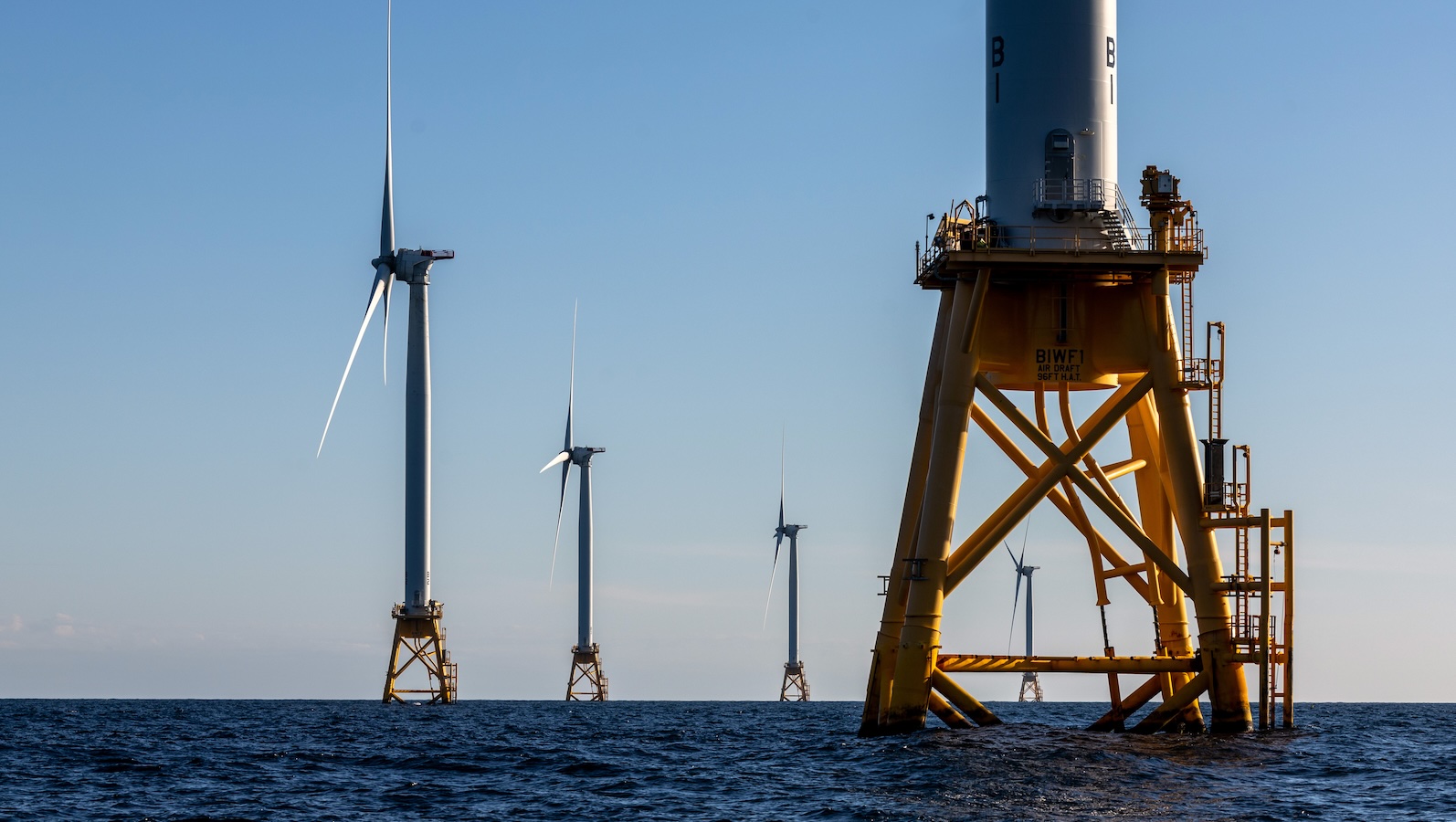
Despite this rhetorical opposition, the offshore wind industry experienced a major boom under the Biden administration. Louisiana companies, long accustomed to servicing the offshore oil and gas industry, recognized a lucrative diversification opportunity. Gulf-based shipyards and fabricators leveraged their decades of heavy marine engineering experience to support early East Coast developments. Notably, in 2016, Louisiana supply boats, engineers, and metal fabricators played an instrumental role in constructing the United States’ very first commercial offshore wind farm near Block Island, Rhode Island.
By 2024, this momentum had matured into a robust regional economic engine. According to data from the Oceantic Network, an industry trade group, nearly a quarter of all offshore wind work contracts nationwide had been awarded to Gulf-based firms. Collectively, close to $1 billion in direct investments had flowed into local shipyards and heavy fabrication yards across southeastern Louisiana.
The Second-Term Crackdown (January 2025–Present)
The landscape shifted dramatically on January 21, 2025—the opening day of Trump’s second presidential term. Moving swiftly to fulfill campaign promises, the administration executed a series of sweeping executive orders designed to dismantle renewable energy infrastructure. Federal waters were abruptly withdrawn from new offshore wind leasing programs, and permitting processes for all pending and approved projects were frozen indefinitely.
When these initial actions sparked immediate, fierce legal challenges from environmental coalitions and industry stakeholders, the administration pivoted to a novel financial tactic: offering multi-billion-dollar federal buyouts to developers to incentivize them to permanently surrender their leases and walk away from their capital investments.
This strategy proved highly effective for developers facing years of regulatory limbo. To date, energy companies have relinquished 12 major offshore wind leases in exchange for federal payouts. Among the casualties is a massive, highly anticipated 2-gigawatt wind farm slated for the Gulf of Mexico, located approximately 44 miles south of Lake Charles, Louisiana.
Supporting Context & Metrics: The Cost of the Freeze
The federal government’s campaign to scrub offshore wind from public waters carries substantial economic and energy security implications, particularly for a region that viewed the sector as a vital engine for economic diversification.
Financial and Energy Losses
During a panel discussion at Tulane University’s prestigious Future of Energy Forum, energy policy experts broke down the sheer scale of the federal buyout initiative. Madelyn Smith, a program manager with the Southeastern Wind Coalition—a nonprofit advancing wind power across 11 states—highlighted the financial mechanics driving developers away.
"For many reasons, it’s very compelling," Smith said, referencing the federal payout offers. "And there’s no real pathway for progress in the next two to three years, and some of these leases are quite expensive."
According to industry tracking, the federal government has expended roughly $4 billion in taxpayer funds to buy out and cancel these leases. The terminated projects collectively represented approximately 21 gigawatts of potential power generation capacity—enough clean electricity to power more than 5 million American homes.
Impact on Louisiana’s Industrial Ecosystem
The sudden halt has hit local infrastructure hard. Companies that invested heavily in retooling their facilities to support turbine assembly and foundation manufacturing now find themselves with idle capacity.
James Martin, CEO of Gulf Wind Technology—an Avondale-based enterprise specializing in the design and physical testing of advanced wind turbine blades—expressed deep frustration at the Tulane forum.
"It is a shame," Martin remarked. "It’s been a big pause button on what was a sleeping giant of an industry."
To survive the downturn, Gulf Wind Technology and similar regional firms have been forced to pivot away from renewable energy, seeking emergency contracts within the aerospace and defense sectors. Other businesses have had to enact painful cost-cutting measures, slash operating budgets, and execute deep workforce reductions.
"There’s huge layoffs in the wind space, and some of the best engineers on the planet — they’re giving up," Martin warned.
Educational institutions that rushed to align their curricula with the expanding green economy have likewise been forced to recalibrate. Nunez Community College in Chalmette, which previously launched an innovative two-year turbine technician training program, and the University of New Orleans, which established its Wind Energy Hub to offer targeted engineering scholarships and corporate internships, now face a temporary reality where graduate placement pipelines have slowed to a trickle.
Official Statements and Industry Perspectives
The mood among Louisiana’s political and industrial leaders is a complex mixture of political frustration, economic pragmatism, and long-term optimism.
State Representative Joe Orgeron, a Republican from southeastern Louisiana who brings firsthand professional experience from the offshore wind sector, pulled no punches when describing the current regulatory climate during the Tulane energy panel.
"Come January 21st, 2029, we all get to wave goodbye," Orgeron stated bluntly. "The current administration has been a one-man stopping show. I’m pretty confident, and I’m hopeful that it’ll change."
Summarizing the prevailing industry sentiment regarding how local firms plan to weather the storm, Orgeron added: "Just wait for the clock to run out."
This perspective was reinforced by regional analysts who point out that the underlying market demand for diverse energy sources has not disappeared, even if federal policy has artificially suppressed it. Prior to the federal crackdown, major energy providers were actively integrating offshore wind into their long-term portfolios. For instance, RWE—the German multinational energy giant behind the canceled Lake Charles project—had successfully secured a major power delivery agreement with Entergy. That contract was designed to channel renewable electricity directly to an estimated 350,000 industrial and residential customers across Louisiana and Texas, proving that regional utility demand for offshore wind was both genuine and commercially viable.
Future Outlook: Preserving Expertise for the Next Administration
As the offshore wind industry navigates what many executives refer to as a federally mandated hibernation period, the primary objective across Louisiana has shifted from aggressive expansion to strategic preservation.
Industry leaders recognize that maintaining the intellectual capital, specialized maritime engineering skills, and fabrication infrastructure built up over the past decade is critical. If the supply chain dissolves entirely, rebuilding it when political winds eventually shift could take years and cost billions more.
Consequently, regional shipyards, research hubs, and advocacy groups are focusing their remaining resources on maintaining baseline competencies. By keeping core engineering teams intact, exploring dual-use marine technologies, and maintaining tight communication channels with sympathetic state lawmakers, Louisiana’s maritime sector is positioning itself to hit the ground running.
For the workers, engineers, and corporate leaders who built the Gulf’s offshore wind supply chain, the strategy remains straightforward and steadfast: endure the regulatory headwinds, protect the workforce from total dispersal, and keep one eye fixed firmly on the horizon—and the calendar date of January 21, 2029.



