

Executive Overview
In the contemporary landscape of global agriculture, the intersection of technological accessibility and ecological stewardship has never been more critical. For decades, the primary hurdle for aspiring and transitioning agriculturalists has not been a lack of passion or environmental urgency, but rather a profound deficit in accessible, highly technical, and scientifically rigorous education. Farming is an unrelenting vocation; it demands grueling physical labor and continuous problem-solving across diverse disciplines—ranging from microbiology and soil entomology to corporate cost-accounting, supply-chain logistics, and organic certification compliance.
Historically, acquiring this elite tier of agricultural expertise required uprooting one’s life to attend specialized residential programs, a luxury few working farmers can afford. The Rodale Institute Farmer Training (RIFT) program, operating out of its foundational Pennsylvania campus for more than 15 years, has long been a gold standard in hands-on organic education. However, its physical footprint restricted its cohort size to a modest dozen or so students annually.
Today, a paradigm shift is underway. By harnessing advanced digital learning management systems and distilling over 75 years of peer-reviewed, field-tested research into high-definition video modules, the Rodale Institute has officially bridged the gap between elite agricultural science and the working farmer. This newly launched virtual extension platform transcends geographic barriers, allowing thousands of agricultural entrepreneurs across the globe to tap into university-level instruction from their tractors, farm offices, and kitchen tables. By combining the scientific integrity of traditional extension services with the flexibility of modern e-learning, this initiative promises to scale the next generation of regenerative organic enterprises, securing a more sustainable and economically viable food system for the future.
Detailed Chronology: The Evolution of Organic Agricultural Extension
To fully appreciate the gravity of Rodale Institute’s digital pivot, one must examine the historical trajectory of agricultural education and the operational milestones that led to this virtual expansion.
- The Mid-20th Century Foundation: The journey began over 75 years ago when J.I. Rodale founded the organic movement in the United States, establishing a philosophy rooted in the understanding that soil health is inextricably linked to human and environmental health. For decades, dissemination of this knowledge relied heavily on print media, localized workshops, and on-site demonstrations.
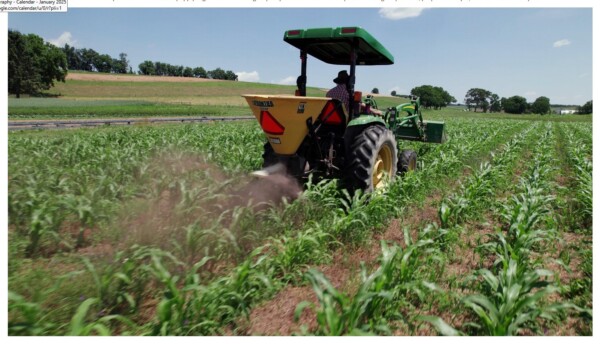
- Establishment of the Physical RIFT Program: Recognizing a widening gap in practical, commercial-scale organic training, the Rodale Institute formally established its flagship Farmer Training (RIFT) program in Pennsylvania. Over a rigorous nine-month in-person curriculum, select cohorts of aspiring agriculturalists were immersed in the realities of managing a working organic farm.
- The Three-Year Digital Incubation (2021–2024): Anticipating the acute need to scale agricultural education without sacrificing academic rigor, institute leadership initiated a quiet transformation. Over a three-year period, educators and researchers systematically captured the core components of the RIFT curriculum on video, translating hands-on field lessons into structured, multimedia instructional units.
- Integration of the Canvas LMS: To ensure a seamless user experience, the institution integrated its vast repository of educational assets into the robust Canvas learning management system. This infrastructure provided the technological backbone necessary for assignment tracking, peer-to-peer collaboration, instructor feedback, and automated assessments.
- The Virtual Extension Launch and Strategic Partnerships: Marking a major milestone in modern ag-tech, the virtual campus officially opened its digital doors, instantly expanding the institute’s capacity from a dozen residential trainees to an estimated 6,500 active learners. Concurrently, pioneering institutional partnerships—such as collaborations with the nonprofit Good Roots—began utilizing the curriculum to reinforce the business and financial acumen of emerging producers nationwide.
Supporting Context & Metrics: The Anatomy of Modern Agricultural Education
The challenges facing modern farmers are both agronomic and financial. According to agricultural economists, transitioning from conventional chemical-dependent farming to certified organic production requires a rigorous, typically three-year transition period during which operational costs may remain high while yields adjust and price premiums are not yet fully realized. During this fragile window, a mismanaged pest outbreak, an improper application of organic soil amendments, or a failure in financial recordkeeping can spell financial ruin.
The Knowledge Gap in Agribusiness
While the internet is flooded with scattered articles, hobbyist blogs, and fragmented video clips on gardening, it lacks a centralized, scientifically verified repository for commercial-scale regenerative organic farming. Dean of Education Renée Baran notes that new and even seasoned farmers frequently harbor critical gaps in their operational knowledge. These gaps span multiple complex domains:
- Soil Science & Entomology: Understanding biological soil webs, mycorrhizal fungi networks, and beneficial insect habitats to naturally suppress pests.
- Crop Rotation & Weed Dynamics: Mastering complex botanical sequences that naturally break disease cycles and smother weeds without synthetic herbicides.
- Financial & Business Literacy: Implementing precise cost accounting, asset management, and marketing strategies to ensure long-term enterprise profitability.
Metrics of Expansion: From Dozens to Thousands
The quantitative impact of transitioning from a localized model to a virtual campus is staggering.
| Metric | Traditional In-Person RIFT Program | Virtual Extension Campus |
|---|---|---|
| Annual Cohort Capacity | ~12–15 students | Up to 6,500 farmers |
| Geographic Reach | Primarily local/regional residents | Nationwide and international |
| Time Commitment | Full-time, 9-month immersive residency | Self-paced, asynchronous learning |
| Core Curriculum Focus | Field execution & applied techniques | Comprehensive ag-science & business management |
By leveraging a virtual learning environment, the institute achieves an exponential leap in outreach efficiency. Furthermore, the curriculum is meticulously designed to mirror university-level academic standards while remaining remarkably intuitive for individuals who may not consider themselves technologically adept.
Official Statements: Perspectives from Institute Leadership and Strategic Allies
The philosophy and urgency behind the virtual extension platform are best articulated by the leaders steering its implementation and the external partners utilizing its framework.
Reflecting on the relentless nature of agricultural life, Renée Baran, Dean of Education at the Rodale Institute, underscores the core design philosophy of the digital initiative:
"Farming is a unique way to make a living because farmers don’t get vacations or even weekends off when they can take time to focus on learning. But new farmers and many experienced ones have gaps in their knowledge they need to fill. We want to be the ‘regenerative organic agriculture YouTube’ where farmers can find the information they’re looking for, but with real scientific integrity and a community of others to connect to and learn with."
Detailing the depth of the curriculum, Dr. Jason Slipp, Director of Education, emphasizes the departure from superficial online tutorials:
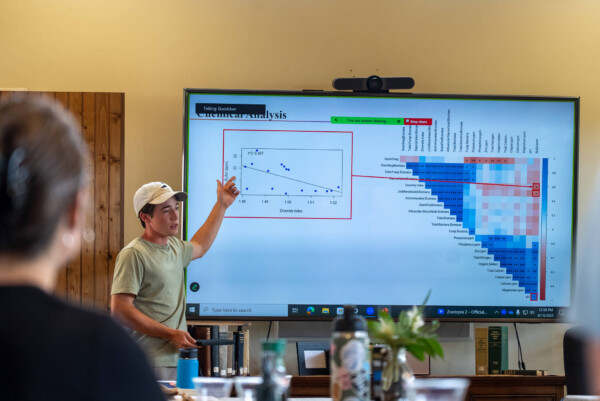
"At Rodale Institute, we have accumulated more than 75 years’ worth of knowledge, and for the past three years, we’ve been capturing much of our RIFT curriculum on video. We’re now offering it to farmers who are not able to enroll in our nine-month, in-person program. These are university-level classes based on proven instructional principles. With the robust Canvas learning management system, students can work at their own pace and focus on the areas that are most important to them. This is easy for everyone to use, even if they’re not too tech-savvy."
The initiative’s value proposition extends far beyond independent farmers, attracting the attention of mission-aligned agricultural nonprofits. Rebecca Frimmer, partner and principal consultant for Good Roots—an organization dedicated to helping organic farmers build lasting, sustainable businesses—highlights the critical intersection of agronomy and enterprise management:
"Farmers need training in business management and finance to ensure they are profitable and viable for the long term. The biggest challenge for farmers is finding the time to balance all that must be done. It’s essential to carve out the space to work on the farm business and not just in the business. Smaller-scale producers may not have the resources to access consulting services or other professional services like bookkeeping and marketing. The self-paced educational resources and interactive support offered by Rodale Institute open up effective ways for Good Roots to ensure the next generation of farmers can scale up with strong financial and marketing foundations."
Future Outlook: Scaling Regenerative Agriculture for Global Impact
As the agricultural sector confronts the compounding pressures of climate volatility, degraded soils, and an aging farming demographic, the imperative to train a new generation of ecologically conscious producers has never been more pressing. The successful deployment of Rodale Institute’s virtual campus signals a new era for agricultural extension services—one where physical geography no longer dictates access to elite mentorship and scientific validation.
Looking forward, the institute plans to continuously expand its digital catalog, integrating newly emerging data on carbon sequestration, climate-resilient crop varieties, and advanced direct-to-consumer marketing models. By fostering strategic collaborations with universities, agricultural trade schools, and non-profit farm incubators, the virtual platform is positioned to serve as the connective tissue for a burgeoning global community of practice.
Crucially, the educational umbrella is not restricted to commercial producers alone. Recognizing that systemic agricultural transformation requires shifts in consumer demand and public health consciousness, the virtual campus also curates specialized modules such as "Being a Regenerative Consumer" and "Regenerative Health: The Power of the Plate." These courses invite everyday citizens, hobbyist gardeners, and beekeepers to engage directly with the regenerative movement.
Ultimately, by democratizing access to decades of hard-won scientific insights, the Rodale Institute is doing more than simply teaching farming mechanics; it is laying the foundational bedrock for a healthier, more resilient, and economically secure food system for generations to come.
For comprehensive details, curriculum schedules, and enrollment information regarding upcoming courses, interested individuals can visit the official portal at RodaleInstitute.org/education.



