

Executive Overview
From the bustling corridors of United Nations delegations in Bangkok to the rising tides of the South Pacific, the international environmental movement has entered a critical new phase of mobilization. Over the past week, Greenpeace activists, allied civil society coalitions, indigenous leaders, and impacted local communities have staged a coordinated wave of visual and direct actions across seven countries.
These interventions—ranging from high-profile political demonstrations and cultural protests to humanitarian responses on the ground—underscore the interconnected nature of the crises facing modern societies. Whether confronting the existential threat of unchecked plastic production, resisting the return of European militarization, fighting for the inviolable 1.5°C global warming limit, or demanding basic socioeconomic rights such as fair and decent housing, citizens around the world are drawing a hard line in the sand.
For more than half a century, Greenpeace has utilized photo-activism and direct witness as core pillars of its strategy to expose environmental injustice, corporate malfeasance, and governmental inaction. This week’s snapshots from the global frontline serve not only as documentary evidence of crisis, but as a testament to human resilience. As extreme weather events compound systemic socio-economic pressures, the demand for structural reform has never been more urgent. This report provides an in-depth chronological and thematic breakdown of Greenpeace’s global actions over the past week, contextualizing the local struggles within the broader framework of international policy negotiations and human survival.
Detailed Chronology of Global Actions
1. Bangkok, Thailand: Striking at the Source of the Plastic Crisis
Date/Context: Coinciding with the Heads of Delegation (HODs) intersessional meetings at the United Nations ESCAP office.
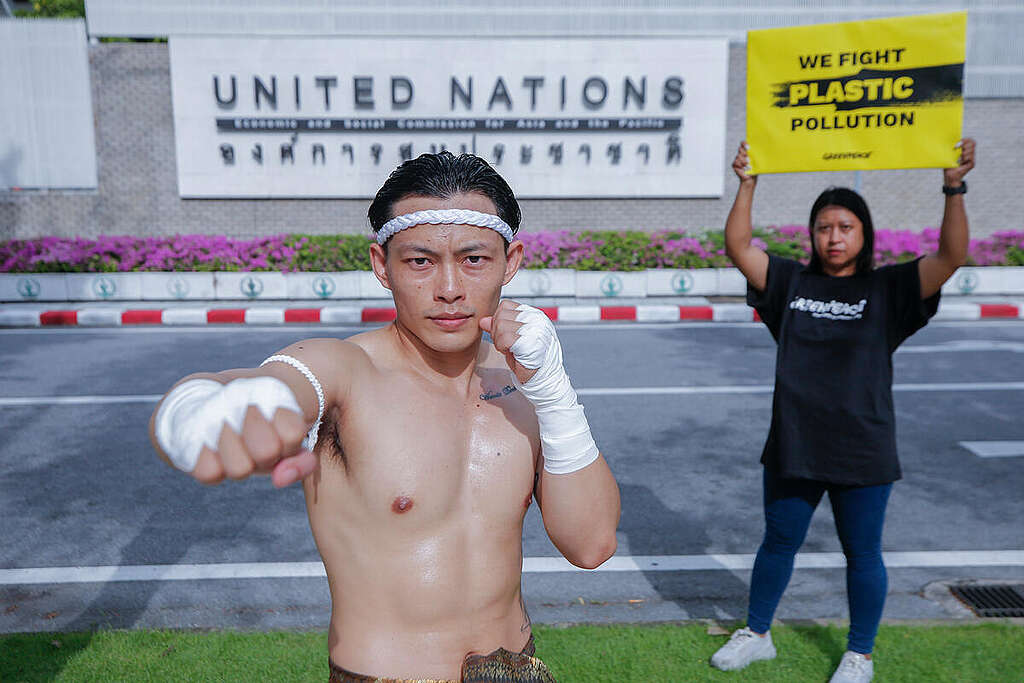
Outside the United Nations office in Bangkok, Thailand, an unusual and striking scene unfolded as Greenpeace Thailand activists joined forces with a professional Muay Thai fighter. Stage-managing a powerful symbolic action right at the doorstep of international diplomacy, the participants used the traditional martial art to visually articulate a straightforward message: humanity must "fight" and tackle plastic pollution directly at its source.
Inside the UN building, Heads of Delegation (HODs) from Member States were locked in critical discussions regarding the parameters of the upcoming Global Plastics Treaty. Outside, the activists made it clear that half-measures, voluntary corporate pledges, and downstream waste management strategies are wholly insufficient. Greenpeace is calling on governments worldwide to place mandatory, ambitious absolute cuts in virgin plastic production at the absolute heart of a legally binding Global Plastics Treaty. Without addressing the upstream extraction of petrochemicals and the relentless manufacturing of single-use plastics, global ecosystems will continue to choke under an insurmountable tide of synthetic waste.
2. Berlin, Germany: The "Indomitable" Stand Against Rearmament and Conscription
Date/Context: Mass cultural mobilization at the Brandenburg Gate.
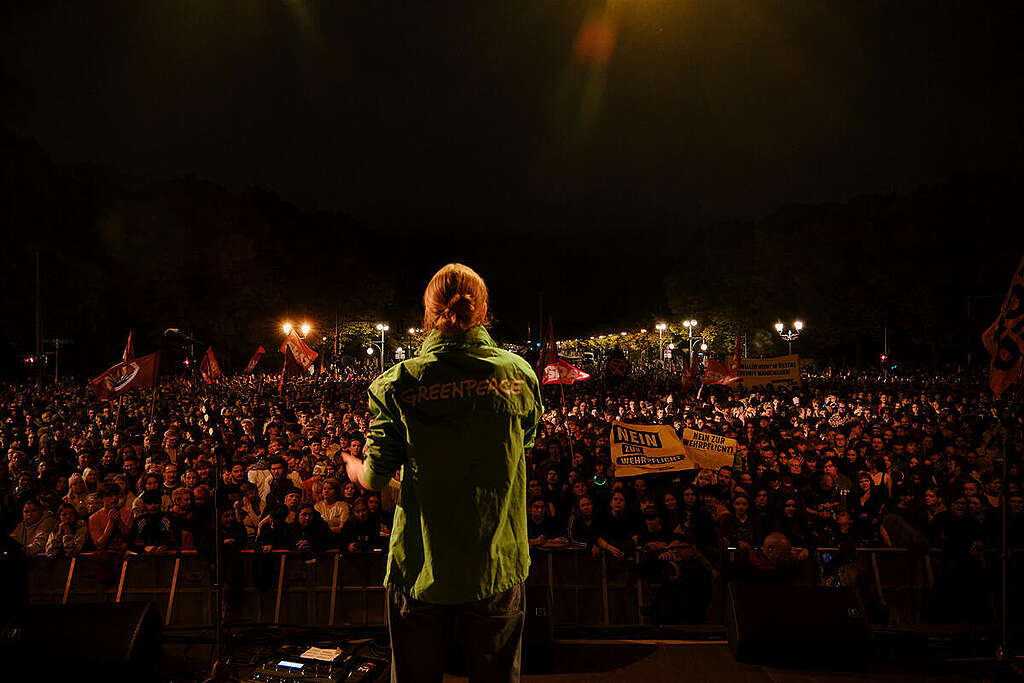
Shifting focus to the heart of Europe, Greenpeace Germany aligned itself with a broad, multi-generational coalition of youth, peace, and civil society organizations at Berlin’s historic Brandenburg Gate. Operating under the rallying motto "Unzwingbar – kein Bock auf Krieg und Wehrpflicht" ("Indomitable – No Interest in War and Conscription"), tens of thousands gathered for a massive open-air concert and political rally featuring prominent musical acts such as K.I.Z., Disarstar, and Apsilon.
The event served as a high-visibility platform to protest the potential reintroduction of compulsory military service and the broader, accelerating trend of unchecked militarisation within Germany and the European Union. Speeches from peace organizers and youth representatives—including a prominent voice from Greenpeace Youth—highlighted the severe psychological, social, and economic consequences that these regressive policies impose on younger generations. Activists challenged the prevailing political narrative that relies exclusively on ever-increasing defense spending, arguing instead that true human security requires investment in climate resilience, social welfare, and international diplomacy rather than a return to Cold War-era conscription models.
3. Nadi, Fiji: Holding the Line at 1.5°C in the South Pacific
Date/Context: Pre-COP climate summit demonstrations and the Pacific Flotilla.
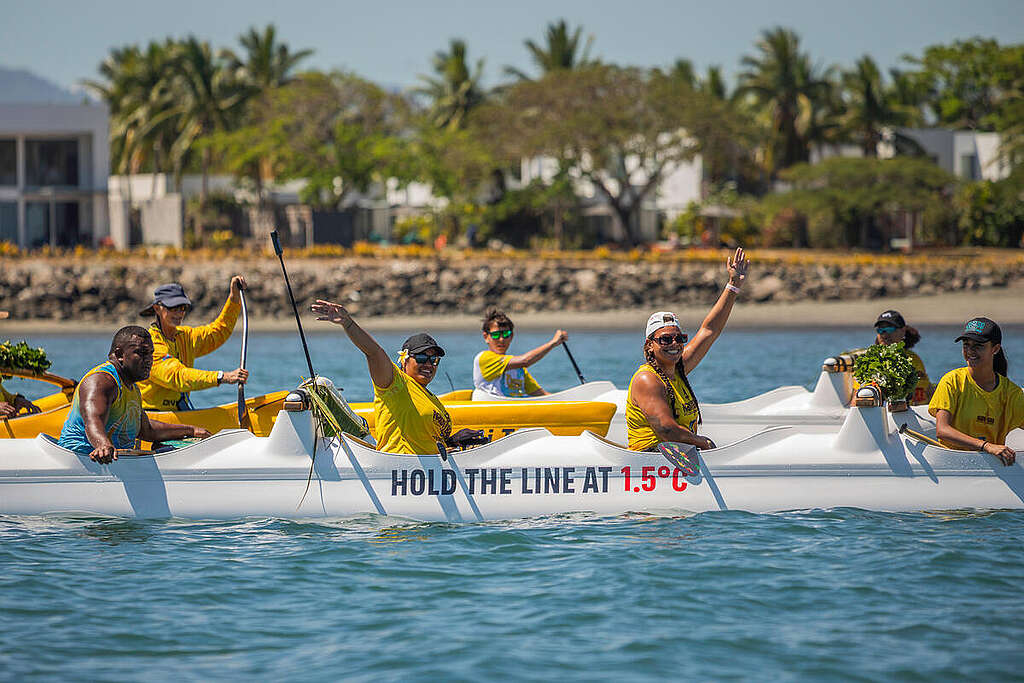
In the tropical waters of Nadi, Fiji, the existential stakes of the climate crisis were brought into sharp, colorful focus as a vibrant flotilla made its way past official Pre-COP climate summit venues. Comprising around 80 participants—including Pacific and Torres Strait Islander community members, revered Elders, and passionate youth activists—the flotilla utilized traditional outrigger canoes, the flagship vessel SV Oceania, and bold banners to broadcast a unified plea to the international community: "Keep 1.5°C Alive" and "Hold the Line at 1.5°C."
This mobilization carried immense symbolic and political weight. With Australia slated to take the reins of the COP31 climate negotiations in Türkiye, Pacific frontline communities are forcefully reminding global powers that the 1.5°C warming threshold established under the Paris Agreement is not a flexible political target, but a non-negotiable survival line for low-lying island nations and coastal regions. The flotilla served as a direct indictment of continued fossil fuel expansion in the region and a demand for wealthy historical polluters to finance a rapid, equitable energy transition.
4. Palembang, South Sumatra, Indonesia: The Choking Haze of Wildfire Neglect
Date/Context: Ongoing air quality and forest fire prevention campaigns.
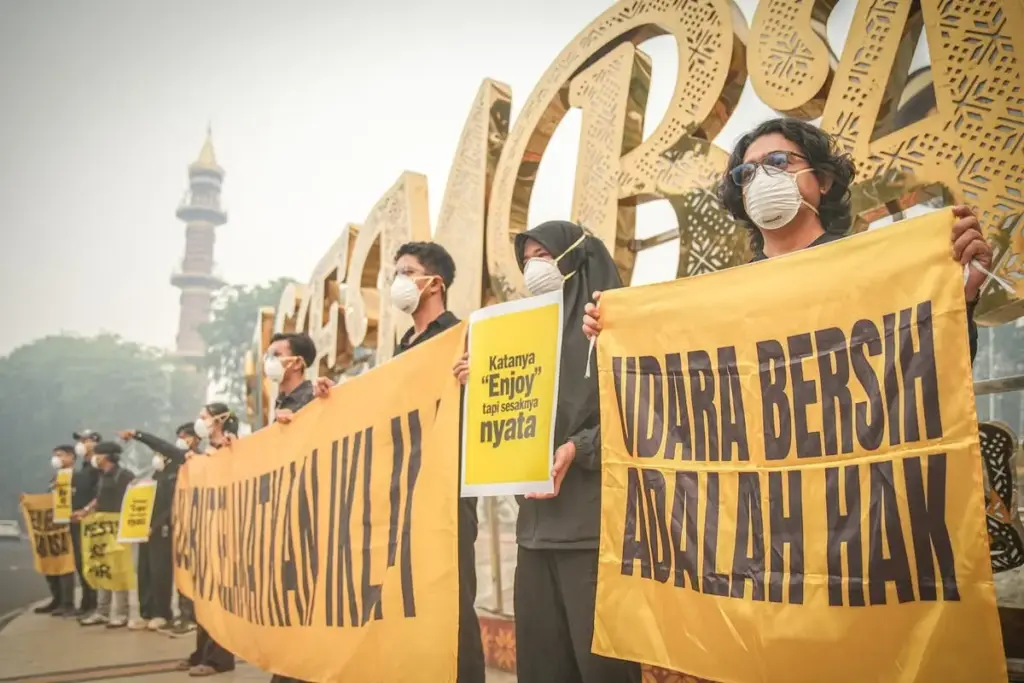
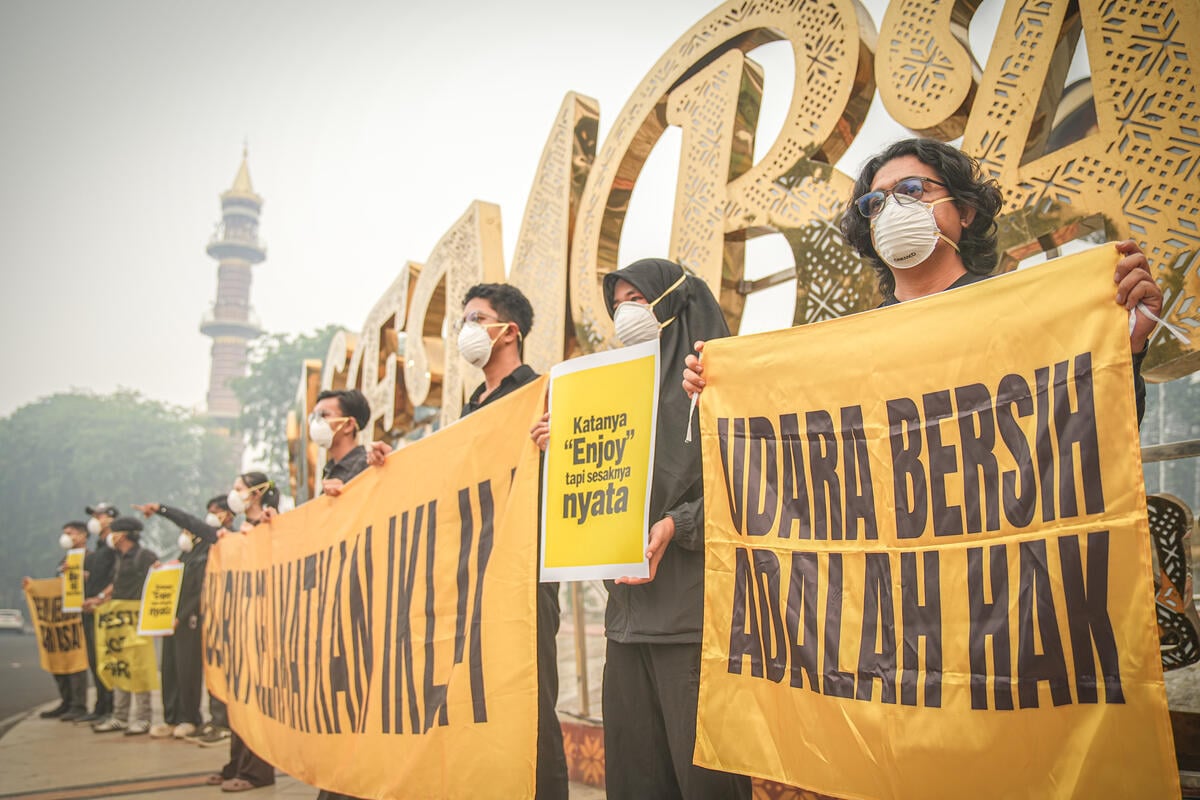
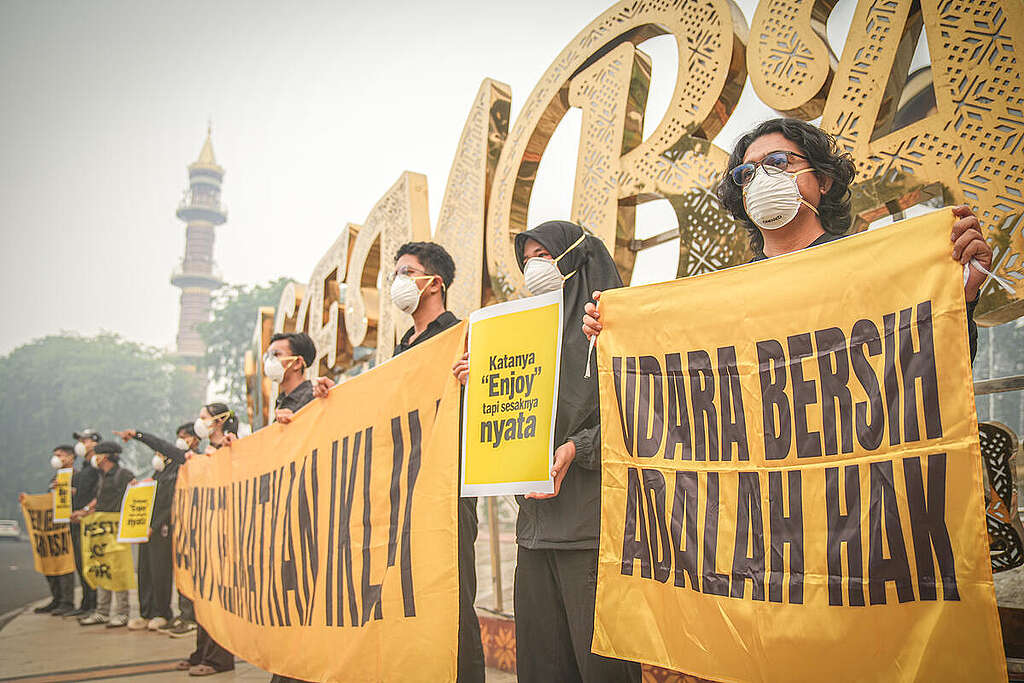
In Palembang, South Sumatra, members of the Greenpeace Indonesia Forest Fires Prevent Team (Tim Cegah Api) took a courageous stand, holding posters and banners amid toxic, amber-tinted skies. For nearly two months, the city has been blanketed by a dense, hazardous wildfire haze that has pushed air quality indexes to perilous levels, severely threatening public health, disrupting local economies, and casting an oppressive shadow over daily life.
The crisis is not confined to Indonesian borders; the toxic smoke has drifted across international boundaries, heavily degrading air quality in neighboring Singapore and Malaysia. The recurring scourge of forest and peatland fires in Southeast Asia is deeply tied to land clearance practices for industrial agriculture, primarily palm oil and pulpwood plantations. Greenpeace Indonesia continues to demand greater corporate accountability, stricter enforcement of environmental protection laws, and proactive landscape-level restoration to prevent these annual ecological and public health catastrophes.
5. Zurich, Switzerland: Rejecting a Scorched Future
Date/Context: Nationwide coalition march against extreme heat.
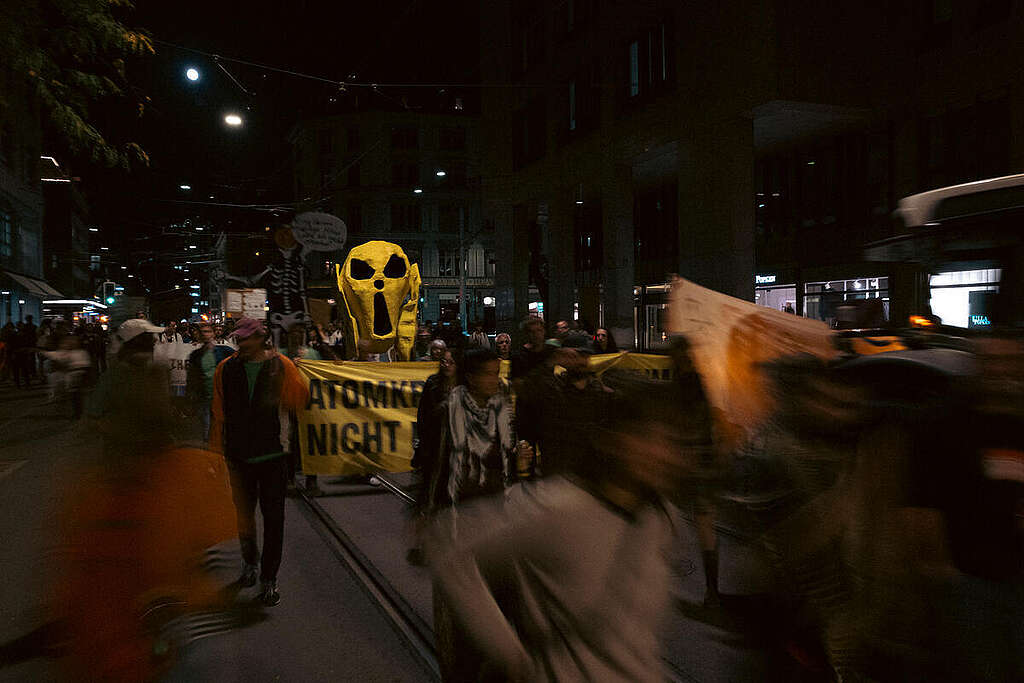
In Switzerland, the streets of Zurich reverberated with the footsteps of approximately 7,000 demonstrators marching under the banner: "No 50°C Summers!" Organized by an unprecedented coalition of more than 70 civil society organizations spanning the climate, health, environmental, and agricultural sectors, the massive mobilization demanded immediate, legally binding adaptation and mitigation measures to protect the Swiss population from accelerating global heating.
Switzerland, as an Alpine nation, is warming at roughly twice the global average, threatening glaciers, water security, and public health—particularly among vulnerable elderly populations during severe summer heatwaves. The demonstrators criticized the Swiss government’s sluggish legislative response to emission reduction targets and called for a complete overhaul of national climate policy that prioritizes public health, urban cooling infrastructure, and a rapid phase-out of fossil-fuel dependencies.
6. Madrid, Spain: The Intersection of Climate and Social Justice
Date/Context: Direct action sit-in at Puerta del Sol.
The struggle for environmental justice cannot be separated from socioeconomic survival, a reality highlighted vividly in Madrid, Spain. Greenpeace Spain activists and concerned citizens staged a high-visibility sit-in at the iconic Puerta del Sol plaza, demanding immediate government action to guarantee the fundamental constitutional right to decent, affordable housing.
As soaring housing costs, unregulated tourist apartment conversions, and gentrification price millions out of urban centers across Spain, low-income families are increasingly pushed into precarious living conditions that leave them intensely vulnerable to compounding crises, including extreme urban heatwaves driven by climate change. Greenpeace’s participation in the housing rights mobilization signals a strategic evolution within the environmental movement, recognizing that ecological resilience is inextricably linked to social equity, secure housing, and economic dignity for the working class.
7. Chachoengsao Province, Thailand: Dual Crises of Flooding and Fossil Gas
Date/Context: Humanitarian relief operations and anti-fossil fuel advocacy.
Back in Thailand, Greenpeace staff and volunteers transitioned from political advocacy to direct humanitarian support in flood-ravaged Chachoengsao Province. Unprecedented and severe flooding—which began sweeping through the region late last month—has heavily impacted 11 distinct districts, leaving over 23,790 households grappling with submerged homes, contaminated water supplies, and devastated livelihoods.
While local communities struggle to cope with the immediate aftermath of climate-fueled extreme weather, they face an additional compounding threat: the proposed construction of a massive 540-megawatt fossil gas power plant known as the Burapha Power project. Local residents and environmental advocates have fiercely opposed the plant, warning that it will degrade vital local water resources, worsen regional air pollution, and lock the country into decades of additional greenhouse gas emissions. Greenpeace Thailand has called on the Thai government to immediately halt all further fossil fuel expansion, cancel polluting projects in vulnerable zones, and redirect financial resources toward community-led recovery and decentralized renewable energy infrastructure.
Supporting Context & Metrics
To fully comprehend the scope of Greenpeace’s global interventions this week, one must examine the quantitative backdrop against which these actions take place:
- The 1.5°C Threshold: According to the World Meteorological Organization (WMO) and the Intergovernmental Panel on Climate Change (IPCC), global average temperatures have already hovered dangerously close to the 1.5°C pre-industrial baseline. For Pacific island nations represented in the Nadi flotilla, exceeding this limit translates directly to existential displacement and sea-level inundation.
- Plastic Production Realities: Global plastic production has skyrocketed past 400 million metric tons annually. Without the legally binding production caps demanded by activists in Bangkok, output is projected to double over the next two decades, overwhelming global waste management systems entirely.
- Southeast Asian Haze Impacts: The recurring peatland and forest fires in Indonesia affect millions of citizens across the archipelago, Singapore, and Malaysia, generating billions of dollars in economic losses through healthcare expenditures, school closures, and aviation disruptions.
- European Climate Vulnerability: In Switzerland, where 7,000 citizens marched against 50°C summers, extreme heat events have historically accounted for thousands of premature deaths among vulnerable demographics, rendering climate adaptation an urgent public health imperative.
- Housing and Climate Justice in Spain: Urban centers like Madrid experience severe "urban heat island" effects, where dense concrete infrastructure combined with a lack of affordable, well-insulated housing exposes low-income urban residents to life-threatening indoor temperatures during prolonged summer droughts.
Official Statements
Greenpeace Thailand Campaigner on the Bangkok Plastic Action:
"We cannot recycle our way out of the plastic crisis. Governments meeting behind closed doors in Bangkok must realize that every piece of plastic manufactured represents a permanent burden on our oceans and communities. By standing alongside the discipline and strength of Muay Thai, we are signaling that civil society is ready to fight this pollution at its absolute source—capping production before it begins."
Greenpeace Youth Representative in Berlin:
"A security policy that relies solely on bloated military budgets while ignoring the climate emergency is a direct threat to our generation’s future. Conscription and rearmament do not protect us from rising seas, extreme heat, or ecological collapse. We demand a redefinition of security that puts human well-being and environmental stability first."
Pacific Climate Activist during the Nadi Flotilla:
"The Pacific is not drowning; we are fighting. Leaders gathering at Pre-COP must understand that 1.5°C is not a negotiable political compromise for debate in air-conditioned rooms—it is our absolute boundary between life and extinction. We will hold the line, no matter the cost."
Future Outlook
As the global political calendar advances toward upcoming international summits—including the finalization of the Global Plastics Treaty and the COP31 preparations—the momentum generated by this week’s actions signals an intensifying wave of grassroots and institutional pressure.
The convergence of diverse struggles—uniting environmental campaigners, peace advocates, housing rights movements, indigenous elders, and humanitarian volunteers—demonstrates that the modern climate movement has matured into a holistic crusade for systemic transformation. Governments and corporate polluters can no longer compartmentalize environmental degradation from social justice, economic security, and international peace.
Greenpeace remains steadfast in its 50-year commitment to bearing witness, documenting injustice, and mobilizing citizens worldwide. Through continued photo-activism, direct action, and unwavering solidarity with frontline communities, the international network will continue to challenge entrenched power structures until a truly sustainable, equitable, and peaceful world is realized.



