

By the MIT Technology Review Energy & Climate Desk
Published as part of The Spark Newsletter Series
Executive Overview
As the global energy transition accelerates past critical tipping points, the architecture of power generation, industrial manufacturing, and grid stabilization is undergoing a profound transformation. This week, the MIT Technology Review editorial team released its highly anticipated 2026 Climate Tech Companies to Watch list. This annual index highlights the most innovative, disruptive, and commercially viable enterprises shaping the future of energy and climate technology.
An exhaustive analysis of this year’s selections reveals three overarching macro-trends defining the current industrial landscape:
- The absolute hegemony of China in renewable infrastructure, wind deployment, and next-generation battery chemistries.
- The relentless energy demands of Big Tech’s AI data center boom, which are single-handedly breathing new life into advanced nuclear and next-generation geothermal energy startups.
- The maturation of long-duration energy storage (LDES), moving past traditional lithium-ion limitations toward iron-air, compressed carbon dioxide, and second-life electric vehicle (EV) battery architectures.
While macroeconomic headwinds and regulatory shifts continue to pose challenges for early-stage climatetech ventures, the companies highlighted in the 2026 report offer a clear roadmap toward a decarbonized global economy. This report provides an in-depth breakdown of the firms leading the charge, the technologies powering their growth, and the structural forces reshaping the energy landscape.
Detailed Chronology: The Evolution of Climate Tech to 2026
The trajectory of climate technology over the past decade has shifted dramatically from theoretical research and venture-capital experimentation to industrial-scale deployment. To understand how the market arrived at the 2026 landscape, it is instructive to trace the milestones of key technologies highlighted in this year’s report:
- Pre-2022: The early phases of next-generation energy storage were dominated by lab-scale breakthroughs. Technologies like compressed $textCO_2$ storage and iron-air batteries existed largely on paper or in pilot facilities, struggling to secure the capital needed for commercial validation.
- May 2022: MIT Technology Review first profiles emerging storage innovators, such as Energy Dome, documenting their path toward building commercial-scale plants before a single operational facility had been realized.
- Mid-2024 to 2025: The explosive growth of generative artificial intelligence triggers an unprecedented surge in data center construction. Tech giants realize that local power grids cannot support the massive energy loads required for AI training clusters, sparking a frantic search for reliable, 24/7 clean power sources.
- May 2026: Next-generation geothermal pioneer Fervo Energy goes public, executing a landmark initial public offering (IPO) that raises $2.2 billion and cements enhanced geothermal systems (EGS) as a viable asset class for institutional investors.
- Late 2026: The release of the MIT Technology Review 2026 Climate Tech Companies to Watch list captures a market defined by global industrial competition, heavily anchored by Chinese manufacturing muscle and Western data center procurement contracts.
Supporting Context & Metrics: Key Themes and Innovators
The 2026 cohort of climate tech companies reflects a pragmatic pivot toward technologies that can scale rapidly while addressing the grid’s most acute vulnerabilities.
1. China as the Epicenter of Global Energy Innovation
It has become an undeniable reality that the People’s Republic of China is the undisputed engine of the global climate and energy technology sector. Home to the world’s largest and most sophisticated electrical grid, China is deploying solar, wind, and storage assets at a scale and velocity that defies historical precedent.
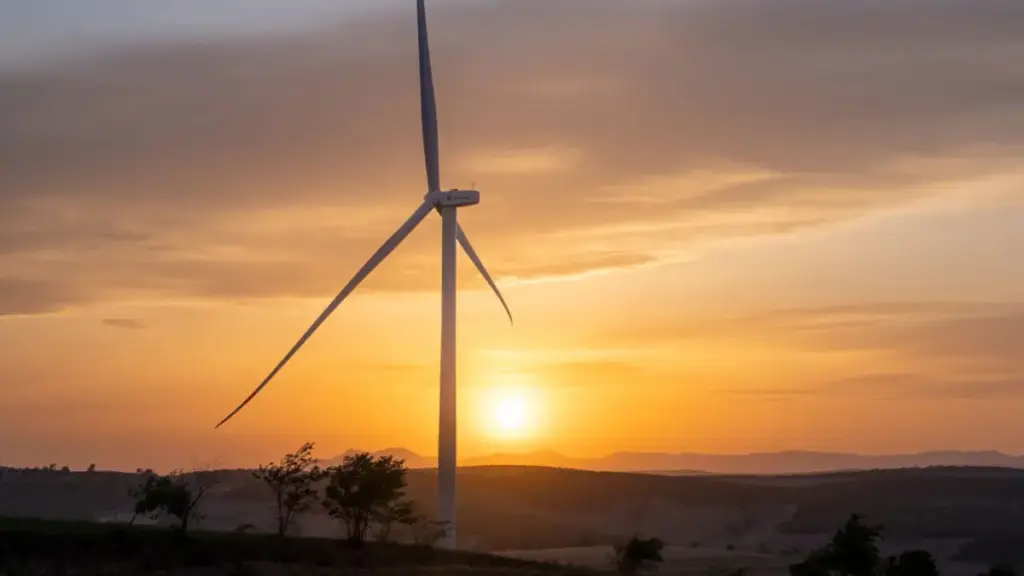
- Envision Energy: Making its second appearance on the MIT Technology Review watch list, Envision has cemented its status as a renewables titan. The company has successfully installed over 100 gigawatts (GW) of wind power globally, alongside more than 50 gigawatt-hours (GWh) of advanced battery storage. Facing an intensely crowded domestic market, Envision is aggressively expanding its international footprint, executing major wind and storage projects across Germany, Brazil, Australia, and an upcoming pipeline in Vietnam.
- WeLion New Energy: In the realm of advanced battery chemistry, Chinese firms are leading the race to commercialize solid-state and semi-solid-state batteries. WeLion captured global attention with a landmark laboratory result achieving 824 watt-hours per kilogram ($textWh/kg$)—more than triple the energy density of standard lithium-ion cells currently used in electric vehicles. While lab-scale breakthroughs are notoriously difficult to scale, WeLion is actively deploying semi-solid-state alternatives designed to accelerate time-to-market while vastly outperforming traditional lithium-ion specifications in safety and range.
+-----------------------------------------------------------------+
|               KEY METRICS: 2026 CLIMATE TECH LEADERS            |
+--------------------------+--------------------------------------+
| Company                  | Key Metric / Milestone               |
+--------------------------+--------------------------------------+
| Envision Energy          | 100+ GW wind power globally          |
| WeLion New Energy        | 824 Wh/kg lab energy density         |
| Fervo Energy             | $2.2 Billion IPO (May 2026)          |
| Form Energy / Google     | 30 GWh iron-air storage project      |
| X-energy / Amazon        | 320 MW SMR cluster (Richland, WA)    |
+--------------------------+--------------------------------------+
2. The Data Center Gold Rush and the Quest for Firm Power
A striking trend in the 2026 selections is the heavy concentration of US-based climate tech companies receiving strategic backing from Big Tech. As artificial intelligence data centers demand continuous, round-the-clock baseload power, tech conglomerates are injecting billions into non-intermittent clean energy solutions.
- Fervo Energy: By adapting horizontal drilling and hydraulic fracturing techniques pioneered by the oil and gas industry, Fervo has unlocked enhanced geothermal systems (EGS), making geothermal energy practical in geographic regions previously deemed unviable. Following its blockbuster $2.2 billion IPO in May 2026, the company is scaling rapidly with a mandate to bring 1 gigawatt of geothermal power online by the end of 2030.
- X-energy: Addressing the nuclear renaissance, X-energy is engineering helium-cooled small modular nuclear reactors (SMRs). Their compact design allows for unprecedented deployment flexibility. The company is currently collaborating with Amazon on a 320-megawatt reactor cluster in Richland, Washington. Furthermore, industrial applications are expanding: X-energy has secured a landmark agreement with Dow Chemical to deploy an SMR cluster at one of its major chemical manufacturing facilities by the early 2030s.
- Brimstone: Representing the third US entry on the list, Brimstone approaches decarbonization from an entirely different industrial angle, developing a revolutionary one-step process to manufacture cleaner cement while simultaneously extracting critical minerals.
3. Grid Stabilization and the Long-Duration Energy Storage (LDES) Boom
The massive influx of intermittent wind and solar generation has placed unprecedented stress on transmission networks, making energy storage the ultimate bottleneck—and opportunity—of the energy transition.
- Form Energy: Returning to the watch list for the third consecutive year, Form Energy is scaling its proprietary iron-air batteries to provide cheap, multi-day, long-duration energy storage. The company is currently developing a colossal 30 GWh iron-air battery project designed to power a Google data center. When completed in phases between 2028 and 2031, it is projected to be the largest battery storage installation on Earth by capacity.
- Energy Dome: Utilizing thermodynamic principles, Energy Dome stores grid energy by compressing carbon dioxide into a liquid state. This technology offers a significantly lower cost profile than lithium-ion batteries for discharge durations exceeding 10 hours. Transitioning from pre-commercial concepts in 2022, Energy Dome now boasts a global pipeline exceeding 30 GWh of planned installations, including a strategic project with Google in Ireland slated to come online in 2028.
- Moment Energy: With over one million electric vehicle batteries projected to reach the end of their primary automotive life by 2030, Moment Energy is pioneering a circular economy approach. Operating out of a specialized facility in Vancouver, British Columbia, the company repurposes spent EV battery packs into rugged, containerized backup power units for commercial and industrial applications.
Official Statements and Industry Insights
The convergence of corporate sustainability mandates and national security priorities has elevated climate technology from a niche environmental sector to a core pillar of geopolitical strategy.
Industry analysts tracking the 2026 report emphasize that the definition of "clean tech" has fundamentally broadened. No longer limited to solar panels and wind turbines, the sector now encompasses heavy industrial decarbonization, advanced materials science, nuclear engineering, and digital grid management.
"The energy storage market has surpassed even the most aggressive projections of four years ago," noted editors tracking the sector for the MIT Technology Review. "As solar and wind capacity saturate regional grids, the imperative for multi-day, non-chemical, and circular storage solutions is no longer optional—it is the absolute foundation upon which modern electrification rests."
Furthermore, the involvement of hyperscale cloud providers—such as Google and Amazon—in financing capital-intensive hard-tech projects like enhanced geothermal and small modular nuclear reactors signals a permanent shift in corporate procurement. Big Tech is no longer merely purchasing renewable energy credits; it is directly underwriting the development of next-generation power infrastructure.
Future Outlook: Navigating the Road Ahead to 2030
As the industry looks past the midpoint of the decade, the path forward is marked by both immense opportunity and significant execution risk. The technologies highlighted on the MIT Technology Review 2026 list represent the vanguard of a multi-trillion-dollar industrial transformation, but several structural challenges remain:
- Supply Chain Bottlenecks: While Chinese manufacturers like Envision and WeLion maintain dominance in scale, trade frictions, tariffs, and geopolitical fragmentation will test the resilience of global supply chains. Western markets must aggressively scale domestic manufacturing capacity for critical minerals, battery components, and nuclear fuel cycles.
- Interconnection Backlogs: In North America and Europe, monumental grid interconnection queues continue to delay the deployment of renewable generation and storage assets. Streamlining regulatory approval processes for projects like Fervo’s geothermal plants and Form Energy’s LDES installations will be vital.
- Capital Expenditure Realities: While venture capital has matured into private equity and public listings (such as Fervo’s IPO), the macroeconomic climate demands rigorous capital efficiency. Projects must demonstrate clear pathways to profitability without relying indefinitely on government subsidies.
Despite these headwinds, the innovations profiled in the 2026 Climate Tech Companies to Watch list prove that human ingenuity continues to outpace systemic challenges. From iron-air chemistry and compressed gas storage to helium-cooled nuclear fission and enhanced geothermal drilling, the tools required to build a resilient, decarbonized global energy system are rapidly transitioning from blueprints to reality.
This comprehensive report draws from ongoing coverage by The Spark, the weekly climate and energy newsletter produced by the editorial team at MIT Technology Review. To receive breaking analysis and industry insights directly in your inbox every Wednesday, professionals and researchers can subscribe via the official MIT Technology Review portal.



