

By Environmental and Marine Correspondent
October 9, 2026
Executive Overview
In what marine conservationists are calling an undeniable indictment of modern fisheries management, the International Council for the Exploration of the Sea (ICES) has issued a stark warning for the United Kingdom’s maritime future. For the second consecutive year, scientific advisors have recommended an absolute ban on the fishing of Northern Shelf cod for 2027. Once celebrated as one of the most prolific and commercially valuable fish populations in British waters, this iconic stock has now collapsed to such a precarious state that scientists warn any level of extraction threatens its final erasure.
The latest advisory is not an isolated incident; rather, it serves as the bleeding edge of a broader, systemic crisis. Currently, three out of the UK’s four primary cod stocks are subject to zero-catch recommendations. This grim milestone underscores a profound disconnect between world-class marine science and short-term political decision-making. Despite mounting warnings of ecological bankruptcy, historic overfishing and persistent political concessions to set catch limits above scientific thresholds have driven these marine ecosystems to the absolute brink.
Beyond the immediate ecological implications, the collapse of the Northern Shelf cod has metastasized into a socio-economic crisis. From the iconic British fish and chip shop facing unprecedented price inflation and supply shortages to coastal communities grappling with lost livelihoods, the degradation of our oceans is being felt across the entire nation. As policymakers increasingly acknowledge that environmental security is national security, the ongoing mismanagement of UK fisheries poses a critical threat to the country’s food security, economic resilience, and long-term climate adaptation strategies.
Detailed Chronology: The Decline and Fall of Northern Shelf Cod
To understand how one of the most robust fisheries in the British Isles was brought to the edge of commercial extinction, one must trace the compounding policy failures and environmental pressures that have defined the past decade.
A Decade of Steep Declines (2016–2026)
The trajectory of Northern Shelf cod—a vast population spanning the North Sea, the waters west of Scotland, the eastern English Channel, and the Skagerrak—has been marked by unmitigated downward spirals. ICES data reveals a catastrophic shrinkage across all three distinct sub-populations that comprise the Northern Shelf stock: the Southern, Northwestern, and Viking cod.
Since 2016, the metrics of decline have grown increasingly severe:
- Southern Population: Hit hardest by a combination of warming waters and persistent fishing pressure, the southern region of the Northern Shelf has seen its cod biomass plummet by a staggering 52% over the decade.
- Northwestern Population: Close behind its southern counterpart, the Northwestern cod stock has experienced a parallel reduction of 53% since 2016.
- Viking Cod: Though historically more resilient due to its deeper, colder northern habitat, the Viking cod population has still suffered a severe 37% decline over the same timeframe.
The Turning Point: From Precautionary Cuts to Total Collapse
For years, fisheries management relied on incremental reductions in total allowable catches (TACs) in an effort to curb overfishing while protecting commercial operations. However, these measures consistently lagged behind the actual rate of depletion. By the mid-2020s, marine assessments revealed that the Southern cod population had fallen well below critical biological limits—the threshold below which a stock loses its capacity to replenish itself through natural reproduction.
Last year, ICES took the unprecedented step of recommending a complete zero-catch closure for the entire Northern Shelf stock. It was a clear signal that the population had crossed a dangerous ecological tipping point. Yet, instead of meeting this emergency with decisive conservation measures, governance bodies bowed to political and commercial lobbying.
The disconnect between ecological reality and regulatory action is laid bare by recent catch-limit data. In 2026 alone, 58% of all UK fishing opportunities were set above scientific advice, effectively reversing years of fragile, hard-won progress toward sustainable fisheries management. By ignoring independent scientific counsel in favor of short-term economic appeasement, policymakers guaranteed a second consecutive year of zero-catch recommendations for 2027.
Supporting Context & Metrics: The Scale of Mismanagement
The predicament facing Northern Shelf cod is emblematic of a wider, systemic failure within British and European fisheries governance. To contextualize the current crisis, one must examine the mechanisms of scientific oversight, the realities of mixed-fisheries dynamics, and the broader economic toll of ecological neglect.
The Role of ICES and the Zero-Catch Standard
The International Council for the Exploration of the Sea operates as an independent intergovernmental marine science organization. Its primary function is to assess the health of fish stocks and provide evidence-based advice on the maximum sustainable yields that will allow marine populations to recover and thrive over the long term.
Crucially, ICES does not recommend a "zero catch" lightly. Such advice is reserved exclusively for fish stocks that have fallen into an exceptionally poor, endangered state—where mortality from any level of targeted fishing, or even unavoidable bycatch, poses an unacceptable risk of total stock collapse.
In the case of the Northern Shelf, the three sub-populations (Southern, Northwestern, and Viking) frequently mix geographically and are targeted concurrently within mixed-fisheries operations. Because vessels targeting healthier species inevitably catch cod as bycatch, ICES concluded that even incidental harvesting makes recovery impossible, necessitating a complete moratorium across the board.
Three Out of Four: A National Crisis
The emergency facing Northern Shelf cod is not an anomaly; it is part of a broader collapse of British marine resources. Out of the four distinct cod stocks managed under the UK’s purview, three now receive zero-catch advice from scientists.
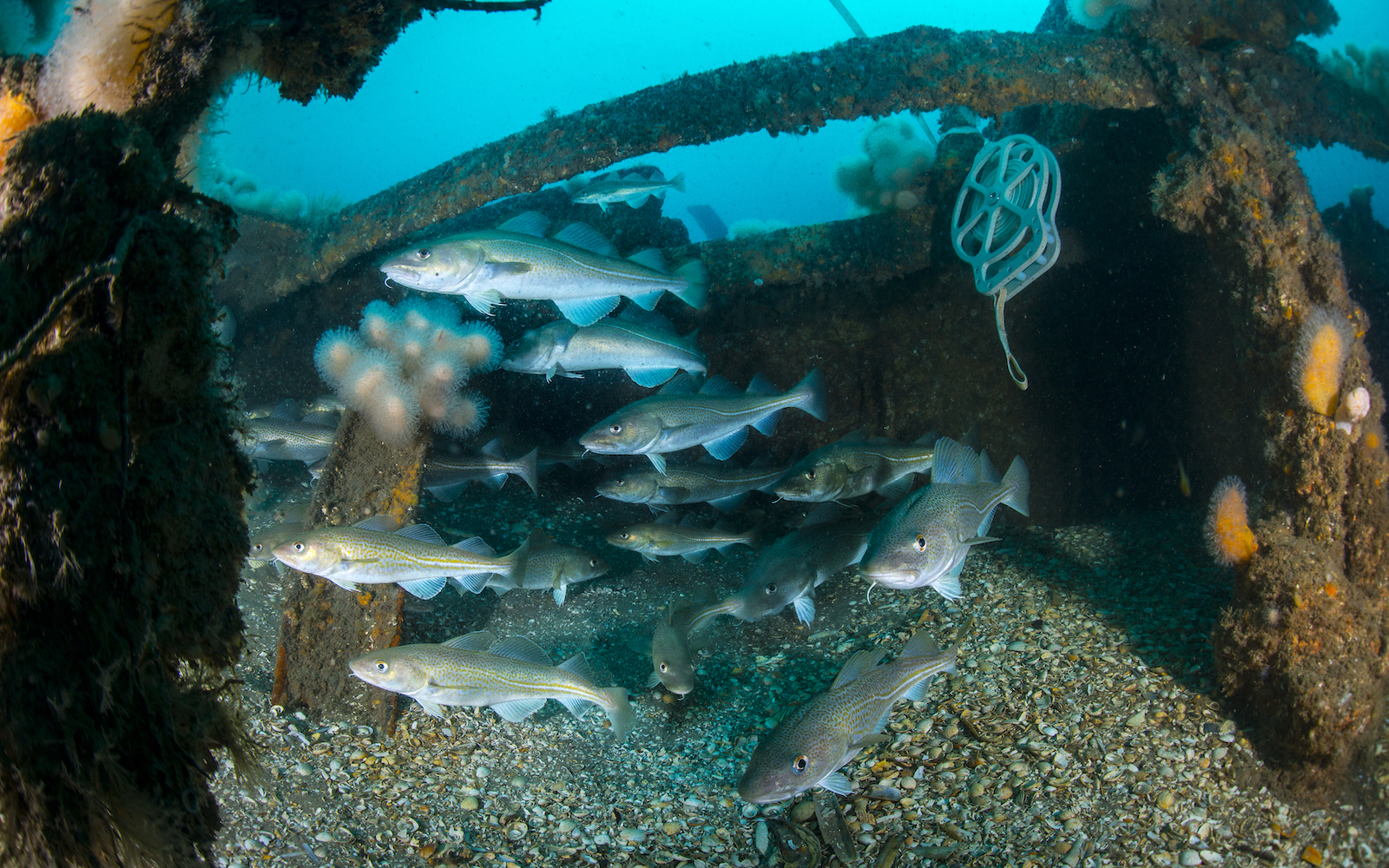
This sobering statistic highlights the structural inadequacies of contemporary fisheries management. For decades, quotas have been negotiated behind closed doors, where the immediate economic demands of the commercial fishing sector routinely override the long-term biological imperatives outlined by marine biologists. The result is a depleted marine landscape where multiple commercial species hover on the brink of functional extinction.
The Ripple Effect: From Trawlers to Takeaways
While the debate over quotas often plays out in government conference rooms and scientific journals, the consequences of depleted fish stocks are keenly felt on Britain’s high streets.
The traditional British fish and chip shop—an enduring cultural institution—is bearing the brunt of the cod collapse. Industry reports highlight several mounting pressures facing independent fish and chip businesses:
- Skyrocketing Wholesale Prices: With domestic cod landings severely restricted, shop owners face soaring procurement costs.
- Shrinking Availability: The volume of freshly caught domestic cod has dwindled, forcing businesses to compete fiercely for scarce local supply.
- Heavy Reliance on Imports: To stay afloat, many British chip shops now rely heavily on imported cod, sourced from distant waters such as the Barents Sea, exposing businesses to international supply chain shocks and currency fluctuations.
- Consumer Cost Pressures: The average price of a takeaway fish and chip meal has risen sharply in recent years, pricing out working-class families and transforming a historically accessible, affordable meal into a luxury item.
Official Statements and Industry Perspectives
The announcement of the 2027 zero-catch advice has drawn sharp criticism from conservation organizations, who are demanding immediate accountability from political leaders.
Jonny Hughes, Fisheries Policy Lead at the Blue Marine Foundation, did not mince words when addressing the ongoing policy failures:
"A second consecutive year of zero-catch advice should be a wake-up call. Northern Shelf cod did not collapse overnight. It is the result of years of political decisions that repeatedly allowed catches to exceed scientific recommendations."
Hughes emphasized that the path forward requires a fundamental shift in political will, contrasting the excellence of modern marine science with the persistent refusal of governments to implement its findings:
"The choice facing governments is simple: continue with business as usual or prioritise recovering this iconic species. The future of our seas and our fishing communities depend on getting this right."
"It is remarkable that we have access to some of the best fisheries science in the world, science that tells us exactly how to fish sustainably while securing the greatest long-term benefits for fishing communities, food security and the economy, yet we continue to disregard it."
Furthermore, Hughes linked the protection of marine biodiversity to broader national security and climate resilience frameworks:
"At a time when the Government rightly recognises that the climate crisis is already affecting our lives, it must also recognise that resilience to these challenges depends on a healthy and resilient ocean. Healthy fish populations are a fundamental part of that."
Future Outlook: Restoring Marine Resilience
As the UK navigates an uncertain ecological and economic future, the collapse of Northern Shelf cod serves as a critical test case for the nation’s environmental commitments.
The Department for Environment, Food and Rural Affairs (Defra) has increasingly acknowledged that nature and climate security are intertwined components of national security. A healthy, biodiverse ocean acts as a vital carbon sink, buffers against coastal erosion, and provides the structural resilience necessary for marine ecosystems to withstand warming sea temperatures and acidification driven by climate change.
However, policy declarations must be matched by enforceable, science-led regulatory reforms. To rescue Northern Shelf cod from the point of no return, future fisheries management frameworks must undergo a paradigm shift:
- Strict Adherence to Scientific Advice: Governments must legally bind themselves to respecting ICES quotas, eliminating the political horse-trading that historically pushes total allowable catches above safe biological limits.
- Ecosystem-Based Management: Management strategies must look beyond single-species quotas to account for mixed-fisheries dynamics, habitat protection, and the cumulative impacts of climate change on fish migration and reproduction.
- Transition Support for Coastal Communities: Recognizing that a zero-catch policy imposes immediate hardships on fishers, governments must provide targeted economic transition support, retraining programs, and incentives for low-impact, sustainable fishing methods that allow stocks to rebound.
- Enhanced Monitoring and Enforcement: Closing loopholes in catch-reporting, deploying mandatory remote electronic monitoring (REM) on commercial vessels, and aggressively cracking down on illegal discarding will be essential to ensure that emergency closures are genuinely respected.
The warning bells have sounded for a second consecutive year. Whether policymakers choose to heed the science or gamble away the remainder of Britain’s marine heritage will determine not only the fate of the Northern Shelf cod, but the viability of the nation’s fishing communities and food security for generations to come.



