

Executive Overview
Deep in the heart of southern Chile, the windswept expanse of Patagonia National Park is undergoing a profound and meticulous ecological renaissance. Once scarred by more than a century of intensive sheep and cattle ranching, the Chacabuco Valley is slowly shedding the industrial fencing and overgrazed pastures that nearly drove its native fauna into oblivion. At the forefront of this monumental healing process is a dedicated, women-led team of rangers and conservationists who are working tirelessly to reverse decades of environmental degradation.
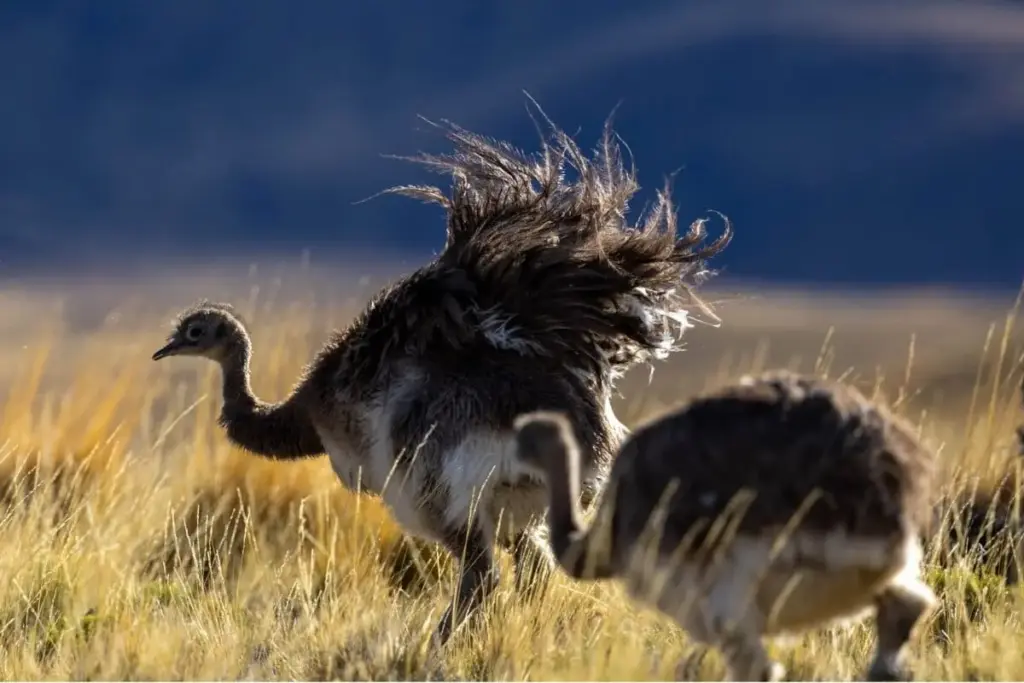
In April 2026, Mongabay’s reporting team traveled to this remote sanctuary to document one of South America’s most ambitious rewilding initiatives. Working in close collaboration with the Rewilding Chile Foundation—an organization established by Tompkins Conservation—these rangers prepared for a critical milestone: the reintroduction of 13 Darwin’s rheas (Rhea pennata) back into the wild.
The mission is as delicate as it is vital. Darwin’s rheas, flightless running birds closely related to ostriches, serve as the ecological "gardeners of the steppe." By consuming native vegetation and excreting seeds across vast distances, they play an indispensable role in maintaining the health and diversity of the Patagonian landscape. However, facing relentless threats from apex predators like pumas, illegal livestock grazing, harsh weather extremes, and the lingering legacy of habitat fragmentation, these birds require round-the-clock protection and expert management.
This in-depth report chronicles the arduous preparation, the emotional high-stakes release, and the broader ecological implications of bringing Chile’s forgotten steppe-dwellers back home.
Detailed Chronology: The Road to Release
A Year-Long Labor of Love
The journey to release a single group of Darwin’s rheas is not a spontaneous event; it is the culmination of a year-round, highly synchronized operation based out of the park’s dedicated Rheas Reproduction Center. According to veteran rangers who have spent a decade tending to the facility, the process requires immense patience, specialized animal husbandry, and unwavering vigilance.
Months before the scheduled release, candidate birds are moved into specialized acclimation corrals. Here, they spend approximately two months adjusting to the sights, sounds, and ambient conditions of the semi-wild environment they will soon inhabit. Ensuring optimal physical health is paramount. Rangers monitor the birds’ nutrition meticulously, guaranteeing that each individual possesses the robust body condition required to navigate the harsh demands of the Patagonian steppe.
Mitigating Predator Pressures
Operating in Patagonia means coexisting with one of the region’s most formidable apex predators: the puma (Puma conconor). Pumas represent a constant threat to captive-reared and newly released wildlife. To safeguard the rheas during their vulnerable acclimation phase, rangers maintain specialized security protocols around the enclosures.
"We live in a landscape where pumas are the main predator," explains a senior ranger at the reproduction center. "We’re always making sure they don’t get into the corrals."
防御 measures include specially engineered fencing designed with outward-angled tops, which drastically reduce the likelihood of a puma successfully clearing the barrier by jumping. This constant vigilance allows the birds to mature and stabilize safely before facing the ultimate test of survival in the open wilderness.
Weather, Stress, and the Tense Moments Before Liberation
As the target release day approaches, the logistical challenges multiply. The Chacabuco Valley is notorious for its mercurial and punishing weather patterns, characterized by gale-force winds and drastic, sudden temperature drops.
On the morning of the operation, the rangers gathered to assess environmental conditions. "Our biggest concerns are the environmental conditions on release day," the team noted while scanning the horizon. "We’re in an area where winds are very strong, and we have drastic temperature changes."
The handling process itself is fraught with nervous tension. Rangers must capture and secure the large birds into specialized transport boxes without inducing undue physiological stress or physical injury.
"We get stressed about stressing them," admitted one staff member. "We don’t want to harm them when we put them in the transport boxes."
Once loaded, the transport vehicles navigated the rugged terrain to a release site chosen for its proximity to local herds of guanacos—another native herbivore that shares deep ecological overlap with the rheas. With careful precision, the transport box lids were unlatched.
"Three, two, one. Go."
The transition was remarkably smooth. Eschewing panic, the 13 rheas stepped out into the open steppe with surprising composure. Within moments, observers watched in awe as the birds immediately began grazing and foraging—a golden indicator of low stress levels and high adaptability. Rather than scattering in terror, they moved cohesively as a flock, quickly embarking on journeys that would take them kilometers away into the heart of the national park.
Supporting Context & Metrics: Rebuilding the Steppe
The Legacy of Ranching and the Power of Rewilding
To understand the significance of the 2026 rhea release, one must look back at the ecological trajectory of the Chacabuco Valley. For well over a century, the valley was dominated by intensive sheep and cattle ranching operations. Vast tracts of land were carved up by thousands of kilometers of wire fencing, which restricted the natural migratory pathways of native wildlife, degraded soils, and displaced indigenous species.
By the early 2000s, Darwin’s rheas had been pushed to the absolute brink of local extinction. Historical wildlife surveys and census estimates conducted in the region revealed a horrifyingly small population—ranging between a precarious 11 and 15 individuals remaining in the entire area.
"When I arrived in 2016, you simply didn’t see many rheas," recalls a conservation worker stationed at the park.
The turning point arrived when Tompkins Conservation stepped in, acquiring the former pastoral ranches and transitioning them into protected public parkland. In one of the most ambitious infrastructural deconstructions in South American conservation history, workers began dismantling thousands of kilometers of obsolete wire fencing. This monumental act of un-fencing allowed the windswept steppes to breathe again, opening up ancient corridors for native species to reclaim their historic ranges.
The Ecological Role of the "Gardeners of the Steppe"
Darwin’s rheas are far more than charismatic avian inhabitants; they are foundational keystone species essential to the recovery of the Patagonian ecosystem.
Field biologists and rangers tracking the birds have extensively documented their droppings, discovering a rich array of viable seeds from various native shrubs and grasses. This empirical evidence underscores the rhea’s role as an elite seed disperser. As they roam across massive home ranges in search of sustenance, they continuously plant and propagate the flora of the steppe.
"For me, the rhea is the gardener of the steppe," a senior conservationist reflects. "We’ve found many different seeds in their droppings. This shows us they’re excellent seed dispersers. We believe their role is extremely important for restoring the steppe."
Furthermore, as rhea numbers have slowly ticked upward due to ongoing reproduction and release programs, ecological monitors have observed cascading positive effects. The return of the birds has coincided with healthier interactions between native herbivores, such as increased coexistence and shared foraging dynamics between guanacos and rheas. Slowly but surely, the complex natural rhythms of the Patagonian wilderness are stitching themselves back together.
Official Statements and Community Engagement
Bridging Generations: Environmental Education in the Field
Rewilding Chile understands that long-term ecological restoration cannot succeed without the hearts and minds of the local human community. Changing a cultural paradigm forged over a century of ranching requires deep patience and active outreach.
"These changes take time," park authorities note. "After more than a century of ranching, you can’t expect people to understand that the park has to be protected in just 10, 20 years."
As part of this educational crusade, the park actively integrates local youth and students into its conservation milestones. During the lead-up to the April 2026 release, local science educators brought student groups directly to the park to witness the rewilding efforts firsthand.
"As a science teacher, we thought it was very important for students to come visit a National Park, where conservation actions as powerful as a release are carried out," one educator remarked. By witnessing the liberation of the 13 rheas, the next generation of Chileans gains a tangible, emotional connection to their natural heritage, transforming passive observers into active stewards of the environment.
Human Reflection on Avian Society
Beyond the hard science of biology and population metrics, working intimately with Darwin’s rheas offers profound philosophical lessons for the human caretakers. Observing how the birds prioritize collective survival over individual impulse has left a lasting mark on the women and men who spend their days guarding them.
"What matters most to them is the group, not the individual," one ranger reflected on release day. "I think that’s an important lesson for us as humans who have always believed ourselves to be so superior."
Future Outlook
The successful release of the 13 Darwin’s rheas in April 2026 marks a major victory for Patagonia National Park, but the work is far from finished. Rewilding Chile and Tompkins Conservation face an ongoing commitment to monitor the post-release survival of the birds using advanced tracking technologies, camera traps, and field surveys.
Challenges remain on the horizon. The lingering presence of legacy fences outside park boundaries, the ever-present threat of puma predation, and the complexities of climate variability mean that the newly established rhea populations will require continued, adaptive management for years to come.
However, the trajectory is undeniably hopeful. With each successful release, the "gardeners of the steppe" take another stride toward healing the wounds of industrial ranching. The resurgence of the rhea serves as a powerful global reminder that with vision, perseverance, and rigorous scientific stewardship, damaged ecosystems can heal, and lost wilderness can be brought back to life.
Mongabay’s video journalism team continues to document frontline conservation stories across the globe. If you have inspiring local stories, urgent environmental issues, or community-led initiatives you believe deserve investigative coverage, get in touch with the Mongabay reporting desk to be a part of the journalistic process.



