

Executive Overview
Across sub-Saharan Africa, urban mobility has long been defined by the cacophony of roaring engines, the gridlock of chaotic traffic, and thick, billowing plumes of black diesel exhaust. For decades, the ubiquitous minibus—known locally as the matatu in Kenya or dala-dala in Tanzania—has served as the beating heart of African commerce and commuting. Yet, these aging, diesel-powered workhorses carry a heavy toll, pumping millions of tons of carbon dioxide and toxic particulate matter into the atmosphere, choking metropolitan skies, and driving up public health crises.
Enter BasiGo, a pioneering e-mobility startup that is systematically reimagining how public transport operates across the region. Founded on a vision of clean air and sustainable commerce, the company aims to replace tens of thousands of diesel buses with state-of-the-art electric alternatives. By introducing an innovative "pay-as-you-drive" financing model, BasiGo is dismantling the most significant barrier to electric vehicle (EV) adoption in developing markets: the astronomical upfront cost.
What began as a fleeting glimpse of snow-capped mountains during pandemic lockdowns has now blossomed into a fast-growing fleet transporting millions of passengers across Kenya and Rwanda. More than just a vehicle manufacturer, BasiGo operates as an end-to-end service provider, supplying vehicles, building charging infrastructure, and managing maintenance. As the company looks beyond commuter minibuses toward inter-city coaches and heavy-duty freight trucks, it stands at the vanguard of an economic and environmental transformation that could redefine urban living across the African continent.
Detailed Chronology: From Pandemic Skies to a Continental Fleet
The 2020 Awakening: A Glimpse of the Possible
The genesis of BasiGo can be traced back to an unprecedented global crisis. In March 2020, as the COVID-19 pandemic swept across the globe, governments scrambled to implement containment measures. In Kenya, authorities took the drastic step of temporarily suspending public transportation to curb community transmission.
The shutdown lasted a mere three days. Yet, the environmental impact was instantaneous and profound. Without thousands of combustion engines spewing exhaust into the Nairobi air, the urban atmosphere underwent a miraculous cleansing. For the first time in decades, residents of Nairobi—situated roughly 175 kilometers away—looked up and clearly beheld Mount Kenya, Africa’s second-highest peak. For some, the visibility extended even further south, revealing the majestic crown of Mount Kilimanjaro, the continent’s highest mountain, towering in the distance across the Tanzanian border.
For the founders of BasiGo, this brief reprieve from smog was a revelation. It offered a tangible, living proof-of-concept of what African cities could become if diesel-powered transport were eliminated. The temporary lockdown transformed into an enduring ambition: to harness this environmental clarity and make it a permanent reality for millions of urban dwellers.
Scaling the Fleet and Winning Commuters
Moving swiftly from conceptualization to execution, the leadership team engineered a business model tailored specifically to the economic realities of East African transport markets. Rather than attempting to rival legacy automotive giants with bespoke manufacturing plants, BasiGo adopted an asset-light, partnership-driven manufacturing strategy. The company sources foundational bus components and chassis from established global EV manufacturers in China, including industry giants like King Long and BYD, and imports them to Kenya for local assembly.
This approach stimulated local job creation and technical capacity building. Technicians, engineers, and support staff were hired and rigorously trained to assemble, repair, and maintain sophisticated electric powertrains on African soil.
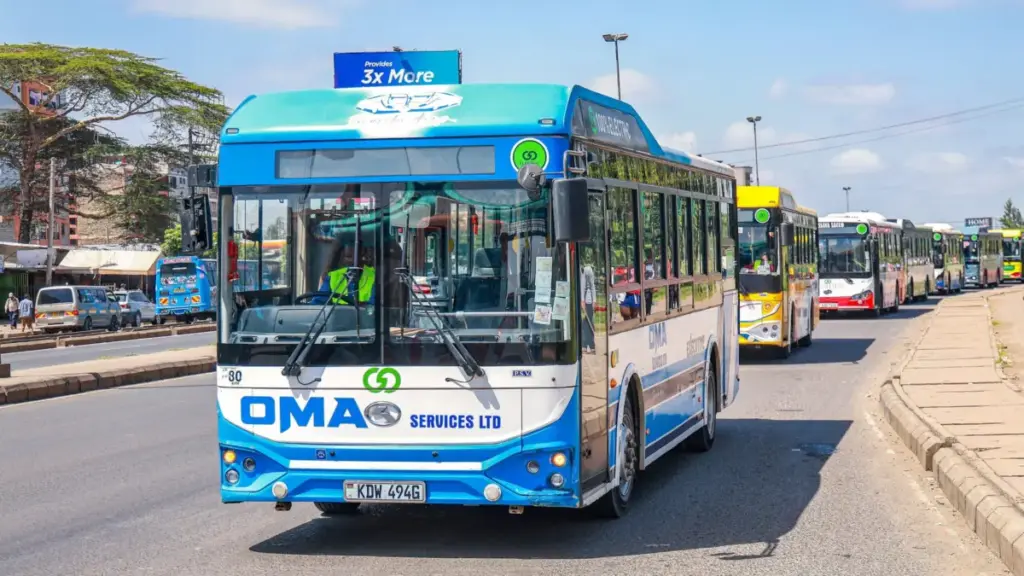
Since its operational launch, BasiGo has achieved impressive milestones. The company has deployed a growing fleet of electric buses operating on crucial urban routes in Kenya and Rwanda. Together, this expanding fleet has successfully ferried more than 15 million passengers. What started as an environmental pipe dream is now a heavily relied-upon, daily transit reality for thousands of working-class commuters.
Supporting Context & Metrics: Economics, Environment, and Ecosystems
Dismantling the Upfront Cost Barrier
The primary hurdle facing the adoption of electric commercial vehicles in developing nations is capital expenditure. Traditional internal combustion engine (ICE) buses are relatively inexpensive to purchase upfront, though they impose crippling long-term costs through fuel consumption and maintenance. Conversely, electric buses command a steep initial price tag, effectively pricing out individual operators and small bus cooperatives—the lifeblood of African public transport.
BasiGo’s core innovation lies in neutralizing this financial bottleneck through its comprehensive service ecosystem. Co-founder and CEO Jit Bhattacharya recognized that selling buses outright would fail. Instead, BasiGo treats the bus as part of a holistic service package.
Under the company’s pay-as-you-drive model, an individual operator or a member of a bus cooperative (of which there are more than 300 in Kenya) pays a remarkably modest initial deposit—reportedly 40% less than the down payment required for a conventional diesel bus. Following this, the operator pays a daily lease fee calculated based on usage.
This financial architecture completely alters the risk profile for transport entrepreneurs. According to Bhattacharya, operators utilizing BasiGo buses earn a projected return on investment (ROI) that is 5 to 10 times higher over the operational lifespan of the vehicle compared to a traditional diesel counterpart. The savings accumulated from avoiding volatile fossil fuel prices far outweigh the daily lease obligations.
Environmental Impact and Local Economic Resilience
The ecological benefits of this transition are staggering. Calculations by BasiGo’s engineering and environmental teams indicate that replacing a single diesel bus with an electric alternative in Kenya eliminates approximately 50 tons of carbon dioxide emissions annually. With an estimated 20,000 buses operating in Nairobi alone, the complete electrification of the city’s municipal bus fleet would slash hundreds of thousands of tons of greenhouse gases every year.
Furthermore, the environmental dividends extend far beyond carbon metrics. Kenya boasts a remarkably green energy grid, with approximately 90% of its national energy mix generated from renewable sources—predominantly geothermal, hydro, and wind power.
By powering its fleet with domestically generated renewable electricity, BasiGo keeps capital within the local economy. Traditional public transport relies heavily on imported petroleum, leaving operators vulnerable to global oil shocks, foreign exchange fluctuations, and balance-of-payment pressures. Electric mobility decouples domestic transport from the international fossil fuel market, retaining wealth within East Africa.
The human health impacts are equally compelling. Drastic reductions in particulate matter ($PM2.5$ and $PM10$) directly correlate with falling rates of respiratory ailments. Public health advocates project noticeable declines in childhood asthma, chronic bronchitis, and cardiovascular illnesses in densely populated urban corridors once choked by vehicle fumes.
Official Statements and Industry Perspectives
The rapid ascent of BasiGo has drawn intense scrutiny and admiration from global investors, environmentalists, and urban planners alike. At the core of the company’s public messaging is a commitment to pragmatic, scalable sustainability.
"Our goal was never to build a boutique luxury brand for eco-conscious elites," explains CEO Jit Bhattacharya. "We set out to solve the fundamental economic equation of public transport in Africa. If an electric bus does not make more financial sense for a daily-wage bus operator than a diesel bus, the transition will fail. Our pay-as-you-drive model bridges that gap, proving that sustainability and high profitability can walk hand in hand."
Industry analysts point out that BasiGo’s integration into existing informal transport networks—such as Kenya’s deeply entrenched matatu cooperatives—is a masterclass in market penetration. Rather than attempting to uproot legacy systems, BasiGo collaborates directly with cooperative leadership, transforming entrenched operators into enthusiastic stakeholders in the green transition.
Environmental regulators across East Africa have similarly praised the initiative. Representatives from environmental protection agencies have noted that private-sector-led e-mobility provides governments with an actionable pathway toward meeting their Nationally Determined Contributions (NDCs) under the Paris Agreement, without imposing heavy, state-funded subsidies.
Caveats, Challenges, and Structural Bottlenecks
Despite its resounding early successes, BasiGo’s path forward is fraught with operational, infrastructural, and logistical hurdles. Scaling an innovative transport model across developing markets demands navigating complex realities.
The Human Capital Bottleneck
While BasiGo successfully imports core components from established Chinese manufacturing giants like King Long and BYD, the mandate for local assembly introduces significant operational friction. Constructing, servicing, and repairing high-voltage electric commercial vehicles requires specialized technical skills that are rarely found off-the-shelf in local labor markets.
Consequently, BasiGo must invest heavily of its own accord in comprehensive training programs. Educating local mechanics, electricians, and engineers to safely handle lithium-ion battery packs, regenerative braking systems, and electric motor controllers in every operational zone is resource-intensive. As the company expands into new territories, maintaining this high standard of technical education will remain a persistent challenge.
Infrastructure Deficits and Real Estate Realities
Powering a massive fleet of commercial electric buses requires robust electrical grid upgrades and high-power charging depots. However, securing the requisite land and grid connectivity is far from straightforward.
BasiGo has encountered major hurdles in acquiring real estate for charging stations. To be commercially viable, charging depots must be situated directly along high-density bus routes and immediately adjacent to high-voltage power lines. In bustling urban centers like Nairobi, prime land near transit hubs is scarce, legally contested, and prohibitively expensive. Navigating municipal zoning laws, securing utility permits, and upgrading substation capacities to handle sudden, massive electrical loads represents a capital expenditure challenge that could constrain rapid geographic expansion.
Future Outlook: Beyond Minibuses and into Freight
BasiGo is standing firmly at an inflection point. Having successfully transitioned from concept to an established commercial presence, the company’s forward trajectory points toward aggressive expansion across multiple dimensions.
Fulfilling the Backlog
Current operational metrics underscore overwhelming market demand. More than 150 BasiGo buses are actively navigating East African roads, but this figure represents only a fraction of the pipeline. The company currently holds a verified reservation list of 1,200 commercial customers eagerly awaiting vehicle deliveries as manufacturing capacity and supply chains scale up.
To satisfy this pent-up demand, BasiGo is actively securing venture capital, forging strategic debt-financing partnerships, and refining its local assembly workflows to accelerate throughput.
Diversifying Product Lines: From Coaches to Cargo
Having successfully proven its model within the urban commuter minibus segment, BasiGo has already initiated diversification. The company has successfully rolled out inter-city coach services, demonstrating that its electric drivetrain and battery management technologies can handle long-haul, high-speed regional transit routes.
However, the most ambitious horizon for BasiGo lies in tackling the next major heavy polluter on African highways: commercial freight trucks. Heavy-duty logistics trucks are among the most carbon-intensive and fuel-thirsty vehicles traversing sub-Saharan trade corridors, moving goods from ports like Mombasa inland toward Uganda, Rwanda, and the Democratic Republic of Congo.
While BasiGo’s leadership has kept specific specifications and rollout timelines tightly under wraps, company executives have offered a clear directive to industry watchers: stay tuned.
If BasiGo can successfully translate its pay-as-you-drive financing and charging ecosystem from urban minibuses to heavy freight haulers, the company will do far more than clean the air of Nairobi or Kigali. It will lay the foundational infrastructure for a fully decarbonized logistics backbone across the entire sub-Saharan region, proving that Africa can leapfrog the fossil-fuel era entirely on its journey toward a sustainable future.



