

Executive Overview
The American renewable energy landscape is undergoing a quiet yet structural transformation, anchored by the expansion and technological maturation of anaerobic digestion and biogas recovery systems. According to a landmark report released by the American Biogas Council (ABC) in late 2026, wastewater treatment plants (WWTPs) continue to solidify their position as the foundational pioneers of the biogas sector. Accounting for a staggering 47% of all operational anaerobic digesters across the United States, municipal and industrial wastewater facilities remain the undisputed heavyweights of biogas production.
Yet, the broader biogas ecosystem—spanning municipal wastewater, agricultural manure management, and landfill gas (LFG) recovery—is entering a new phase of sophisticated commercialization. As major waste and energy companies approach the completion of their initial multi-year landfill-gas-to-renewable-natural-gas (RNG) commitments, the industry is pivoting toward value-additive integration. Developers are no longer merely burning biogas for localized electricity or flaring it out of regulatory necessity; they are increasingly investing in high-end upgrading infrastructure to produce pipeline-quality RNG, combined heat and power (CHP) systems, and complex co-digestion methodologies that merge wastewater sludge with external organic feedstocks.
At the same time, shifting macroeconomic and regulatory currents are reshaping the financial calculus of project developers. From regulatory credit pricing fluctuations across compliance markets like California and Oregon to massive capital infusions by private equity-backed firms, the biogas sector is navigating a complex matrix of regulatory incentives and market-driven demands. This comprehensive review examines the latest findings from the ABC wastewater report, details significant corporate and municipal developments from September 2026, analyzes key environmental credit metrics, and projects the trajectory of the biogas economy in the years ahead.
Detailed Chronology: September 2026 Industry Developments
The month of September 2026 proved to be an exceptionally active period for project commissioning, strategic partnerships, and long-term infrastructure renewals across the North American biogas and RNG sectors. Major players including Montauk Renewables, Waga Energy, LRS, Casella Waste Systems, and Opal Fuels all achieved critical operational and contractual milestones.
Mid-September: Montauk Renewables Unveils $200 Million Swine Waste Facility in North Carolina
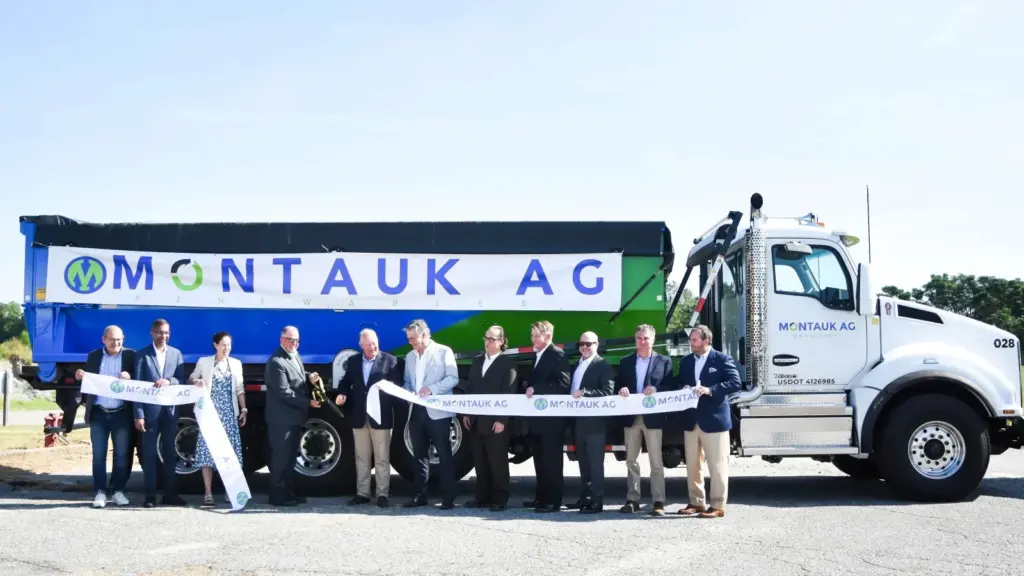
On September 15, executives from Montauk Renewables, alongside local dignitaries and agricultural stakeholders, celebrated the formal grand opening of a massive anaerobic digestion facility in Turkey, North Carolina. Representing a cumulative capital investment of approximately $200 million, the agricultural biogas project is designed to harvest methane-rich manure biogas from a vast network of regional swine operations to generate utility-scale electricity.
According to statements from Montauk Renewables CEO Sean McClain and the company’s regulatory filings, the facility operates under long-term supply agreements spanning more than 80 distinct farming locations. To ensure revenue stability, Montauk secured a 10-year power purchase agreement alongside a complementary contract to market roughly one-third of the facility’s generated renewable energy certificates (RECs) to Duke Energy. At peak operational capacity, the Turkey facility is projected to yield up to 41 megawatt-hours (MWh) of electrical power annually, paired with an estimated 870 tons of high-grade organic fertilizer alternatives—closing the loop on agricultural nutrient management.
This agricultural commissioning comes on the heels of solid financial momentum for Montauk, which reported a 19.7% year-over-year revenue increase to $54 million in the second quarter of 2026, bolstered by a 3% bump in RNG production totaling 1.5 million million British thermal units (mmBtus).
Mid-September: Waga Energy Secures LRS Partnership for Atkinson, Illinois Landfill Project
In another major development on September 15, French RNG developer Waga Energy—bolstered by major private equity backing—announced that Lakeshore Recycling Systems (LRS) had selected the firm to engineer, finance, construct, own, and operate a state-of-the-art RNG production facility at the Eco-Hill Landfill. Located in Atkinson, Illinois, the Eco-Hill site is LRS’s sole landfill asset and serves as a vital waste-management hub for the greater Chicago metropolitan area.
The planned facility is engineered with an initial raw gas processing capacity of 3,000 standard cubic feet per minute (scfm), which is expected to yield up to 610,000 mmBtus of pipeline-spec RNG annually. Under the structural parameters of the agreement, LRS will secure an ongoing equity share of the revenues generated from the commercial sale of the on-site RNG. Construction is currently underway, with commercial operation slated to commence in 2028.
Early September: Waga Energy and Casella Waste Systems Bring Third RNG Facility Online
Demonstrating the power of strategic, multi-project development frameworks, Waga Energy and Casella Waste Systems jointly announced the operational launch of their third collaborative landfill gas project on September 3. Situated at Casella’s McKean Landfill in Mount Jewett, Pennsylvania, the new facility represents another milestone in the companies’ long-term environmental partnership.
The McKean facility is designed to process 2,000 scfm of raw landfill gas, scaling up to produce an estimated 407,000 mmBtus of pipeline-grade RNG annually once full operational velocity is achieved. Production at the site is actively ramping up. The underlying partnership between Casella and Waga encompasses a multi-site framework wherein Waga absorbs 100% of the upfront capital expenditure for construction, retaining ownership and operational control over a 20-year span, while both entities share the resulting RNG sales revenues.
Mid-September: Opal Fuels Strengthens California Portfolio Through Municipal Renewals and CNG Station Upgrades
Opal Fuels made waves in California’s clean transportation and biogas sectors throughout September with a pair of critical operational updates. On September 16, Opal announced the successful five-year renewal of its operating agreement with the City of San Diego for the long-standing landfill-gas-to-energy project at the Miramar Landfill. Operating continuously since 1998, the Miramar facility captures methane to generate approximately 400,000 MWh of electricity annually, providing reliable baseload renewable power to the local grid.
This municipal renewal followed on the heels of an August-into-September operational push that saw Opal complete major capacity upgrades at its compressed natural gas (CNG) and RNG fueling station in Goshen, California. Following comprehensive renovations, the Goshen station expanded its throughput capacity by 1.7 million gasoline gallon equivalents (GGE) annually, integrating high-integrity RNG into its fuel slate. Opal acquired the Goshen facility in 2025 and has aggressively deployed capital across its national portfolio, channeling $52.7 million into project developments during the first half of 2026 alone. Despite mixed revenue results—reflecting a 5% year-over-year dip for the first half of 2026—Opal’s underlying operational output remains robust, highlighted by a 6% increase in RNG production to 2.4 million mmBtus over the same timeframe.
Supporting Context & Metrics: The American Biogas Council Report
The micro-level project announcements of September 2026 find profound macro-level validation in the American Biogas Council’s landmark wastewater sector report, released earlier in the month. The comprehensive industry survey provides a fresh analytical baseline for the state of anaerobic digestion infrastructure across the United States.
Wastewater Dominance and Untapped Potential
According to the ABC data, wastewater treatment plants currently operate 1,213 anaerobic digestion facilities nationwide, accounting for nearly half (47%) of all operational biogas installations in the country. Remarkably, 29 new municipal and industrial wastewater digester facilities have successfully come online since 2020.
Despite this leadership, the ABC report stresses that the wastewater sector is operating at only a fraction of its ultimate theoretical potential. Industry guidelines generally flag wastewater facilities with average daily flow rates exceeding 1 million gallons per day (MGD) as prime candidates for anaerobic digestion. Currently, only about 24% of such qualified facilities have integrated digesters into their unit processes. If the remaining 76% of qualified plants were to adopt anaerobic digestion, the municipal sector could unlock a massive wave of new biogas capacity.
Evolution of Digester Technology
Beyond simple capacity growth, the ABC report highlights a qualitative evolution in how wastewater treatment plants design and utilize their digesters. Historically engineered primarily for sludge volume reduction and localized thermal or electrical energy generation, modern wastewater digesters are increasingly configured for multi-purpose monetization.
Since 2018, a rapidly growing segment of the municipal sector has invested in advanced gas-upgrading technologies to convert raw biogas into high-value RNG for pipeline injection or vehicle fueling. Others have scaled up CHP systems or embraced "co-digestion"—the practice of co-processing municipal wastewater sludge with high-strength organic wastes (such as food waste, fats, oils, and greases) to dramatically boost methane yields and tipping-fee revenues.
National Biogas Yields and Future Projections
Today, wastewater digesters across the U.S. collectively capture more than 100 billion cubic feet of biogas annually. However, the ABC projects that with aggressive, widespread adoption across all qualified facilities, the wastewater sector alone could capture an additional 70 billion cubic feet of biogas per year, radically expanding the nation’s renewable energy supply.
Official Statements and Industry Insights
The structural evolution of the biogas economy has prompted prominent industry leaders to reassess strategic priorities. Commenting on the release of the municipal infrastructure report, ABC Executive Director Patrick Serfass emphasized that the path forward lies in both horizontal expansion and vertical optimization.
"Our survey shows there are opportunities to do more — by expanding anaerobic digestion where it makes sense and getting more value from the digesters already in place," stated Serfass in an official press release accompanying the report.
Serfass’s perspective underscores a broader industry realization: as the "low-hanging fruit" of landfill gas capture is systematically exhausted by major waste management firms, the market must look toward optimizing existing municipal and agricultural assets, deploying advanced gas-cleaning technologies, and extracting higher-value commodities out of traditional waste streams.
Regulatory and Environmental Credit Market Snapshot
The financial viability of biogas and RNG projects is deeply intertwined with environmental credit markets and regulatory compliance mechanisms. Developers rely heavily on programs such as the federal Renewable Fuel Standard (RFS) and state-level clean fuel initiatives to monetize the environmental attributes of their projects.
Market pricing metrics compiled by EcoEngineers provide a snapshot of the regulatory credit landscape as of October 7, 2026:
- D3 RIN Prices (Cellulosic Biofuel): Trading at $2.294 per Renewable Identification Number (RIN), down slightly from $2.380 in 2025. Despite the minor year-over-year compression, D3 RIN values remain remarkably robust, providing essential revenue support for cellulosic RNG producers.
- D5 RIN Prices (Advanced Biofuel): Trading at $2.085 per RIN, marking a slight increase from $2.060 in 2025.
- Oregon Clean Fuels Program (CFP): Credits are valued at $81 per metric ton of carbon dioxide equivalent ($81/MT CO₂e), reflecting steady regional demand for low-carbon transportation fuels.
- California Low Carbon Fuel Standard (LCFS): Credits are trading at $88 per metric ton of carbon dioxide equivalent ($88/MT CO₂e). California’s LCFS market remains a dominant financial driver for RNG projects nationwide, particularly for facilities injecting gas into the state’s transportation pipeline network.
These credit values directly dictate capital expenditure decisions. While carbon and RIN prices have experienced minor cyclical adjustments, they continue to provide the predictable cash flows necessary for developers like Montauk, Waga, and Opal to secure project-finance debt and equity backing for multi-million-dollar infrastructure investments.
Future Outlook
As the biogas industry looks toward the remainder of the decade, the strategic horizon is characterized by maturation, technological integration, and market diversification.
- The Shift to End-Use Optimization: With major waste companies nearing the completion of their initial, highly publicized landfill-gas-to-RNG commitments, the frontier of growth is shifting. Future investments will increasingly prioritize optimization, efficiency upgrades at legacy sites, and the conversion of medium-to-small landfills that were previously deemed economically unviable.
- Unlocking Municipal and Agricultural Potential: The untapped capacity identified in the ABC report—specifically the 76% of qualified wastewater plants lacking digesters and the vast expanse of rural agricultural manure streams—represents the primary growth engine for the 2030s. Projects like Montauk’s $200 million North Carolina swine waste facility signal a growing willingness among institutional investors to tackle complex agricultural feedstocks.
- Technological Convergence: Expect to see accelerated deployment of advanced gas-upgrading technologies, membrane separation systems, and carbon capture and sequestration (CCS) integrations at biogas facilities. By pairing RNG production with carbon capture, developers can drive their carbon intensity (CI) scores deep into negative territory, maximizing compliance value under stringent state programs like California’s LCFS.
In summary, the biogas sector has graduated from an experimental environmental compliance tool into a vital, highly capitalized pillar of the North American energy infrastructure. Driven by municipal leadership, agricultural innovation, and sophisticated private sector partnerships, the industry is well-positioned to convert millions of tons of waste into clean, reliable, and lucrative renewable energy for decades to come.



