
Executive Overview
As the global imperative to transition toward a low-carbon economy intensifies, the conversation surrounding energy infrastructure often bogs down in macro-economics. Headlines are routinely dominated by multi-billion-dollar federal subsidies, massive corporate balance sheets, and the monumental capital expenditures required of national utilities. Yet, while finding the necessary funding to overhaul power grids and construct utility-scale clean energy projects may seem daunting, the most resilient and responsive solutions may be much closer to home.
Across Canada, a quiet revolution is taking root, driven not by multinational conglomerates or distant venture capital firms, but by neighbors, local cooperatives, and grassroots investors. Through innovative financial mechanisms such as community bonds, localized green funds, and cooperative ownership models, everyday citizens are taking the energy transition into their own hands. These initiatives prove that building low-carbon power projects does not exclusively require centralized financing; it can be democratized, localized, and funded from the bottom up.
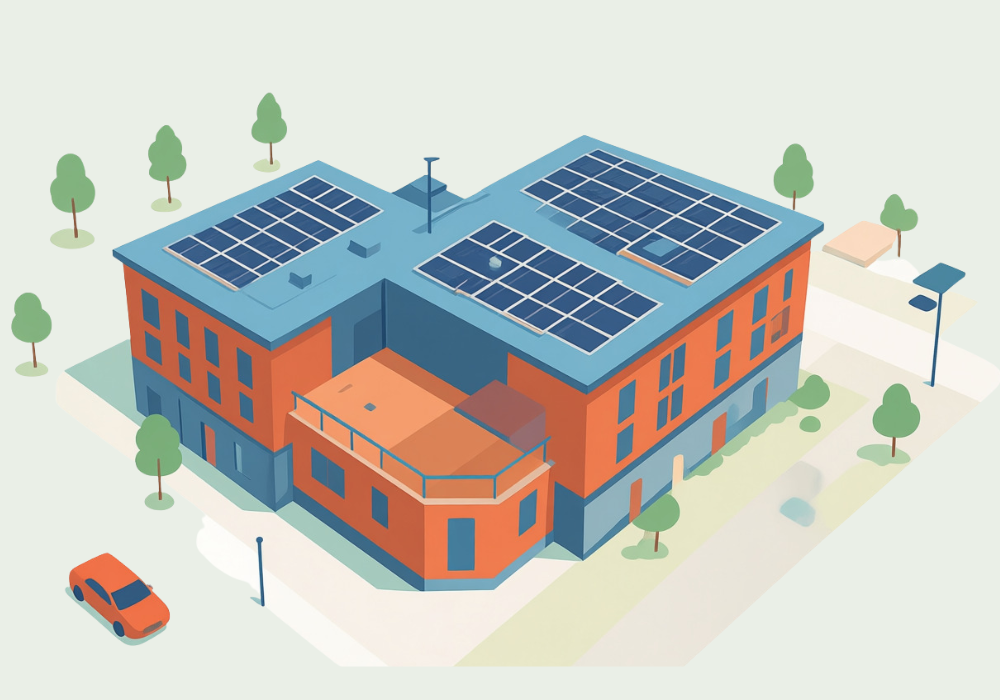
This article explores eight pioneering Canadian projects—spanning solar arrays, wind turbines, electric vehicle (EV) charging networks, net-zero housing, and sacred spaces—that demonstrate the power of local capital. By examining these diverse models, we can glean valuable lessons on how decentralized financing is breaking down barriers, empowering urban dwellers and rural communities alike, and proving that the path to a sustainable future is intrinsically tied to community empowerment.
Detailed Chronology of Canadian Community Clean Energy
To understand how decentralized green financing evolved in Canada, it is instructive to trace the chronological milestones of the movement. What began as a visionary urban experiment decades ago has blossomed into a diverse nationwide portfolio of cooperative clean energy, green transportation, and sustainable housing initiatives.
1. The Urban Pioneer: WindShare (Toronto, Ontario)
The timeline of Canadian community-owned green energy traces back to the early days of urban wind advocacy. WindShare stands as Canada’s historical pioneer in this sector, representing the first time local residents directly co-owned a commercial clean energy project. Launched through a partnership between 825 Toronto residents and local utility Toronto Hydro, the cooperative successfully erected and operated a wind turbine in the heart of Canada’s largest metropolis. WindShare proved that renewable energy generation was not strictly the domain of rural landscapes or massive utility monopolies, establishing a crucial precedent for urban citizen participation in the energy transition.
2. Expanding the Cooperative Model: Wind and Solar Pioneers
Building upon the early momentum in Toronto, the cooperative model quickly spread across Ontario’s diverse geographies to harness both wind and solar potential.

- OREC (Ontario Renewable Energy Cooperative): Founded in 2010, OREC took community-led generation a step further by securing partial ownership in two commercial-scale wind turbines situated near Lake Huron. By tapping into one of the province’s prime wind corridors, OREC’s assets began generating roughly 3.3 million kWh annually—enough electricity to power upwards of 400 homes each year.
- Wintergreen (Kingston, Ontario): Shifting focus to solar energy, Wintergreen emerged as a prominent solar array located just outside Kingston. Capable of powering 100 homes, Wintergreen operates under the umbrella of SolarShare, widely recognized as Canada’s leading renewable-energy cooperative.
3. Diversifying into Biogas and Urban Solar Access
As the 2010s progressed, community energy pioneers began looking beyond conventional wind and solar generation to tackle organic waste and urban accessibility.
- ZooShare (Toronto, Ontario): In a novel approach to the circular economy, ZooShare was established to convert organic animal waste and food waste into renewable electricity for Ontario’s central grid. The project relied on financial backing from approximately 800 cooperative members who purchased community bonds. (Note: Following a member vote in 2023, ZooShare suspended interest payments and transitioned to repaying bonds as cash flow permits, highlighting the inherent financial risks and operational hurdles sometimes faced by pioneering alternative projects.)
- Wascana (Regina, Saskatchewan): Recognizing that urban apartment-dwellers and renters are routinely locked out of the residential solar market due to lack of roof access, the Wascana cooperative in Regina pioneered an equitable solution. Wascana successfully installed 400 solar panels collectively owned by roughly 100 members, predominantly renters and condo residents who could never otherwise install solar systems on their own properties.
4. Modern Frontiers: EV Charging, Net-Zero Housing, and Sacred Spaces
In recent years, the community bond model has broken out of traditional electricity generation to fund the broader infrastructure required for a decarbonized society.

- Faithfully Green Fund: Moving beyond commercial energy generation, this unique fund tackled building efficiency by helping faith communities finance green retrofits. By selling community bonds and running a revolving loan fund, the initiative finances energy-efficiency upgrades for temples, churches, and mosques.
- Propolis (Kamloops, British Columbia): Propolis demonstrated the power of community bonds in sustainable real estate development. The cooperative successfully raised $1 million from approximately 100 local investors to construct a 53-unit affordable, net-zero apartment building in Kamloops, proving that green housing and social equity can be mutually reinforcing.
- EcoCharge: Marking a major milestone in sustainable transportation, EcoCharge launched the first EV-charging community bond campaign of its kind. Through this initiative, everyday citizens own a decentralized network of roughly 100 EV charging stations spread across Quebec and New Brunswick, bridging the gap between clean transit and community investment.
Supporting Context & Metrics: The Anatomy of Community Bonds
To fully grasp the significance of these eight initiatives, one must examine the financial mechanics that make them possible. At the heart of most modern Canadian cooperative energy projects lies the community bond.
Community bonds are a form of fixed-income retail investment that allow everyday people to invest directly in local infrastructure projects that yield both financial and social or environmental returns. Unlike traditional municipal bonds backed by tax revenue, or corporate bonds issued by multinational entities, community bonds bridge the gap between grassroots passion and institutional finance.

Key Metrics and Impact Indicators
- Scale of Participation: Most individual community bond campaigns reviewed here engage between 100 and 800 local investors, proving that mobilization does not require tens of thousands of participants to achieve viability.
- Diversification of Asset Classes: While initial projects focused narrowly on single wind turbines (WindShare) or solar arrays (Wintergreen, Wascana), contemporary initiatives have expanded the asset class to include biogas facilities (ZooShare), EV-charging networks (EcoCharge), affordable net-zero real estate (Propolis), and deep energy retrofits (Faithfully Green).
- Democratizing Access: Projects like Wascana and Propolis directly address the "split incentive" and access barriers of the modern economy, enabling renters and low-to-moderate-income families to participate in and benefit from the green transition.
- Generation Capacity: Ranging from community solar arrays powering 100 homes (Wintergreen) to utility-scale wind farms generating millions of kilowatt-hours annually (OREC), these localized projects cumulatively represent a significant, decentralized contribution to Canada’s decarbonization goals.
Official Statements and Stakeholder Perspectives
The growth of cooperative green energy has generated considerable discussion among policy experts, financial analysts, and community leaders regarding the future of energy democracy in Canada.
Advocates of decentralized finance argue that community-owned projects offer psychological and social benefits that traditional utility models cannot replicate. When local residents hold a financial stake in a nearby wind turbine, solar array, or EV charging hub, the phenomenon known as NIMBYism (Not In My Backyard) often transforms into YIMBYism (Yes In My Backyard). Communities stop viewing clean energy infrastructure as an unwelcome imposition from distant corporate entities and begin viewing it as a source of local pride, economic resilience, and shared wealth generation.

However, industry observers also sound notes of caution regarding regulatory hurdles and financial vulnerability. The operational trajectory of projects like ZooShare—which had to restructure its bond repayment schedule following a 2023 member vote—serves as a reminder that pioneering green enterprises operate within volatile market conditions. Navigating complex grid-interconnection rules, fluctuating energy purchase tariffs, and construction cost overruns can place immense pressure on volunteer-led or cooperative boards.
Financial analysts emphasize that for community bonds and renewable energy cooperatives to scale beyond niche urban and rural enclaves, they require supportive provincial regulatory frameworks, standardized legal templates to reduce high startup transaction costs, and potentially credit-enhancement programs from senior levels of government to de-risk retail investments.

Future Outlook: The Road Ahead for Decentralized Canadian Energy
As Canada charts its course toward its mid-century net-zero emissions targets, the role of grassroots innovation and localized capital will be more critical than ever. The centralized electricity grids built over the past century are facing unprecedented strain due to the electrification of transportation and heating, rising population densities, and the escalating impacts of climate change.
The eight projects examined—from WindShare’s pioneering urban turbine in Toronto to EcoCharge’s multi-provincial EV network and Propolis’s net-zero housing in Kamloops—illustrate a powerful truth: the energy transition is not merely a technical challenge of swapping fossil fuels for electrons; it is a structural challenge of how we organize, own, and govern our power systems.

Looking forward, several key trends are likely to shape the evolution of community-owned clean energy in Canada:
- Mainstreaming Digital Investment Platforms: The friction of issuing and managing retail bonds is declining as fintech platforms emerge to streamline community fundraising, making it easier for everyday citizens to discover and invest in local green projects.
- Deepening Indigenous Partnerships: A rapidly expanding frontier for community energy involves First Nations-led cooperatives and equity partnerships, ensuring that Indigenous communities exercise direct ownership and reap long-term economic benefits from clean energy projects on traditional territories.
- Integration with Smart Grids and Storage: As battery technology becomes more affordable, future community solar and wind initiatives will increasingly incorporate localized energy storage, allowing cooperatives to provide grid-balancing services and resilience against extreme weather events.
- Policy Support and Provincial Harmonization: For community bonds to transition from an alternative financing method to a pillar of Canada’s infrastructure strategy, provincial regulators must streamline rules surrounding securities exemptions and retail participation.
Ultimately, the answer to funding our low-carbon future is indeed local. By harnessing the collective capital, imagination, and civic engagement of everyday Canadians, cooperatives and community bonds are proving that the energy transition can be built from the ground up—one solar panel, wind turbine, charging station, and sustainable home at a time.