Executive Overview
In an era defined by climate anxiety and the desperate search for scalable carbon-offsetting solutions, billions of dollars are funnelled into corporate tree-planting initiatives. From high-tech seed-spraying drones to ambitious global pledges to plant a trillion trees, the prevailing dogma of modern conservation has been largely anthropocentric: humans must intervene, plant, and manage the earth back to green health.
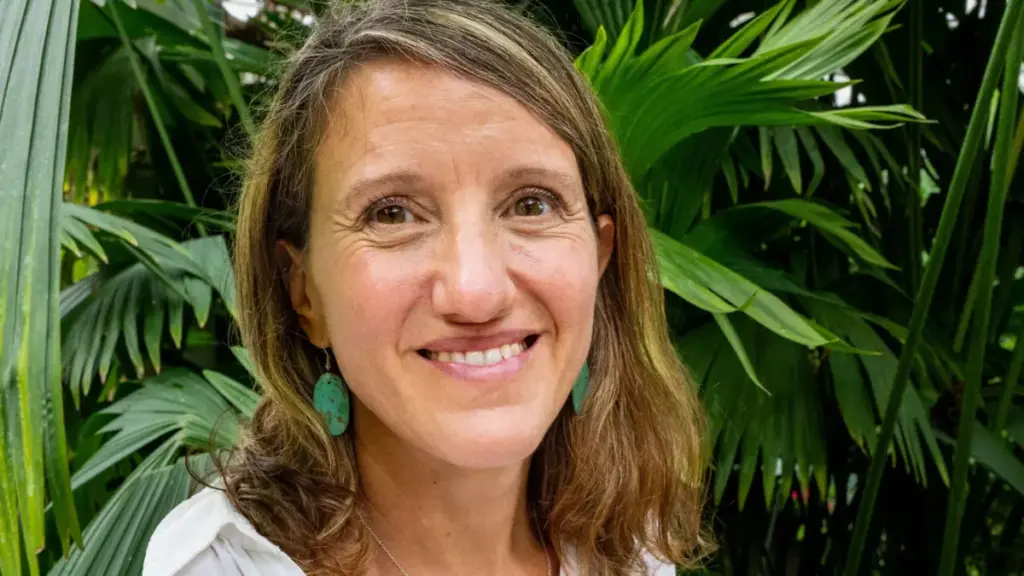
Yet, deep within the lush, humid interior of central Panama, forest ecologist Daisy Dent is championing a radical, counter-intuitive paradigm shift. Walking through the centuries-old plots of the Barro Colorado Nature Monument, managed by the Smithsonian Tropical Research Institute, Dent studies a landscape where not a single tree was planted by human hands. Here, scrubby plots of adolescent second-growth trees seamlessly yield to the cathedral-like canopies of ancient, mature jungles—all built entirely through the unassisted, collaborative labor of nature’s hidden workforce: bats, birds, monkeys, fungi, and insects.
For over two decades, Dent—a senior scientist at ETH Zurich and a principal investigator for the international research network 2ndFor—has built a compelling body of scientific evidence challenging the commercial "monocrop" model of reforestation. Her research proves that traditional carbon-crediting schemes, which blanket vast areas with single-species tree plantations, can be expensive, highly vulnerable ecological mistakes. Conversely, natural regeneration—often referred to as passive restoration—offers a low-cost, high-impact alternative that not only captures vast quantities of carbon dioxide but builds vastly superior, climate-resilient ecosystems. As extreme weather events, prolonged droughts, and shifting climate patterns threaten traditional plantations, Dent’s findings suggest that the most effective path forward for planetary survival may simply be stepping back and letting the forest heal itself.
Detailed Chronology: From Deforestation Despair to Ecological Insight
The story of modern passive forest restoration is anchored in a decades-long evolution of scientific inquiry, shifting from the devastation of tropical landscapes to the meticulous cataloging of forest demographics.
The Turn of the Millennium: Witnessing the Crisis
Around the turn of the millennium, a young Daisy Dent was working as a PhD student researching the old-growth forests of northern Borneo. It was an environment of profound beauty, but one overshadowed by acute grief. Day after day, Dent watched helplessly as irreplaceable, biodiverse landscapes were clear-cut and bulldozed to make way for endless commercial palm oil plantations. Rather than surrender to despair, Dent pivoted her academic focus toward ecological restoration and the ways damaged lands might recover.
The Prorena Years (2005): A Niche Awakening
In 2005, following her doctoral studies, Dent joined Panama’s Prorena (Program for Reforestation of Native Species), a collaborative initiative between the Smithsonian Tropical Research Institute and the Yale School of Forestry and Environmental Studies. Prorena’s objective was pragmatic: to determine the most effective methods for establishing diverse native forests on deforested, clear-cut land.
At the time, secondary forests—those regrowing naturally after primary forest loss—were considered a niche, secondary area of academic interest. The standard protocol for restoration mirrored agricultural traditions: clear the land, run nurseries, and transplant saplings into rangelands. However, Dent began questioning the necessity and cost-effectiveness of this heavy-handed approach. In 2009, she published a landmark paper demonstrating that local animal populations naturally rebound with surprising speed as secondary forests regenerate.
Entering Barro Colorado (2010): Unlocking the Archives
In 2010, Dent moved her research base to the Barro Colorado Nature Monument in Panama. The site itself is a living laboratory born from history: its forested peninsulas and islands were carved out in 1914 when the construction of the Panama Canal flooded the local river basin. Under generations of Smithsonian stewardship, ecologists had amassed an extraordinary century-long repository of ecological data.
Dent took over the oversight of sequential regeneration plots originally identified and categorized in 1994 by pioneering American ecologist Julie Denslow. Spanning plots left to recover naturally anywhere from 20 to over 100 years, this continuity allowed Dent to track the demographic shifts of individual trees across a century of forest time. She mapped, measured, and tracked each trunk emerging from bare earth, decoding the precise biological mechanisms that dictate why some clear-cut plots rebound into thriving, diverse jungles while others stall and falter.
The 2015 Paris Agreement and the "Trillion Trees" Influx
In 2015, as the landmark Paris Agreement was codified, global climate policy turned its eyes toward reforestation. Propelled by prominent ecological studies suggesting that regrowing a trillion trees could capture a decade’s worth of global carbon emissions, international leaders rallied behind massive tree-planting campaigns.
Dent, already well-positioned as a leading voice in secondary forest dynamics, utilized her Barro Colorado data to co-author a groundbreaking 2016 study published in Nature. The research revealed a startling metric: a hectare of naturally regenerated secondary forest can capture up to 11 times as much carbon annually as an old-growth forest, driven by the aggressive growth rates of young trees competing for sunlight.
Subsequent studies through the early 2020s—including a 2022 paper published by the Royal Society and a 2024 follow-up examining degraded tracts in Panama and Brazil—cemented her findings: even landscapes retaining as little as 35% original tree cover can successfully regenerate into mature forests entirely on their own, provided the surrounding matrix contains the necessary animal and plant interactions.
Supporting Context & Metrics: The Mechanics of Natural Rebound
To understand why passive regeneration frequently outperforms human-planted monocultures, one must look below the canopy to examine the hidden engineering of tropical ecosystems.
The Animal Architects: Seed Dispersal Networks
Tropical forests are not merely collections of trees; they are intricate webs of interdependent biological relationships. According to Dent’s research, fruit-eating animals—including spider monkeys, fruit bats, and parrots—are responsible for planting more than 70% of all trees in tropical rainforests.
As these animals forage across the landscape, they ingest seeds and deposit them via nutrient-rich droppings across clear-cut boundaries. Dent’s dataset can identify which specific species built particular patches of forest.
- The Diverse Patch: A thriving 70-year-old plot on Barro Colorado, featuring a complex, stratified canopy approaching the richness of an ancient jungle, was built through the collaborative planting efforts of dozens of diverse animal species.
- The Homogeneous Trap: In stark contrast, a patch of the exact same age characterized by narrow, uniform trunks of a single long-legged species (Gustavia superba) revealed a different story. This monotonous landscape was engineered almost entirely by tropical rodents known as agoutis, which bury and forget single-species seed caches.
The Stifling Legacy of Ranching
Dent’s long-term demographic mapping also demystified why some clear-cut sites fail to progress past early-stage pioneer species. In the Gustavia-dominated patches, legacy impacts from cattle ranching—specifically the persistent roots of stubborn pasture grasses introduced decades prior—smothered incoming seeds and choked out competing saplings. These resilient grasses can persist for up to 150 years, blocking the natural succession waves of large-trunked, heavy carbon-storing trees by suffocating them of light and root space.
Global Scale and Carbon Potential
The empirical data gathered in Central America aligns with macro-level global assessments. A landmark 2024 estimate published in Nature calculated that approximately 215 million hectares of forest worldwide—an area larger than the total landmass of Mexico—possess the environmental conditions required to regenerate naturally.
Furthermore, tropical forests remain the earth’s single largest terrestrial carbon sink, accounting for approximately 40% of all carbon stored on land. When allowed to recover through natural processes rather than commercial planting, these ecosystems re-establish the complex underground fungal networks (mycorrhizae) and microbial communities essential for long-term soil health and carbon sequestration.
Official Statements & Expert Perspectives
The transition from academic theory to real-world conservation policy requires bridging the gap between field ecologists and restoration practitioners. Prominent voices in the scientific community emphasize the irreplaceable value of long-term ecological research infrastructure.
"Having these long-term mapped forest plots is really valuable," explains Liza Comita, a professor of tropical forest ecology at Yale University, who is actively collaborating with Dent to translate scientific insights into actionable restoration strategies. "It provides this really nice research infrastructure where you can build projects on top of that."
Reflecting on the unique demographic depth of the Barro Colorado site, Robin Chazdon, a professor emeritus of ecology and evolutionary biology at the University of Connecticut who collaborated with original plot founder Julie Denslow, notes:
"It tells you more about the actual processes that are happening in the site… giving us an unvarnished look at the mechanics of forest succession over generational timelines."
Despite the growing mountain of evidence supporting natural recovery, Dent remains perplexed by the institutional inertia driving corporate carbon markets.
"Tropical forests are underpinned by this massive network of interactions," Dent points out, stressing the delicate balance between pollinators, seed-distributors, and subterranean fungi.
Reflecting on the disconnect between corporate greenwashing and ecological reality, she adds: "I think there’s an increasing recognition that we can’t just plant trees. We have to rebuild a system."
Future Outlook: Assisted Natural Regeneration and the Coming "Mega El Niño"
As the limits of traditional carbon-offsetting models become increasingly apparent, conservationists are shifting toward hybrid frameworks known as Assisted Natural Regeneration (ANR). Recognizing that many degraded landscapes are too heavily damaged or isolated to recover entirely on their own, scientists and modern carbon-crediting startups are finding common ground.
In Panama, Dent and Liza Comita are collaborating with London-based carbon-crediting startup Ponterra to design high-impact interventions for southern Panama’s deforested ranchlands. Rather than erasing the landscape to plant single-species timber farms, these projects map ecological corridors to reconnect isolated forest fragments, selectively reintroduce missing wildlife species to "silent forests," and utilize strategic enrichment planting only where natural seed dispersal is compromised.
These projects ask sophisticated ecological questions—such as whether solitary standing trees left by ranchers to shade cattle can act as "nucleation points" that accelerate natural forest recovery across abandoned pastures. Corporate giants like Microsoft, willing to pay premium prices well above baseline commodity rates for high-quality carbon removal, are increasingly demanding projects grounded in verified, long-term ecological resilience rather than quick-fix greenwashing.
The Looming Climate Test
The ultimate test for both natural and artificial forests is rapidly approaching. As severe droughts, extreme heatwaves, and unprecedented weather anomalies batter Latin America, monocultural plantations are proving dangerously fragile. Because commercial tree farms lack genetic and structural diversity, they face catastrophic collapse when exposed to pathogens, extreme temperatures, or prolonged water stress.
Dent warns that the upcoming extreme weather cycles—such as the projected mega El Niño events—could serve as a brutal moment of reckoning for corporate carbon schemes.
"You have much reduced resilience in the system when it comes to extreme events like droughts or floods or extreme heat or pathogens," Dent cautions.
As policymakers and global carbon creditors are forced to confront the systemic failures of cookie-cutter plantations, the century-old plots of Barro Colorado stand as a beacon of proof. By trusting the complex, interwoven machinery of nature, humanity has access to a battle-tested, resilient blueprint for planetary healing—one that proves the most powerful tool for restoring the earth is simply giving it the space, time, and biodiversity to heal itself.