Executive Overview
As the global energy transition accelerates, the search for reliable, 24/7 emissions-free electricity has driven unprecedented innovation in the power sector. While wind and solar power have captured the lion’s share of public attention, geothermal energy—long praised for its baseload reliability—has often struggled with high upfront risks, site-specific limitations, and declining resource efficiency over time.
Enter a quiet revolution taking place deep beneath the arid landscape of New Mexico. In June 2024, a nimble energy technology startup named Zanskar acquired the Lightning Dock geothermal power plant. At the time of purchase, the facility was in a state of terminal decline. The water surging up from the underground geothermal reservoir was cooling at an alarming, unprecedented rate, rendering the commercial operation rapidly uneconomical.
Just two years later, through a combination of cutting-edge predictive modeling, sophisticated geological mapping, and modern deep-drilling techniques, Zanskar has completely inverted the fate of the facility. By sinking a single, precisely engineered well into previously unexplored depths, the company brought the plant back to full operational capacity. Over the past year of operation, the revived Lightning Dock facility has generated more than twice the electricity it would have produced using its legacy infrastructure.
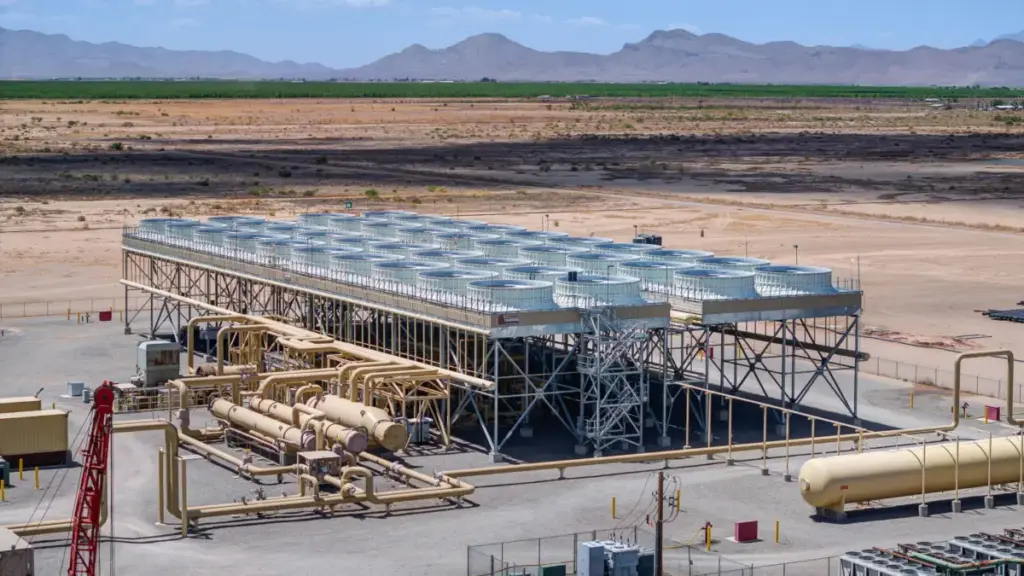
Beyond saving a single 15-megawatt plant—which provides clean power to roughly 11,000 U.S. homes—this technical success carries profound implications for the broader clean energy landscape. By proving that conventional hydrothermal resources harbor vastly underappreciated potential at greater depths, Zanskar’s breakthrough challenges conventional industry wisdom and points the way toward a renaissance for geothermal energy across the United States.
Detailed Chronology: From Near-Collapse to Operational Triumph
The Origins and Decline of Lightning Dock
Originally brought online in 2013, the Lightning Dock geothermal site in New Mexico was designed to harness subterranean heat to drive a commercial power generation cycle. Historically, the facility relied on two primary production wells to feed scorching water from the earth into the plant’s heat exchangers.
In the geothermal industry, it is standard operating procedure for well temperatures to experience a gradual decline over time. Typically, a wellfield cools at a predictable rate of 1 to 2 degrees Fahrenheit per year as thermal energy is extracted. However, Lightning Dock suffered an aggressive anomaly in the years preceding Zanskar’s acquisition.
Data from the site revealed a staggering temperature drop of 50 degrees Fahrenheit over a mere five-year window—a catastrophic cooling rate of 10 degrees Fahrenheit annually. By the time Zanskar stepped in to purchase the facility in June 2024, the water entering the power plant had plummeted to a tepid 250 degrees Fahrenheit. This was critically below the facility’s engineered operational threshold of at least 310 degrees Fahrenheit. Without an immediate and radical intervention, the plant faced permanent closure.
Unlocking the Subsurface with Advanced Modeling
Rather than treating the declining temperatures as an irreversible exhaustion of the local resource, Zanskar deployed advanced geological modeling and data-driven mapping techniques to analyze the subterranean architecture of the Lightning Dock reservoir.
The investigation yielded a startling revelation: the historical production wells were barely scratching the surface of the geological formation. Sinking to a shallow depth of only 2,500 feet, the legacy wells were tapping into merely the uppermost boundary of the vast geothermal reservoir, sitting completely outside the optimal thermal zone.
"The production wells were quite shallow and not in the best location," explains Joel Edwards, co-founder and Chief Technology Officer (CTO) of Zanskar.
Armed with this diagnostic insight, Zanskar’s proprietary modeling software ran predictive simulations to test whether targeting a deeper, strategically mapped location would restore the plant’s economic viability. The models delivered an affirmative verdict: drilling deeper and in a completely new spot would grant access to the core thermal resource, allowing the facility to run efficiently once more.
The 8,000-Foot Solution
Translating digital models into physical reality required heavy industrial execution. Zanskar mobilized drilling rigs to sink a new well reaching a staggering depth of 8,000 feet—more than three times the depth of the original production infrastructure.
The newly drilled well commenced operations in May 2025, instantly altering the fluid dynamics and thermal profile of the plant. After a full year of continuous commercial operation, the results have exceeded even the most optimistic engineering projections. The new well continues to flow at an impressive rate of more than 4,000 gallons per minute, breathing new life into a facility that was widely written off by industry observers.
Supporting Context & Metrics: Challenging Geothermal Dogma
The success at Lightning Dock does more than validate a single corporate turnaround; it strikes at the heart of long-held assumptions within the geothermal energy sector.
The Depth-Versus-Permeability Paradox
Conventional wisdom in geothermal development has long been governed by a frustrating trade-off. Geologists have always known that the deeper you drill into the Earth’s crust, the hotter the temperatures become—a fundamental law of geothermal gradients. However, this thermal gain has historically been offset by a geological penalty: as depth increases, the surrounding rock layers are subjected to immense overburden pressure, causing fractures to close up and rock formations to pack tightly together.
This reduction in rock permeability means that while deep water might be scorching hot, it cannot flow freely enough through the dense, compressed rock to feed a commercial power plant efficiently. Consequently, traditional hydrothermal operations have generally constrained their drilling activities to shallower depths—typically ranging between 3,000 and 5,000 feet.
Shattering Preconceptions
Zanskar’s experience at Lightning Dock fundamentally upends this paradigm. When the engineering team sank their 8,000-foot well, they discovered that fluid flow not only survived the descent but actually increased in the newly targeted zone.
"That fundamentally changes how you think about not just Lightning Dock but all hydrothermal assets in America and what the potential can be for all of them," notes Ben Brenner, Director of Federal Affairs at Zanskar.
By demonstrating that high-permeability fluid pathways can exist at much greater depths than previously assumed, the project opens up vast swaths of previously overlooked subsurface geography for commercial energy extraction.
Hard Metrics and Grid Impact
The quantitative performance metrics recorded over the past year underscore the magnitude of the transformation:
- Temperature Recovery: Water temperatures have been restored to levels meeting or exceeding the plant’s 310-degree Fahrenheit operational requirement.
- Flow Rate: The new 8,000-foot well maintains a robust, steady flow exceeding 4,000 gallons per minute.
- Generation Output: Over its first full year of revived operation, Lightning Dock generated more than twice the electricity it would have produced using its failing legacy wells.
- Capacity and Reach: The facility currently pumps 15 megawatts of reliable, baseload electricity directly into the local electrical grid—enough sustainable power to satisfy the daily needs of approximately 11,000 American households.
Official Statements and Industry Perspectives
The rapid turnaround of the New Mexico facility has sent ripples through the renewable energy community, drawing commentary from the company’s leadership and shedding light on broader industry trends.
Reflecting on the milestone, Zanskar CTO Joel Edwards expressed cautious optimism balanced by scientific rigor. "The plant has completely turned around," Edwards stated, describing the initial performance metrics as "really exciting."
At the same time, Edwards emphasized that the energy sector operates on long temporal horizons, requiring patience to validate technological innovations. "Ultimately, you need to run these things for long time frames to get confidence in their performance over long time frames," he noted, signaling that Zanskar is continuously monitoring the wellfield’s long-term behavior.
The project also highlights a broader maturation trajectory within the renewable energy sector, mirroring evolutionary trends seen in other extractive industries. Over the past few decades, oil and gas developers successfully pushed the technological envelope, evolving from shallow surface drilling to complex extraction operations stretching 20,000 feet or more beneath the surface.
"I think that arc is going to play out in geothermal," Edwards predicts, suggesting that the industry will increasingly normalize deep-well drilling as standard practice rather than the exception.
Furthermore, industry experts draw an important distinction between Zanskar’s approach and other high-profile innovations in the geothermal space, such as Enhanced Geothermal Systems (EGS). Pioneers like Fervo Energy utilize advanced hydraulic fracturing ("fracking") techniques borrowed from the oil and gas sector to artificially fracture hot rocks that are otherwise too impermeable for traditional geothermal production.
While EGS is vital for expanding geothermal access to entirely new geographic regions, Zanskar’s work at Lightning Dock demonstrates that immense value remains locked within existing, conventional hydrothermal resources. Many of these older sites do not require aggressive reservoir engineering or artificial fracturing; they simply require a second look powered by modern predictive modeling and deeper vision.
"There’s still plenty of ‘low-hanging fruit’ in the geothermal world," Edwards observes. "Many of these conventional resources have plenty of potential—they just need a second look."
Future Outlook: The Next Phase for Lightning Dock and Beyond
With the immediate emergency resolved and the plant operating at peak efficiency, Zanskar is far from finished with the Lightning Dock asset. The company has laid out an ambitious roadmap for future development at the site. Over the next few years, Zanskar plans to execute further exploratory drilling and implement targeted infrastructure upgrades to the power plant itself. These investments are projected to squeeze even higher electrical output from the New Mexico reservoir, maximizing the asset’s long-term value for the local grid.
More broadly, the success at Lightning Dock serves as a proof-of-concept for aging geothermal assets across the United States and around the world. Hundreds of early-generation geothermal sites face declining yields, rising operational costs, or premature abandonment simply because historical developers lacked the sophisticated data modeling and deep-drilling capabilities available today.
By marrying artificial intelligence, advanced geological modeling, and modern subsurface engineering, companies like Zanskar are proving that the earth still holds vast, hidden reservoirs of clean energy just waiting to be rediscovered. As the global demand for reliable, 24-7 decarbonized electricity intensifies, the lessons learned in the desert of New Mexico may well serve as the blueprint for a nationwide geothermal renaissance.