

Executive Overview
For nearly half a century, the global marine environment has undergone a profound, accelerating transformation. Once-thriving underwater ecosystems, defined by sprawling bull kelp forests and rich biodiversity, are now facing unprecedented ecological stress brought on by a warming climate, acidification, and anthropogenic pressures.
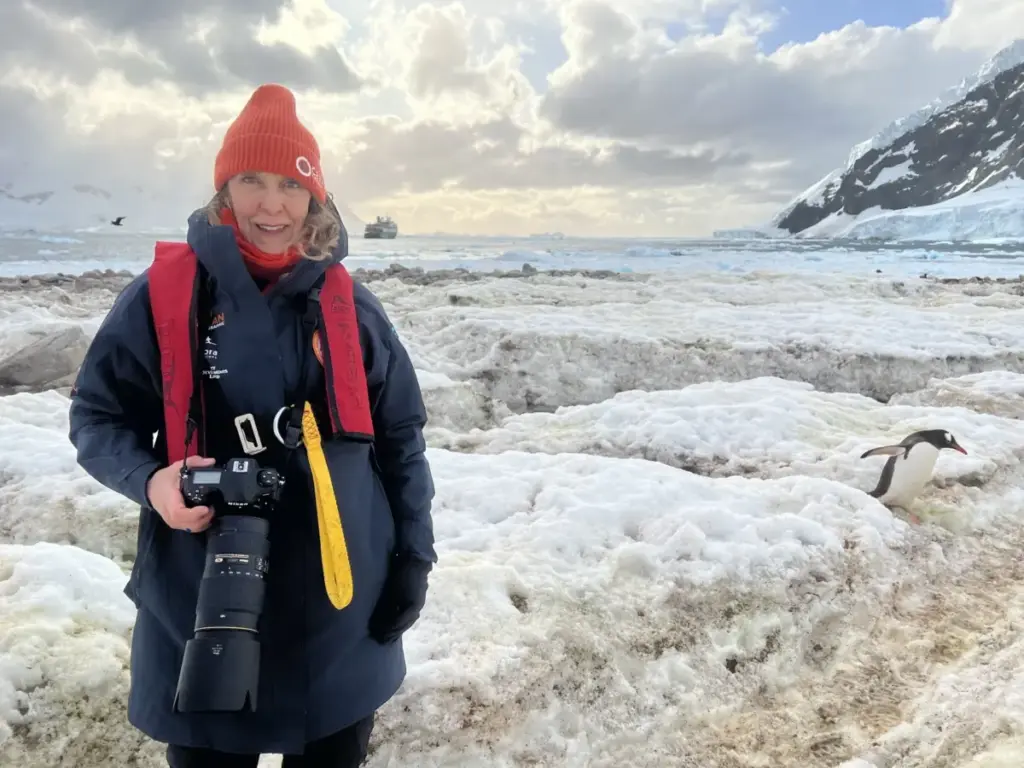
Amidst this backdrop of ecological decline, the narrative of modern ocean conservation is increasingly shaped by dedicated individuals who have witnessed these shifts firsthand. Among them is veteran diver, underwater photographer, and conservationist Virginia Bria, whose 49-year career provides a rare lens through which to observe the degradation—and the potential recovery—of the world’s oceans.
This report examines Bria’s nearly five decades beneath the surface, her alignment with legendary oceanographer Dr. Sylvia Earle, and her work with the global marine conservation organization Mission Blue. It explores the alarming decline of marine habitats along the California coast, the vital importance of global "Hope Spots" like Cuba’s Jardines de la Reina, and the surging optimism driven by a new generation of youth ambassadors. Furthermore, this piece analyzes the critical imperative of legacy giving and institutional funding in securing a sustainable future for marine ecosystems worldwide.
+-------------------------------------------------------------------------+
|                        MISSION BLUE CORE PILLARS                        |
+--------------------------+----------------------------------------------+
| 1. Identification        | Establishing global "Hope Spots" based on    |
|                          | unique ecological and cultural significance. |
+--------------------------+----------------------------------------------+
| 2. Advocacy & Education  | Mobilizing communities, scientists, and      |
|                          | young leaders to amplify ocean awareness.    |
+--------------------------+----------------------------------------------+
| 3. Global Expeditions    | Documenting vulnerable marine biomes from    |
|                          | the Arctic to the Caribbean.                 |
+--------------------------+----------------------------------------------+
Detailed Chronology: 49 Years Beneath the Surface
To understand the current state of marine conservation, one must trace the historical trajectory of environmental change across decades. Bria’s journey as a diver and instructor on the Northern California coast serves as a micro-history of broader oceanic shifts.
The Golden Years of the North Coast (1970s–1980s)
When Bria first learned to dive and subsequently began teaching diving on the rugged, nutrient-rich waters of Northern California, the underwater landscape was remarkably vibrant. Dense canopies of bull kelp (Nereocystis luetkeana) formed thick, undulating forests just beneath the surface. These forests acted as foundational ecosystems, providing shelter, breeding grounds, and sustenance for an immense variety of marine life, including rockfish, abalone, harbor seals, and sea otters.
Navigating these waters often required swimming through dense, towering pillars of kelp. For a young underwater photographer, it was an era of seemingly boundless biological wealth and peaceful sanctuary.
The Gathering Storm: Ecological Decline (1990s–2010s)
As decades progressed, the subtle indicators of systemic climate stress became impossible to ignore. Warming ocean temperatures, marine heatwaves (such as the persistent phenomenon known as "The Blob"), and ecological imbalances—exacerbated by the decimation of sunflower sea stars by sea star wasting disease—led to an explosion of purple sea urchins.
These urchins systematically overgrazed the bull kelp forests, transforming vibrant underwater habitats into barren, unproductive "urchin barrens." Concurrently, the once-abundant populations of fish and marine mammals experienced measurable contractions. The vivid underwater world of Bria’s early career began to fade, replaced by stark reminders of global climate disruption.
Convergence with Mission Blue (2015–Present)
Faced with localized losses in her own backyard and witnessing similar devastation across global dive expeditions, Bria sought out structural avenues for environmental advocacy. Her path crossed with Dr. Sylvia Earle on numerous exploratory voyages, culminating in a defining moment in 2015: participating in the Elysium Artist for the Arctic Expedition aboard the Polar Pioneer, celebrating Dr. Earle’s 80th birthday.
[1970s: Vibrant Kelp Canopies]
       │
       ▼ (Warming Waters & Urchin Overgrazing)
[2000s: Ecological Shift & "Urchin Barrens"]
       │
       ▼ (Action & Advocacy)
[2015–Present: Mission Blue & Hope Spot Documentation]
This journey solidified Bria’s commitment to Mission Blue, an initiative founded by Dr. Earle to spark public awareness and mobilize support for a global network of marine protected areas known as Hope Spots.
Supporting Context & Metrics: The State of Global Marine Ecosystems
The personal observations of veteran divers like Bria are reinforced by decades of marine science and ecological data. The health of the world’s oceans is currently at a critical juncture, characterized by several interconnected crises:
- Kelp Forest Loss: Along the North American West Coast, over 95% of giant kelp and bull kelp forests have disappeared in certain regions over the past decade due to marine heatwaves and unchecked herbivory.
- Coral Reef Degradation: Global coral reef ecosystems continue to suffer from repeated mass bleaching events driven by rising sea surface temperatures. Scientific consensus indicates that without immediate emissions reductions and localized protections, up to 90% of tropical reefs could be degraded by mid-century.
- The Hope Spot Strategy: Mission Blue recognizes that traditional marine reserves often fail to account for ecological connectivity. Hope Spots—places that are scientifically identified as critical to the health of the ocean—currently number over 150 worldwide. These areas range from pristine deep-sea trenches to heavily utilized coastal zones awaiting restorative management.
Case Study: Jardines de la Reina, Cuba
One of the most compelling examples of successful marine conservation is the Jardines de la Reina (Gardens of the Queen) Marine Nature Park in Cuba. Bria participated in documentation dives alongside Dr. Sylvia Earle within this specific Hope Spot.
Because Cuba restricted commercial fishing and unregulated scuba diving in the area for decades, the archipelago remained remarkably insulated from the overfishing and coastal development that plagued the rest of the wider Caribbean. The resulting ecosystem boasts thriving mangrove forests, pristine coral reefs teeming with apex predators like sharks, and an abundance of fish species rarely seen in such densities elsewhere. This stark contrast underscores a fundamental tenet of modern conservation: when given legal protection and left undisturbed, marine ecosystems possess an astonishing capacity for natural regeneration.
Official Statements and Perspectives
The urgency of marine conservation requires a multi-generational approach, bridging the wisdom of veteran explorers with the unyielding energy of emerging environmental leaders.
"I cannot imagine the loss of so many sentient creatures I have photographed over the years, and I feel an obligation to protect what I love for the next generation. The ocean has given me peace and health throughout my life, and in return, the ocean never asks anything of me. It is time to pay it forward."
— Virginia Bria, Underwater Photographer and Mission Blue Advocate
The Voice of Youth: The BIG ACE Expedition 2025
The transition of leadership from established conservationists to youth advocates represents a vital pillar of contemporary environmental movements. During the recent BIG ACE Expedition 2025 aboard the Sylvia Earle—with Dr. Earle serving as chief scientist—a cohort of youth ambassadors aged 9 to 24 joined researchers to evaluate polar ecosystems.
According to expedition participants, these young leaders exhibited exceptional grasp of complex climate science, effectively translating technical data into compelling public awareness campaigns. Their involvement reinforces the core philosophy of Mission Blue: that systemic policy changes and cultural shifts begin by inspiring younger generations through direct engagement with the natural world.
Future Outlook: Legacy, Policy, and Sustained Action
As marine ecosystems face accelerating pressures from industrial activity, plastic pollution, and thermal stress, the roadmap for the next fifty years of ocean conservation relies heavily on institutional resilience, public education, and targeted funding mechanisms.
The Importance of Planned Giving and Legacy Support
Grassroots activism and scientific expeditions require sustained financial backing. Organizations like Mission Blue depend on philanthropic contributions, grants, and planned legacy gifts to sustain their global operations.
Planned gifts allow donors to weave their lifelong passion for the ocean into the permanent architecture of marine conservation. By establishing endowments and contributing through estate planning, supporters ensure that research vessels can continue charting remote waters, that local communities can secure protective designations for their coastal waters, and that future generations of youth ambassadors can experience the transformative power of the sea.
Strategic Imperatives for the Decade Ahead
Looking forward, the global marine conservation community has outlined several non-negotiable milestones:
- Targeted Expansion of Marine Protected Areas (MPAs): Accelerating the designation of global waters into strictly enforced MPAs, aligning with international targets to protect 30% of the global ocean by 2030 (the "30×30" initiative).
- Climate-Resilient Restoration: Scaling up innovative restoration projects, such as outplanting heat-tolerant coral strains and actively re-seeding kelp forests alongside urchin removal programs.
- Amplifying Indigenous and Local Stewardship: Partnering directly with coastal communities and indigenous groups who have historically managed marine resources sustainably.
Through the combined efforts of veteran explorers documenting the changes, scientists gathering empirical data, youth leaders amplifying the message, and dedicated philanthropists securing financial legacies, the movement to save our blue planet remains resilient. As Dr. Sylvia Earle and advocates like Virginia Bria continue to demonstrate, hope is not merely a passive emotion—it is an active, disciplined commitment to the future of life on Earth.



