Executive Overview
Amid scorching summer heat waves that have pushed municipal power grids to their absolute limits across the Northeast, the last thing on most homeowners’ minds is domestic heating appliances. Yet, behind the scenes of sweltering cities and record-breaking temperatures, a quiet revolution is taking place in the American energy landscape.
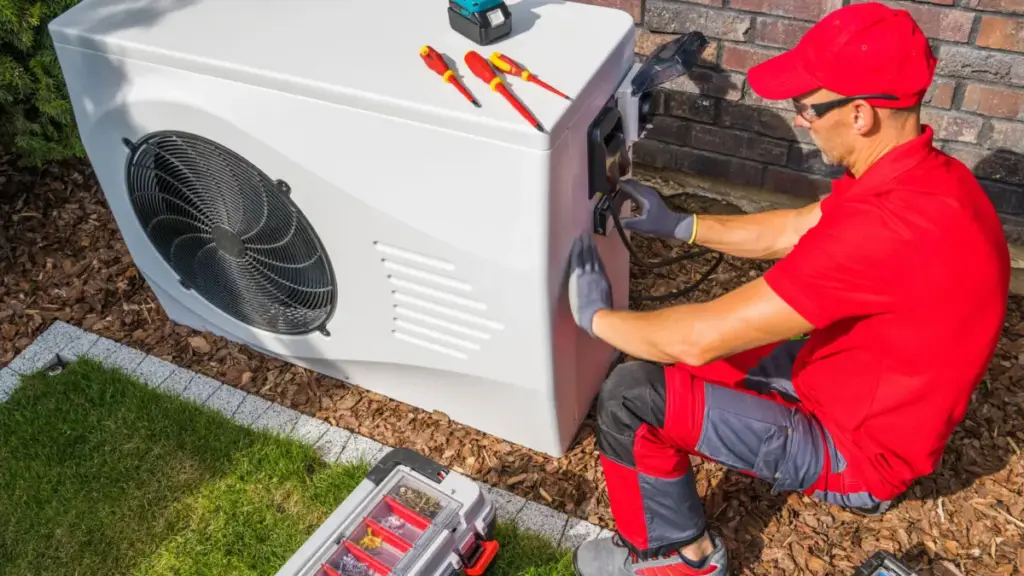
Heat pumps—highly efficient, electricity-powered systems capable of both warming homes in the dead of winter and cooling them during sweltering heat waves—are experiencing an unprecedented boom. Over the past 15 years, sales of these dual-purpose climate regulators have quietly doubled across the United States. More remarkably, they have decisively overtaken traditional fossil-fuel heating systems, outpacing natural-gas furnaces by a staggering 32% during the first quarter of 2026.
These statistics would be impressive under any circumstances, but they arrive at a paradoxical moment. Just as the calendar flipped to January 1, 2026, a critical federal tax credit incentivizing heat pump installations expired. Slashed by the Trump administration alongside a sweeping rollback of clean-energy incentives originally established by the 2022 Inflation Reduction Act, the federal subsidy—which previously offered homeowners up to $2,000 for adopting the technology—vanished overnight.
Energy analysts and climate policy experts braced for a sharp contraction in the market. Many anticipated a repeat of the electric vehicle (EV) sector’s trajectory, where the expiration of lucrative consumer tax credits triggered severe market contractions. Instead, the domestic heat pump market has shrugged off the regulatory rug-pull. Data from industry trade groups shows that sales have not only stabilized but continue to climb, proving that the technology has crossed a critical economic and cultural threshold. The era of the heat pump is officially here, and it appears to be entirely self-sustaining.
Detailed Chronology: From Niche Technology to Market Dominance
To understand how heat pumps successfully navigated the abrupt removal of federal subsidies, it is necessary to examine the chronological trajectory of clean-tech incentives and market adoption over the past half-decade.
The Legislative Catalyst (2022–2024)
The modern era of U.S. heat pump adoption truly accelerated with the passage of the landmark Inflation Reduction Act (IRA) in August 2022. The legislation injected billions of dollars into domestic clean energy, introducing Section 25C tax credits that covered up to 30% of the cost of purchasing and installing high-efficiency heat pumps, capped at $2,000 annually.
Simultaneously, state-level programs, municipal building decarbonization mandates, and aggressive utility-scale rebates converged to make heat pumps an increasingly attractive proposition for homeowners replacing aging HVAC systems. In 2024, recognizing the profound shift occurring in residential energy consumption, the MIT Technology Review formally designated heat pumps as one of its annual breakthrough technologies, declaring that the world had officially entered "the era of the heat pump."
The Subsidy Cliff and the EV Precedent (2025)
By late 2025, the political landscape shifted dramatically. Following the implementation of new federal fiscal priorities under the returning Trump administration, clean-energy subsidies came under intense scrutiny.
The writing was on the wall for green-technology tax credits. For the electric vehicle industry, the cliff was catastrophic. When federal tax credits of up to $7,500 for new EV purchases abruptly ended on September 30, 2025, the market experienced severe whiplash. Dealerships and manufacturers recorded massive spikes in sales during the final weeks leading up to the deadline as consumers scrambled to lock in the savings. Immediately following the sunset date, however, sales fell off a precipice, forcing automakers to scramble and adjust inventory as the market slowly and painfully labored to normalize through mid-2026.
Industry observers naturally assumed the same fate awaited the residential HVAC sector when Congress and the executive branch signaled that the $2,000 heat pump tax credits would not survive past December 31, 2025.
The Post-Subsidy Resilience (Early 2026)
As the clock struck midnight on New Year’s Eve 2025, the federal heat pump tax credits officially expired. Yet, rather than plunging into a slump, shipment and sales data compiled by the Air Conditioning, Heating, and Refrigeration Institute (AHRI)—a trade association representing roughly 90% of the North American HVAC market—revealed an entirely different reality.
Following a predictable, flat seasonal lull between December and January, heat pump shipments began their usual spring climb in early 2026. Crucially, that seasonal rebound proved even stronger than those recorded in previous years. According to independent economic analyses, such as a comprehensive review published by UC Berkeley energy economist Lucas Davis in July 2026, consumer demand has remained stubbornly robust. The data confirms that the removal of federal financial assistance has failed to dent the upward trajectory of heat pump installations, marking a stark divergence from the EV sector’s post-subsidy turbulence.
Supporting Context & Metrics: The Mechanics and Economics of Modern Heating
To fully appreciate the resilience of the heat pump market, one must understand the underlying thermodynamics and macroeconomic factors driving consumer behavior.
How Heat Pumps Work
Contrary to popular misconception, heat pumps do not generate heat by burning fossil fuels or through brute-force electrical resistance. Instead, they leverage fundamental principles of thermodynamics to move thermal energy from one location to another.
A closed-loop system containing a specialized refrigerant circulates through indoor and outdoor coils. As the refrigerant expands and compresses, it absorbs latent heat from the external environment—even when outdoor temperatures are well below freezing—and transfers that thermal energy indoors. In the summer months, the cycle reverses, extracting heat from inside the home and expelling it outside, functioning identically to a standard air conditioner.
Efficiency and Decarbonization
This mechanical transfer of energy makes heat pumps astonishingly efficient. While a traditional electric resistance heater delivers one unit of heat for every unit of electricity consumed, modern cold-climate heat pumps can deliver three to four units of thermal energy for that same amount of electricity.
Once installed, this superior efficiency typically translates to significantly lower operational costs compared to legacy gas furnaces, oil boilers, or baseboard electric heating systems. Furthermore, because they run entirely on electricity and burn no fossil fuels on-site, heat pumps serve as a cornerstone technology for global building decarbonization initiatives. When paired with a residential solar array or a decarbonized electrical grid, they reduce household carbon footprints to near zero.
Global Momentum
The American phenomenon is mirrored internationally. According to data from the International Energy Agency (IEA), countries across Europe and Asia have aggressively pivoted toward heat pump technology. Germany and China, in particular, have enacted stringent building efficiency standards and financial frameworks that have turned heat pumps into the dominant choice for new residential construction and deep retrofits alike.
| Metric / Indicator | Historical Context (Pre-2025) | Current Status (2026 Data) |
|---|---|---|
| U.S. Heat Pump Sales Growth | Doubled over a 15-year span | Outpaced gas furnaces by 32% in Q1 2026 |
| Federal Tax Credit Status | Up to $2,000 credit (Active through Dec 2025) | Expired completely on January 1, 2026 |
| Market Response to Subsidy Loss | Anticipated contraction (comparable to EVs) | Shipments steady and rising through spring 2026 |
| Global Adoption Leaders | United States, European Union, China | Broad international acceleration |
Official Statements & Expert Analysis
The unexpected decoupling of heat pump demand from federal tax credits has forced economists, industry leaders, and policy analysts to reevaluate what drives consumer adoption in the green technology space.
In his July 2026 analysis published on the Energy at Haas blog, UC Berkeley professor and energy economist Lucas Davis addressed the surprising resilience of the market head-on.
"It appears that the U.S. market for heat pumps is strong enough that it does not depend on tax credits," Davis wrote.
His analysis of AHRI shipment data indicates that the federal incentive was ultimately a marginal catalyst rather than a foundational crutch. For most American homeowners making the expensive transition from fossil-fuel infrastructure, the decision to install a heat pump is increasingly driven by long-term operating economics, home comfort, and growing consumer awareness of climate vulnerabilities—such as intense summer heat waves requiring reliable, efficient cooling—rather than short-term tax write-offs.
Industry manufacturers echo this sentiment. While upfront capital costs remain a notable barrier—heat pumps typically require a higher initial investment than replacement gas furnaces—supply chain maturation, installer training programs, and improved manufacturing efficiencies have begun to close the price gap.
Moreover, utility companies and municipal governments in several forward-thinking states have stepped into the void left by the federal government, offering localized rebates and low-interest financing programs that bypass federal legislative volatility entirely.
Future Outlook: Navigating Roadblocks on the Path to Complete Electrification
The path to widespread technological adoption is rarely a straight line. This is especially true for consumer-facing home infrastructure upgrades, which require individual households to make significant financial commitments, navigate complex contractor networks, and alter deeply ingrained habits regarding how they heat and cool their living spaces.
The successful weathering of the 2026 federal tax credit expiration proves that the heat pump market has achieved structural maturity. It is no longer an experimental niche propped up exclusively by government life support; it has graduated into a mainstream consumer commodity driven by clear performance and financial advantages.
Looking forward, the challenges facing the sector are shifting from consumer demand to infrastructure readiness. As millions of additional homes transition to high-efficiency electric heating and cooling, local electrical distribution grids will face mounting pressure. Upgrading neighborhood transformers, hardening grid resilience against extreme weather, and expanding the workforce of certified HVAC technicians specializing in heat pump technology will be the defining hurdles of the late 2020s.
Nevertheless, the data from the first half of 2026 offers profound encouragement. Even when heavy political and legislative roadblocks are thrown into the path of the energy transition, the fundamental economic and environmental arguments for decarbonization are proving resilient. The era of the heat pump is not fading; if anything, it is just beginning to catch fire.