Executive Overview
Did you know that some of the world’s most iconic hiking routes were once at risk of being loved to death? Over the past two decades, the global appetite for adventure travel has surged into a multi-billion-dollar economic engine. By 2024, the worldwide hiking industry was valued at more than $11 billion, showing no signs of slowing down.
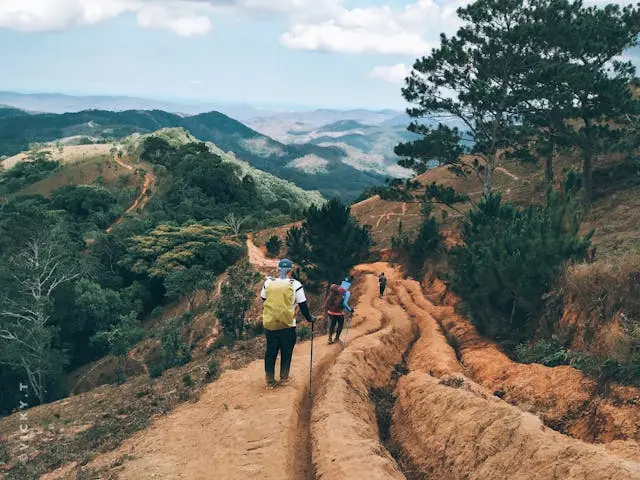
While this influx of travelers serves as a powerful economic driver for rural communities and developing mountain regions, it comes with a severe hidden cost. Without structure, rising foot traffic accelerates soil erosion, ravages fragile alpine ecosystems, and degrades historic pathways that were never engineered for the demands of modern mass tourism.
To combat this silent destruction, governments, park authorities, and conservationists around the globe are taking definitive action. From the ancient stone staircases of the Andes to the volcanic slopes of Japan and the rugged wilderness of North America, regulated access is rapidly transitioning from a rare exception to the global standard. Hiking permits are no longer just an administrative hoop to jump through; they are an absolute necessity for environmental conservation, public safety, and long-term trail management.
Detailed Chronology: The Evolution of Trail Regulation
The shift from open, unrestricted wilderness access to tightly managed, permit-only systems did not happen overnight. It was born out of crisis—a reactive measure to unmistakable ecological and infrastructural collapse.
- Pre-2000s (The Era of Unrestricted Access): For decades, legendary routes like Peru’s Inca Trail and North America’s long-distance backpacking tracks operated under a "first-come, first-served" mentality. Trailheads were largely unguarded, camper numbers were unmonitored, and waste management was virtually nonexistent.
- 2002 (The Watershed Moment for Peru): Facing catastrophic erosion along the classic Inca Trail—where an estimated 1,500 tourists plus swarms of unmonitored porters trekked the fragile stone paths daily—the Peruvian government stepped in. They instituted a hard cap of 500 total permits per day, carving out space for guides and support staff while preserving the heritage site.
- 2021 (Nepal Shifts Its Paradigm): In an effort to curb high-altitude emergencies and regulate the trekking economy, Nepal introduced restricted-area permits for regions like Manaslu, alongside a groundbreaking mandate requiring foreign trekkers to hire licensed guides through registered agencies, effectively phasing out unregulated solo trekking in sensitive zones.
- 2023 (The Pacific Crest Trail and Mount Fuji Take Action): Recognizing the strain of social-media-driven overtourism, the Pacific Crest Trail (PCT) implemented strict long-distance permit quotas, capping northbound hikers at 50 per day during peak season. Simultaneously, Japan introduced a pioneering entry fee and daily climber cap on Mount Fuji’s heavily congested Yoshida Route.
- 2024–Present (The New Normal): Global media outlets have codified overtourism as one of the defining challenges of the decade. Permit systems have expanded aggressively, transforming from localized experiments into sophisticated digital reservation ecosystems spanning multiple continents.
Supporting Context & Metrics: Why Permits Are Mandatory
Understanding why hiking permits are required demands a hard look at the data. Unmanaged human foot traffic inflicts measurable, systemic damage on natural and cultural landmarks.
1. Preventing Environmental Degradation
Trails are not indestructible. Every boot step causes soil compaction, strips away protective vegetation, and accelerates the failure of natural drainage systems. Before visitor caps were introduced, the Inca Trail was literally crumbling beneath the weight of thousands of weekly visitors, putting the surrounding cloud forest ecosystem under immense pressure. By capping access to 500 daily permits, Peru slashed human impact while preserving local employment.
2. Protecting Cultural and Historic Sites
Many of the world’s legendary trails are not merely scenic walks; they are living archaeological corridors. At Machu Picchu, daily visitor caps—set at 5,600 during peak season and 4,500 in the low season—combined with mandatory one-way circuits prevent the structural wear and tear that comes from uncontrolled crowd movements. Without these controls, irreplaceable historic stonework degrades at an unsustainable rate.
3. Managing Global Overtourism
The numbers speak for themselves. When Japan implemented its entry fee and daily climber limits on Mount Fuji’s Yoshida Route in 2023, climber numbers dropped by 14% in a single season. This seemingly modest policy instantly removed thousands of bodies from the mountain, drastically easing trail congestion, reducing discarded waste, and alleviating logistical strain on local mountain huts.
4. Elevating Wilderness Safety
Permit systems serve a dual purpose as critical risk-management tools. High-altitude environments and remote wilderness routes are notoriously volatile. When permits are tied to mandatory licensed guides and registered operators—as seen in Nepal and various restricted South American zones—authorities maintain an accurate manifest of who is on the mountain. This structural accountability dramatically cuts down on search and rescue operations for lost or injured hikers.
Official Statements & Perspectives
The implementation of widespread permit systems has sparked intense debate among conservationists, local communities, and avid adventurers.
Park administrators and environmental scientists emphasize that these regulations are the only barrier standing between the preservation of natural wonders and their total destruction. As international park management boards frequently note in policy briefs, “Iconic trails are finite resources. Once degraded beyond repair, they cannot simply be rebuilt.” Conservationists argue that caps are an ethical obligation to future generations, ensuring that pristine ecosystems are passed down intact rather than converted into eroded mud pits.
Conversely, independent travelers and adventure purists have historically viewed permit systems with skepticism. Critics argue that rigid quotas, months-long advance booking lotteries, and rising administrative fees commercialize the wilderness, pricing out spontaneous travelers and transforming the raw spirit of exploration into a bureaucratic luxury.
However, industry experts counter that these friction points are the necessary trade-offs of a crowded planet. Without limits, the alternative is not free-roaming adventure, but permanent trail closures due to irreversible ecological collapse. Furthermore, structured access directly supports rural economies. By funneling travelers through licensed operators, mountain communities secure stable, reliable, year-round employment for guides, porters, and cooks, replacing boom-and-bust tourism cycles with sustainable livelihoods.
Future Outlook: What Lies Ahead for Global Trekking
As global populations grow and the desire for experiential, nature-based travel intensifies, the landscape of outdoor recreation is facing an inflection point. The era of the open-door wilderness is drawing to a close.
In the coming years, expect to see hiking permit systems expand far beyond their current bastions in Peru, Japan, and the United States. Emerging trekking hubs across Central Asia, Europe, and Africa are actively studying the frameworks established by the Inca Trail and Mount Fuji. Digital reservation platforms, dynamic pricing models, and biometric trailheads will likely become standard features of the modern trekking experience.
For the modern adventurer, this means that spontaneity must take a backseat to stewardship. Responsible travel now begins months before hitting the trail, starting with digital research, advance lottery applications, and a mindset shift that views permits not as a bureaucratic restriction, but as a badge of honor—proof that you are playing an active role in protecting the wild spaces you love.
The message from park authorities worldwide is clear: if you plan to hike a world-famous route, look ahead, book early, and respect the cap. The wild is worth waiting for.