

Executive Overview
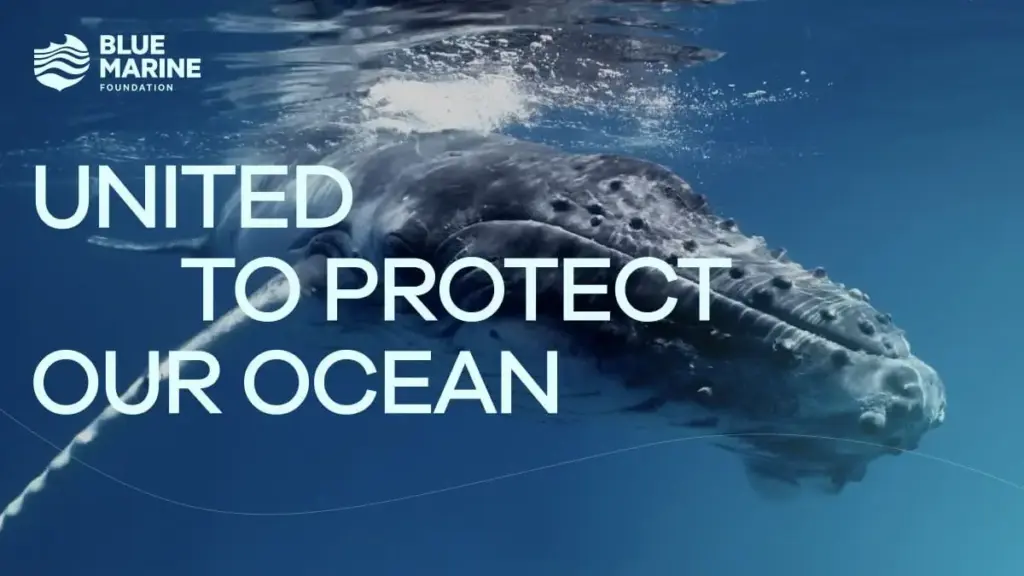
In an escalating environmental dispute that pits international conservation bodies against global regulatory agencies, a coalition of over 30 marine conservation organizations and independent scientific experts has formally challenged the United Nations Food and Agriculture Organization (FAO). At the center of the controversy is a contentious characterization within the FAO’s forthcoming 2026 State of the World’s Fisheries and Aquaculture (SOFIA) report, which hails Antarctic fisheries management as a “global benchmark for ecosystem-based fisheries management.”
To the coalition—spearheaded by the Blue Marine Foundation and supported by leading voices in polar ecology—this designation represents a dangerous illusion. Far from being a pristine, sustainable model of human stewardship, the Southern Ocean is undergoing rapid and destabilizing ecological shifts. Climate change is eroding sea ice at unprecedented rates, while industrial fishing fleets are pulling record-shattering tonnages of Antarctic krill (Euphausia superba) from the very waters where penguins, whales, and seals feed.
By labeling this system a gold standard, critics argue that the FAO is laundering the reputation of an extractive industry that operates with impunity in ecologically sensitive feeding grounds. This comprehensive report explores the anatomy of this regulatory clash, examining the scientific realities of modern krill fishing, the ecological stakes for Antarctic megafauna, the geopolitical hurdles of the Commission for the Conservation of Antarctic Marine Living Resources (CCAMLR), and the urgent demands for a paradigm shift in how humanity manages the Earth’s last great wilderness.
Detailed Chronology: How the Crisis Unfolded
To understand the friction between conservationists and the UN food agency, one must trace the timeline of escalating industrial pressure in the Southern Ocean and the policy failures that have allowed it to accelerate.
Phase One: The Rise of the Industrial Krill Fishery
For decades, Antarctic krill—shrimp-like crustaceans measuring roughly six centimeters in length—were viewed as an inexhaustible, bottomless pantry for the Southern Ocean. While whaling and sealing decimated the upper tiers of the marine food web in the 19th and 20th centuries, krill populations remained relatively insulated. However, as global seafood stocks depleted elsewhere, industrial fishing fleets turned their sights southward.
Utilizing advanced continuous pumping technologies and massive midwater trawls, modern super-trawlers began vacuuming up krill not merely for direct human consumption, but predominantly for aquaculture feed (particularly for salmon farming) and nutraceutical omega-3 supplements. Over the past fifteen years, catches have surged to historic highs, concentrated heavily in specific sectors of the Southwest Atlantic—most notably around the Antarctic Peninsula and the Scotia Sea.
Phase Two: The Scientific Alarm Bells
As catches climbed, field biologists and oceanographers began documenting alarming anomalies. The Antarctic Peninsula is one of the fastest-warming regions on the planet. The loss of sea ice—which serves as a critical nursery substrate for juvenile krill and algae upon which they graze—has triggered measurable declines in local krill recruitment.
Simultaneously, researchers observed a dangerous spatial overlap between industrial fishing operations and the foraging zones of dependent predators. Baleen whales, gentoo and chinstrap penguins, and Antarctic fur seals were increasingly forced to compete with massive commercial processing vessels for dwindling local swarms of krill. Scientific papers published in peer-reviewed journals repeatedly warned that CCAMLR’s outdated management models failed to account for localized depletion, treating the entire Southern Ocean as a homogenous pool rather than a patchwork of fragile, interconnected habitats.
Phase Three: The FAO’s 2026 SOFIA Draft and the Backlash
The flashpoint arrived with the preparatory releases and drafts of the FAO’s 2026 State of the World’s Fisheries and Aquaculture report. As the definitive global stocktake on marine resource extraction, the SOFIA report carries immense diplomatic and economic weight.
When conservationists reviewed the draft language describing Antarctic fisheries as a "global benchmark" for ecosystem-based management, alarm bells sounded across the international marine science community. Recognizing that this seal of approval would be weaponized by industrial fishing lobbies to greenwash operations and deflect scrutiny, the Blue Marine Foundation and its allies mobilized.
Phase Four: The Open Letter and Institutional Standoff
In late 2026, the coalition released a sharply worded open letter addressed directly to the leadership of the FAO. The document dismantled the "benchmark" narrative, presenting empirical data on climate stress, localized overfishing, and regulatory blind spots.
In response, FAO representatives—including senior fisheries officials such as Dr. Manuel Barange—defended the agency’s reporting framework, pointing to the foundational mandate and precautionary design of CCAMLR as theoretically sound, even if practical implementation faces hurdles. This defensive posture has done little to appease scientists, who argue that theoretical safeguards are meaningless when real-world biomass is being stripped from predator feeding grounds at record-breaking scales.
Supporting Context & Metrics: The Biological and Industrial Realities
To grasp why conservationists are risking diplomatic friction with a major UN body, one must examine the unique biology of Antarctic krill and the mechanics of the modern industrial fishery.
The Keystone Species of the Southern Ocean
Antarctic krill are arguably the most ecologically significant invertebrate on Earth. Every major predator in the Southern Ocean—from the colossal blue whale to millions of Adélie penguins, albatrosses, and leopard seals—depends directly or indirectly on Euphausia superba for survival.
Beyond their role as a dietary staple, krill play a monumental role in the global carbon cycle. Feeding on microscopic surface algae, krill ingest carbon and package it into dense, rapidly sinking fecal pellets that transport carbon to the deep ocean—a biological pump comparable in scale to major terrestrial forests. Disrupting krill populations does not merely risk starving whales; it destabilizes a core planetary mechanism for carbon sequestration.
+-----------------------------------------------------------------+
                 THE ANTARCTIC MARINE FOOD WEB
+-----------------------------------------------------------------+
       [ Apex Predators: Whales, Seals, Penguins, Albatross ]
                              ^
                              |  (Direct Dietary Dependence)
                   [ ANTARCTIC KRILL ]
                              ^
                              |  (Grazing)
               [ Phytoplankton / Surface Algae ]
                              ^
                              |  (Carbon Sequestration / Climate Sink)
                      [ Deep Ocean Carbon ]
+-----------------------------------------------------------------+
The Spatial Concentration Trap
Proponents of the krill fishery frequently argue that total catch amounts to only a tiny fraction of the total estimated krill biomass in the entire Southern Ocean (which historical surveys place in the hundreds of millions of tonnes). However, marine scientists emphasize that this "macro-view" is fundamentally misleading.
Krill are not evenly distributed across millions of square kilometers of open ocean; they aggregate in massive, hyper-dense swarms driven by ocean currents and bathymetry. Industrial fishing vessels target these exact same high-density aggregations, particularly in the narrow waters around the Antarctic Peninsula and the South Shetland Islands.
Consequently, while the total ocean-wide catch percentage may appear low on paper, the local extraction rate in critical feeding grounds is catastrophic. It creates localized depletion zones where predators—which cannot travel thousands of miles to find alternative food sources during breeding seasons—starve amidst industrial abundance.
Climate Change: A Shrinking Margin of Error
The modern reality of Antarctica cannot be analyzed in isolation from the climate crisis. The continent is experiencing systemic environmental degradation:
- Sea Ice Collapse: Winter sea ice extents have plummeted to record lows over consecutive years, eliminating the shelter required by larval krill.
- Ocean Acidification: Lower pH levels in cold Southern Ocean waters threaten the calcium carbonate structures required by various planktonic organisms.
- Warming Waters: Rising ocean temperatures alter phytoplankton blooms, throwing the timing of krill reproduction out of sync with seasonal food availability.
Adding heavy industrial fishing pressure on top of these compounding climate stressors is, according to conservation biologists, akin to kicking an ecosystem while it is already down.
Official Statements and Institutional Positions
The ideological battle lines are clearly drawn between the defenders of international governance frameworks and the advocates for emergency ecological intervention.
The Conservation Coalition Perspective
In their open letter to the FAO, the Blue Marine Foundation and over 30 allied organizations laid out an uncompromising critique of current management practices:
"To describe Antarctic fisheries management as a ‘global benchmark’ is not merely an exaggeration; it is a dangerous fiction that ignores the lived reality of the Southern Ocean today. While CCAMLR was once heralded for its precautionary intent, it has failed to adapt to the velocity of the climate crisis and the relentless expansion of industrial fishing. By endorsing this broken system, the FAO risks providing a regulatory stamp of approval to the systematic stripping of critical wildlife feeding grounds."
The coalition’s demands are precise:
- Retraction of the Benchmark Label: The FAO must officially revise its 2026 SOFIA report to reflect the severe vulnerabilities and management failures inherent in current Antarctic fisheries.
- Precautionary Spatial Management: Implementation of immediate, legally binding catch limits that protect localized foraging grounds around the Antarctic Peninsula.
- Climate-Integrated Quotas: Complete overhaul of catch allocation models to dynamically factor in sea ice loss, warming temperatures, and predator population metrics.
The FAO and Regulatory Defense
Defending the institutional perspective, FAO fisheries officials argue that the designation of CCAMLR as a benchmark stems from its historical framework, which was built around ecosystem-level considerations rather than single-species yields.
In formal correspondence released alongside the open letter (such as communications involving FAO fisheries leadership like Dr. Manuel Barange), the agency maintains that its reports aim to reflect existing multilateral governance structures. The FAO contends that while implementation challenges exist—largely due to geopolitical gridlock among CCAMLR member states—the foundational architecture of the treaty remains the most comprehensive multilateral fisheries management framework operating in international waters.
However, critics note that institutional self-preservation often prevents UN bodies from calling out the geopolitical paralysis that infects bodies like CCAMLR, where consensus requirements allow individual nations with vested commercial fishing interests to veto vital marine protection measures.
Future Outlook: What Lies Ahead for the Southern Ocean?
As the international community digests the controversy surrounding the 2026 SOFIA report, the stakes for the future of Antarctic governance have never been higher. Several critical developments will shape the trajectory of krill management in the coming years:
1. The Battle Over Marine Protected Areas (MPAs)
For over a decade, proposals to establish a sprawling network of Marine Protected Areas in the Antarctic—including massive zones around East Antarctica, the Weddell Sea, and the Antarctic Peninsula—have languished within CCAMLR. Because CCAMLR operates on a consensus model, nations with active krill-fishing or distant-water fishing ambitions have repeatedly blocked these sanctuaries. The pressure applied by the Blue Marine Foundation’s open letter injects fresh urgency into these stalled diplomatic negotiations, forcing member states to justify their obstructionism on the global stage.
2. Technological Transparency and Vessel Monitoring
The transparency of the krill fishery is undergoing intense scrutiny. Modern conservation tech—including satellite-based vessel tracking (AIS), synthetic aperture radar (SAR) monitoring, and environmental DNA (eDNA) sampling—is making it increasingly difficult for industrial fleets to operate in the shadows. Independent researchers are now mapping fishing activity in real-time against whale migration routes and penguin colony locations, providing undeniable evidence of spatial conflict.
3. Market Pressures and Supply Chain Accountability
Ultimately, the economic engine driving Antarctic krill extraction is consumer demand further up the supply chain. Much of the krill meal processed by industrial super-trawlers is funneled into the global aquaculture sector, particularly farmed salmon operations in Europe and the Americas. Conservation organizations are shifting focus toward corporate accountability, warning major seafood retailers and certification bodies that sourcing products reliant on unsustainable krill reduction poses a severe reputational risk.
Conclusion
The FAO’s characterization of Antarctic fisheries as a "global benchmark" is more than a bureaucratic misstep; it is a symptom of a broader disconnect between international bureaucratic metrics and the empirical realities of a collapsing biosphere. As climate change accelerates and industrial fleets push deeper into the vital feeding grounds of the Southern Ocean, the margin for error has vanished.
The open letter signed by the Blue Marine Foundation and its global partners serves as a stark warning: pretending that a broken system is a gold standard will not save Antarctica. Only immediate, uncompromising reform—grounded in rigorous science, climate-adjusted quotas, and the establishment of vast marine sanctuaries—can prevent the tragedy of the commons from consuming the beating heart of our global ocean.



