

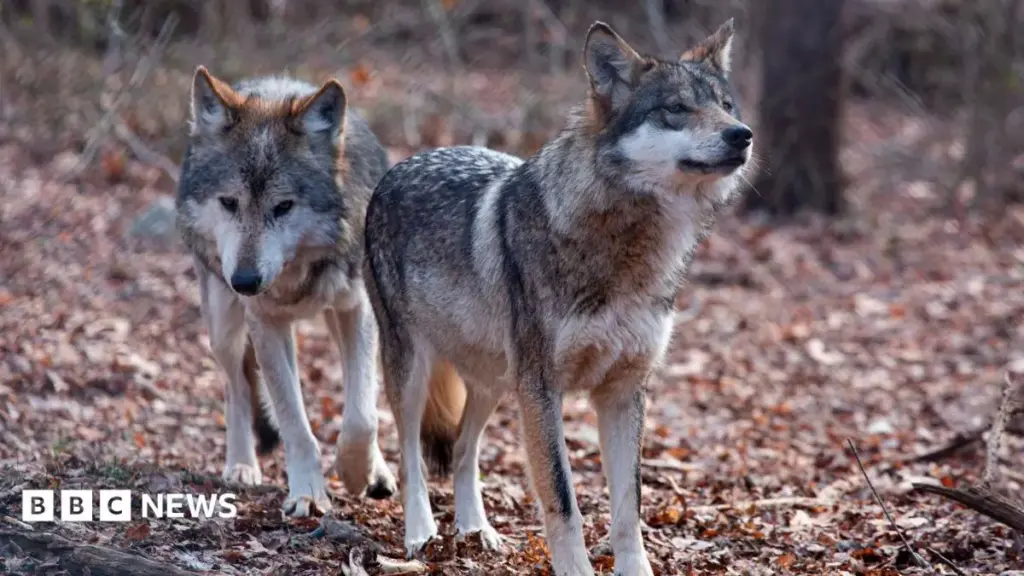
WASHINGTON — In a policy maneuver that immediately reignites a decades-old culture war over the American wilderness, President Donald Trump has signed an executive order initiating a federal review to remove endangered species protections for the grey wolf (Canis lupus) and its critically endangered southern relative, the Mexican wolf (Canis lupus baileyi).
The directive, framed by the White House as a critical measure to support the struggling American livestock industry and lower record-high beef prices, sets the stage for a dramatic shift in wildlife management. While the order does not grant an immediate green light for ranchers to cull the predators, it directs Interior Secretary Doug Burgum to conduct a sweeping 90-day assessment to determine whether these iconic carnivores have achieved sufficient population recovery to warrant delisting under the Endangered Species Act (ESA).
The decision has triggered immediate and fierce opposition from conservation organizations, wildlife biologists, and environmental law groups. Critics warn that the administration is bowing to political pressure at the expense of decades of painstaking, science-backed conservation biology. Environmental advocates have already signaled their intent to wage an aggressive legal battle, echoing the protracted courtroom showdowns that thwarted previous federal attempts to strip the animals of their protected status.
Executive Overview: The Intersecting Crises of Ranching and Conservation
At the heart of the administration’s policy is a fragile economic ecosystem facing unprecedented pressures. The executive order explicitly cites staggering baseline metrics: United States livestock herds have dwindled to a 75-year low, while domestic consumer demand for beef has climbed by approximately 10% over the past decade.
"More can and should be done to support this critical industry," the executive order reads, emphasizing that pastoral farmers and ranchers play a "vital role" in maintaining both the national food supply chain and the cultural heritage of the American West.
For the White House, the move is designed to address a multi-faceted agricultural squeeze. American cattle producers have faced intense financial friction due to rising operational costs, severe multi-year droughts across the western range, and recent outbreaks of parasites within domestic herds. Compounding these frustrations, the Trump administration recently moved to loosen restrictions on foreign beef imports in a bid to lower record-high consumer prices at grocery stores—a policy that squeezed the profit margins of domestic ranchers.
By dangling the prospect of federal delisting—and the subsequent ability to lethally manage predators that occasionally prey on livestock—the administration attempts to throw a political olive branch to an agricultural constituency grappling with structural economic headwinds.
Yet, conservationists argue that the administration is manufacturing a false narrative. Environmental advocates point out that livestock losses attributed to wolves represent a statistically negligible fraction of total herd mortality. Furthermore, they emphasize that existing state-run compensation programs already provide ranchers with up to 100% financial reimbursement for livestock confirmed to have been killed by wolves, alongside funding for non-lethal deterrents such as fladry, guard animals, and specialized fencing.
"This is a huge distraction to placate a handful of ranchers and make them believe that wolves are a greater threat than President Trump’s own policies," said Greta Anderson, deputy director of the Western Watersheds Project, a non-profit organization dedicated to protecting wildlife and watersheds in the western United States.
Detailed Chronology: From Near-Eradication to the Brink of Delisting
To fully understand the gravity of the current executive order, one must examine the turbulent historical timeline of human-wolf relations in North America—a trajectory defined by systematic extermination, landmark environmental legislation, and relentless legal warfare.
The Historical War on Carnivores
Towards the end of the 19th century and extending well into the 20th, the federal government—driven by the expansionist goals of homesteaders, cattlemen, and sheep ranchers—launched a systematic, state-sponsored campaign to exterminate wolves across the American landscape. Through federal predator control programs, bounty hunting, trapping, and the widespread use of poisons like strychnine and Compound 1080, wolves were methodically wiped out from the vast majority of their historical range.
By the mid-19th century, the Mexican wolf—the rarest, most genetically distinct, and southernmost subspecies of the grey wolf in North America—had been virtually eradicated from the wild within the United States. The grey wolf fared little better, surviving only in isolated, impenetrable pockets of the Great Lakes region and the deep wilderness of Canada and Alaska.
The Legislative Turning Point
The tide turned in 1973 with the passage of the Endangered Species Act, a landmark piece of bipartisan legislation signed by President Richard Nixon. The ESA provided the legal teeth necessary to protect imperiled species and mandate recovery plans. Both the grey wolf and the Mexican wolf were subsequently granted federal protections, halting their downward slide toward total extinction.
Reintroduction and Recovery Milestones
In 1995 and 1996, in one of the most celebrated and contentious experiments in modern conservation history, federal biologists triumphantly reintroduced grey wolves into Yellowstone National Park and central Idaho. Simultaneously, the Mexican Wolf Recovery Program kicked off in 1998, releasing captive-bred Mexican grey wolves into the Blue Range Wolf Recovery Area of Arizona and New Mexico.
The recovery has been slow, fraught with illegal poaching, political interference, and socioeconomic friction, but biologically resilient. According to recent figures released by the US Fish and Wildlife Service (FWS), the wild population of Mexican wolves in the United States reached 319 individuals in 2025—a dramatic, heartening increase from the mere four individuals that existed when reintroduction began in 1998.
Meanwhile, the broader population of grey wolves across the lower 48 states has rebounded to roughly 18,000 animals, primarily concentrated in the Great Lakes states (Minnesota, Wisconsin, Michigan) and the Northern Rockies (though populations in the latter region were previously stripped of protections through congressional riders).
The Legal Rollercoaster of the 2020s
The battle over federal delisting is not new. In 2020, during Trump’s first term, the FWS officially removed federal endangered species protections for the grey wolf across most of the United States, handing management authority over to state wildlife agencies.
That decision immediately triggered a firestorm of litigation. In February 2022, a federal judge in California restored Endangered Species Act protections to grey wolves across the vast majority of the country, ruling that the Trump-era decision was arbitrary and capricious because it ignored the animals’ inability to reoccupy significant portions of their historical range.
Now, the current executive order restarts this administrative cycle, tasking Interior Secretary Doug Burgum with building a new evidentiary foundation to justify stripping protections once and for all.
Supporting Context & Metrics: Population Dynamics and Economic Realities
The debate surrounding the executive order ultimately hinges on two competing datasets: the biological status of wolf populations and the economic realities of modern ranching.
Biological Metrics and Habitat Loss
While raw population numbers suggest robust growth, wildlife biologists caution against viewing census figures in a vacuum.
- Mexican Wolves: While the population of 319 individuals represents a major milestone, conservationists stress that the subspecies remains ecologically vulnerable. Confined primarily to rugged pockets of the Southwest, the population suffers from low genetic diversity, making them susceptible to inbreeding depression and disease.
- Grey Wolves: The national estimate of 18,000 grey wolves is heavily skewed. The vast majority reside in Alaska and Canada, or are concentrated in the Great Lakes region. In the broader expanse of their historical western habitat—where vast swaths of land have been fragmented by human development, highways, and energy extraction—wolves remain functionally absent from most of their historic ecological niches.
"The Mexican grey wolf is not recovered simply because the population has grown," emphasized Claire Musser, executive director of the Grand Canyon Wolf Recovery Project. "Weakening federal protections now would put decades of recovery work at risk. True recovery requires not just arbitrary headcounts, but established, interconnected populations with healthy genetic exchanges across diverse landscapes."
The Economic Calculus of Livestock Predation
Proponents of the executive order maintain that predatory losses inflict undue psychological and financial distress on ranchers operating on thin profit margins. However, peer-reviewed scientific studies and wildlife management data consistently demonstrate that wolf predation accounts for less than 1% of total annual cattle and sheep mortality in states where wolves and livestock share the landscape. The vast majority of livestock deaths are driven by disease, weather extremes, birthing complications, and poisonous plants.
Furthermore, existing institutional frameworks are explicitly designed to insulate ranchers from these specific economic shocks. Through state-administered compensation funds, livestock producers can receive full market value for animals verified to have been killed by wolves.
Critics argue that framing wolves as a primary driver of agricultural distress deflects attention from the systemic macroeconomic pressures facing American agriculture—including corporate consolidation in the meatpacking industry, high feed and fertilizer costs, and the intensifying impacts of climate change on water and forage availability.
Official Statements & Stakeholder Reactions
The signing of the executive order has drawn sharp lines between agricultural associations, political figures, and environmental watchdogs.
- The White House Perspective: Administration officials defended the order as a common-sense measure designed to restore balance between federal wildlife mandates and local economic survival. "Our ranchers feed America," a senior administration official noted on background. "It is the duty of the federal government to ensure that regulatory burdens do not unnecessarily impede their ability to steward the land and maintain our national food security."
- The Ranching Community: While major cattlemen associations have expressed cautious optimism regarding the potential for lethal management tools, many remain frustrated that the administration’s broader trade policies continue to permit cheaper beef imports. Nevertheless, organizations representing western landowners have long contended that federal red tape prevents them from effectively protecting their herds from apex predators.
- Conservation Organizations Push Back: The reaction from the conservation community was swift, unified, and combative.
- The Wolf Conservation Center released a statement highlighting the irreplaceable role wolves play as keystone species. By regulating herbivore populations such as elk and deer, wolves help regenerate overgrazed riparian zones, prevent soil erosion, and restore biodiversity to forest and prairie ecosystems.
- Western Watersheds Project and the Grand Canyon Wolf Recovery Project confirmed they are actively consulting with environmental litigators to prepare legal challenges the moment the Department of Interior formally initiates rulemaking based on Trump’s directive.
Future Outlook: The Road Ahead and Legal Horizons
As Interior Secretary Doug Burgum’s 90-day clock begins to tick, the immediate future of America’s wolves hangs in the balance.
Under the terms of the executive order, the Department of the Interior is mandated to review biological recovery criteria, consult with state wildlife agencies, and evaluate the economic impacts of wolf predation on the livestock sector. If Secretary Burgum’s review concludes that the grey wolf and Mexican wolf have met recovery thresholds, the FWS will be directed to issue a formal proposed rule to delist the species.
Such a move will instantly trigger a cascade of legal maneuvers. Environmental law firms—such as Earthjustice, the Center for Biological Diversity, and WildEarth Guardians—are poised to file immediate motions for preliminary injunctions in federal district courts. They will argue that any delisting decision violates the mandates of the Endangered Species Act by ignoring the best available peer-reviewed science regarding long-term species viability and habitat connectivity.
Beyond the courtroom, the debate carries profound philosophical implications for the American landscape. It forces a reckoning on a fundamental question: Can human civilization and large apex predators permanently coexist on a heavily developed continent, or must the wild be continually managed to serve narrow industrial and agricultural interests?
For now, the fate of the grey wolf and its critically endangered southern cousin remains anchored in bureaucratic limbo—caught between the economic anxieties of the modern ranching sector and the unyielding vigilance of those dedicated to keeping the American wilderness wild.



