TAIPEI — In a landmark triumph that reverberates across the cultural and political landscape of East Asia, the Siraya people of Taiwan have officially secured legal recognition from the government, becoming the island’s 17th officially designated Indigenous group.
In late July, the Siraya achieved a long-awaited milestone by becoming the very first Indigenous community from Taiwan’s lowland plains—historically known as the Pingpu groups—to gain formal state status under the Pingpu Indigenous Peoples Status Act. Passed in October 2025, this revolutionary piece of legislation established long-overdue pathways to redress centuries of cultural erasure, forced assimilation, and administrative invisibility.
For the Siraya community, the designation marks the triumphant culmination of a decades-long, grueling campaign for justice. It heals wounds inflicted by successive waves of colonial powers that sought to erase their identity, strip them of their ancestral lands, and force their integration into the dominant Han Chinese majority.
Yet, as community leaders, activists, and legal scholars emphasize, while this moment is cause for profound celebration, official recognition is merely the first step in a much broader, unfinished journey toward total transitional and historical justice.
Executive Overview
The formal announcement was delivered with palpable emotion during a Cabinet meeting on July 30. To the sound of echoing cheers and applause from Siraya community members inside the chamber, Premier Cho Jung-tai stepped to the podium to make the historic declaration.
"I’ve officially announced in a Cabinet meeting that the Siraya are a legally recognized Indigenous group in Taiwan," Premier Cho stated, cementing a policy shift that redefines the nation’s relationship with its marginalized populations.
In the gallery, veteran activist and founder of the Tainan Siraya Cultural Association, Wan Cheng-hsiung, shouted out in the traditional Siraya language, voicing the collective relief of a people long denied their heritage: "We’ve finally come home!"
President Lai Ching-te, who has championed the Siraya cause for cultural and legal restoration dating back to his tenure as the mayor of Tainan and later as vice president, welcomed the decision with open arms. Writing on Facebook on August 1—Taiwan’s official Indigenous Peoples’ Day—President Lai underscored the profound weight of the milestone.
"This is a historic moment for the Siraya people and an important milestone in the pursuit of historical and transitional justice for Indigenous peoples," Lai wrote.

According to data released by Taiwan’s Council of Indigenous Peoples, eligible individuals belonging to the Siraya community are expected to begin the formal process of registering their Indigenous status in mid-August. This transition will unlock critical institutional support, political representation, and socioeconomic rights that have been withheld from lowland Indigenous groups for generations.
Detailed Chronology: Decades of Resistance and Legal Battles
The path to the July 2026 Cabinet announcement was paved by decades of relentless grassroots organizing, strategic litigation, and legislative friction. Understanding this victory requires tracing the arc of Taiwan’s democratic awakening and the legal battles that forced the state to reckon with its colonial past.
The Post-Martial Law Awakening (1987–2010)
For centuries, Taiwan’s Indigenous populations were bifurcated by administrative policy. While highland groups enjoyed a degree of protected recognition due to their geographic isolation, lowland Pingpu communities—deemed "well-assimilated" by successive regimes—were systematically ignored.
It was only following the lifting of martial law in 1987 and the subsequent democratization of Taiwan that the Pingpu peoples found the political space necessary to organize. Groups began mobilizing to demand the restoration of their cultural heritage, language, and ancestral rights.
The Turning Point: Tsai Ing-wen’s Apology (2016)
A watershed moment in Taiwan’s reconciliation movement arrived in May 2016 with the inauguration of President Tsai Ing-wen, who campaigned on a promise of sweeping Indigenous rights reforms.
Just months into her term, on August 1, 2016, President Tsai took the unprecedented step of issuing a formal apology to Taiwan’s Indigenous peoples on behalf of the government. She acknowledged "the four centuries of pain and mistreatment" they had endured under Dutch, Spanish, Koxinga, Qing, Japanese, and Kuomintang administrations.
This historic apology was not handed down from on high; it was forced by the tenacity of the community. Weeks prior, hundreds of Indigenous activists and community members staged a gritty, two-day protest directly in front of the presidential office in Taipei, demanding concrete systemic reforms rather than empty rhetorical gestures.
The Judicial Breakthrough (2010–2022)
While the executive branch signaled a willingness to reconcile, the legal machinery moved glacially. In 2010, Siraya activist Uma Talavan took the battle into the courtroom, filing a landmark administrative lawsuit seeking formal state recognition for the Siraya people.
After enduring a frustrating series of rejections by lower courts—which repeatedly deferred to rigid, bureaucratic definitions of indigeneity—Siraya legal teams appealed all the way to the top.

In November 2022, Taiwan’s Constitutional Court delivered a resounding victory for justice. The high court ruled that the government’s continued exclusion of Pingpu communities from official Indigenous status was unconstitutional. The court gave the Legislative Yuan a strict three-year window to draft and pass corrective legislation.
Legislative Triumph and Final Recognition (2025–2026)
Meeting the court’s mandate, Taiwan’s parliament passed the long-awaited Pingpu Indigenous Peoples Status Act in October 2025. This legislation opened the legal gateway for the Siraya to apply for recognition.
Following a nine-month administrative review process by the executive branch, the Council of Indigenous Peoples and the Cabinet officially conferred 17th-group status on the Siraya on July 30, 2026.
Supporting Context & Metrics: Understanding the Siraya and the Pingpu Experience
To fully grasp the magnitude of the Siraya’s victory, one must examine the demographic, cultural, and sociological realities of Taiwan’s Indigenous landscape.
Demographics and Societal Structure
While Taiwan’s population is overwhelmingly Han Chinese, the island is also the historic and ancestral homeland of diverse Austronesian-speaking Indigenous communities. According to Taiwan’s Ministry of the Interior, approximately 629,000 people are currently registered as being of Indigenous descent, accounting for roughly 2.7% of the island’s total population.
The Siraya are traditionally a matrilineal society, with lineage and property traced through the maternal line. Historically residing primarily in the southern city of Tainan and its surrounding lowlands, the Siraya are recognized as the largest of the Pingpu groups—a collective term for the Indigenous inhabitants of Taiwan’s fertile coastal plains and valleys. Other prominent Pingpu groups include the Kavalan, Ketagalan, Taokas, Pazeh, Papora, Babuza, Hoanya, and Makatau.
In 2016, Tainan municipal data recorded more than 11,800 individuals who had successfully registered as Siraya under local municipal ordinances. However, because local recognition did not confer national rights, hundreds of thousands remained in administrative limbo. Today, Siraya activists and scholars estimate that between 250,000 and 350,000 people across Taiwan carry Siraya heritage but have been systematically denied national Indigenous status.
The Mechanics of Erasure
Under a succession of colonial powers—including the Qing dynasty, the Japanese colonial empire, and the early Kuomintang regime—Pingpu communities faced intense, coordinated pressure to assimilate into Han Chinese culture. Because they lived in accessible lowland areas and adopted agricultural and social practices that overlapped with Han settlers, colonial administrators labeled them Shufan ("civilized savages") as opposed to the Shengfan ("raw savages" of the mountain regions).
This colonial categorization had devastating, long-term consequences. While highland groups eventually secured varying degrees of protected status, land rights, and cultural preservation resources in the latter half of the 20th century, the Pingpu were legally and administratively erased. They were stripped of their traditional lands, denied political representation, and barred from accessing state-sponsored language revitalization programs and institutional support.

A rare exception occurred in 2002, when the Kavalan gained limited recognition as Taiwan’s 11th Indigenous group. However, that status was not universally applied; it was restricted strictly to individuals who had registered under specific historical timeframes and their direct descendants, leaving many others locked out.
Official Statements and Scholarly Insights
The transition from administrative erasure to legal inclusion has elicited profound reflections from scholars, activists, and government leaders alike.
Jolan Hsieh, a prominent Indigenous studies scholar at National Dong Hwa University in Taiwan—who is also known by her traditional Siraya name, Bavaragh Dagalomai—offered a nuanced assessment of the historic milestone during an interview with Mongabay.
"I see official recognition primarily as a process of restoring a relationship between the state and a people whose identity was denied or administratively erased, rather than granting us an identity that we did not previously possess," Hsieh explained.
"At the same time, recognition matters because state recognition has very concrete consequences. It affects political representation, cultural rights, education, language revitalization, land and resource questions, and access to institutional support."
Hsieh emphasized that the Siraya experience challenges rigid, colonial definitions of indigeneity that demand cultural "purity" or uninterrupted preservation of traditions.
"The Siraya experience demonstrates that Indigenous identity cannot be determined simply by asking whether a community has remained culturally ‘pure’ or whether its language and traditions have survived unchanged," she noted.
Premier Cho Jung-tai echoed this sentiment during his policy briefings, calling the recognition of the Siraya an essential step for Taiwan to fulfill its promise of multiculturalism and human rights protection. Cho pledged that the Cabinet would maintain open lines of communication with local governments, academic institutions, and Indigenous groups to expedite the review of pending applications from other Pingpu communities.
Future Outlook: The Long Road Ahead
While the July 30 announcement was met with unbridled joy on the streets of Taipei and Tainan, community leaders are quick to point out that the struggle for total equity is far from over.

Speaking to journalists immediately following the ceremony, activist Uma Talavan cautioned that legal recognition is merely a doorway, not the destination.
"We know there are over 400 legal provisions from 100 to 200 laws concerning Indigenous peoples. So far, only amendments to three laws have been passed," Talavan stated. "[We hope] to revise the laws thoroughly and make sure they reflect our due rights."
Securing 17th-group status grants the Siraya access to specific welfare programs, educational subsidies, and political representation reserved for Indigenous populations. However, complex battles remain on the horizon, particularly regarding the restitution of ancestral lands, the legal protection of sacred ecological sites, and the deep institutional funding required to revive the Siraya language from the brink of extinction.
Furthermore, the government faces the monumental task of processing potential applications from the remaining Pingpu groups—such as the Makatau, Taokas, and Pazeh—each of whom will demand individualized administrative pathways to justice.
Confronting Unfinished Business
As Taiwan continues to project itself internationally as a beacon of human rights, democracy, and progressive Indigenous governance in East Asia, scholars like Bavaragh Dagalomai argue that the nation must maintain rigorous self-reflection.
"Taiwan has often been celebrated as a place where Indigenous peoples have gained constitutional recognition and where Indigenous rights have developed significantly," Hsieh observed. "That history is important. But it also means that Taiwan has to confront the unfinished parts of its own Indigenous justice project."
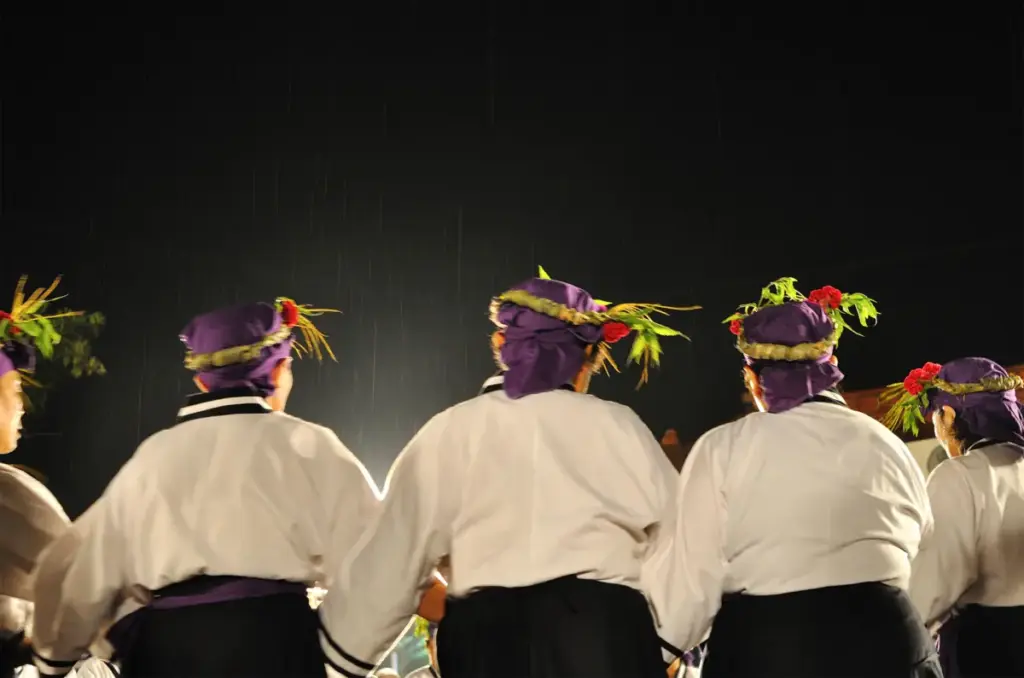
For the Siraya people, the journey home has finally begun. After four centuries of colonial displacement, administrative silencing, and quiet resilience, their identity is once again written not just in the hearts of their matriarchs and the steps of their traditional night rituals, but in the official ledgers of the state. Yet, as the drums echo across Tainan and the registration desks open this August, the Siraya stand ready to write the next chapter: one of active restoration, self-determination, and enduring cultural sovereignty.