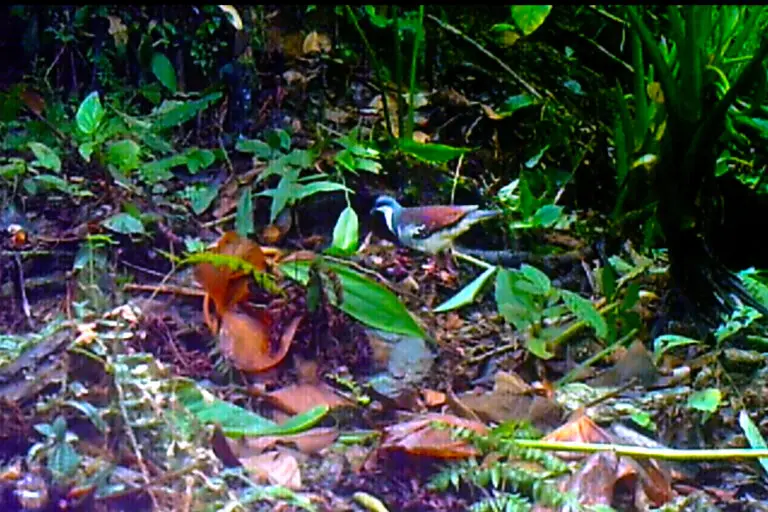
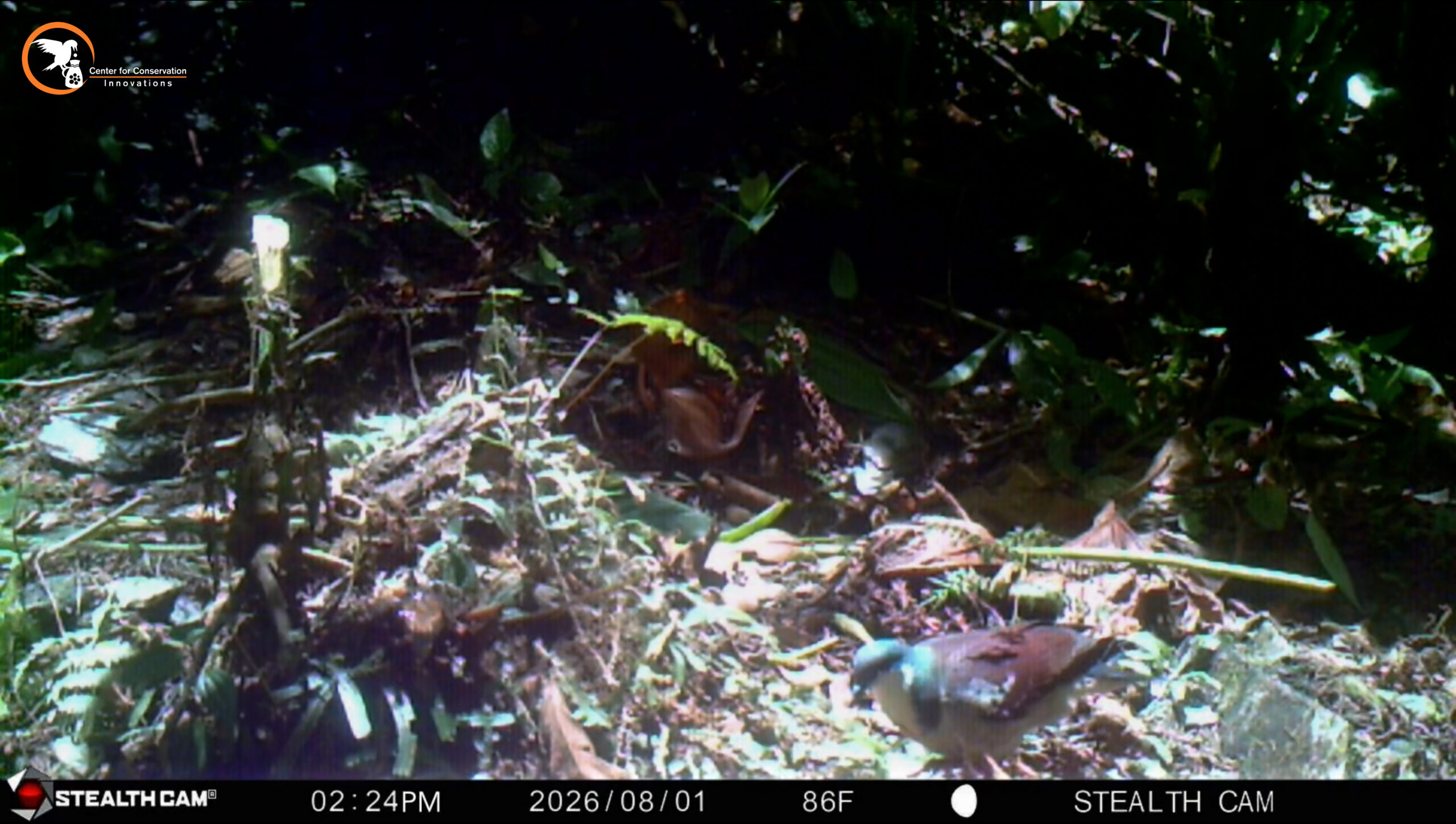
In the dense, shadowed rainforests of the Philippine island of Mindoro, a decades-long silence has finally been broken. A camera trap deployed in the rugged Puerto Galera rainforest has captured the first confirmed photograph in 20 years of one of the planet’s most elusive and imperiled birds: the Mindoro bleeding-heart pigeon (Gallicolumba platenae).
Announced on September 3 by the nonprofit Center for Conservation Innovation Ph Inc. (CCIPH), this single, high-definition image serves as definitive proof that the critically endangered species still survives in the wild. Previously designated as a "lost" species by the Search for Lost Birds program—a classification reserved for wildlife not scientifically documented for at least a decade—the pigeon’s sudden reappearance offers a fragile window of hope. Yet, conservationists warn that the jubilation of rediscovery must be tempered by a sobering reality: the bird’s highland sighting suggests a desperate population being squeezed upward as lowland habitats are swallowed by human encroachment, tourism development, and deforestation.
Achieved through a collaborative expedition joining modern conservation science with the deep ecological expertise of Indigenous Iraya Mangyan forest patrollers, this breakthrough highlights both the resilience of nature and the urgent, unmet need for comprehensive legal protection across Mindoro’s fragile mountain ecosystems.
Detailed Chronology: Two Decades in the Shadows
To understand the immense significance of the August camera trap image, one must look back at the precipitous decline of Gallicolumba platenae. Historical accounts from early naturalists describe the ground-dwelling pigeon as a common, widespread resident of Mindoro’s lush interior forests. However, as the 20th century progressed, compounding pressures of habitat destruction and hunting reduced the bird to a ghost of the forest floor.
The timeline of modern encounters with the Mindoro bleeding-heart reads as a chronology of fading echoes:
The Late 20th Century: Unchecked lowland logging, agricultural expansion, and rampant snaring drastically shrink the bird’s natural range. Sightings by local communities become sparse, and academic surveys return empty-handed.
The 2005 Milestone: For twenty years, the last scientifically verified record of the species hung on a single event in 2005. During this encounter, an individual was accidentally caught in a snare trap intended for red junglefowl (Gallus gallus) near a fruiting fig tree. While subsequent unverified reports trickled in from various pockets of the island, none could be authenticated by conservation authorities.
The Silent Years: Field surveys conducted by CCIPH and partner organizations frequently drew blanks. Local villagers and guides displayed unfamiliarity with the species, and regional hunters reported going years—or even decades—without laying eyes on the distinctively marked pigeon. This prolonged vacuum resulted in the species being officially flagged as "lost."
August 2026: Under the Mindoro Forest and Biodiversity Conservation Programme, CCIPH researchers John Bibar and Joshua Manila, working hand-in-hand with Indigenous Iraya Mangyan forest patrollers, successfully capture the definitive photograph of the bird using strategically placed camera traps in the Puerto Galera rainforest.
September 3, 2026: CCIPH publicly releases the confirmation, which is subsequently validated by prominent ornithologists and international species assessment experts, ending twenty years of scientific uncertainty.
Supporting Context & Metrics: Biology, Habitat Pressures, and Distribution Shifts
The Mindoro bleeding-heart pigeon is a masterclass in specialized avian evolution, possessing features that make it instantly recognizable to those trained in tropical ornithology—yet equally vulnerable to discovery by poachers and predators.
Morphological Signatures
According to Alex Berryman, who oversees species conservation assessments for Asia at BirdLife International, the bird is distinguished by a striking, unmistakable aesthetic:
An arresting orange-red splash of color centered on an otherwise pristine white chest, evoking the visual metaphor of a "bleeding" heart.
Iridescent, metallic green plumage blanketing its head and neck, shifting dynamically under the dappled sunlight of the understory.
Deep blue-green and rich brown upperparts, complemented by warm brown wings marked by a single, distinct whitish wing bar.
These traits cleanly separate Gallicolumba platenae from its island-hopping sister species within the Philippine archipelago, all of which share the bleeding-heart moniker but possess distinct regional variations in plumage and coloration.
The Elevation Mystery: A Lowland Species Pushed Uphill?
Historically, ecological data classified the Mindoro bleeding-heart as a dedicated lowland forest specialist. Typical encounters occurred around 400 meters (1,300 feet) above sea level, with occasional rare observations reaching up to 800 meters (2,600 feet).
However, the August 2026 camera trap shattered this baseline by capturing the specimen at an elevation exceeding 900 meters (nearly 3,000 feet). Rather than signaling a natural biological expansion into higher altitudes, this high-elevation record has sparked serious concern among researchers.
"A lowland specialist appearing in high-elevation forest is not necessarily a species expanding its horizons," CCIPH researchers noted in their joint statement. "It may be a species running out of lowland to live in."
Juan Carlos Gonzalez, an ornithologist and curator for birds at the Museum of Natural History at the University of the Philippines Los Baños, explains that while moist lowland and transitional mid-mountain rainforests can still persist at the 900-meter mark in Mindoro’s steep terrain, the lower slopes of Puerto Galera have undergone severe degradation. Driven largely by escalating tourism and unchecked land conversion, human pressures on the coastal and low-lying foothills are effectively compressing wildlife into shrinking, harder-to-reach upland refuges.
Official Statements and Expert Perspectives
The global conservation community has responded to the rediscovery with a mixture of cautious celebration and urgent calls to action.
The Discovery Team (CCIPH):
Emphasizing the fragility of the data point, CCIPH researchers framed the photograph not as a destination, but as a starting line:
"For an extremely rare and secretive species, a single image can carry enormous weight. It confirms that the bird continues to survive within the landscape… It is a data point, and a fragile one: a single confirmed occurrence of a single bird in a landscape where suitable forest has become increasingly fragmented. Whether it continues to beat for another twenty years or another hundred will depend on whether we treat this image merely as an extraordinary record or allow the evidence it carries to change what we do next."
Ornithological Validation (UPLB Museum of Natural History):
Dr. Juan Carlos Gonzalez underscored the broader ecological implications of the find for regional policy and management:
"This record not only proves that this very rare species continues to persist in these steep rainforests, but solidifies the importance of Puerto Galera as a UNESCO biosphere reserve and an important sanctuary for this critically endangered species."
International Assessment (BirdLife International / IUCN):
Alex Berryman pointed out the compounding vulnerability of the pigeon’s conservation status, noting its dual listing on the IUCN Red List as Critically Endangered and its tracking under the Search for Lost Birds initiative:
"There is no doubt that this refers to a Mindoro bleeding-heart… Birds that find themselves on both these lists are of particular concern. This high-elevation record raises hope that there might be more out there, but we must act swiftly to understand the true health of the population."
Indigenous Stewardship: The Iraya Mangyan Partnership
Crucial to this breakthrough was not the deployment of high-tech gear in isolation, but the deep integration of traditional ecological knowledge with modern conservation methodology. The photograph was secured directly within the Iraya Mangyan ancestral domain through a joint initiative under the Mindoro Forest and Biodiversity Conservation Programme.
CCIPH explicitly credited the triumph to Indigenous forest patrollers Alex, Melenciano, Cristito, Jay, and Sonnyboy. Drawing upon generations of ancestral stewardship, intimate landscape familiarity, and an unbroken daily presence in the rugged wilderness, these patrollers worked alongside CCIPH researchers John Bibar and Joshua Manila to map out optimal camera trap placements.
This Indigenous-led framework proves that community empowerment and participatory science represent the most viable pathway forward for safeguarding the biodiversity hotspots of the Philippines. Without the local expertise of the Iraya Mangyan, the cryptic, ground-dwelling habits of Gallicolumba platenae would likely have kept it hidden indefinitely.
Future Outlook: A Roadmap for Survival
While the rediscovery of the Mindoro bleeding-heart pigeon injects vital momentum into Philippine conservation, experts agree that a single photograph cannot reverse decades of institutional neglect and environmental degradation. Transforming this fleeting moment of hope into long-term species recovery requires a multi-pronged, systemic strategy.
1. Legislative Protections and Expanded Reserves
Dr. Gonzalez has issued a direct call for the establishment of a formal, legislated protected area encompassing the entire Mount Halcon-Mount Malasimbo Range. Despite its unmatched ecological value, this critical mountain range currently lacks a unified, government-designated protected status covering its totality, leaving segments vulnerable to exploitation.
2. Scaling Up Camera-Trapping Initiatives
Given the proven efficacy of remote automated cameras in tracking secretive terrestrial pigeons, Alex Berryman recommends that expansive camera-trapping networks be deployed systematically across all remaining tracts of suitable mid-to-high-elevation forest on Mindoro. This will allow researchers to transition from isolated snapshots to robust population estimates, trend monitoring, and tracking of breeding pairs.
3. Mitigating Accidental Trapping and Poaching
The historical vulnerability of the bleeding-heart to snares intended for other ground-dwelling wildlife—such as the red junglefowl—demands immediate intervention. Conservationists advocate for:
The redesign and implementation of wildlife-safe trapping alternatives or complete bans on indiscriminate snaring within biodiversity zones.
A crack down on illegal logging operations that continue to chip away at the edges of the pigeons’ remaining habitat.
Enhanced local conservation education integrated directly with community-led ecotourism initiatives. By leveraging Indigenous tracking skills for sustainable nature tourism, local communities can generate economic incentives that directly align with forest preservation rather than exploitation.
Conclusion
The reappearance of the Mindoro bleeding-heart pigeon after twenty years in the shadows is an extraordinary testament to the resilience of the natural world and the dedication of the people who protect it. Yet, the clock is ticking for Gallicolumba platenae. Whether this iconic bird’s heart continues to beat in the rainforests of Mindoro for generations to come depends entirely on whether society chooses to treat this photograph as a final, tragic eulogy or as the catalyst for an unyielding defense of its last remaining home.