


Executive Overview
The narrative surrounding the American electric vehicle (EV) market has experienced whiplash over the last twelve months. Following the legislative demise of the all-important $7,500 federal EV tax credit—eliminated under the Trump administration’s sweeping "One Big Beautiful Bill" (OBBA) tax law—analysts and industry stakeholders braced for a prolonged slump. The immediate aftermath indeed saw a miserable sales picture, leaving legacy automakers and clean energy advocates questioning the near-term viability of the nation’s vehicle electrification trajectory.
Yet, a landmark study published by economists at the Salata Institute for Climate and Sustainability at Harvard University tells a profoundly different, highly resilient story. Initially projecting a 32% EV market share for new vehicle sales in the US by 2030, Harvard researchers revised their estimates upward to a striking 38%—more than quadrupling the 8% market share recorded in 2025.
How is this massive acceleration possible in the face of aggressive policy rollbacks and the sudden removal of federal incentives? The answer lies in a convergence of volatile global geopolitics, rapidly maturing battery technology, aggressive private-sector deployment of charging infrastructure, and a structural shift in consumer economics. Far from being a fatal blow to the industry, the loss of the federal tax credit has exposed a broader truth: the EV transition has crossed a threshold where falling upfront costs, superior vehicle performance, and chronic instability in fossil fuel markets matter more to American drivers than government subsidies.
Legacy automakers like Toyota, Subaru, and Ford are betting heavily on this resilient "new normal," pushing forward with affordable models and robust production pipelines designed to conquer the market of the 2030s.
Detailed Chronology: The Policy Shifts and Global Shocks Shaping the EV Landscape
To understand how the US electric vehicle market rebounded from legislative and geopolitical blows, it is necessary to examine the timeline of events that transformed the landscape between late 2024 and late 2026.
- December 2024: The baseline policy era. Under the Biden-era regulatory framework and the Inflation Reduction Act (IRA), long-term projections placed US EV adoption on a hyper-growth track, with economists forecasting a commanding 48% market share for new vehicle sales by 2030, underpinned by robust consumer tax credits and federal infrastructure support.
- Late 2025: The federal EV landscape darkens. The $7,500 consumer tax credit for new, used, and commercial electric vehicles officially bites the dust following the passage of the Trump administration’s OBBA tax legislation. Concurrently, newly enacted executive orders attempt to freeze ongoing green initiatives, including a mid-stream halt to the $5 billion National Electric Vehicle Infrastructure (NEVI) public fast-charging program. US EV sales enter a protracted, highly publicized slump.
- February 28, 2026: A geopolitical turning point. The Trump administration launches a military conflict in Iran. Predictably, Tehran retaliates by closing the Strait of Hormuz—the world’s most critical maritime petroleum shipping chokepoint. The conflict rapidly expands across the Middle East, resulting in widespread destruction of regional oil and gas extraction and refining infrastructure. Global crude prices skyrocket, sending shockwaves through domestic fuel pumps.
- Spring 2026: Compounding the global energy crisis, ongoing geopolitical friction with Russia—exacerbated by a lack of robust US diplomatic and economic pressure against Vladimir Putin’s unprovoked war in Ukraine—results in systematic damage and destruction to Russian oil and gas assets. International fuel markets face a devastating double-whammy, keeping gasoline prices at punishingly high levels.
- July 6, 2026: Harvard University’s Salata Institute releases its definitive simulation study, titled "Simulating Impacts of Trump Policy Changes on Electric Vehicle (EV) Adoption." The report evaluates the damage done by the OBBA tax law and other regulatory rollbacks, concluding that despite the repeal of the $7,500 tax credit, market momentum will still carry EVs to an impressive 32% of total US new vehicle sales by 2030.
- September 2026: Legal and legislative pushback materializes. A federal judge formally overturns the Trump administration’s halt on the NEVI fast-charging program, allowing billions in federal funds to flow back into state-level highway electrification projects.
- September 17, 2026: The Harvard Gazette updates the Salata Institute’s findings. Driven by faster-than-expected improvements in battery economics and commercial charging expansions, the projected 2030 EV market share is officially revised upward from 32% to a record-shattering 38%.
Supporting Context & Metrics: Deconstructing the Harvard Study
The Harvard Salata Institute study provides empirical weight to what many field analysts suspected: while policy rollbacks inflict measurable damage, the macroeconomic fundamentals driving the clean energy transition have evolved past the point of simple legislative repeal.
The True Cost of the OBBA
The Harvard model simulated various policy scenarios to isolate the precise impact of the One Big Beautiful Bill. Under a business-as-usual baseline inherited from late 2024, 2030 EV adoption was slated to hit 48.0%.
The enactment of the OBBA—specifically its aggressive dismantling of clean energy incentives—lowered that trajectory. The study notes:
"We estimate that the OBBA’s elimination of the IRA EV-related tax credits will reduce the 2030 EV sales share of new vehicles from 48.0% to 39.4%, relative to a December 2024 policy baseline."
Drilling down further, the researchers emphasized that the single largest drag on the market—accounting for a 6.2 percentage point reduction on its own—was the total termination of purchase and lease credits for new, used, and commercial electric vehicles. Other regulatory changes enacted by the administration were found to be statistically minor nuisances by comparison.
From COVID Price Spike to the "New Normal"
Skeptics frequently argue that temporary fuel price spikes—such as those witnessed during the COVID-19 pandemic—fail to permanently alter consumer driving habits. However, transportation analysts point out structural differences that make the 2026 energy crisis an entirely different beast.
During the pandemic, supply chain disruptions caused fleeting fuel price increases that quickly evaporated as global lockdowns lifted. In contrast, the ongoing destruction of petroleum infrastructure in the Middle East and Eastern Europe represents a systemic, structural shock to the fossil fuel paradigm. With geopolitical instability threatening long-term market predictability, consumers are viewing high pump prices not as an anomaly, but as the "new normal."
Furthermore, technological maturity separates 2026 from the early 2020s:
- Battery Chemistry & Pricing: Incremental breakthroughs in lithium-ion and alternative chemistries have dramatically reduced upfront vehicle manufacturing costs while expanding driving ranges to over 300–400 miles on average, eliminating range anxiety for mainstream buyers.
- The Charging Infrastructure Boom: Despite federal policy hiccups, the physical footprint of public chargers has expanded exponentially. Quick-serve restaurant chains (such as regional favorites and nationwide brands), retail hubs, and municipal curbside charging initiatives (particularly visible in dense urban centers like New York City) have stepped in to fill infrastructure gaps.
- The "Gas Desert" Phenomenon: Ongoing consolidation in the retail petroleum sector has led to a structural decline in neighborhood gas stations, leaving urban and rural motorists increasingly vulnerable to fuel deserts. Recharging an EV—whether at home, at a local grocery store, or via fast-chargers along major interstate corridors—is increasingly recognized as fundamentally more convenient than tracking down a dwindling number of traditional gas stations.
Official Statements & Industry Reactions
Automotive executives and academic researchers have responded to these shifting dynamics by recalibrating their long-term strategies.
Speaking on the resilience of the market, lead energy analysts from the Salata Institute noted that while government incentives act as a powerful accelerator, market forces can ultimately sustain a high-velocity transition:

"The removal of the credit creates a speed bump, but it does not reverse the fundamental technological and economic advantages that electric vehicles offer the modern consumer over internal combustion engines."
Legacy automakers have mirrored this sentiment through their capital allocation and product launches. Rather than abandoning electrification—as some critics predicted following the loss of federal subsidies—legacy brands are competing fiercely on price and utility.
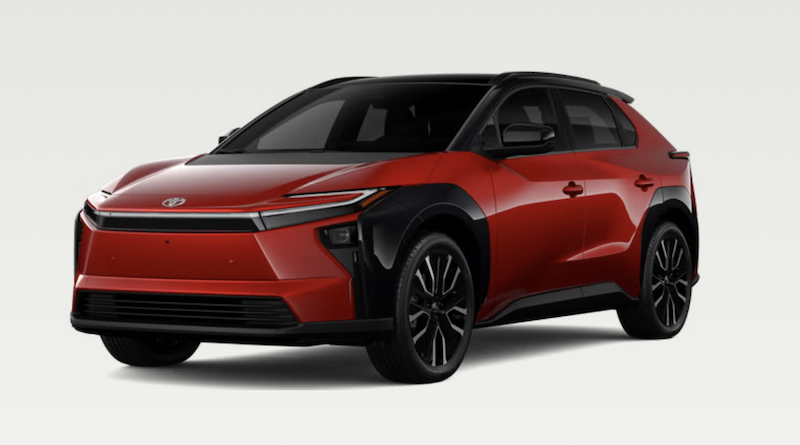
- Toyota: Long criticized by early EV purists for a cautious, hybrid-heavy approach, Toyota has firmly committed to the vehicle electrification movement. The automaker is aggressively rolling out its next-generation
bZlineup (including models tailored for the 2027 model year), banking on brand loyalty and manufacturing scale to capture market share. - Subaru: Continuing to push into uncharted waters, Subaru expanded its footprint in the US market with the rollout of new EV variants like the Solterra Trailseeker, proving that rugged, adventure-oriented brands can successfully transition their core demographics to battery power.
- Ford: Demonstrating that affordability is key to capturing mass-market volume, Ford has fast-tracked the development and upcoming production of its highly anticipated Fathom electric pickup truck. With targeted pricing sitting comfortably under $30,000, the Fathom represents a direct challenge to traditional gas-powered utility vehicles, aiming squarely at budget-conscious commercial and retail buyers.
Future Outlook: Navigating the Road to 2030
As the United States barrels toward the decade’s close, the path to a 38% EV adoption rate by 2030 is clearing of regulatory debris, even as geopolitical risks remain high.
The judicial reversal of the NEVI funding freeze ensures that federal dollars will continue to supplement private investments in interstate fast-charging networks. Simultaneously, private enterprise—realizing that the future of personal mobility is electric—continues to deploy capital into charging infrastructure without waiting for federal permission slips.
For consumers, the value proposition of EV ownership has shifted away from political subsidies and toward total cost of ownership, performance, and convenience. With maintenance costs slashed by the elimination of oil changes, spark plugs, and complex exhaust systems, and with electricity prices offering insulation from the violent price swings of global oil cartels, the financial logic of driving electric speaks for itself.
Ultimately, the attempt to legislate away the electric vehicle revolution has proven unsuccessful. While policy changes from Washington certainly altered the gradient of the climb, the unstoppable momentum of lower battery costs, superior engineering, and private-sector innovation has kept America firmly on the road to an electrified future. As automakers roll out sub-$30,000 electric trucks and expand charging corridors from coast to coast, 2030 is no longer shaping up as a distant, uncertain milestone—it is arriving precisely on schedule.



