Executive Overview
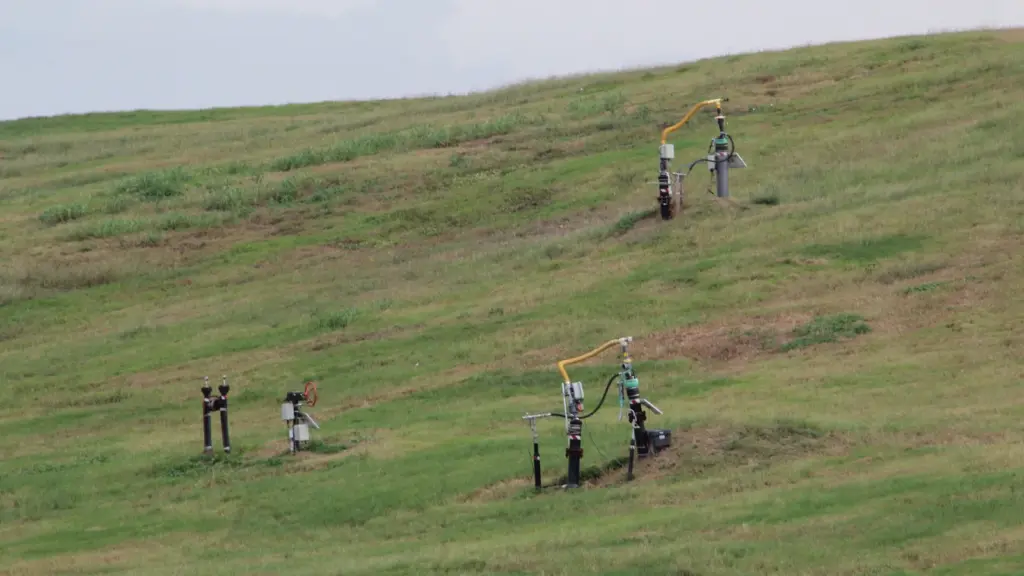
In the high-stakes world of modern waste management, the intersection of environmental compliance, operational efficiency, and cutting-edge technology has never been more critical. Landfills remain one of the most stubborn and substantial sources of anthropogenic methane emissions in the United States, posing a significant climate challenge while simultaneously representing a massive, untapped reservoir of renewable energy. Enter Loci Controls, an automated wellhead tuning vendor specializing in maximizing gas collection and control systems (GCCS).
For the past ten years, Loci Controls has quietly amassed an unprecedented repository of operational data. Today, the company is bridging the gap between raw data and actionable intelligence by integrating artificial intelligence into its flagship WellWatcher platform. By training an unnamed large language model (LLM) on a decade’s worth of anonymized real-time telemetry—spanning gas flow rates, pressure fluctuations, and detailed compositional metrics—Loci is transforming how site operators interact with their wellfields.
Instead of forcing technicians to comb through endless, complex spreadsheets at the start of a shift, the enhanced WellWatcher platform uses AI to surface anomalous data, automatically highlight high-priority maintenance targets, and deliver concrete, context-aware operational recommendations. This technological leap arrives at a pivotal moment for the waste and recycling sector, which is increasingly embracing artificial intelligence and machine learning to drive down costs, optimize sorting facilities, and tighten environmental compliance.
As regulatory scrutiny over fugitive methane emissions intensifies and the demand for reliable renewable natural gas (RNG) feedstock grows, Loci Controls’ AI-driven upgrade offers a timely blueprint for modernizing landfill gas extraction. By turning a decade of institutional data into a predictive, real-time safety net, the company is aiming to safeguard plant uptimes, protect pipeline specifications, and squeeze every possible cubic foot of methane out of America’s landfills.
Detailed Chronology of the AI Integration
The journey from a passive data repository to an active, AI-assisted operational co-pilot did not happen overnight. It is the culmination of years of iterative platform development, disciplined data collection, and a strategic push to solve one of the most persistent bottlenecks in landfill management: information overload.
Phase 1: Building the Foundation (The Pre-AI Era)
For over a decade, Loci Controls established itself as a trusted vendor in the automated wellhead tuning space. The company’s core value proposition has always centered on helping landfill operators optimize their GCCS infrastructure through automated monitoring and control hardware. Prior to the recent AI rollout, Loci’s WellWatcher platform functioned primarily as a high-powered dashboard. It provided clients with extensive tables and visual graphs displaying critical parameters—such as gas flow rate, internal well pressure, and gas composition—across dozens of individual wells scattered across sprawling landfills.
However, as Melinda Sims, Loci’s co-founder and director of product development, has pointed out, having access to data is not the same as having actionable insights. At the beginning of a working shift, an operator might be greeted by a "sea of data," tasked with scanning extensive metrics across myriad wells to deduce which specific infrastructure components were failing, underperforming, or drifting out of compliance. While Loci’s hardware alone had previously touted a verified 15% increase in methane capture rates for client sites, the human element of interpreting complex, fluctuating trends across interconnected well networks remained a daily operational hurdle.
Phase 2: Pilot Testing and Model Training (Months Prior to Launch)
Recognizing the untapped potential sitting within their massive database, Sims and her engineering team initiated a quiet pivot toward artificial intelligence several months ago. Rather than building a machine learning model from scratch, the team opted to train an established large language model (LLM) using a heavily anonymized subset of the historical operational data collected by Loci over the past ten years.
The primary objective of this training phase was simple yet ambitious: teach the model to comprehend the nuances of landfill gas physics, wellhead mechanics, and environmental variables so it could accurately identify which measurements genuinely merit human intervention. By feeding the LLM historical scenarios where well conditions degraded, pressure dropped, or gas quality plummeted, the model learned to recognize the subtle multivariate warning signs that precede operational failures.
Following the initial offline training, Loci launched a controlled pilot program across a select handful of active landfill sites. This real-world testing phase was crucial for calibrating the AI’s sensitivity. It ensured that the tool would avoid alarm fatigue—the dangerous phenomenon where operators ignore alerts due to a high volume of false positives—while still catching critical deviations before they impacted broader systems.
Phase 3: The General Rollout and Immediate Deployment
The culmination of these developmental steps occurred earlier this month, when Loci officially rolled out its AI-driven features across the entire WellWatcher platform. The deployment strategy was designed for maximum immediate impact: the new functionality was made instantly accessible to all existing clients who currently have Loci wellhead monitors and controllers installed across their sites.
According to Sims, the deployment costs for this initial rollout were kept to a minimum, allowing the company to deliver immediate, high-value software enhancements to its core customer base without triggering prohibitive infrastructure expenses. Looking ahead, Loci is actively exploring pathways to extend these AI capabilities to clients who utilize only Loci’s monitoring hardware, further expanding the software’s market footprint.
Supporting Context & Metrics: The Macro-Environment of Waste AI
To fully understand the significance of Loci Controls’ latest software iteration, one must examine the broader economic and environmental forces currently reshaping the waste and recycling sector.
The Industry-Wide Embrace of Artificial Intelligence
For decades, the waste management industry was characterized by heavy machinery, manual labor, and traditional operational methodologies. However, the past several years have marked a profound cultural and technological shift. As the deployment costs of artificial intelligence and machine learning have plummeted—while their practical use cases have simultaneously multiplied—waste operators of all sizes have leaned into digital transformation.
In the realm of waste hauling, major fleets are increasingly deploying AI-powered routing and logistics software, unlocking millions of dollars in annual fuel and labor savings. Meanwhile, Materials Recovery Facilities (MRFs) are undergoing a technological renaissance, integrating computer vision and machine learning sorting units to drastically reduce contamination rates, accelerate processing speeds, and boost the recovery of valuable commodities. Loci Controls’ entry into the AI arena represents the natural extension of this broader industrial trend into the specialized, highly technical domain of landfill gas collection.
The Methane Imperative and the RNG Boom
Beyond general efficiency gains, external pressures regarding environmental compliance and climate change are mounting. Landfills are consistently identified by the U.S. Environmental Protection Agency (EPA) and various international bodies as among the largest anthropogenic sources of methane emissions in the United States. Because methane possesses a global warming potential significantly greater than carbon dioxide over a 20-century timescale, fugitive emissions from landfills represent a severe and pressing climate impact.
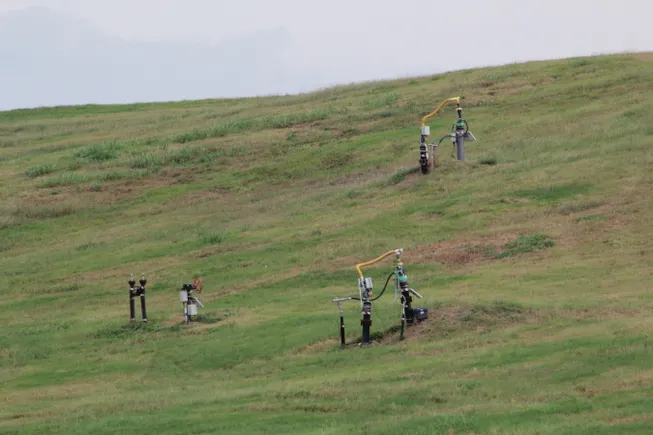
Simultaneously, however, this methane represents a lucrative commodity. Through the capture and processing of landfill gas, operators can create pipeline-quality Renewable Natural Gas (RNG), turning an environmental liability into a major revenue stream.
This dual mandate—mitigating climate emissions while maximizing RNG production—creates extreme operational pressures. RNG facilities are bound by exceptionally strict gas composition constraints. If the methane concentration drops, or if unwanted contaminants like oxygen and nitrogen rise above precise thresholds, the gas is instantly kicked off the pipeline, resulting in severe financial penalties and lost production time for plant operators.
As Sims notes, these RNG plant operators are exceptionally motivated to pinpoint wellfield issues before they escalate. A single underperforming well can silently drag down the quality of the entire aggregate gas stream, threatening to take an entire RNG facility offline.
Official Statements and Industry Insights
The strategic rationale behind Loci’s AI integration is best understood through the perspectives of its leadership, who have spent years listening to the pain points of landfill operators and RNG producers.
Melinda Sims, co-founder and director of product development at Loci Controls, has been instrumental in steering the company’s technological evolution. Reflecting on the sheer scale of the company’s operational archive, Sims highlighted the unique competitive advantage Loci holds in the marketplace:
"We have the largest database of real-time measurements of what’s happening at a landfill. We’re looking to put an extra level of AI smarts on top of that to tease out some things that would have been harder to find otherwise."
Addressing the initial feedback gathered during the multi-site pilot program, Sims emphasized how the AI features directly alleviate the cognitive burden on site technicians. By digesting thousands of individual data points and translating them into concise summaries and recommended actions, the technology acts as an expert digital assistant:
"If you come in and you’re an RNG plant operator and you’re about to go out of spec and get kicked off your pipeline, then you’re highly motivated to figure out where in my well field do I need to pay attention and go check for issues."
Furthermore, Sims pointed out that while traditional hardware interventions have historically yielded impressive performance bumps—such as Loci’s documented 15% increase in methane capture rates—the ultimate metric for success in the age of AI will be enhanced system resilience and plant uptime. By giving operators the tools to proactively withstand unpredictable environmental variables, extreme weather events, and subterranean pressure shifts, the AI-enhanced WellWatcher platform transforms reactive troubleshooting into proactive asset management.
Future Outlook: The Road Ahead for Landfill AI
As Loci Controls digests the initial market response to its newly deployed WellWatcher AI features, the company’s product development roadmap points toward an even more sophisticated, interactive future.
The Rise of Conversational Diagnostics
While the current iteration of the AI platform delivers automated summaries, performance overviews, and prioritized maintenance recommendations directly to the user dashboard, Loci is already exploring the next frontier of human-machine interaction: conversational agents.
Sims revealed that the company is actively investigating the feasibility of developing an integrated chat agent. Such an agent would allow operators to engage in a natural language dialogue with their wellfield data—asking complex diagnostic questions like, "Which wells in the north quadrant experienced a pressure drop during yesterday’s heavy rainfall?" or "What is the primary driver behind the slight elevation in nitrogen levels at Well 42?"
However, Sims was transparent about the economic realities of such advancements, noting that deploying sophisticated, context-aware conversational models across vast industrial networks could introduce higher operational expenses, requiring careful cost-benefit analysis as the technology matures.
Scaling Access and Redefining Industry Standards
In the near term, Loci’s growth strategy involves broadening the reach of its existing AI tools. Beyond the current user base of clients equipped with both Loci wellhead monitors and controllers, the company is engineering pathways to extend these AI capabilities to facilities that utilize only Loci monitoring hardware. This expansion could significantly widen the data intake loop, feeding even more diverse topographical and operational variables back into the underlying large language model.
Ultimately, the successful integration of artificial intelligence into landfill gas collection systems signals a broader maturation of the waste tech sector. As regulatory frameworks tighten, corporate sustainability goals demand absolute accountability, and the market for renewable natural gas matures, the margin for operational error is vanishingly thin.
By marrying a decade of proprietary hardware telemetry with state-of-the-art machine intelligence, Loci Controls is not merely upgrading a software dashboard; it is setting a new benchmark for how critical environmental infrastructure is monitored, managed, and optimized. In doing so, the company is proving that the path to a cleaner, more sustainable energy future runs straight through the intelligent management of America’s waste sites.