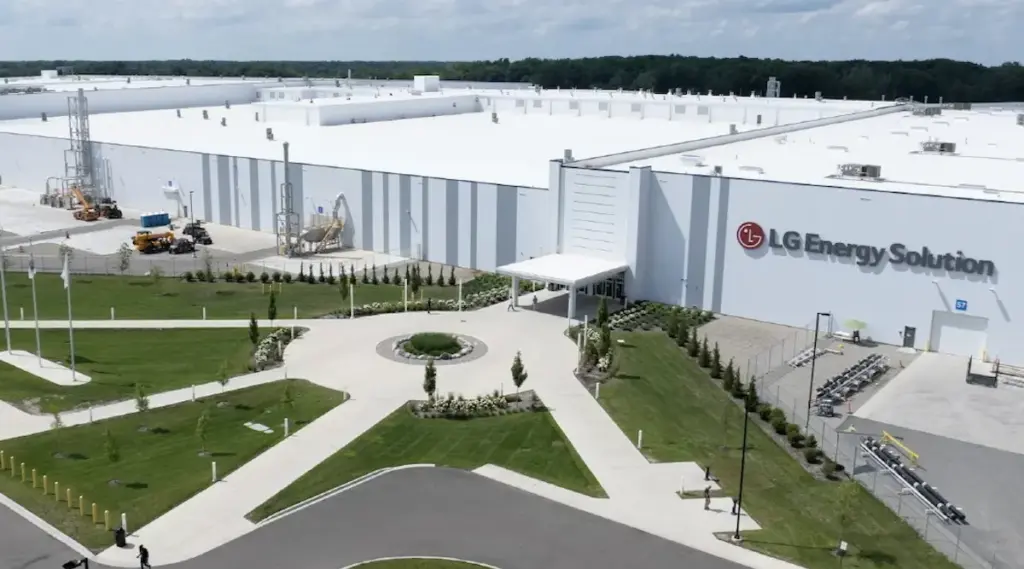
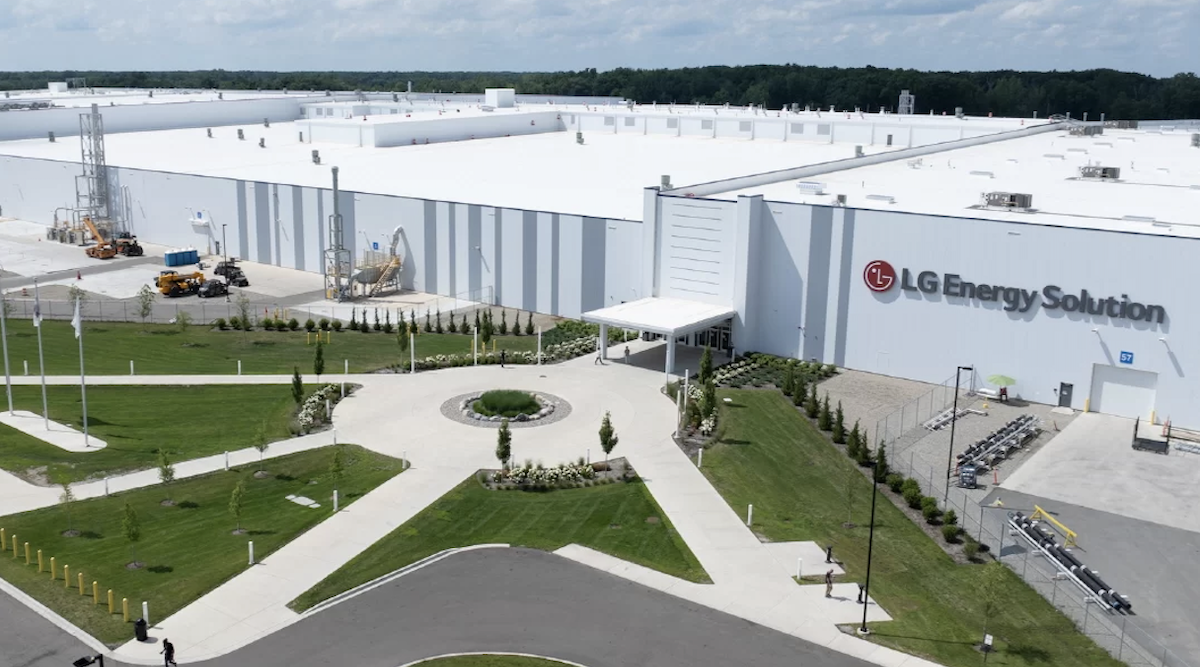
In a political landscape where energy rhetoric frequently collides with physical reality, US Interior Secretary Doug Burgum has delivered a remarkable about-face. Nearly a year after dismissing utility-scale energy storage as a nonexistent fantasy—famously decrying sunset as a "catastrophic failure" of solar power—Burgum has publicly embraced the technology. The occasion for this dramatic shift was the official ribbon-cutting ceremony for a massive new battery manufacturing facility in Lansing, Michigan, operated by South Korean battery giant LG Energy Solution.
Burgum’s sudden endorsement of domestic battery production as "foundational to America’s energy future" highlights a glaring disconnect between partisan talking points and the hard economics of modern industrial policy. While the administration continues to champion a fossil-fuel-centric "Energy Dominance Agenda," the practical realities of swing-state economics, job creation, and grid reliability have forced a pragmatic reckoning. Batteries are source-agnostic; they stabilize grids powered by wind and solar, while simultaneously supporting the electric vehicle (EV) supply chain—including high-density cells destined for upcoming vehicles like the 2027 Toyota Highlander EV.
However, this industrial pivot is complicated by shifting geopolitical currents. Even as Washington celebrates billions of dollars in clean energy manufacturing investments involving key allies like South Korea, friction threatens the broader bilateral relationship. From abrupt shifts in joint military exercises to ongoing cross-Pacific supply chain dependencies, the administration’s transactional diplomacy reveals deep tensions. This investigative report examines the chronology of Burgum’s storage U-turn, the underlying economic metrics driving modern renewable integration, and the complex web of domestic politics and international relations shaping the future of American energy.
Detailed Chronology: From Denial to Foundational Acceptance
To understand the magnitude of Secretary Burgum’s recent remarks, one must revisit the baseline established by the Trump administration in late 2025. During an August 2025 appearance on Fox Business, Burgum leaned heavily into familiar anti-renewable talking points, attempting to frame the energy transition as an inherently unreliable and expensive endeavor.
"And of course, when the sun goes down, you have a catastrophic failure called sunset and there’s no solar energy produced, and yet we’re subsidizing these things that are intermittent, unreliable, and expensive," Burgum declared on live television, sidestepping the foundational role of modern Battery Energy Storage Systems (BESS) designed specifically to capture and redistribute daytime solar generation.
In the same breath, Burgum disparaged wind energy, claiming that drops in generation rendered wind investments virtually useless. Yet, this narrative ignored the vast wind infrastructure humming away in his own home state. According to data compiled by the US Energy Information Agency (EIA), wind power accounted for a staggering 35% of North Dakota’s in-state electricity generation in 2025.
Fast forward to August 18, 2026. In what can only be described as a startling rhetorical pivot, Burgum stood before flashing cameras in Lansing, Michigan, to inaugurate LG Energy Solution’s state-of-the-art battery plant. Gone were the quips about "catastrophic sunsets" and nonexistent storage technologies. Instead, Burgum championed the facility as a vital pillar of national security and economic growth.
"Domestic battery production is foundational to America’s energy future — reducing dependence on foreign adversaries, driving good-paying American jobs and advancing the American Energy Dominance Agenda," Burgum stated in an official press release issued by LG Energy Solution.
The political calculus behind this sudden conversion is transparent. With the 2026 midterm elections looming, the administration is intensely focused on preserving its congressional majority. Michigan remains a critical swing state, and the LG Energy facility is projected to inject up to 1,700 new manufacturing jobs into the local economy. Whether Burgum’s newfound appreciation for battery storage will survive the political cycle remains to be seen, but for now, industrial pragmatism has momentarily trumped ideological denial.
Supporting Context & Metrics: The Reality of Modern Grid Integration
Secretary Burgum’s initial skepticism was rooted in a nostalgic view of the electrical grid that might have held weight twenty years ago, but bears little resemblance to contemporary energy markets. The US power grid is undergoing its most rapid transformation since the widespread electrification of the 20th century, driven by sharp declines in the cost of solar photovoltaic systems, wind turbines, and lithium-ion batteries.
Data from the US Energy Information Agency underscores this paradigm shift:
Two-Decade Growth: Over the past twenty years, electricity generation from wind power and utility-scale solar has surged to account for roughly 17% of total US generation, up from less than 1% in 2005.
The Storage Backbone: Modern BESS installations have evolved from experimental pilot projects into indispensable grid infrastructure. These systems smooth out frequency fluctuations, provide emergency backup during extreme weather events, and shift daytime solar generation into peak evening demand hours—effectively neutralizing the "sunset" critique.
Regional Dominance: States traditionally viewed as fossil-fuel strongholds are increasingly reaping economic rewards from renewables. North Dakota’s 35% wind generation share in 2025 proves that clean energy integration is no longer confined to progressive coastal states.
Furthermore, the technology being manufactured at facilities like the new Lansing plant is inherently flexible. Batteries do not care whether the electrons stored within their cells originate from a natural gas turbine, a nuclear plant, a wind farm, or a solar array. By acknowledging that BESS technology is "foundational," the administration has tacitly admitted that grid stability in the 21st century is structurally dependent on energy storage.
Official Statements and Industrial Realities
The LG Energy Solution facility in Lansing is not a single-product enterprise; it represents a diversified manufacturing hub designed to serve both stationary grid storage and the expanding electric vehicle market.
Dual-Track Manufacturing: Stationary Storage and EVs
Stationary Grid Storage (LFP Cells): The facility will manufacture cost-effective lithium-iron-phosphate (LFP) battery cells. These cells are subsequently integrated by LG Energy Solution Vertech—the company’s US energy storage division—into comprehensive systems engineered for utility-scale grid stabilization, commercial facilities, and industrial applications. This explains the alignment with administration officials seeking grid resilience and load-balancing tools.
Automotive Electrification (NMC Cells): Alongside LFP cells, the Lansing plant will produce energy-dense nickel-manganese-cobalt (NMC) cells destined for major automotive partners like Toyota. These cells will power upcoming electric platforms, including the 2027 Toyota Highlander EV, which will be assembled at Toyota Motor Manufacturing Kentucky (TMMK) in Georgetown, Kentucky.
This dual application creates an interesting political tension. While stationary storage can be marketed under the broad umbrella of grid reliability and traditional infrastructure, the massive capital investments in passenger EV supply chains run counter to the administration’s vocal hostility toward zero-emission vehicle mandates. Nevertheless, automakers are forging ahead with localized supply chains to meet consumer demand and comply with domestic sourcing requirements.
The Broader Ecosystem: Forge Nano and Samsung SDI
The Lansing project is part of a broader wave of international investment in American clean technology manufacturing. In North Carolina, the California-based startup Forge Nano has officially broken ground on a major expansion of its lithium-ion battery manufacturing operations, supported by deep-pocketed South Korean partner Samsung SDI.
This facility—focused primarily on heavy-duty commercial trucks, military applications, and aerospace—carries a fascinating backstory. The project was initially bolstered by a $100 million grant awarded by the US Department of Energy during the Biden administration in 2024. Despite facing attempts by the Trump administration to claw back clean tech funding, the grant survived subsequent legal challenges. In a sign of pragmatic political adaptation, the administration dispatched Audrey Robertson, Assistant Secretary overseeing the Office of Critical Minerals and Energy Innovation, to preside over the official groundbreaking ceremony, seamlessly claiming credit for the project’s economic momentum.
Future Outlook: Geopolitical Friction and Strategic Ambiguities
While economic partnerships with South Korean battery giants are anchoring America’s domestic energy manufacturing boom, troubling signals on the geopolitical front threaten to strain these very alliances.
The South Korean Alliance Under Strain
Just as South Korean firms are committing billions of dollars to build out the foundational infrastructure of the US energy transition, political actions from the White House have introduced unnecessary friction into Seoul-Washington relations.
In a move that caught international observers and military analysts off guard, President Trump abruptly decided to cut the final six days short from the 11-day "Ulchi Freedom Shield" joint military exercise between the US and South Korea. This sudden curtailment—announced on the very day the exercises commenced without prior consultation with Seoul—has sparked intense anxiety among regional experts.
Dokyoung Koo, an Atlantic Council nonresident fellow and 22-year Korean military veteran, underscored the gravity of the decision:
"From a South Korean perspective, most troubling is not simply the reduction of combined military exercises, but the way the decision was made. Announcing such a major change on the very day the exercise began, without adequate prior consultation with Seoul, falls short of the respect allies should expect from one another."
Navigating the Contradictions
This diplomatic misstep highlights a recurring paradox in contemporary American foreign and domestic policy. South Korea is presently playing a decisive, foundational role in securing America’s energy future—providing the capital, technological expertise, and manufacturing capacity required to build modern power grids and advanced electric vehicles. Yet, transactional diplomacy and unilateral decision-making risk alienating a premier strategic and economic partner.
As the US navigates the remainder of the political cycle, the trajectory of energy storage appears secure, locked in by billions in capital expenditure, regional job creation, and undeniable grid economics. Whether federal leadership can maintain a coherent strategy that honors both domestic manufacturing wins and international alliances remains one of the defining questions of the current energy era.