Over recent years, Reform UK—led by Nigel Farage alongside deputy leader and energy spokesperson Richard Tice—has reshaped the British political narrative. Combining strict anti-immigration rhetoric with an explicit anti-Net-Zero platform, the hard-right populist party has positioned the repudiation of climate policies at the very center of its economic agenda. Despite facing ongoing scrutiny over party financing and operating with a modest cohort of MPs, Reform UK’s polling surges have amplified its influence over national debate.
Central to Reform UK’s political platform is the systematic rejection of established climate science and low-carbon economics. Party leadership routinely frames decarbonization targets as "net stupid zero," alleging that green policies are responsible for domestic deindustrialization, inflated household energy bills, and industrial job losses. To support these claims, Farage and Tice advocate for scrapping the UK’s legally binding 2050 Net-Zero target, expanding North Sea fossil fuel extraction, lifting the ban on hydraulic fracturing (fracking), and dismantling existing renewable energy contracts.
However, an exhaustive factcheck by Carbon Brief analyzing 45 distinct claims made by Reform UK leadership reveals a widespread reliance on inaccurate statements, cherry-picked statistics, and disproven climate-sceptic narratives. Key institutional bodies—including the Intergovernmental Panel on Climate Change (IPCC), the UK Climate Change Committee (CCC), the Office for Budget Responsibility (OBR), the Met Office, and national business groups—contradict Reform UK’s core arguments.
Empirical data demonstrates that UK carbon emissions have fallen by 54% since 1990 while national GDP nearly doubled, that renewable generation has shielded consumers from volatile international gas prices, and that the costs of climate inaction far exceed the investment required to reach net-zero emissions.
Detailed Chronology: The Escalation of Anti-Net-Zero Rhetoric (2024–2026)
Reform UK’s campaign against decarbonization has intensified through public statements, media interviews, and policy documents from 2024 through mid-2026.
+-----------------------------------------------------------------------------------+
|                           CHRONOLOGY OF KEY EVENTS                                |
+-----------------------------------------------------------------------------------+
|  June 2024      | Farage & Tice launch election campaign attacks on Net Zero.    |
|                 | Farage claims human CO2 is minor (3%) and not a pollutant.     |
|                 | Tice attributes global warming to "the sun or volcanoes."     |
+-----------------+-----------------------------------------------------------------+
|  February 2025  | Reform UK holds press conference targeting energy infrastructure. |
|                 | Tice proposes a "windfall tax" on renewables, claims underground|
|                 | cabling is cheaper than pylons, and calls battery storage unsafe.|
+-----------------+-----------------------------------------------------------------+
|  July 2025      | Tice asserts Labour's climate strategy destroys industrial jobs.|
|                 | Renewable Energy Association reports clean energy employment    |
|                 | officially surpassed oil and gas sector jobs for the first time. |
+-----------------+-----------------------------------------------------------------+
|  May 2026       | Tice Bloomberg interview: Claims Net-Zero costs "trillions,"   |
|                 | asserts IPCC "resiled" from core science, and attacks solar.    |
+-----------------+-----------------------------------------------------------------+
|  July-Aug 2026  | UK suffers record heatwave & drought; driest July on record.     |
|                 | Tice dismisses extreme heat as comparable to 1976.              |
|                 | Farage declares "countries that frack get rich, others get poor."|
+-----------------------------------------------------------------------------------+
The 2024 General Election Campaign
During the summer 2024 election campaign, Reform UK incorporated explicit climate skepticism into its official manifesto. Nigel Farage publicly argued on BBC Radio 5 Live that human activity accounts for only 3% of global annual carbon dioxide emissions and asserted that labeling CO2 a pollutant was "nuts." Concurrently, Richard Tice appeared on BBC Breakfast to dismiss human-caused global warming, attributing temperature shifts to natural cycles driven by the sun and volcanic activity.
The 2025 Energy Infrastructure Push
In February 2025, Reform UK convened a series of press conferences targeting the UK’s electrical grid expansion. Tice served notice on National Grid, falsely claiming that burying high-voltage cables underground was "as cost-effective, or indeed cheaper" than erecting overhead transmission pylons.
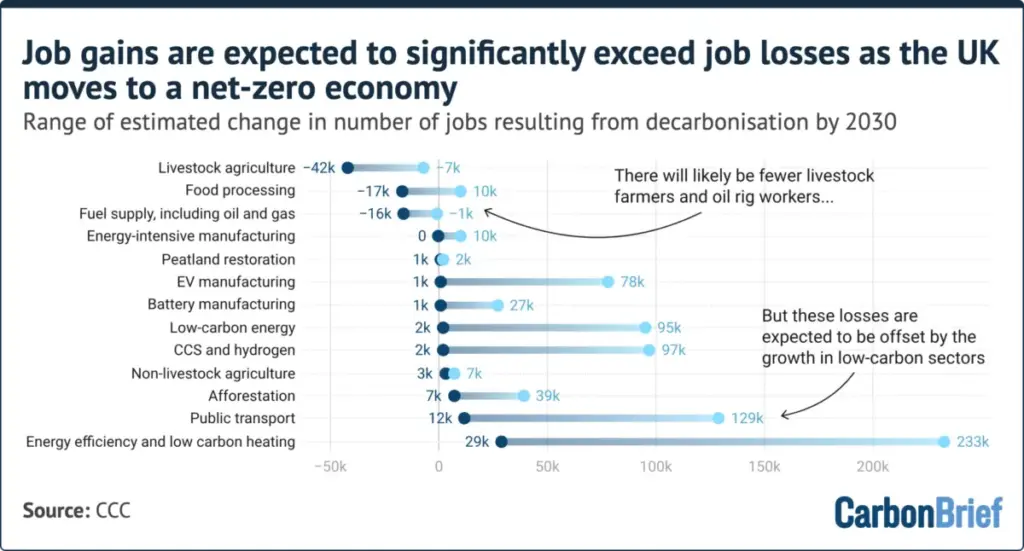
He further proposed a retrospective "windfall tax" on renewable energy generators to claw back historical subsidies, while demanding a ban on battery energy storage systems (BESS) on safety grounds. By July 2025, Tice claimed that government climate policies were "destroying hundreds of thousands of industrial jobs," even as industry figures showed low-carbon employment reaching record highs.
The 2026 Media and Heatwave Controversies
In a May 2026 extended interview with Bloomberg, Tice reiterated several disproven claims: asserting that IPCC climate models had collapsed due to changes in high-emissions baseline scenarios, that sea-level rise would be unaffected by reaching net-zero, and that the UK was acting "unilaterally" in pursuing decarbonization.
Later that summer, as the UK experienced its hottest summer on record and its driest July in history, Tice minimized the severe heat conditions, comparing them to the summer of 1976. In August 2025 and mid-2026 press conferences, Farage maintained that Net Zero was the primary cause of British deindustrialization, claiming that "countries that frack get rich, and countries that don’t frack get poor."
To evaluate Reform UK’s platform, Carbon Brief gathered and fact-checked 45 explicit claims across five primary categories: climate science, net-zero economics, energy prices, fossil fuel extraction, and renewable technology.
+-----------------------------------------------------------------------------------+
|                        REFORM UK CLAIMS VS. EMPIRICAL DATA                        |
+-----------------------------------------------------------------------------------+
| CATEGORY          | REFORM UK CLAIM                  | EMPIRICAL EVIDENCE / DATA  |
+-------------------+----------------------------------+----------------------------+
| Climate Science   | Sun/volcanoes cause warming;     | Human activity accounts    |
|                   | human CO2 impact unproven.       | for ~100% of modern warming|
|                   |                                  | (IPCC AR6).                |
+-------------------+----------------------------------+----------------------------+
| Global Alignment  | UK acting "unilaterally" on      | 140 nations (74% of global |
|                   | Net-Zero targets.                | emissions) have Net-Zero   |
|                   |                                  | targets.                   |
+-------------------+----------------------------------+----------------------------+
| Economic Impact   | Net-Zero destroys economy and    | UK emissions down 54%      |
|                   | costs "trillions of pounds."     | since 1990 while GDP grew  |
|                   |                                  | ~90%. Net cost is £108bn.  |
+-------------------+----------------------------------+----------------------------+
| Energy Bills      | Renewables drive high domestic   | High wholesale gas prices  |
|                   | electricity bills.               | drove ~2/3 of bill spikes  |
|                   |                                  | (UKERC analysis).          |
+-------------------+----------------------------------+----------------------------+
| Grid Upgrades     | Underground cables are cheaper   | Underground cables cost    |
|                   | than overhead pylons.            | 3.5x–5x more than overhead |
|                   |                                  | lines (Ramboll/IET/DNV).   |
+-------------------+----------------------------------+----------------------------+
| Fossil Fuel Supply| North Sea drilling/fracking will | ~90% of UK North Sea oil/  |
|                   | slash UK gas prices like US.     | gas drained; UK lacks US   |
|                   |                                  | geology and export limits. |
+-----------------------------------------------------------------------------------+
1. Climate Science and Environmental Attribution
Human Contribution vs. Natural Cycles
Reform UK leaders frequently assert that natural variations drive modern climate change. Tice’s claim that "there’s no evidence that man-made CO2 is going to change climate" relies heavily on an un-peer-reviewed discussion paper published by two independent authors through Statistics Norway in 2023. Statistics Norway explicitly clarified in 2024 that the paper does not represent its official stance, and independent climate scientists labeled the document a flawed reprise of standard climate-denial talking points.
The IPCC AR6 report states it is "unequivocal" that human influence has warmed the atmosphere, ocean, and land, driven by CO2 concentrations higher than at any point in at least two million years. Furthermore, scientific attribution studies confirm that human influences account for approximately 100% of observed warming since the pre-industrial period, with natural drivers like solar output and volcanic eruptions exerting a negligible net effect on long-term trends.
Global Warming and Extreme Weather Events
During the extreme summer heat of 2026, Tice argued that recent conditions were simply a repetition of the 1976 UK heatwave. Met Office analysis demonstrates significant differences between the two periods:
Likelihood: Human-induced climate change made the record-breaking summer temperatures of 2026 approximately 130 times more likely.
Intensity: Baseline warming means a 1976-style atmospheric circulation pattern is now 3°C to 4°C hotter than it was fifty years ago.
Extremes: The 20th century recorded only three days where UK temperatures exceeded 36°C (including 1976). Summer 2026 recorded three such days in a single year and ten separate days above 35°C, double the previous record set in 1976.
                  UK Summer Temperature Extremes: 1976 vs. 2026
  +--------------------------------------------------------------------------+
  | Days > 36°C in entire 20th Century:  3 days (including 1976)             |
  | Days > 36°C in Summer 2026 alone:    3 days                              |
  +--------------------------------------------------------------------------+
  | Days > 35°C in Summer 1976:          5 days                              |
  | Days > 35°C in Summer 2026:          10 days (All-Time Record)           |
  +--------------------------------------------------------------------------+
2. Economic Metrics: Costs, Jobs, and Industrial Output
The "Trillions" Myth vs. Actual Costs
Reform UK claims that reaching Net Zero will cost British taxpayers "trillions of pounds," citing misinterpretations of figures from the National Energy System Operator (NESO) and the Climate Change Committee (CCC).
Capital Investment vs. Net Cost: The CCC’s latest analysis calculates that the total cumulative net cost to achieve economy-wide Net Zero by 2050 is £108 billion, equivalent to less than 0.2% of UK GDP annually.
Operational Savings: While upfront investment requires approximately £670 billion between 2025 and 2050, clean technologies yield £562 billion in operational savings over the same period due to the superior efficiency of electric vehicles, heat pumps, and fuel-free renewable generation.
Economic Benefits: The UK Government estimates that achieving decarbonization targets through 2040 delivers £865 billion in net economic benefits, primarily by preventing severe climate damages and avoiding volatile fossil fuel imports.
                           CCC Net-Zero Cost Model (2025–2050)
  +--------------------------------------------------------------------------+
  | Upfront Capital Investment Required:     + £670 Billion                  |
  | Cumulative Operational & Fuel Savings:   - £562 Billion                  |
  +--------------------------------------------------------------------------+
  | Total Net Cost to the UK Economy:         £108 Billion (~0.2% of GDP)     |
  +--------------------------------------------------------------------------+
Industrial Deindustrialization and Employment Data
Nigel Farage has repeatedly asserted that Net Zero is the "prime reason for the deindustrialisation of Britain." Historical economic metrics refute this timeline:
  UK Manufacturing Share of Employment vs. Climate Legislation
  30% +------------------------------------------------------------------+
      | * (1950s: Post-WWII Peak)                                        |
  20% |                                                                 |
      |                                                                 |
  10% |        * (2000-2016: Dropped to ~10% prior to Net-Zero target)  |
      |           ________                                              |
   0% +--------------------+---------------------------------------------+
      1950                2000                                      2026
Deindustrialization Timeline: UK manufacturing employment fell from roughly 30% after World War II to 10% between 2000 and 2016—long before the UK enacted its 2050 Net-Zero target in 2019. The decline was driven by global trade dynamics, foreign competition in steel, and market shifts away from coal.
Green Economy Growth: A 2026 report by CBI Economics revealed that the UK net-zero sector generated £105 billion in Gross Value Added (GVA) in 2025 and supported 1.1 million jobs, offering wages significantly above the national average.
Sectoral Job Shifts: In 2024, employment in the UK clean-energy sector officially surpassed employment in offshore oil and gas extraction for the first time in history.
3. Energy Prices, System Costs, and Infrastructure
Wholesale Gas vs. Renewable Subsidies
Tice and Farage claim that renewable energy expansion is directly responsible for soaring UK electricity bills. Empirical market data shows the opposite mechanism at play:
Gas Price Exposure: The UK’s marginal pricing electricity market design means that natural gas-fired power stations set the wholesale price of electricity most of the time. The UK Energy Research Centre (UKERC) found that expensive natural gas caused two-thirds of the rise in domestic electricity bills following recent global fuel shocks.
Savings from Renewables: Independent analysis by Carbon Brief revealed that wind and solar generation saved the UK £1.7 billion in gas imports during the first two months of the 2026 Hormuz energy crisis alone.
                          Drivers of Recent Electricity Bill Spikes
  +--------------------------------------------------------------------------+
  | [====================================        ] 67% High Wholesale Gas   |
  | [==========                                  ] 33% Other System Factors  |
  +--------------------------------------------------------------------------+
    Source: UK Energy Research Centre (UKERC)
Grid Transmission: Underground Cables vs. Overhead Pylons
To block proposed grid extensions, Tice claimed that burying high-voltage power lines underground is as cost-effective as building overhead pylons.
Independent engineering studies from Ramboll (May 2026), the Institution of Engineering and Technology (IET, April 2025), and DNV (2024) consistently demonstrate that underground high-voltage alternating current (HVAC) transmission lines are 3.5 to 5 times more expensive to construct than standard overhead lines. Subsea cabling options can reach up to 11 times the cost. Converting all planned national grid expansions to underground routes would add an estimated £22 billion in direct capital expenditure to consumer energy bills.
                  Cost Multiplier: Underground vs. Overhead Transmission
  Overhead Lines [1.0x] (Baseline)
  Underground    [=======================] 3.5x - 5.0x
  Subsea Cables  [==================================================] Up to 11.0x
4. North Sea Extraction and Fracking Realities
North Sea Reserve Depletion
Reform UK advocates for issuing hundreds of new drilling licenses, alleging that regulations are suppressing abundant oil and gas reserves. Data from the North Sea Transition Authority (NSTA) and the Energy and Climate Intelligence Unit (ECIU) indicate that geological depletion—not regulation—is the main factor in declining output:
Depletion Level: Approximately 90% of the UK’s total recoverable North Sea oil and gas reserves have already been extracted and burned.
Production Decline: North Sea gas production fell by 74% between 2000 and 2025, while oil production dropped by 75%, despite the previous Conservative government holding six licensing rounds during its tenure.
Price Impact: Because the UK produces less than 1% of global oil and gas, domestic extraction cannot alter international wholesale market prices.
                      UK North Sea Hydrocarbon Depletion
  +--------------------------------------------------------------------------+
  | Drained / Already Burned Resources:       [=======================] 90%  |
  | Remaining Recoverable Reserves:           [===] 10%                      |
  +--------------------------------------------------------------------------+
    Source: Energy and Climate Intelligence Unit (ECIU)
The Feasibility of UK Fracking
Farage’s claim that UK shale gas could replicate the American energy boom ignores fundamental geological differences:
Resource Size: Independent geological studies show that recoverable UK shale gas resources are roughly 10 times smaller than early speculative estimates.
Geological Complexity: Unlike the expansive, uniform basins of North America, British shale formations are highly faulted and fragmented, making high-volume horizontal hydraulic fracturing technically difficult and economically unviable, as demonstrated by early exploratory abandonments across Western Europe.
Official Statements & Expert Analysis
Institutional leaders and scientific bodies have repeatedly challenged Reform UK’s public statements on energy policy and climate science:
Climate Science and Global Policy Alignment
Intergovernmental Panel on Climate Change (IPCC): "It is unequivocal that human influence has warmed the atmosphere, ocean, and land. Reaching net-zero CO2 emissions globally is a physical requirement to stabilize human-induced global warming."
Carbon Brief Analysis on International Targets: "It is false to claim the UK acts ‘unilaterally’. Over 140 countries representing 74% of global greenhouse gas emissions have active Net-Zero targets. If the UK abandoned its goal, it would join the United States and Iran as one of the few major emitters without one."
Economic Realities and Energy Transition
CBI Economics Report (2026): "Net-zero is already one of the UK’s most productive and geographically distributed industrial sectors, generating high-value employment, driving supply chain activity, and anchoring the UK within one of the defining economic transformations of our era."
Climate Change Committee (CCC): "Clean power coupled with accelerated electrification is the clearest route to lower energy bills for UK households. Without global emissions reductions, physical risks may exceed the threshold where the UK can protect itself through adaptation measures alone."
Prof. Jan Rosenow, University of Oxford (Substack Analysis): "The claim that ‘renewables make electricity expensive’ doesn’t survive contact with wholesale data. The countries with the most expensive wholesale electricity are those still dependent on gas to set their market prices."
Future Outlook: Political and Economic Implications
As Reform UK continues to build its political platform around anti-green policies, the debate over the UK’s energy strategy carries significant economic, environmental, and diplomatic consequences.
+-----------------------------------------------------------------------------------+
|                        FUTURE OUTLOOK: SCENARIO ANALYSIS                          |
+-----------------------------------------------------------------------------------+
| POLICY DIRECTION      | ECONOMIC IMPLICATIONS        | INFRASTRUCTURE & GRID      |
+-----------------------+------------------------------+----------------------------+
| Net-Zero Continuation | • Secures £105bn+ GVA.       | • Requires £64bn-£89bn grid|
| (Current Path)        | • Creates 135k-725k net jobs.|   investment by 2030s.     |
|                       | • £562bn operating savings.  | • Lowers dependence on gas.|
+-----------------------+------------------------------+----------------------------+
| Reform UK Proposal    | • Exposes UK to gas spikes.  | • £22bn added cost via     |
| (Abandon Net-Zero)    | • Risks £92bn in lost green  |   forced undergrounding.   |
|                       |   investments (NEF data).    | • Stranded fossil assets.  |
+-----------------------------------------------------------------------------------+
Strategic Energy Security vs. Import Dependency
With North Sea reserves nearing exhaustion, maintaining heavy reliance on fossil fuels would increase the UK’s exposure to international supply shocks. Data from the Digest of UK Energy Statistics (DUKES) shows that the UK’s net energy import dependency reached 44% in 2024, up from 30% in 2010.
Electrifying transport and heating via homegrown offshore wind, nuclear, and solar power offers a direct path to reducing import vulnerability. Disenfranchising green capital through windfall taxes or regulatory bans could deter tens of billions of pounds in private investments, as highlighted by the New Economics Foundation (NEF).
Global Standing and Diplomatic Consequences
Reversing the UK’s climate commitments would mark a significant shift in foreign policy. Having established the Climate Change Act in 2008 and become the first major economy to mandate Net Zero by 2050 in 2019, withdrawing from these targets would isolate the nation within the G7 and European economic blocs.
As carbon border adjustment mechanisms (CBAM) take effect internationally, British industrial exports produced via high-emissions energy systems could face trade barriers and tariffs in key markets.
The Limits of Political Populism Against Scientific Consensus
The tension between political rhetoric and physical reality remains central to the UK energy debate. While blaming Net Zero for systemic economic challenges offers a concise political narrative, it conflicts with data from the OBR, CCC, and international research bodies.
As climate impacts intensify—demonstrated by the extreme heatwaves, agricultural pressures, and water shortages recorded in 2026—the economic necessity of combining rapid decarbonization with robust infrastructure adaptation will remain a primary challenge for UK policymakers.