

Executive Overview
American higher education is currently navigating its most severe crisis of institutional autonomy in modern history. Following the return of President Donald Trump to the Oval Office in January, the federal government has deployed a potent financial weapon against the nation’s premier universities. By freezing or summarily withdrawing billions of dollars in federal research grants and institutional funding, the administration has exerted unprecedented leverage over campus admissions, faculty hiring guidelines, and diversity, equity, and inclusion (DEI) mandates.
The ramifications of this pressure campaign have been swift and destabilizing. Data from the Academic Freedom Index reveals that institutional autonomy within the United States experienced a staggering downward plunge last year. In a disturbing democratic reversal, the decline in American academic independence is now tracking at a steeper, more accelerated trajectory than equivalent erosions witnessed in nations such as Hungary, Turkey, and India.
However, a landmark study recently published in the journal Energy Research & Social Science posits that this current governmental assault did not materialize in a vacuum. Instead, the research demonstrates that the structural vulnerabilities exploited by the Trump administration were decades in the making. For at least fifty years, corporate interests—most notably major fossil fuel conglomerates and conservative philanthropic foundations—have systematically infiltrated higher education. By deploying massive donations and targeted endowments, these external entities have reshaped university research agendas, subtly shifted campus ideological balances, and steadily eroded the defenses of academic institutions against outside political and financial manipulation.
As federal support dwindles and universities scramble to patch expanding budget deficits, the historical reliance on private corporate funding has left higher education dangerously exposed. This report examines the historical origins, systemic mechanics, and contemporary consequences of "corporate capture" in American academia, exploring how decades of private influence prepared the ground for the current federal crackdown.
Detailed Chronology: From the Powell Memo to Project 2025
To understand the modern vulnerability of American universities, historians and sociologists point to a deliberate, multi-generational playbook designed to realign the nation’s intellectual centers with corporate and conservative priorities.
The 1971 Powell Memo: Blueprint for a Counter-Offensive
The foundational strategy of modern corporate capture is frequently traced back to a confidential memorandum written in August 1971 by Lewis F. Powell Jr., just months before his appointment to the United States Supreme Court by President Richard Nixon. Drafted for the U.S. Chamber of Commerce, the Powell Memo was a passionate call to arms for the American business community, which Powell believed was under systemic attack from radical left-wing elements, student activists, and critical intellectuals.
Powell argued that the free enterprise system could only be defended by aggressively projecting corporate influence into the nation’s intellectual institutions. He urged the Chamber of Commerce to coordinate a strategic offensive, explicitly recommending that corporations fund sympathetic scholars, evaluate and rewrite school textbooks, and mobilize corporate boards of trustees to actively correct the perceived "imbalance" caused by liberal faculty members.
"If you go back and read the Powell memo, you already had the agenda of the Trump administration," notes Robert Brulle, an environmental sociologist at Brown University. The memo institutionalized the idea that higher education was not an independent public good, but an ideological battleground that corporate America had a fiduciary duty to conquer.
The Rise of Conservative Foundations
In the decades following the Powell memo, a network of deep-pocketed conservative foundations—most notably the Olin, Scaife, Koch, and Bradley foundations—operationalized Powell’s vision. Funded by tycoons who amassed immense fortunes in chemical manufacturing, industrial production, and fossil fuels, these philanthropic entities poured billions of dollars into higher education and public policy infrastructure.
At the same time, these exact family foundations spent decades bankrolling The Heritage Foundation, the prominent Washington-based conservative think tank. The Heritage Foundation ultimately spearheaded Project 2025, a comprehensive, far-right policy playbook designed to fundamentally restructure the federal government and bring institutions—including higher education—into strict ideological alignment with conservative priorities during a subsequent Republican administration. The ideological pipeline connecting 1970s corporate boardrooms to contemporary federal policy has thus operated as a continuous, well-funded conveyor belt.
The Modern Crackdown and Anticipated Obedience
Fast forward to the present day. Armed with the strategic blueprints of the past half-century, the second Trump administration has moved aggressively to discipline recalcitrant universities. Institutions that once prided themselves on unyielding independence have begun to buckle under the financial strain. Elite schools such as Columbia, Brown, and Northwestern have quietly caved to various administrative demands, altering institutional policies to stave off federal reprisals.
Climate initiatives and environmental research programs have emerged as primary targets for federal retaliation. Demonstrating the tangible stakes of this campaign, the administration revoked $4 million in federal grants awarded to Princeton University, explicitly penalizing the institution on the grounds that its climate research was generating dangerous levels of "climate anxiety."
Faced with this hostile regulatory environment, many university administrators have engaged in what scholars term "anticipatory obedience." Rather than mounting a unified defense of academic freedom, institutional leaders have increasingly resorted to self-censorship and pre-emptive compliance. Ryan Wishart, a sociology professor at Creighton University and co-author of the recent study on corporate capture, warns that this preemptive capitulation is deeply destructive. "I think university leaders need to stop engaging in anticipatory obedience [and] self-censorship," Wishart asserts.
Supporting Context & Metrics: The Fossil Fuel Footprint in Academia
While ideological policing has accelerated under the current administration, the daily financial mechanics of corporate influence are most clearly visible through the lens of the fossil fuel industry. For decades, oil and gas giants have systematically funneled money into campus labs, climate research centers, and public policy institutes, embedding corporate priorities into the scientific mainstream.
Financial Inflows and Strategic Partnerships
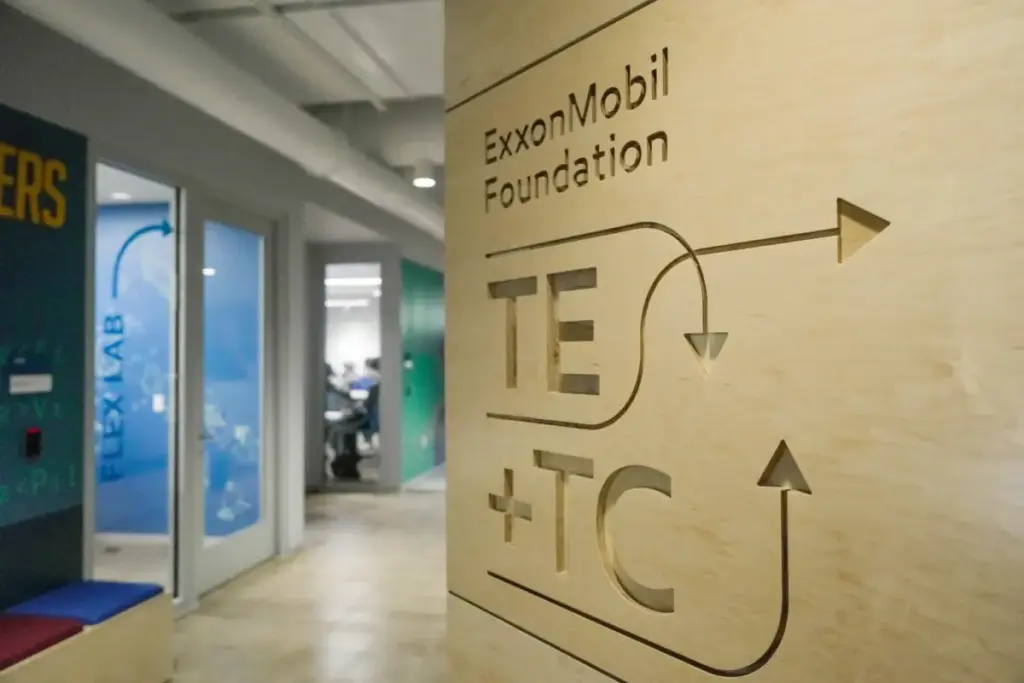
Comprehensive tracking of university endowments reveals an immense financial footprint left by carbon-intensive industries. An extensive cross-institutional analysis discovered that major fossil fuel corporations—including ExxonMobil, BP, Chevron, Shell Oil, ConocoPhillips, and Koch Industries—donated at least $700 million to 27 prominent U.S. universities between 2010 and 2020.
These donations are rarely passive gifts; they frequently establish long-term, structurally integrated research pipelines. For example, British Petroleum (BP) financed Princeton University’s prestigious Carbon Mitigation Initiative for a remarkable quarter of a century before their cooperative contract finally expired in 2025.
Internal documents uncovered during a sweeping congressional investigation illustrate the deliberate nature of these corporate-academic entanglements. One starkly revealing email discovered in the inquiry showed a BP executive in 2020 celebrating the company’s relationship with Princeton, writing that their institutional partnership was "becoming increasingly synergistic (as of course we had planned!)".
Skewing the Science: Natural Gas and Carbon Capture
This structural synergy has had measurable, documented effects on academic output and public policy. Empirical research published in prestigious scientific journals demonstrates that industry-funded scholarship frequently tilts the playing field in favor of corporate interests.
- The Natural Gas Bias: A 2022 study published in Nature Climate Change revealed that policy reports published by institutions such as MIT, Harvard, and Stanford during periods when they received active funding from oil companies exhibited a pronounced systemic bias in favor of natural gas compared to independent, non-funded research.
- The "Bridge Fuel" Narrative: A foundational 2011 report out of MIT, financed directly by fossil fuel interests, successfully popularized the rhetorical framing of natural gas as a clean "bridge fuel" meant to ease the global transition toward renewable energy. This specific corporate-crafted phrase was subsequently adopted and repeated by high-ranking political figures, including former President Barack Obama.
- The Carbon Capture Mirage: A celebrated 2004 research paper from Princeton University, which archival investigations show was significantly shaped by BP, introduced the concept of "stabilization wedges" to global climate discourse. This paper vaulted carbon capture and storage technologies into the absolute center of international climate policy discussions. Yet, more than two decades later, carbon capture remains largely unproven and economically non-viable at scale.
"Corporate capture isn’t necessarily blatant propaganda; it’s a slow drift toward market-friendly climate solutions and away from anything that threatens the industry," explains Noel Healy, lead author of the Energy Research & Social Science study and a professor of geography and sustainability at Salem State University.
A Century-Old Playbook Across Industries
The fossil fuel sector does not hold a monopoly on academic capture. Similar corporate strategies have been successfully deployed by pharmaceutical corporations, agricultural conglomerates, and other powerful industries for over a century.
Historical records unearthed by congressional investigations reveal that electric utilities ran a sprawling, sophisticated propaganda campaign throughout the 1920s to promote unbridled free-market ideals. As part of this campaign, utility executives quietly hired prominent academic economists and sociologists to rewrite textbooks and develop undergraduate curricula favorable to corporate consolidation.
Beyond higher education, the K-12 school system has similarly served as a multi-decade target for industry-sponsored educational outreach. In several resource-dependent states, fossil fuel advocacy is seamlessly woven into daily classroom curricula. In 2022, the Louisiana Mid-Continent Oil and Gas Association proudly published a blog post titled "Back-to-School Fueled by Oil and Natural Gas," which argued that the entire back-to-school transition—including petroleum-derived backpacks, plastic glue, and colored crayons—was made possible exclusively by the petroleum industry.
Official Statements and Academic Perspectives
The revelations surrounding institutional compromise have ignited a fierce debate within the academic community regarding the ethical boundaries of philanthropy, administrative cowardice, and institutional survival.
Lead researcher Noel Healy emphasizes that private donors have long utilized a sophisticated, incremental playbook to bend academic institutions to their will. "Private donors had been practicing a smaller version of the same playbook for years by offering funding in exchange for a say over how university programs are run," Healy noted in an email exchange.
As federal appropriations decline, university executives have increasingly found themselves caught in a fiscal trap. Ryan Wishart elaborates on the economic pressures driving these Faustian bargains: "As budgets have gotten tight historically, that’s been one of the reasons why university administrations have been more willing to make some of these deals with funders that bypass normal academic practices."
However, scholars outside the immediate research team point out that structural reforms face profound limitations due to deeply entrenched political realities. Robert Brulle notes that even if individual universities attempt to clean house, many are inextricably bound to state-level political apparatuses that maintain deep financial and cultural ties to extractive industries. For instance, public institutions like the University of Texas remain perpetually susceptible to the policy whims of a state legislature intimately aligned with the oil and gas sector.
Future Outlook: Reclaiming Institutional Autonomy
With funding streams restricted and corporate donors exerting unprecedented gravitational pull, researchers and academic watchdogs are urgently debating the path forward for American higher education.
Transparency and Congressional Oversight
The authors of the Energy Research & Social Science study argue that meaningful reform must begin with radical transparency. They are calling for a dedicated, comprehensive congressional investigation specifically focused on investigating fossil fuel and corporate influence within higher education institutions. Furthermore, the researchers insist that universities must be legally mandated to fully disclose all donor contracts, corporate research partnerships, and conditional funding agreements.
Resisting Anticipatory Obedience
While institutional transparency and legislative oversight are vital, co-author Ryan Wishart argues that structural changes will ultimately ring hollow if university leadership lacks internal fortitude. The immediate priority, according to Wishart, is for university presidents, provosts, and boards of trustees to halt their preemptive capitulation to the Trump administration.
Until academic leaders collectively refuse to engage in self-censorship and anticipatory obedience, the structural integrity of the American university will continue to erode. As billions of federal dollars hang in the balance and corporate donors step into the vacuum, higher education faces a stark existential choice: reclaim its historic role as an independent, fearless seeker of truth, or fully complete its long, slow drift into a corporate-captured subsidiary of political and industrial power.



