Executive Overview
Every year, millions of travelers escape to the world’s mountain ranges, drawn by the promise of crisp air, panoramic vistas, and restorative outdoor adventure. Yet, a profound environmental paradox underpins modern alpine tourism: the very vehicles people use to reach these pristine sanctuaries are slowly degrading the ecosystems they cherish. Traditional combustion-engine vehicles choke narrow mountain passes with exhaust fumes, overwhelm historical infrastructure, and shatter the acoustic tranquility of wild spaces.
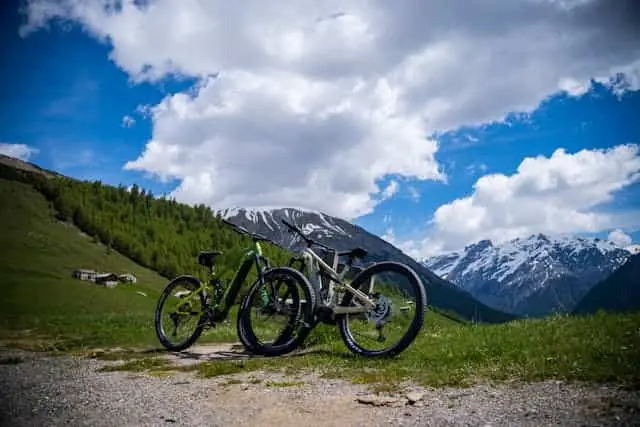
As mountain destinations grapple with unprecedented seasonal congestion, destination management organizations, environmental scientists, and local communities are searching for viable alternatives. Enter the electric mountain bike (e-MTB)—a technological innovation that is rapidly evolving from a recreational novelty into a cornerstone of sustainable alpine mobility. By replacing short car trips between trailheads, accommodations, and town centers with electric pedal-assist transit, visitors can drastically reduce their carbon footprints, alleviate traffic gridlock, and foster a more harmonious, immersive relationship with the natural world.
Detailed Chronology: The Evolution of Mountain Transit and the Rise of the E-Bike
To understand the current reliance on automobiles in alpine regions, one must examine how mountain tourism developed over the past century.
Mid-to-Late 20th Century: The Automobile Boom and Alpine Infrastructure
Following World War II, the democratization of car ownership transformed remote mountain valleys into accessible weekend retreats. Governments and local municipalities invested heavily in widening two-lane roads, paving high-altitude passes, and building expansive parking lots at the bases of trailheads and ski resorts. Communities were explicitly engineered around the private passenger vehicle, assuming that endless asphalt expansion could accommodate infinite tourism growth.
The Turn of the Century: The Overcrowding Crisis
By the early 2000s, the limits of this car-dependent model became painfully apparent. Destinations like Zion National Park, Yosemite, Banff, and the European Alps began experiencing gridlock that rivaled major metropolitan areas. Narrow geological corridors—carved by ancient glaciers—left no room to widen roads further. Parks were forced to implement emergency measures, such as mandatory reservation systems, vehicle caps, and complex shuttle bus networks, merely to prevent total logistical collapse during peak summer months.
The 2010s: The E-Bike Revolution
Simultaneously, advancements in lithium-ion battery technology and electric motor miniaturization sparked a revolution in personal mobility. The commercialization of reliable, high-torque electric mountain bikes bridged the gap between grueling physical exertion and accessible outdoor travel. What began as a niche product for older or physically recovering cyclists quickly transformed into a mainstream phenomenon.
Present Day: Integrating E-Mobility into Destination Management
Today, forward-thinking mountain towns are rewriting their transportation master plans. Rather than viewing e-bikes purely as recreational gear, urban planners and ecotourism boards are recognizing them as legitimate transit alternatives. Integrated bike-share networks, dedicated charging stations, and expanded multi-use trail systems are redefining how tourists navigate alpine environments, shifting the paradigm from carbon-heavy driving to low-impact exploration.
Supporting Context & Metrics: The True Cost of Alpine Traffic and the E-Bike Solution
The environmental and logistical pressures facing mountain communities are supported by stark empirical data. Understanding the scale of the crisis reveals why transitioning to e-mountain bikes is no longer optional for sustainable tourism, but an absolute necessity.
The Air Quality and Emissions Crisis in Protected Lands
The National Parks Conservation Association (NPCA) has highlighted a sobering reality: approximately 96 percent of U.S. national parks suffer from unhealthy air quality levels, with vehicle emissions serving as a primary contributor. High-altitude environments are uniquely vulnerable to air pollution. Atmospheric inversions can trap vehicle exhaust in narrow mountain valleys for days, degrading visibility, harming delicate alpine flora, and threatening wildlife health.
Furthermore, academic research underscores the disproportionate impact of short car trips. Studies conducted at Portland State University revealed that replacing just 15 percent of routine car trips with e-bikes could slash urban and regional carbon emissions by 12 percent. In a mountain vacation context, where travelers frequently drive short distances—three to five miles between hotels, restaurants, trailheads, and scenic lookouts—the emission reduction potential is magnified. Researchers estimate that substituting a car with an e-bike for these local excursions eliminates roughly 225 kilograms of CO2 emissions annually per rider.
Logistical Relief for Infrastructure
Beyond carbon reduction, e-bikes offer immediate relief to overwhelmed municipal infrastructure:
- Spatial Efficiency: Ten automobiles occupy a staggering amount of parking space in a downtown mountain village; those same ten vehicles can be replaced by dozens of e-bikes staged in a fraction of a single parking stall.
- Wear and Tear: Heavy passenger vehicles and oversized SUVs accelerate the degradation of paved mountain roads and rural access routes. E-bikes generate negligible surface wear, dramatically lowering municipal road maintenance costs.
- Noise Pollution Reduction: Internal combustion engines disrupt the acoustic ecology of mountain ecosystems. E-bikes operate near-silently, preserving the natural soundscapes critical for wildlife communication and human psychological restoration.
Official Statements: Perspectives from Ecologists and Local Leaders
As the intersection of tourism and environmental preservation becomes increasingly tense, thought leaders across the conservation and municipal sectors are voicing their perspectives on the e-mobility transition.
Dr. Elena Vance, a senior researcher in alpine ecology at the Institute for Mountain Environment, emphasizes the psychological and ecological shift facilitated by alternative transit:
"When travelers cocoon themselves inside climate-controlled SUVs, they treat the mountain landscape as a passing screen saver. They consume the scenery rather than experience it. E-bikes break down that psychological barrier. Riders engage with the topography, feeling the gradient changes and smelling the pine forest. Ecologically, we see that wildlife is far less disturbed by the low-frequency hum of an electric motor than by slamming car doors and roaring engines."
Marcus Thorne, a municipal planner for a prominent alpine resort community in the Rocky Mountains, highlights the economic and logistical urgency of the shift:
"Our town was built for a fraction of the visitors we host today. During peak summer and winter weekends, our roads are entirely paralyzed. We cannot pave our way out of this congestion—there is simply no physical space. Encouraging visitors and local businesses to embrace e-bikes for in-town travel and low-level trail exploration is the only sustainable path forward. It keeps our air clean, frees up parking for those who truly need it, and preserves the small-town charm that people traveled thousands of miles to experience."
Future Outlook: Paving the Way for Responsible Alpine E-Tourism
Looking ahead, the integration of e-mountain bikes into the global ecotourism framework will depend on proactive policy, infrastructure investment, and visitor education.
1. Infrastructure and Charging Networks
Future mountain destinations will increasingly feature decentralized e-mobility hubs. Cities are investing in secure, solar-powered charging stations located at trailheads and transit centers. This ensures that riders can embark on extended explorations without range anxiety, knowing they can recharge their batteries sustainably using local renewable energy grids (such as solar or micro-hydro power common in alpine regions).
2. Evolving Trail Regulations and Harmonization
Land management agencies are progressively updating outdated trail access policies. Historically designed strictly for non-motorized recreation, trail networks are adapting to accommodate Class 1 pedal-assist e-mountain bikes (which require active pedaling and do not exceed 20 mph). Clearer signage, zoning protocols, and education campaigns will ensure that e-bike riders, traditional mountain bikers, hikers, and equestrians can share backcountry routes safely and respectfully.
3. The Digital Traveler and Seamless Preparation
Modern travel planning is increasingly digital. Eco-conscious tourists now expect integrated platforms where they can book eco-accommodations, rent high-performance e-mountain bikes, and access curated digital trail maps from a single trusted provider. Retailers and rental agencies are stepping up to offer pre-trip gear consultations, ensuring visitors arrive equipped with appropriate safety gear, helmets, puncture-resistant tires, and navigational tools.
Conclusion
The allure of the mountains lies in their enduring wildness, their fresh air, and their profound silence. Protecting these landscapes requires a fundamental rethink of how we move within them. By trading car keys for electric pedal-assist power, travelers can transform their impact from a source of congestion and pollution into an active force for preservation. As e-mountain bikes become an integral part of the alpine experience, they offer a clear message: the best way to explore the mountains is to move through them lightly, leaving nothing behind but the whisper of turning wheels.