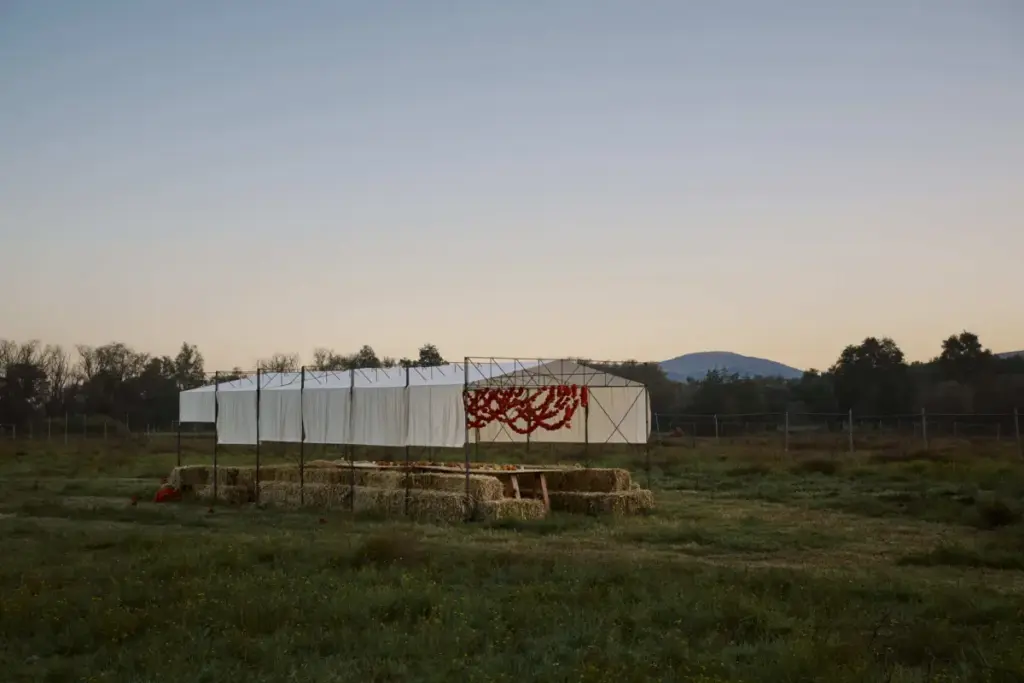
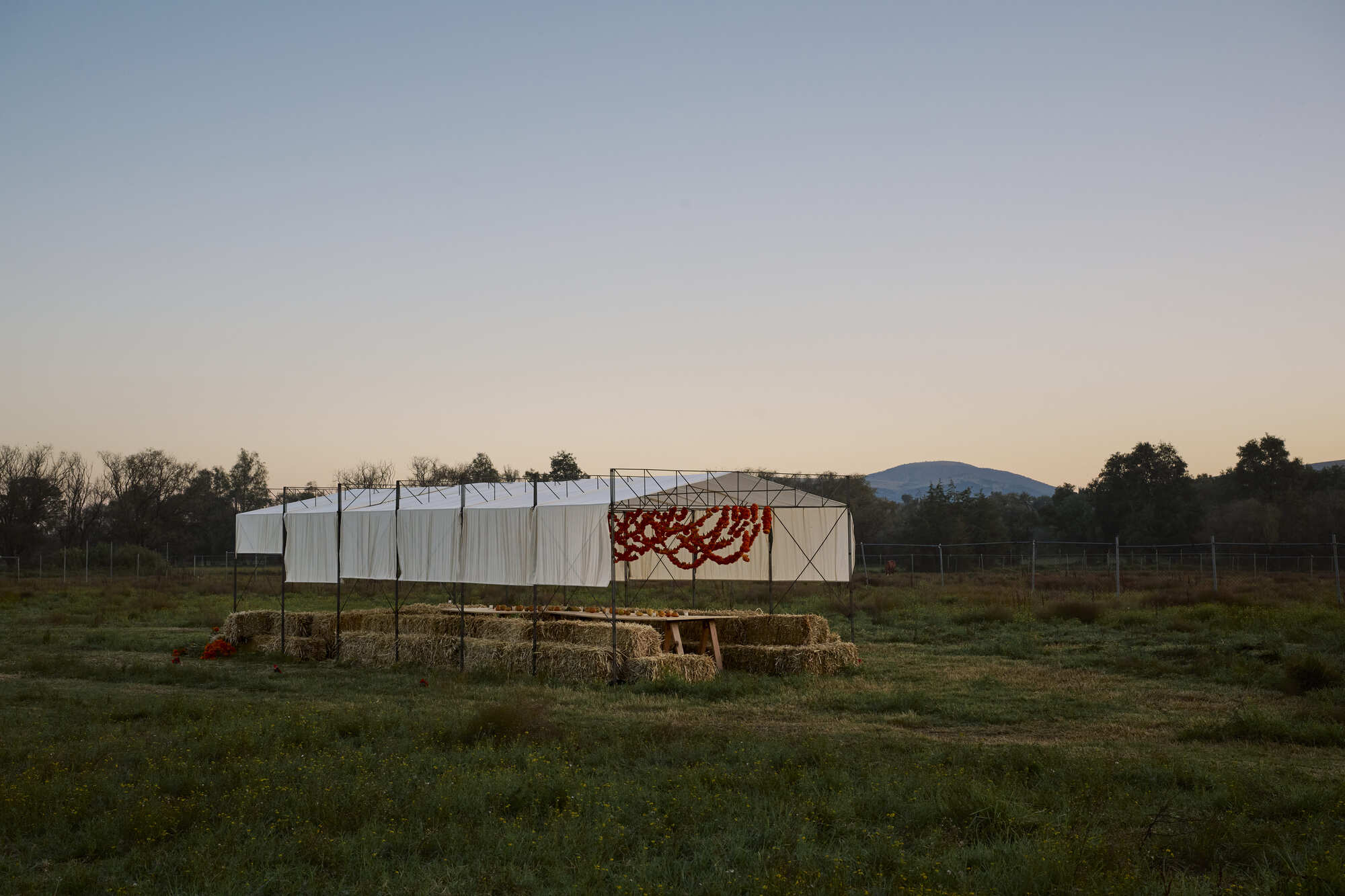
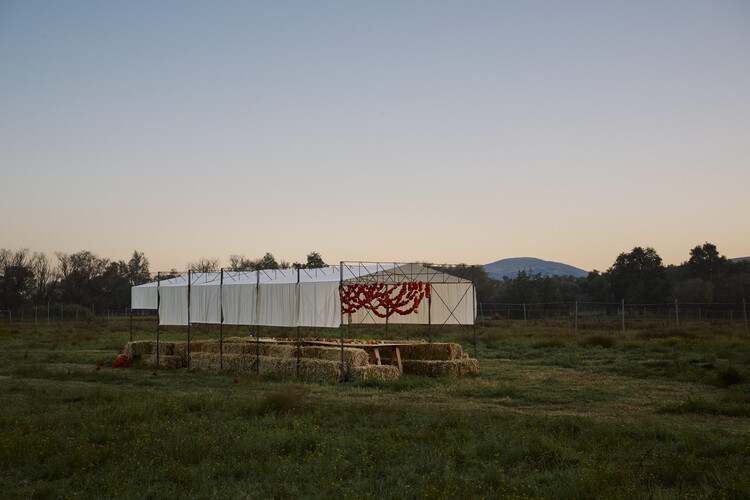
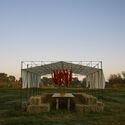
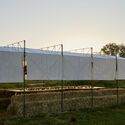
In the contemporary discourse of architecture, permanent structures often dominate the theoretical landscape. However, temporary installations provide a fascinating lens through which designers can explore spatial urgency, ephemeral materiality, and immediate human interaction. The Cempasúchil Pavilion, designed by COLAR Colectivo de Arquitectura and curated by Valentina Díaz, stands as a prime example of this design philosophy. Captured through the lens of architectural photographer Edgar García, this four-day pavilion transcends its brief existence to challenge how built environments can cultivate community, foster informal encounters, and redefine public space.
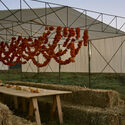
Conceived explicitly to offer shade and structural refuge over a brief four-day activation window, the pavilion rejects monumental permanence in favor of social catalytic power. At its core lies a singular, unifying element: a grand shared table. This central armature acts as a gravitational anchor, drawing diverse groups of people together throughout the day. By prioritizing human connection and communal gathering over programmatic complexity, COLAR Colectivo de Arquitectura has crafted a temporary monument to gathering—a spatial testament to the transient nature of architecture and the enduring weight of human rituals.
Detailed Chronology
The realization of the Cempasúchil Pavilion was a carefully orchestrated exercise in rapid deployment, precise spatial choreography, and intentional design. While the physical manifestation of the structure endured for only a fleeting four-day period, its lifecycle spans a rigorous timeline of conceptualization, fabrication, and public engagement.
Phase I: Conceptualization and Design Development
Long before the first structural components touched the ground, the design team at COLAR Colectivo de Arquitectura engaged in an intensive period of theoretical planning. The overarching design mandate was clear yet demanding: create a temporary structure that could successfully negotiate environmental factors—specifically providing adequate shade and shelter—while actively encouraging social cohesion.
The collective recognized that traditional architectural typologies often erect barriers between individuals. To counteract this, they streamlined the spatial layout, stripping away unnecessary partitions. The conceptual breakthrough emerged from the typology of the table: a universal symbol of sharing, dialogue, and equality. By organizing the entire architectural footprint around a single shared table, the architects established a clear hierarchy where human interaction superseded formal geometry.
Phase II: Material Logistics and Fabrication
Given the ephemeral nature of the installation, material selection was governed by strict parameters: structural integrity, ease of assembly, sustainability, and aesthetic resonance. Although the pavilion’s exact structural skeleton is lightweight by design to accommodate rapid assembly and disassembly, every joint, column, and canopy element was engineered to withstand environmental stresses during its active lifespan.
Fabrication took place off-site, allowing for precision manufacturing that minimized waste and reduced on-site construction time. This pre-fabrication strategy is increasingly vital in contemporary temporary architecture, ensuring that the assembly process aligns smoothly with tight urban event schedules.
Phase III: Deployment, Activation, and the Four-Day Lifespan
Upon site deployment, the Cempasúchil Pavilion immediately transformed its surrounding context. Over the course of its four-day activation, the pavilion served as an organic stage for daily life. Morning light filtered through the canopy, casting dynamic shadows across the central table, while afternoon hours drew diverse groups of visitors seeking refuge from the elements.
Rather than prescribing specific activities, the architecture acted as an open-ended canvas. The collective occupation of the space yielded spontaneous conversations, informal meetings, and moments of quiet contemplation. By the conclusion of its brief residency, the pavilion demonstrated that spatial impact is not measured in years of durability, but in the depth of human engagement it facilitates during its existence.
Supporting Context & Metrics
To fully understand the significance of the Cempasúchil Pavilion, one must contextualize it within broader architectural movements, urban design trends, and quantitative parameters that govern temporary interventions.
The Rise of Ephemeral Architecture
Ephemeral architecture—often manifesting as pavilions, pop-up installations, and temporary urban interventions—has become a vital testing ground for modern designers. Programs such as the annual Serpentine Pavilion in London or the MoMA PS1 Young Architects Program in New York have proven that temporary structures can drive cultural discourse just as effectively as permanent skyscrapers.
COLAR Colectivo de Arquitectura taps into this global movement, demonstrating that regional practices in Latin America are actively contributing to the dialogue on spatial economy and civic engagement. The Cempasúchil Pavilion strips architecture down to its bare essentials: shelter, shadow, and a place to sit together.
Key Metrics and Project Parameters
Project Name: Cempasúchil Pavilion
Architectural Firm: COLAR Colectivo de Arquitectura
Curator: Valentina Díaz
Photographer: Edgar García
Active Lifespan: 4 days
Primary Typology: Temporary Pavilion / Public Installation
Core Spatial Element: A single, shared communal table
Primary Functions: Shade provision, shelter, and informal social gathering
Project Phase
Focus / Objective
Methodological Approach
Design
Social catalysis & spatial economy
Decentralized planning around a central communal table
Fabrication
Material efficiency & rapid assembly
Off-site pre-fabrication to minimize environmental footprint
The philosophical foundation of the Cempasúchil Pavilion is rooted in the architects’ belief that architecture is fundamentally an act of spatial organization rather than a mere accumulation of building materials.
In their official project statement, the architects from COLAR Colectivo de Arquitectura elaborate on this ethos:
"The pavilion arose from the need to create a temporary structure capable of providing shade and shelter over a four-day period. Conceived as a meeting place, it is organized around a single shared table, where different groups of people gather throughout the day, fostering informal encounters and collective occupation. Beyond its functional requirements, the project explores architecture as a temporary act of spatial organization."
This perspective challenges the prevailing real estate paradigm that equates architectural value with permanence. By framing architecture as a transient event, COLAR shifts the focus from structural endurance to experiential intensity. The pavilion does not attempt to conquer time; rather, it embraces time as a core material of design, accepting its temporary condition to create an intense, concentrated burst of community life.
Curator Valentina Díaz further emphasizes the project’s ability to dialogue with its immediate environment. Through careful curation, the pavilion was positioned not as an intrusive object, but as a welcoming civic gesture that invites the public to pause, reflect, and connect. Through Edgar García’s photographic documentation, the interplay between the pavilion’s tectonic elements and the human bodies occupying it is immortalized, capturing the kinetic energy of a space designed specifically for gathering.
Future Outlook: The Legacy of Ephemeral Design
While the physical footprint of the Cempasúchil Pavilion was dismantled shortly after its four-day run, its conceptual reverberations extend far into the future of urban and architectural design. As cities densify and public spaces face mounting commercial pressures, the need for flexible, low-impact, human-centric structures becomes increasingly acute.
Lessons for Urban Planners and Architects
Prioritizing Social Infrastructure over Monumentality: The Cempasúchil Pavilion proves that the most memorable spaces are often those designed around basic human rituals—eating, talking, and resting together—rather than complex programmatic demands.
Embracing Circularity and Reversibility: Temporary architecture offers a masterclass in material efficiency. By designing for disassembly, firms like COLAR Colectivo de Arquitectura point the way toward a more sustainable architectural future where building components can be endlessly repurposed.
Activating Forgotten Urban Voids: Ephemeral installations possess the unique ability to breathe life into underutilized urban spaces, demonstrating the potential of a site and inspiring communities to reimagine what their public realms could become.
Ultimately, the Cempasúchil Pavilion by COLAR Colectivo de Arquitectura serves as a poignant reminder that architecture’s true measure lies not in how long it stands, but in how deeply it touches the lives of those who pass through it. In a world obsessed with permanence, this four-day intervention offers a radical, refreshing vision of architecture as a fleeting gift of space, light, and community.