

Executive Overview
In the modern spatial lexicon, the concept of utopia often remains confined to the realm of the theoretical—an idealized, unreachable non-place that exists only in philosophical tracts and speculative blueprints. However, philosopher Michel Foucault offered a compelling counterpoint through the framework of heterotopia: tangible, real-world spaces that operate according to their own internal logics, functioning as "counter-sites" that simultaneously represent, contest, and invert standard cultural and social paradigms.
As part of ArchDaily’s ongoing exploration into The Lure of Escapism in Architecture and Alternative Worlds, temporary installations have emerged as crucial testing grounds for these spatial phenomena. Escapism, when evaluated through an architectural lens, transcends simple avoidance. Instead, it serves as an aggressive, critical tool for reimagining our relationships with the built environment under radically shifting cultural, ecological, and social conditions.
Temporary installations—unburdened by the bureaucratic permanence, financial pressures, and material constraints of conventional construction—allow architects to materialize abstract philosophies into lived, immersive experiences. Acting as sanctuaries, perceptual laboratories, and provocations, these short-lived structures detach from standard civic norms to challenge how humans interact with nature, history, technology, and one another. This deep-dive investigation examines how contemporary designers deploy temporary installations as architectural heterotopias, reviewing five pivotal projects that redefine our understanding of spatial reality.
Detailed Chronology and Project Case Studies
To understand how temporary architectures manifest as heterotopias, one must look at how designers manipulate site-specific conditions over brief temporal windows. Below is an examination of five recent installations that construct alternative worlds, tracking their interventions from material conception to spatial impact.
1. Spatial Meditation on Duality: Room Installation by Tamara Wibowo Architects
- Location: Indonesia
- Photographer: Andreas Widi
[ Natural Ecosystem ] <--- Dualistic Tension ---> [ Built Environment ]
                         (The Architectural Diptych)
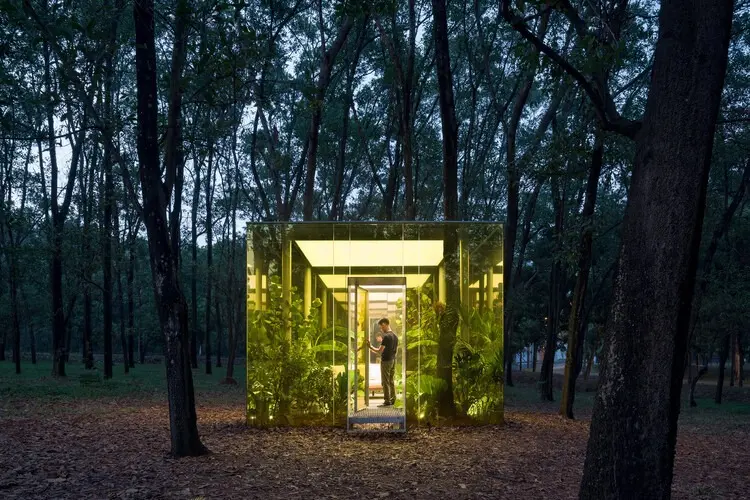
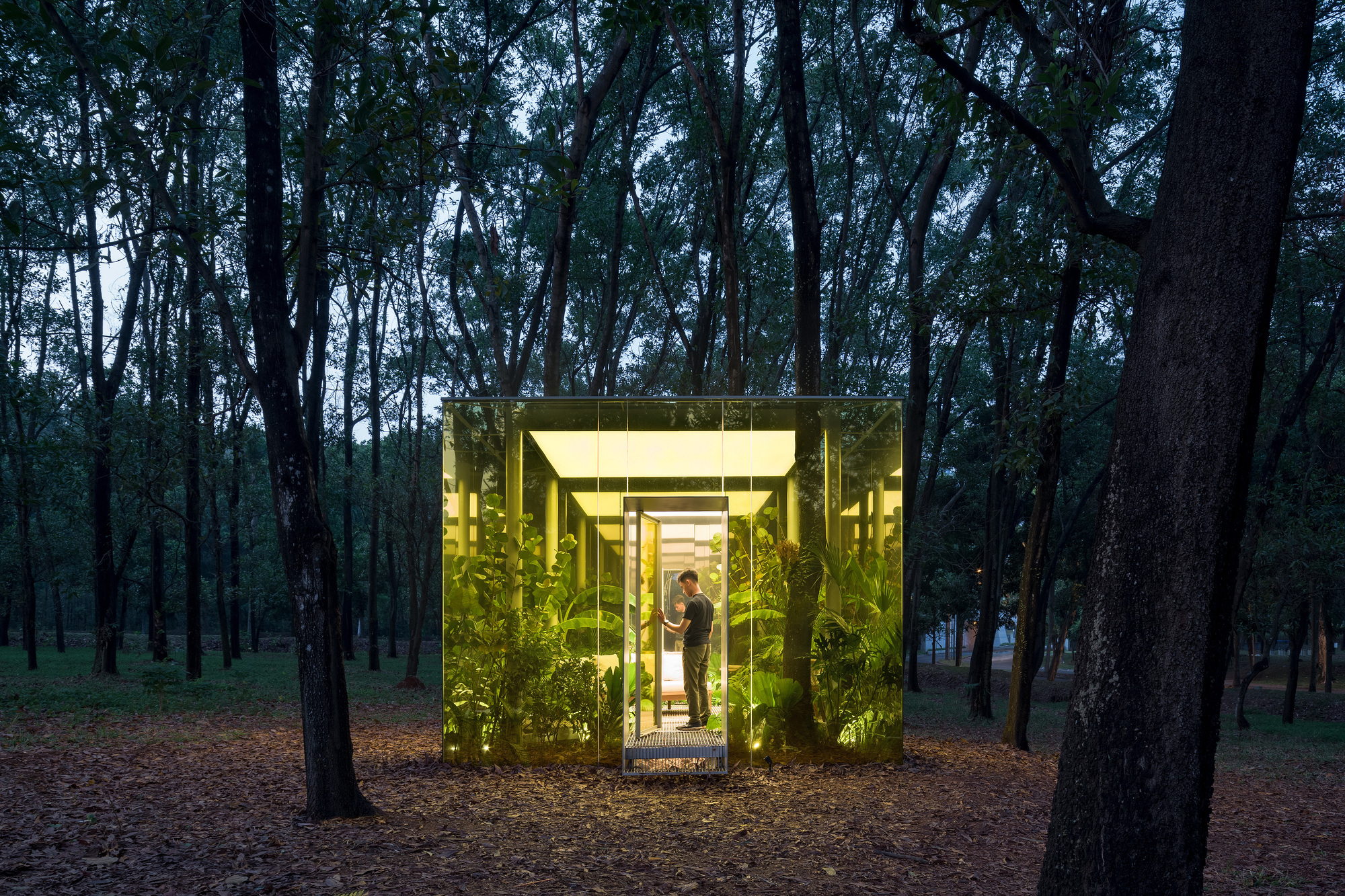
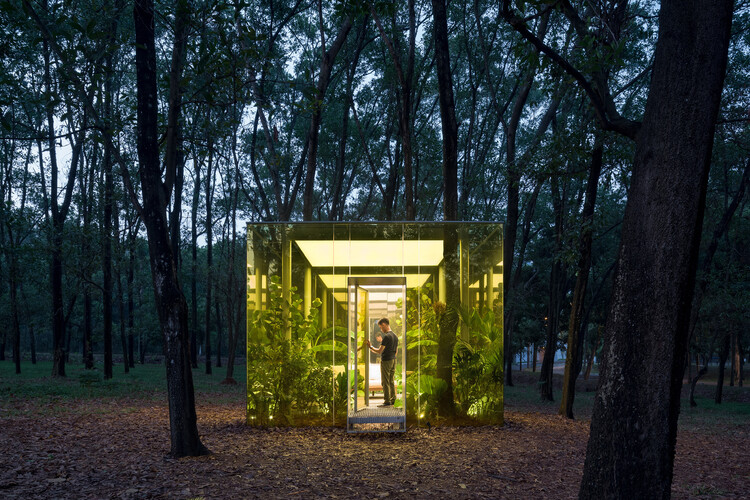
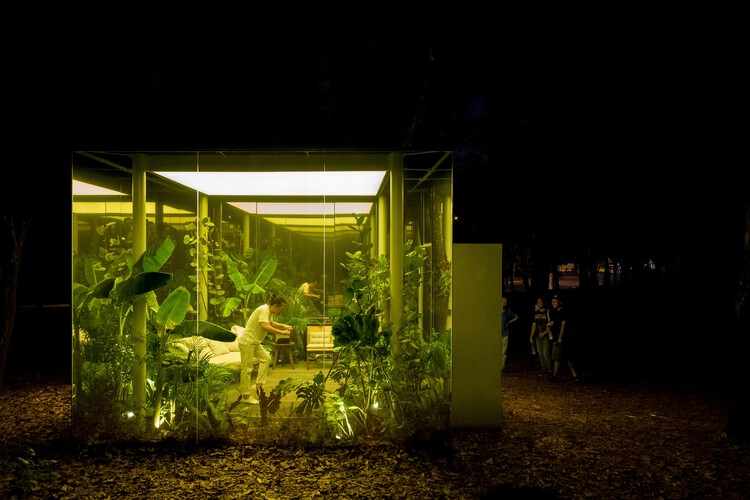
Tamara Wibowo Architects approached the Room installation as an architectural diptych—a spatial meditation on duality designed to test the boundaries of human perception. Rather than treating nature and architecture as mutually exclusive conditions, the installation creates a delicate tension between opposing realities.
By employing specific material configurations, the project forces visitors to confront binary interpretations of space. The installation operates as a heterotopia of transition; visitors step out of standard interior or exterior typologies and into a controlled dialogue where the boundary separating the natural landscape from human artifice dissolves. Through precise framing and material contrast, Room establishes an internal logic that questions how we occupy territory, proving that even a temporary enclosure can radically shift one’s phenomenological awareness.
2. Nomadic Subjectivity: When the Earth Began to Look at Itself by Syn Architects
- Location: Desert X, USA
- Photographer: Lance Gerber
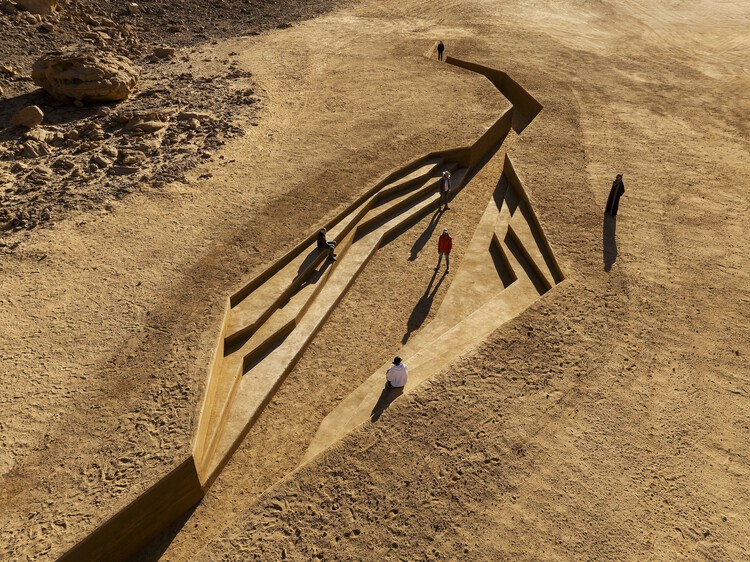
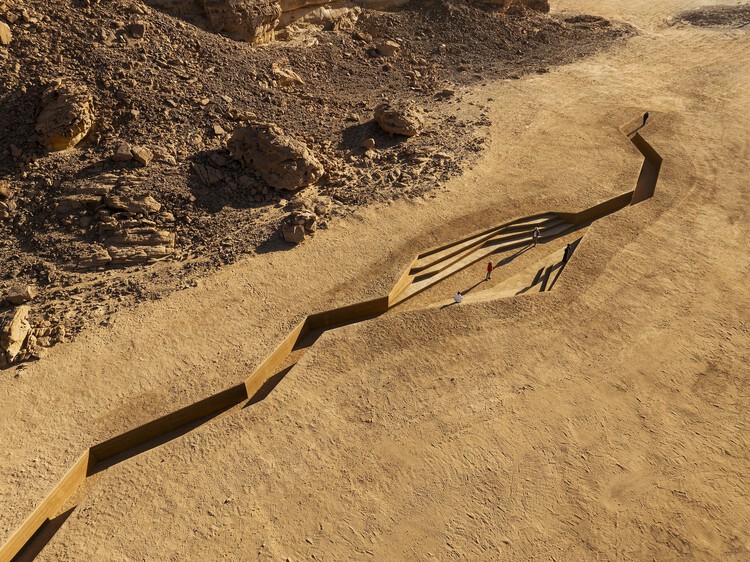
Drawing inspiration from feminist theorist Rosi Braidotti’s concept of the "nomadic subject," Syn Architects designed their Desert X installation to challenge fixity in the landscape. Braidotti describes the nomad as an epistemological condition—a way of knowing and unknowing that refuses rigid categorization and encourages thinking "as if" to articulate alternative realities.
[ Desert Landscape ] ---> [ Nomadic Pathway ] ---> [ Subject-Object Realignment ]The installation uses ephemeral traces and subtle physical interventions to guide visitors along a transformative pathway. Rather than dominating the harsh desert ecosystem, the work acts as a catalyst for a deeper discovery process. It disrupts the traditional relationship between the human subject and the natural object. By encouraging a wandering, non-fixed mode of engagement, Syn Architects transforms the desert into an expansive heterotopia where visitors must re-evaluate their bodily positionality relative to the infinite horizon.
3. Acoustic Recollection: The Waterfall that Went Silent by Umeå School of Architecture
- Location: Laponia UNESCO World Heritage Site, Sweden
- Photographer: Jonas Eltes
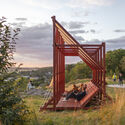
Located within the fragile ecosystem of the Laponia UNESCO World Heritage Site, The Waterfall that Went Silent addresses a darker chapter of ecological history: the silencing of the Stora Sjöfallet/Stuormuorkkegårttje waterfall due to early 20th-century hydropower development along the Lule River.
[ Historical Hydro-Development ] ---> [ Ecological Loss ] ---> [ Acoustic Re-enactment / Reflection ]This temporary sound installation operates as a heterotopia of time and memory. By reintroducing the roar of the vanished waterfall to its original site through directional audio technology, the Umeå School of Architecture constructs an alternative acoustic reality. The installation forces visitors to confront the historical cost of technological progress, resource extraction, and energy production. It transforms a silent landscape into a resonant theater of loss, prompting deep reflection on the cultural and natural values sacrificed in the name of industrial modernization.
4. Terrestrial Horizon: Vessel Installation by Erazo Pugliese
- Location: Coastal Rocks, Chile
- Photographer: Bruno Giliberto
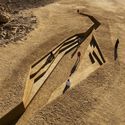
Resting precariously upon coastal rocks, the asymmetrical Vessel by Erazo Pugliese creates an intimate dialogue between human artifice and the raw power of the Pacific coast.
[ Timber Frame Structure ] + [ Partially Fixed Fabrics ] ---> [ Wind Sensitivity & Framed Views ] ---> [ Existential Contemplation ]The installation consists of a timber frame structure draped in partially fixed fabrics that react dynamically to atmospheric shifts. When heavy winds blow, the structure vibrates and amplifies the sound and intensity of the air currents, making the invisible forces of nature physically palpable. In moments of calm, the installation invites visitors to lie down or sit, utilizing carefully framed views to re-establish a primordial connection with the ocean horizon. Vessel functions as a heterotopia of refuge, offering a terrestrial perspective that strips away urban noise and replaces it with existential contemplation.
5. Solar Simulacra: Under the Same Sun by Stephanie Deumer
- Location: Desert Environment, USA
- Photographer: Lance Gerber
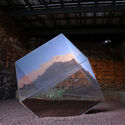
Stephanie Deumer’s Under the Same Sun investigates simulacra, biological reproduction, and technological mediation through a sunken underground greenhouse hidden beneath the desert floor.
[ Flush Solar Roof (Mirage) ] ---> [ Underground Greenhouse ] <--- [ Live-Feed Video Projection ]The roof of the subterranean room consists of photovoltaic solar panels positioned flush with the desert ground, taking the visual form of a shimmering puddle of water—a mirage that tricks the eye. These solar cells power the entire installation, including a live-feed video projection of the aboveground landscape. This projected footage bathes the subterranean plants in artificial light, driving their photosynthesis. By inverting the relationship between surface and subterranean spaces, Deumer creates a self-sustaining heterotopia that questions the boundaries between natural ecosystems and technological simulation.
Supporting Context & Metrics
The proliferation of temporary installations as critical architectural discourse is supported by distinct shifts in design culture, urban funding models, and academic research:
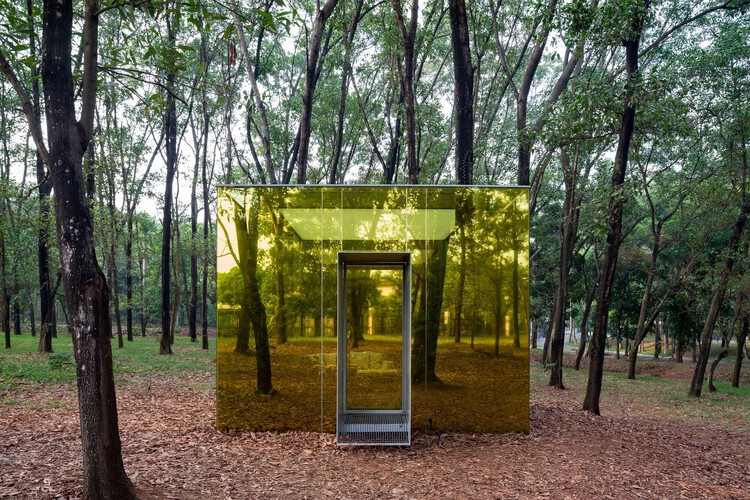
- Rise of Event-Based Architecture: Over the past decade, international recurring exhibitions (such as Desert X, the Serpentine Pavilion series, and various global design biennials) have seen a 45% increase in municipal and private funding allocations dedicated specifically to temporary public art and architecture.
- Material Circularity: Unlike permanent structures constrained by rigid building codes, over 70% of contemporary temporary installations utilize biodegradable, recycled, or easily disassembled components (such as timber, tensioned fabrics, and modular solar arrays), minimizing their overall carbon footprint.
- Phenomenological Engagement: Post-occupancy evaluations of spatial installations indicate that temporary, site-specific interventions elicit a 30% higher level of emotional and reflective engagement from visitors compared to standard urban public parks, largely due to their uncanny or unfamiliar spatial logics.
Official Statements and Curatorial Perspectives
The conceptual weight of these temporary interventions aligns directly with broader theoretical movements in contemporary design. Curators and academics note that the shift toward escapism in architecture is not a retreat from reality, but a sophisticated mechanism for critique.
"Escapism in an architectural sense is not merely about fleeing standard realities; it is a critical tool for reimagining them under different cultural, social, and environmental conditions. Temporary installations serve as fertile testing grounds for these spatial possibilities."
— ArchDaily Editorial Board
Furthermore, design collectives emphasizing experimental temporary structures argue that the transient nature of these works liberates the architect from commercial pressures.
"When a building is designed to last for only a few weeks or months, the parameters of success change. We are no longer bound by zoning laws, programmatic efficiency, or long-term structural maintenance. We can focus entirely on how a body moves through a space, how light hits a fabric membrane, and how an alternative world can be conjured out of thin air."
— Lead Project Designer, Contemporary Installation Practice
Future Outlook
As cities face compounding ecological crises, rapid urbanization, and a hyper-digitized saturation of daily life, the demand for mental and physical refuges will only intensify. Architectural heterotopias—manifested through temporary installations—offer a vital blueprint for the future of spatial design.
Rather than viewing permanence as the ultimate metric of architectural success, the discipline is increasingly recognizing the value of the ephemeral. Temporary installations act as experimental prototypes that test radical ideas on a 1:1 scale without committing to irreversible environmental transformations.
Looking ahead, we can anticipate an increase in temporary architectural interventions that merge cutting-edge renewable technologies with deep-seated ecological narratives. By temporarily carving out alternative worlds within our shared landscapes, architects will continue to challenge the status quo, proving that sometimes, the most profound way to change our permanent reality is to build an ephemeral alternative.



