

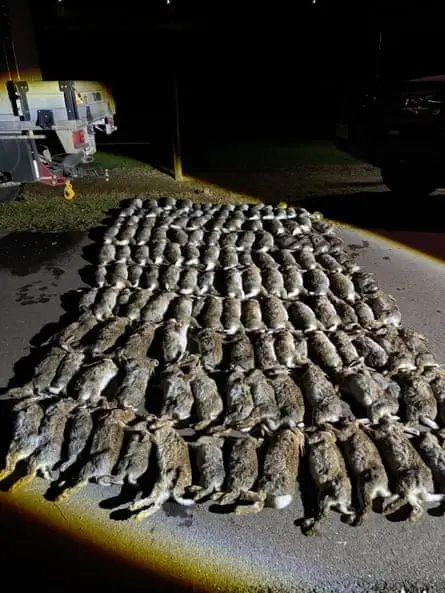
Executive Overview
Across the arid interiors, suburban fringes, and agricultural heartlands of Australia, a silent ecological emergency is unfolding beneath the topsoil. Following a wet winter that brought much-needed moisture to central and southern regions, the European rabbit (Oryctolagus cuniculus) has experienced a staggering population resurgence. What should have been a season of renewal for native flora—marked by fresh shoots of acacia, mulga, and delicate native grasses—has instead transformed into an unprecedented buffet and breeding ground for one of the nation’s most notorious invasive species.
From the red-dirt expanses of South Australia’s Bon Bon Reserve to manicured golf courses in coastal Albany, Western Australia, and the rapidly densifying peri-urban borders of Adelaide and Canberra, rabbits are reaching plague proportions. Current estimates place Australia’s feral rabbit population at approximately 200 million, though experts warn that the true number fluctuates wildly and remains largely unmonitored between formal surveys.
The consequences of this explosion extend far beyond chewed-up suburban gardens and denuded rural landscapes. Ecologically, rabbits present a catastrophic triple threat: they outcompete native marsupials and ground-dwelling species for food and shelter, eradicate vital vegetation necessary for ecosystem regeneration, and sustain unnaturally high densities of apex feral predators like cats and foxes. Economically, they drain the agricultural sector of hundreds of millions of dollars annually.
As traditional biological controls wane due to viral resistance and changing environmental conditions, scientists, land managers, and conservationists are engaged in a race against time. From high-tech detection dogs tracking warrens in the outback to nocturnal culling operations in suburban council areas, Australia is once again reckoning with the enduring legacy of a colonial introduction that fundamentally reshaped the continent.
Detailed Chronology: From 24 Settler Animals to a Continent-Wide Invasion
To understand the scale of the modern rabbit crisis, one must trace a historical arc that spans more than two centuries—a timeline defined by colonial ambition, ecological blindness, and relentless biological warfare.
1788–1859: The Humble Beginnings
While domestic rabbits were brought to Australia aboard the First Fleet in 1788 as a source of captive food, these early populations remained contained. The true genesis of Australia’s continent-wide rabbit invasion is remarkably well-documented. Modern genetic research has traced the vast hordes currently sweeping the country back to a single, fateful importation in 1859.
In October of that year, a wealthy grazier named Thomas Austin imported 24 wild rabbits from England onto his property, Barwon Park, near Geelong in Victoria. Austin famously remarked that "the introduction of a few rabbits could do little harm and might provide a touch of home, in addition to a spot of shooting."
The Late 19th and Early 20th Centuries: Exponential Expansion
Austin’s optimism proved catastrophically short-sighted. Unchecked by native predators capable of keeping pace with their prolific reproductive rates, the rabbits surged northward and westward. Benefiting from Australia’s vast, open landscapes and mild climates, they spread at a rate unprecedented for any colonizing mammal in modern history.
By the 1920s, the rabbit population had reached numbers estimated in the billions. The landscape was visibly altered; massive swathes of pastoral land were stripped bare, triggering catastrophic soil erosion and leaving native species starving. In response, pastoralists erected thousands of kilometers of rabbit-proof fences—most notably the State Barrier Fence in Western Australia—in futile attempts to halt the relentless tide.

The 1950s: The Myxoma Breakthrough
By the mid-20th century, traditional mechanical and chemical methods—such as trapping, poisoning, and warren ripping—were proving inadequate against the sheer scale of the infestation. In 1950, the Australian government introduced the Myxoma virus, a pathogen native to South American rabbits that causes myxomatosis.
Disseminated primarily by mosquitoes and fleas, the virus swept through the Australian rabbit population with devastating efficiency, wiping out an estimated 90% to 99% of rabbits in some regions. For a time, pastoral lands experienced a dramatic recovery, and native vegetation began to regenerate. However, natural selection quickly intervened; rabbits that possessed genetic resistance survived and bred, gradually lowering the virus’s long-term effectiveness.
1995: The Calicivirus Escape
With myxomatosis losing its punch, rabbit numbers began to rebound steadily through the 1970s and 1980s. Recognizing the impending ecological collapse, researchers began testing the Rabbit Hemorrhagic Disease Virus (RHDV), commonly known as calicivirus.
In 1995, before the official and controlled release could take place, the virus accidentally escaped from a high-security quarantine facility on Wardang Island off the coast of South Australia, vectoring across the mainland via insect populations. The impact was immediate and profound. In arid and semi-arid regions, rabbit populations plummeted by up to 95%.
According to conservation biologists, this accidental outbreak triggered one of the largest recoveries of threatened native mammal species ever documented in Australia. For several years, small mammal populations rebounded dramatically as the crushing pressure of rabbit grazing and predator sustenance was temporarily lifted.
The 2020s: Viral Evolution and Modern Plagues
History, however, is repeating itself. Over the last three decades, wild rabbit populations have once again adapted, developing genetic resistance to existing strains of calicivirus. Coupled with recent wet winters across central and southern Australia, these resistant strains have allowed rabbits to bounce back with terrifying speed. Today, as climate patterns shift and sporadic heavy rains trigger flush vegetation growth, the country faces a renewed plague, forcing a pivot toward aggressive, integrated pest management strategies.
Supporting Context & Metrics: The Scale of the Destruction
The modern rabbit problem cannot be understood through observation alone; the data paints a stark picture of economic loss and ecological devastation.
Ecological Impacts
- Threatened Species Pressure: A landmark scientific study revealed that European rabbits exert a negative impact on 329 threatened species across Australia—surpassing every other invasive pest, including feral cats and red foxes.
- The Predator Nexus: While feral cats and foxes are frequently blamed for the extinction of ground-dwelling marsupials, conservation scientists note that rabbits act as a crucial ecological anchor for these predators. By serving as an abundant, year-round food source, rabbits sustain high densities of cats and foxes during lean periods. When wet years cause rabbit numbers to spike, predator populations subsequently surge, placing an unbearable burden on native wildlife.
- Reproductive Velocity: Under favorable conditions with adequate food and moisture, rabbits can breed year-round. In temperate zones, their primary breeding peaks occur in autumn and spring. If left unmanaged, a localized rabbit population can increase tenfold within a single season.
Economic and Agricultural Toll
- Agricultural Losses: A comprehensive 2020–2021 assessment estimated that feral rabbits cost the Australian agricultural sector approximately $200 million annually in lost pasture, crop damage, and control expenditures.
- Peri-Urban Reservoirs: Urban and semi-urban growth has created safe havens for rabbits. Properties with complex landscaping, under-building spaces, and unmonitored gardens provide ideal breeding grounds where traditional control methods—such as baiting or ripping—are legally restricted or logistically impossible. These peri-urban populations act as "reservoirs," continually spilling over into adjacent agricultural zones and nature reserves whenever weather conditions favor expansion.
Official Statements and Expert Perspectives
As communities and conservationists grapple with the rising tide of pests, leading scientists and land managers have voiced urgent warnings alongside innovative solutions.
The Outpost Battle: Conservation in the Arid Center
In the arid center of South Australia, at Bush Heritage Australia’s Bon Bon Reserve, conservation staff are deploying unconventional weapons against the rabbit menace. Among them is Jojo, a five-year-old Kelpie-Jack Russell-Whippet cross. Jojo works grueling shifts—eight days on, two days off—covering up to 20 kilometers a day across the red earth.
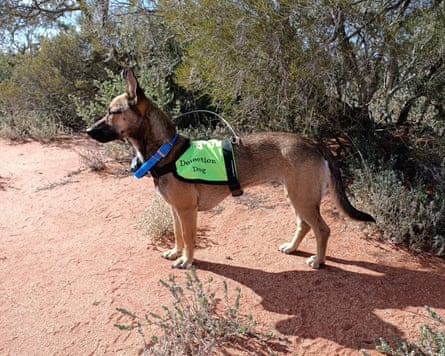
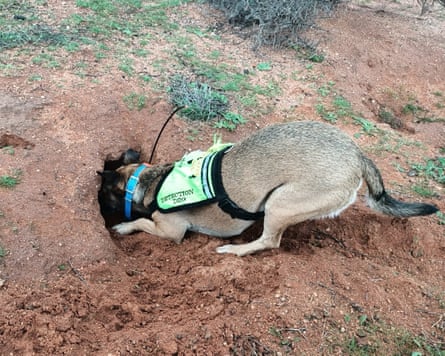
"She’s being kept very busy," says Dr. Pat Taggart, an ecologist with Bush Heritage Australia. "I don’t actually think she has ever caught one. Her job is to scare them back into the burrows."
Jojo’s role is not to hunt individual rabbits, but to accurately locate and map extensive underground warrens. Once mapped, conservation staff can efficiently target the warrens through fumigation or mechanical ripping, neutralizing the breeding infrastructure at its source.
The National Picture: Viral Resistance and New Strains
Dr. John Virtue, director of research, development and engagement at the Centre for Invasive Species Solutions (CISS), highlights the systemic nature of the current outbreak.
"We’ve noticed increases all around the country," Virtue explains, pointing to severe hotspots in southern Western Australia, suburban Canberra, the Adelaide peri-urban ring, the New South Wales Riverina, and southern Queensland. "They can get to incredible numbers and you see the whole landscape gets denuded."
Virtue emphasizes that biological controls are decaying in efficacy: "Over time, the rabbit hemorrhagic disease virus has been losing its effectiveness. This comes back to the need to be releasing new strains every ten to 15 years."
The Predator Connection
Professor Katherine Moseby, an ecologist and conservation biologist at the University of New South Wales, underscores the hidden danger rabbits pose in maintaining predator populations.
"There’s a lot of blame that goes on cats and foxes," Moseby says. "But rabbits can sustain them at really high densities. They are the key to controlling cats."
Reflecting on the 1995 calicivirus escape, Moseby recalls it as "probably the biggest recovery of threatened species ever seen in Australia," noting that rabbit densities in some arid zones plummeted from 150 per square kilometer to just two, paving the way for the resurgence of native mammals. However, she warns that complacency is fatal: "We really need to be on the lookout for more biological control options, and be doing that all the time."
Community Strain on the Urban Fringe
In peri-urban areas like Mount Barker, east of Adelaide, the rabbit explosion is driving social friction and municipal alarm. Susan Ivory of the Hills and Fleurieu Landscape Board notes that the commercial sale of rabbit poisons in the region has quintupled over the last four years.
"The rabbit numbers are getting really high. They’re in gardens, eating people’s vegetables. There are rabbits on school ovals," Ivory says. "People worry about children being exposed to the rabbit droppings, and we get increasing numbers of complaints about dogs barking. It’s causing tensions between neighbours—some people bait and some don’t. But we have seen good results on housing estates where people have worked together to get the rabbit numbers down."
Future Outlook: Toward a Rabbit-Free Horizon?
Looking ahead, the path to controlling Australia’s enduring feral pest requires a synthesis of cutting-edge biotechnology, persistent landscape management, and coordinated community action.
Recognizing the declining efficacy of legacy pathogens, the federal government announced a dedicated program to research and develop novel variants of calicivirus designed to bypass newly developed genetic resistances in wild populations. Scientists stress that biological control remains the only economically viable mechanism to suppress continent-wide populations, as mechanical and chemical controls—while essential for localized property protection—cannot scale to cover millions of square kilometers of outback terrain.
On the ground, integrated pest management (IPM) toolkits continue to evolve. Organizations like CISS emphasize the need to balance efficacy with animal welfare, identifying ground shooting and specific coordinated baiting strategies within regulatory frameworks to minimize unnecessary suffering while achieving necessary population reductions.
For experts like Professor Wayne Meyer of Adelaide University and the Foundation for Rabbit-Free Australia, the ultimate goal—while daunting—remains clear. Meyer envisions a future where Australia is largely or entirely free of rabbits, enabled by advanced genetic tools and synchronized national strategies.
"It’s going to take a tremendous amount of work to do all this safely," Meyer acknowledges. "But only then will we appreciate just how destructive rabbits have been. There is nobody alive that has seen what our landscape looks like without rabbits."
Until that vision is realized, the frontline defense remains a diverse coalition: from government researchers breeding resilient viruses in high-security labs to professional nocturnal shooters clearing suburban ovals, and tireless working dogs like Jojo bounding across the red sands of the outback, ensuring that underground warrens have nowhere left to hide.



