Executive Overview
The Kingdom of Tonga has added a momentous chapter to its storied legacy of marine conservation, officially securing the designation of the Tonga Trench and Whale Nursery as an international Mission Blue Hope Spot.
Spanning the sprawling coastal and offshore waters across the island groups of Ha‘apai, Vava‘u, and ‘Eua, this newly minted Hope Spot encompasses one of the most ecologically diverse, geographically profound, and culturally significant marine regions on the planet.
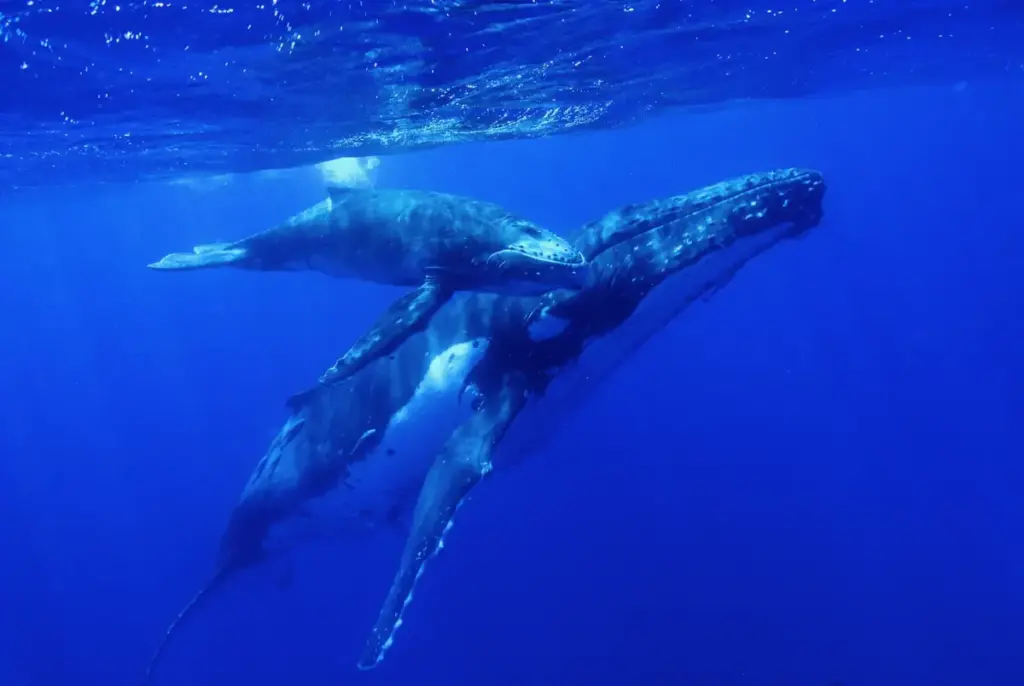
At over 10,800 meters deep, a substantial portion of the Tonga Trench—the second-deepest oceanic trench in the world—slices through this territory, serving as a critical biological corridor and migratory superhighway for pelagic life. Simultaneously, the calm, sheltered bays and passages of the island groups provide a sanctuary for South Pacific humpback whales to mate, calve, and nurse their young.
Coming at a pivotal juncture for the Polynesian kingdom, the designation arrives mere months after the Royal Assent of the Tonga Ocean Management Act in December 2025. This domestic legislation aligns seamlessly with global targets to sustainably manage 100 percent of Tonga’s national waters and protect at least 30 percent by 2030.
By marrying ancestral Pacific seafaring traditions with rigorous modern science, community-led environmental stewardship, and high-level political will, Tonga is positioning itself as a global beacon for ocean governance. The Hope Spot status is designed to catalyze policy coherence, mobilize international and domestic resources, and galvanize grassroots pride among generations of Tongans called to serve as custodians of the Moana (ocean).
Detailed Chronology: From Historic Whaling Ban to Global Hope Spot
Tonga’s journey toward international recognition as a Mission Blue Hope Spot is not a sudden policy pivot; it is the culmination of more than four decades of deliberate, often pioneering environmental legislation and indigenous cultural preservation.
1978: A Kingdom’s Bold Stand Against Whaling
Long before the international community rallied around global moratoria on commercial whaling, the Kingdom of Tonga took an unprecedented step. In 1978, King Taufa‘ahau Tupou IV issued a royal decree permanently banning the hunting and killing of whales across all Tongan waters.
Enacted eight years prior to the International Whaling Commission’s global commercial moratorium in 1986, this decision fundamentally transformed the nation’s relationship with cetaceans. Where whales were once viewed purely through an economic lens of exploitation, they were reclassified as national treasures. This visionary legislation gave beleaguered humpback whale populations the breathing room required to rebound from the brink of extinction. Over the decades, these gentle giants evolved into the cornerstone of Tonga’s conservation-minded tourism economy, supporting sustainable livelihoods and embedding a profound conservation ethic into the national psyche.
The Modern Push: Championing the Hope Spot Nomination
In recent years, the mantle of ocean leadership has been actively carried forward by the royal family, government ministries, and prominent civil society organizations. His Royal Highness Crown Prince Tupouto‘a ‘Ulukalala championed the nomination for the Mission Blue Hope Spot, steering political alignment to ensure that Tonga’s ecological assets receive the global visibility they warrant.
Working in close tandem with grassroots organizations such as the Vava‘u Environmental Protection Association (VEPA) and the Tonga Voyaging Society, the nomination process synthesized decades of localized ecological data, cultural heritage preservation, and marine surveys.
December 2025: The Tonga Ocean Management Act
The announcement of the Hope Spot arrives on the heels of major domestic regulatory victories. In December 2025, the Tonga Ocean Management Act received Royal Assent. This transformative legal framework provides the statutory muscle required to enforce sustainable ocean management across 100% of Tonga’s maritime jurisdiction, while formally cementing the country’s commitment to safeguarding at least 30% of its waters in strict marine reserves by 2030.
By achieving Mission Blue Hope Spot status, Tonga has secured a strategic international mechanism to support policy coherence, attract technical partnerships, and mobilize financial resources required to operationalize the ambitious goals of the Ocean Management Act.
Supporting Context & Metrics: Inside the Hope Spot Ecosystem
The Tonga Trench and Whale Nursery Hope Spot is a complex, multi-layered marine ecosystem where subterranean geography converges with hyper-abundant surface life.
The Abyssal Depth: The Tonga Trench
Plunging to depths exceeding 10,800 meters (35,433 feet), the Tonga Trench is a titanic geological feature. As part of the Tonga-Kermadec subduction zone, it is one of the most active tectonic regions on Earth, characterized by deepwater canyons, seamounts, hydrothermal vents, and submerged volcanic islands.
Despite the extreme pressures, perpetual darkness, and cold temperatures of the deep ocean, these features support a rich tapestry of endemic biodiversity. Nutrient-rich waters, driven upward by deep ocean currents interacting with subterranean topography, fuel primary productivity throughout the water column. This upwelling acts as an invisible engine, sustaining everything from microscopic phytoplankton to apex pelagic predators.
A Sanctuary for Migratory Giants
Each winter, starting around July, humpback whales (Megaptera novaeangliae) complete an epic migration of thousands of miles, leaving behind the icy, krill-rich feeding grounds of Antarctica to journey into the warm, sheltered, azure waters of Tonga.
The calm bays, protected reef passages, and shallow shelves surrounding Ha‘apai and Vava‘u serve as an ideal nursery. Here, newborn calves are taught to breach, breathe, and build the strength required for the grueling return migration south.
Beyond humpbacks, the Hope Spot provides critical habitat for an extraordinary array of marine mammals, including:
- Sperm whales (Physeter macrocephalus)
- Pilot whales (Globicephala)
- False killer whales (Pseudorca crassidens)
- Rough-toothed dolphins (Steno bredanensis)
- Spinner dolphins (Stenella longirostris)
- Bottlenose dolphins (Tursiops truncatus)
The trench and its surrounding waters also serve as a vital migratory pathway for sharks, bluefin and yellowfin tuna, sea turtles, and other oceanic wanderers.
Official Statements and Leadership Perspectives
The designation has drawn enthusiastic praise from international conservation icons, Tongan political leadership, and directors of frontline environmental organizations.
"The whales’ annual journey is a reminder that the ocean is alive, connected, and resilient when given the chance to thrive," stated Dr. Sylvia Earle, legendary oceanographer and Founder of Mission Blue. "This Hope Spot celebrates a place where nature and people are bound together by the sea. Tonga’s leadership shows what is possible when we recognize that protecting the ocean is an investment in the future of all life."
Prime Minister Lord Fakafanua emphasized the strategic value of the designation for national governance and future generations:
"The Mission Blue Hope Spot designation is a valuable mechanism to support policy coherence, mobilise resources, and inspire pride and stewardship across generations. Tonga’s leadership in ocean stewardship continues to guide our nation’s future."
Local non-governmental organizations, which have spent decades gathering baseline ecological data and conducting community-led cleanups, intertidal surveys, and coral monitoring, view the status as a crucial validation of grassroots science.
"The Tonga Trench and Whale Nursery Hope Spot is a critical step in ocean conservation for Tonga," explained Karen Stone, Director of the Vava‘u Environmental Protection Association (VEPA). "The Hope Spot will align science, traditional knowledge, and community management to protect these vital nursery areas and ensure healthy, vibrant oceans."
For the cultural stewards of the sea, the designation bridges ancient ancestral heritage with modern environmental imperatives. Captain ‘Aunofo Havea Funaki, President of the Tonga Voyaging Society and the first licensed female captain in Polynesia, eloquently reflected on this synthesis of culture and conservation:
"In the wake of our ancestors lies the sacred trust of the Moana: to navigate not by the stars alone, but by the wisdom that the Ocean is not ours to conquer, but to cherish, protect, and pass on to those who follow. The Hope Spot sails us forward as guardians and stewards of our ocean’s future."
International voices who have dedicated years to documenting the region’s marine life also champion the global significance of the sanctuary. Prince Hussain Aga Khan, founder of Focused on Nature and a Mission Blue Board Member, who has documented Tongan whales for over a decade, noted:
"The Whale Nursery serves as a crucial sanctuary where mothers can safely raise their calves, contributing to the recovery and stability of global whale populations."
Future Outlook: Challenges, Opportunities, and the Road to 2030
As local communities and tour operators across the kingdom prepare to welcome the annual arrival of humpback whales, the establishment of the Mission Blue Hope Spot provides a multi-faceted platform to address pressing modern challenges while securing sustainable futures.
1. Combating Climate Change and Ocean Acidification
As a low-lying Pacific Island Developing State (PIDS), Tonga is acutely vulnerable to the cascading effects of global climate change, including sea-level rise, ocean warming, and acidification. By safeguarding 30% of its ocean by 2030 and sustainably managing 100%, Tonga is building natural resilience. Healthy, biodiverse marine ecosystems—including thriving coral reefs, seagrass beds, and deep-sea carbon sinks—are inherently more resilient to climatic stressors and provide vital natural buffers for coastal communities.
2. Balancing Sustainable Tourism and Ecosystem Integrity
Whale-watching and marine-based eco-tourism are major drivers of regional economic vitality, particularly in Vava‘u and Ha‘apai. However, unmanaged tourism can introduce vessel noise, water pollution, and physical stress to nursing pods. The Hope Spot framework will assist local authorities, operators, and VEPA in enforcing strict, science-based guidelines for vessel interactions, ensuring that economic benefits continue to flow to local communities without compromising the well-being of cetaceans.
3. Fostering Intergenerational Stewardship
A core mission of both Mission Blue and local Tongan groups is education. By weaving traditional indigenous ecological knowledge—known locally and regionally through voyaging and subsistence practices—with Western marine science, younger generations of Tongans are being empowered to take up the mantle of ocean advocacy. School programs, community workshops, and participatory marine surveys ensure that the pride associated with the Hope Spot translates into long-term behavioral changes on land and water.
Conclusion
The designation of the Tonga Trench and Whale Nursery as a Mission Blue Hope Spot is much more than an international accolade; it is a solemn reaffirmation of an ancient covenant. It proves that small island developing nations can punch far above their weight on the global stage, offering moral, scientific, and political leadership on issues that affect the entire biosphere.
As Dr. Sylvia Earle frequently notes, the ocean is the blue heart of the planet—and thanks to the visionary dedication of the Kingdom of Tonga, the waters surrounding Ha‘apai, Vava‘u, and ‘Eua will continue to beat with vibrant, protected life for generations to come.