


Executive Overview
A fierce debate has erupted across the East of England following the government’s unveiling of a pioneering pilot scheme designed to break the deadlock on stalled housing developments. The proposed Environmental Delivery Plan (EDP), spearheaded by Natural England, aims to streamline the planning process by replacing complex "nutrient neutrality" regulations with a singular developer levy. Under this framework, housebuilders operating in central Norfolk and parts of The Broads would pay a fixed fee of £2,675 per newly constructed home.
The government projects that this initiative will unlock space for 15,780 homes currently held up by strict river protection laws, raising an estimated £42 million in the process. Proponents, including Environment Secretary Angela Eagle, herald the policy as a "win-win" scenario that harmonizes urgent housing needs with regional ecological restoration. The pooled capital would directly fund high-profile conservation projects, such as creating new wetlands, restoring degraded rivers, and executing targeted deer culls to manage overgrazing.
However, the proposal has encountered fierce pushback from ecology experts, local wildlife trusts, and river campaigners. Critics argue that the scheme is a dangerous regulatory shortcut that fails to tackle the root causes of systemic pollution plaguing England’s delicate aquatic ecosystems. Environmentalists warn that swapping rigorous site-by-site mitigation for a generalized financial levy will ultimately jeopardize Norfolk’s globally significant chalk streams—often romanticized as "England’s rainforests"—and weaken vital statutory protections for vulnerable wildlife habitats.
Detailed Chronology of the Policy and Pilot Launch
To understand how the Environmental Delivery Plan reached this contentious juncture, it is vital to trace the timeline of regulatory hurdles, environmental pressures, and policy shifts affecting Norfolk’s housing and waterways.

- The Regulatory Bottleneck (2019–2023): For years, housebuilding in East Anglia and other water-stressed regions faced severe delays due to strict EU-derived "nutrient neutrality" rules. These mandates required developers to prove that new housing estates would not add excess nitrates and phosphates into local river catchments, such as the River Wensum and the Norfolk Broads. Consequently, major regeneration efforts—most notably the ambitious plans for the former Colman’s Mustard Factory at Carrow Works in Norwich—were stalled indefinitely.
- The Shift Toward Systemic Solutions (Early 2024): Recognizing that piecemeal mitigation was choking regional economic growth and exacerbating the national housing crisis, the government directed Natural England to design a broader, landscape-scale mechanism. The concept of the Environmental Delivery Plan (EDP) was born, shifting the burden from individual developers proving zero-impact to a centralized regional strategy funded by collective developer contributions.
- Launch of the Public Consultation (17 September 2024): Defra and Natural England officially opened a public consultation period for the Norfolk EDP pilot, running through 27 October 2024. The consultation invited local stakeholders, conservation charities, and the public to scrutinize the geographic scope and proposed spending of the £42 million fund.
- The Immediate Backlash (September–October 2024): Almost immediately following the announcement, prominent ecological institutions—including the Chartered Institute of Ecology and Environmental Management (CIEEM), the Norfolk Wildlife Trust, and river revival groups—voiced public skepticism. They challenged the government’s narrative that environmental rules were the primary bottleneck for construction, pointing instead to labor shortages, volatile material costs, and land pricing as the true culprits.
- Current Status and Next Steps: Following the close of the consultation in late autumn, Natural England is tasked with reviewing feedback and refining the final blueprint before submitting it to Environment Secretary Angela Eagle for formal sign-off. If approved and successfully implemented, the Norfolk pilot is intended to serve as a blueprint for similar regional delivery plans across England.
Supporting Context, Geography, and Key Metrics
The geographic footprint of the proposed Norfolk EDP covers some of the UK’s most ecologically sensitive and treasured landscapes. Understanding the scope requires examining the specific river catchments, environmental threats, and financial metrics underpinning the policy.
The Geography of the EDP
The pilot targets a vast and interconnected network of waterways and protected zones in central Norfolk, explicitly encompassing:
- The River Wensum: A designated Special Area of Conservation (SAC) famous for its meandering chalk stream habitats.
- The Bure Broads and Marshes: A vital wetland ecosystem supporting rare flora and fauna.
- The River Yare Catchment Area: A sprawling drainage basin integral to the regional hydrological balance.
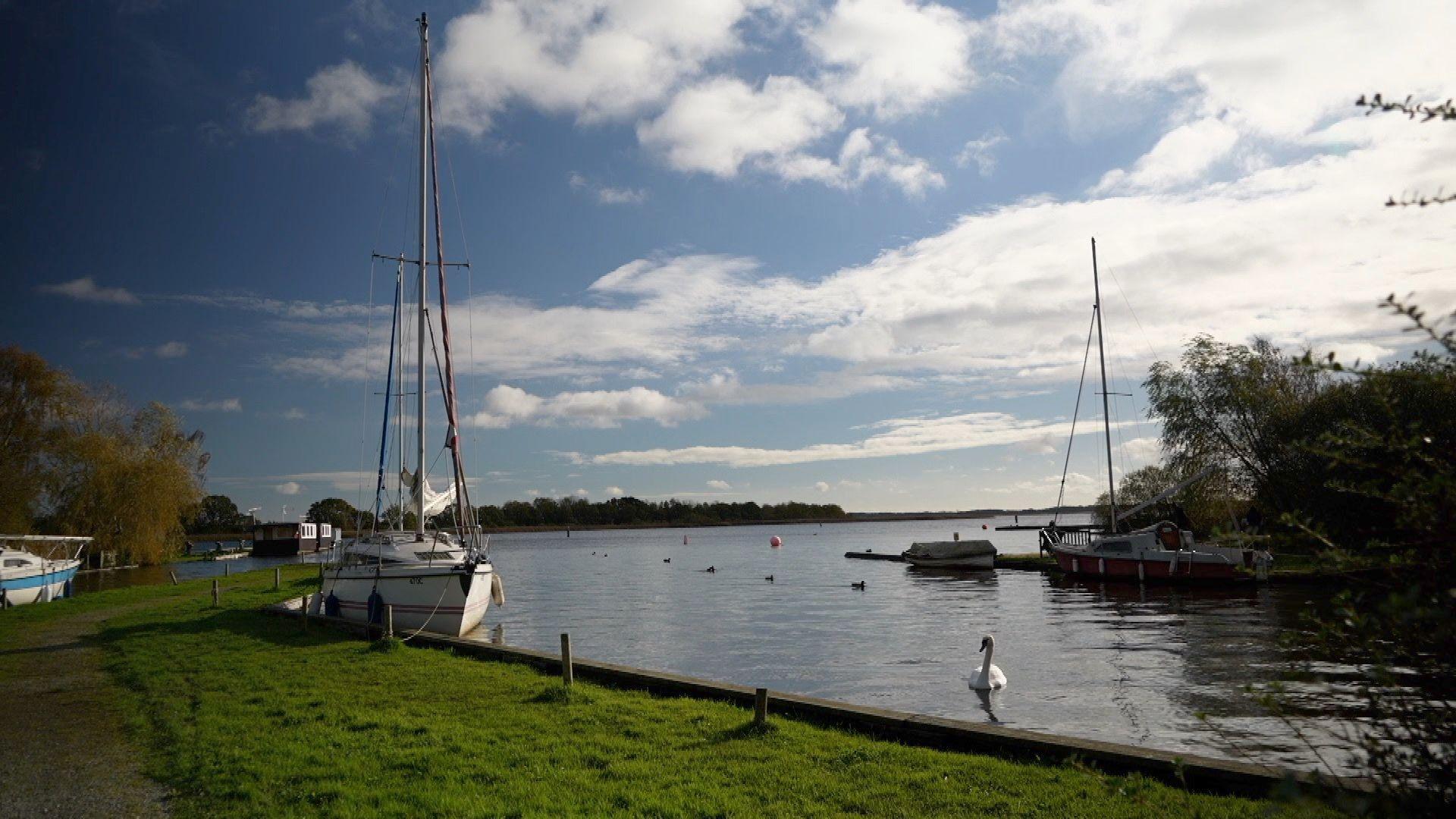
- The Broads National Park: Britain’s magical watermark of navigable rivers and shallow lakes.
Financial and Housing Metrics
- £2,675: The mandatory fee levied on developers for every newly constructed residential unit within the designated EDP zone.
- 15,780: The total number of new homes currently locked in planning limbo that the government claims this scheme will release.
- £42 Million: The cumulative financial war chest anticipated from the developer levy, earmarked exclusively for regional conservation and habitat mitigation.
Unique Interventions: The Deer Crisis
Beyond standard wetland creation, the EDP outlines unconventional conservation tactics, notably targeted deer culling. Over recent years, booming populations of wild deer within The Broads have exerted immense grazing pressure on delicate reedbeds, young woodlands, and marshland flora. Conservationists acknowledge that unchecked herbivore populations threaten habitat regeneration, making culling a necessary, albeit controversial, component of the broader environmental management strategy.
Official Statements and Stakeholder Perspectives
The debate surrounding the Norfolk EDP exposes deep ideological fractures regarding how the United Kingdom should balance economic development with ecological stewardship.
Government and Regulatory Defense
Supporters of the plan argue that traditional regulations are too cumbersome and fail to deliver tangible ecological benefits at scale.
"Instead of tackling pollution piecemeal, site by site, we can now deliver conservation measures that make a real difference for rivers, wetlands and wildlife across Norfolk."
— Marian Spain, Chief Executive, Natural England
Environment Secretary Angela Eagle has consistently championed the initiative as a pragmatic compromise, framing it as a vital "win-win" that cuts bureaucratic red tape for builders while injecting tens of millions of pounds into long-overdue regional conservation projects. A government spokesperson reinforced this stance, stating that a unified, predictable levy simplifies the planning landscape for housing developers desperately trying to meet local housing targets.
Environmental and Ecological Critique
Conversely, independent scientists and conservation watchdogs warn that the policy prioritizes concrete over clean water.

- Sally Haines (Chief Executive, CIEEM): Haines launched a direct critique against the government’s economic justifications, labeling it a "fallacy" to blame ecological safeguards as the primary barrier to housebuilding. Furthermore, she dismantled the operational logic of the levy itself:
- “While the actions outlined in the plan would improve ecological habitats in the area, they won’t necessarily address the pollution that will be going into the water. Unless you do that, you are not going to get good nature recovery.”
- Eliot Lyne (Chief Executive, Norfolk Wildlife Trust): Voicing profound apprehension during the consultation phase, Lyne cautioned that the scheme risks diluting hard-won environmental safeguards:
- “We are concerned that it weakens existing protections for Norfolk’s nationally and globally important wildlife sites such as chalk streams, wetlands and valley fens.”
- Mark Dye (Gaywood River Revival): Highlighting the plight of west Norfolk’s rare chalk streams, Dye emphasized that financial compensation does nothing to stop ongoing degradation:
- “Fundamentally, if you are polluting a chalk stream or a river and you’re putting more and more pollution into that river, and not seeking to address the underlying causes of that, then it’s only going to get worse.”
The Developers’ Counter-Perspective
Weighing in on the wider systemic blame, representatives from the development sector argue that environmentalists are focusing on the wrong culprits. Steve Turner, executive director of the Home Builders Federation, asserted that agricultural runoff from farming practices represents a far more significant source of river pollution than urban housing developments. Furthermore, Turner targeted water utility companies, criticizing them for failing to invest heavily enough in modernized sewage infrastructure to prevent raw wastewater discharges into regional watercourses.
Future Outlook: Implications for National Environmental Policy
The outcome of the Norfolk Environmental Delivery Plan pilot will reverberate far beyond the borders of East Anglia. As the UK government faces mounting pressure to meet ambitious national housing targets—often set at 1.5 million new homes over five years—local planning authorities across the country are watching closely to see if the EDP model offers a viable template.
If the pilot survives public scrutiny, is successfully adopted, and manages to raise the targeted £42 million without causing catastrophic ecological decline, similar developer-funded nature levies could soon roll out across other water-constrained regions in England, such as Hampshire, Somerset, and Kent.
However, if the warnings of groups like the Norfolk Wildlife Trust and CIEEM prove prescient—if housing is unlocked while chalk streams continue to choke on unmitigated agricultural and municipal pollution—the EDP model may instead be remembered as a regulatory retreat that traded irreplaceable natural heritage for short-term political and economic expediency. The ball now rests in the hands of Natural England and the Department for Environment, Food and Rural Affairs (Defra) as they weigh the fierce objections of conservationists against the unyielding demand for brick and mortar.



