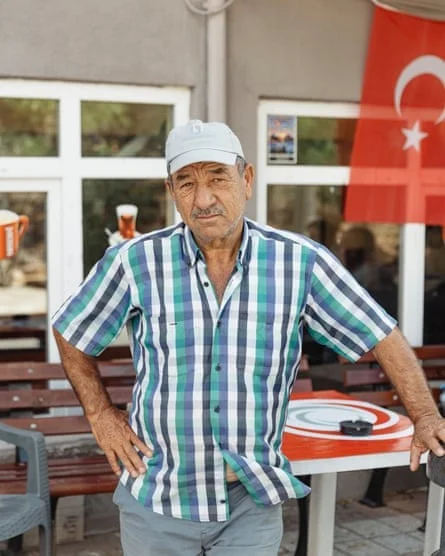
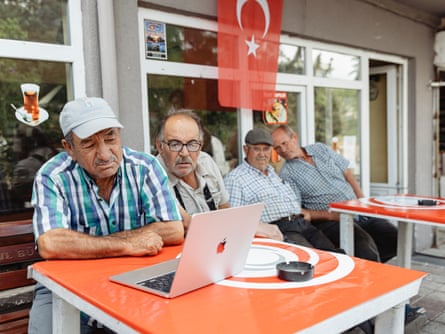
For the villagers of Yolçatı, a quiet rural community nestled on the northwestern outskirts of Istanbul, the descent of night brings with it a familiar, suffocating dread. Two or three times a week, as temperatures cool and the atmosphere settles, a thick, nauseating stench rolls in from the horizon. It is an oppressive odor so severe that families are forced to seal their windows shut, even during the sweltering heat of midsummer nights, retreating indoors to escape a foulness that seems to permeate brick and mortar alike.
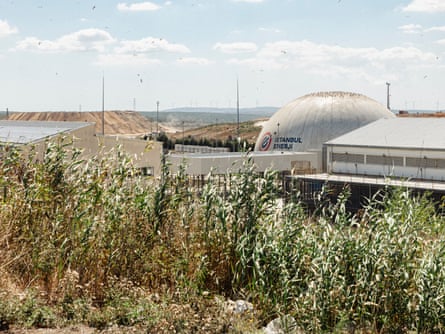
The source of their misery lies just a few miles away: the sprawling Silivri municipal waste dump. Here, colossal volumes of discarded food and other organic refuse rot away in massive piles, belching out a cocktail of stinking, noxious gases. Yet, the pungent smell—while a major daily disruption for local residents—is merely the sensory symptom of an invisible, planetary crisis.
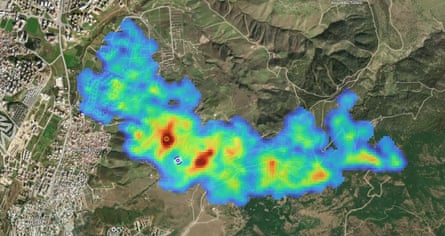
Satellite surveillance reveals that the Silivri landfill is leaking vast, unprecedented quantities of methane—a potent greenhouse gas with a global heating impact up to eighty times greater than carbon dioxide over a 20-year timescale. According to expert researchers at the University of California, Los Angeles (UCLA), Silivri is Turkey’s worst super-emitting waste site, discharging an average of 7.4 tonnes of methane every hour. The climate-warming impact of this single, unrelenting leak is the atmospheric equivalent of 1.5 million gas-guzzling SUVs gunning their engines simultaneously.
Worse still, Silivri is not an isolated offender. Advanced satellite data indicates that colossal methane plumes are streaming from waste facilities nationwide, stretching from İzmir in the west to Ankara in the heartland and Antalya in the south. These "mind-bogglingly large" emissions rank among the largest single man-made methane sources anywhere on Earth.
This explosive scientific revelation has landed at an intensely awkward diplomatic juncture for Ankara. In November, Turkey is set to host the United Nations global climate summit, COP31, and has deliberately placed sweeping methane reductions at the very core of its proposed action agenda. High-ranking state figures—including President Recep Tayyip Erdoğan and his wife, First Lady Emine Erdoğan, a prominent global advocate for zero-waste initiatives—have repeatedly championed comprehensive waste management and climate action as national priorities.
Yet, beneath the polished rhetoric of international climate diplomacy lies a stark domestic reality: local communities paralyzed by fear of official retribution, municipal authorities caught flat-footed by satellite evidence, and systemic political fractures that threaten to derail environmental accountability. As Turkey prepares to welcome the world to negotiate the future of the planet, its own backyard is quietly venting an emergency brake on climate stability straight into the atmosphere.
Detailed Chronology & Investigative Timeline
The 1990s Crucible: From Urban Disaster to Modern Landfills
To understand how modern waste management in Istanbul reached this precarious juncture, authorities often point to the grim history of the 1990s. Decades ago, Istanbul’s streets were chronically overwhelmed by towering piles of uncollected garbage. The crisis culminated in a catastrophic disaster in 1993, when methane gas trapped within the Ümraniye dump exploded, killing 39 people.
The tragedy galvanized public outrage and served as a political springboard for Recep Tayyip Erdoğan, who was elected mayor of Istanbul a year later in 1994 on a platform promising radical modernization of the city’s municipal infrastructure. Under subsequent decades of administrative development, open dumping was largely replaced by engineered sanitary landfills designed to contain waste and, theoretically, capture generated gases for energy production.
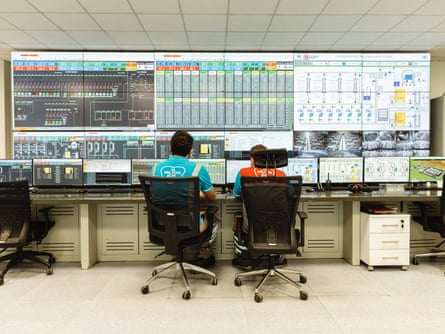
For municipal operators like İSTAÇ—the waste management division of the Istanbul Metropolitan Municipality—the baseline for success is measured against those dark days of open-air rot and lethal explosions. Today, facilities like Silivri and the Seymen waste dump feature active gas-extraction infrastructure designed to siphon off thousands of cubic metres of methane per hour to fuel on-site power plants. From the perspective of municipal engineers, modern operations represent a massive evolutionary leap forward.
The Rise of Satellite Intelligence
For years, the true scale of fugitive emissions escaping these engineered facilities remained hidden from the public eye. Methane is entirely transparent, odorless in its pure form, and undetectable to the naked eye. While local villagers like Kemalettin Özen suffered from the organic stench of decomposing food, they had no way of knowing that climate-wrecking super-plumes were billowing into the upper atmosphere.
The turning point arrived through advanced orbital surveillance. Utilizing cutting-edge data from satellite portals such as Carbon Mapper—including observations from the specialized Tanager satellite—independent researchers began mapping high-resolution greenhouse gas leaks across the globe. In late 2025 and early 2026, data beamed down from space exposed persistent, colossal plumes rising not just from Silivri, but also from the Şile landfill on Istanbul’s Asian side (emitting roughly 4 tonnes of methane per hour) and the Menemen site near İzmir.
When investigative journalists confronted İSTAÇ officials at the Silivri facility with satellite imagery showing massive gas leaks originating from zones clearly visible from their own office windows, the reaction was a mixture of surprise and defensiveness. Fatih Arslan, a representative for the division, cleared his throat and stared intently at the orbital maps.
"Well, there’s not much to say," Arslan conceded, initially attributing the fugitive emissions to active tipping areas of the landfill that had not yet been sealed over with clay layers. "It’s inevitable that this is happening… of course we have to make improvements." He maintained that capturing methane for energy generation remained the primary operational goal, noting that venting the gas into the atmosphere constituted a direct economic and energetic loss.
Supporting Context & Metrics: The Science of Methane Super-Emitters
The Climate "Emergency Brake"
Methane is responsible for approximately a quarter of all contemporary global heating. According to climate scientists, atmospheric concentrations of the gas have experienced a frightening surge since 2007, threatening to push the Earth past catastrophic tipping points. However, unlike carbon dioxide—which lingers in the atmosphere for centuries—methane breaks down naturally within roughly a decade.
This short atmospheric lifespan has led many climate experts to describe targeted methane mitigation as the ultimate planetary "emergency brake." Curbing methane emissions yields immediate, rapid cooling benefits, making the waste sector a critical, low-hanging fruit in the fight against near-term global temperature rises.
The UCLA Stop Methane Findings
The comprehensive scale of Turkey’s waste sector emissions was laid bare by the UCLA Stop Methane project, led by Cara Horowitz, executive director at the Emmett Institute on Climate Change and the Environment.
"Many of these sites have mind-bogglingly large methane emission rates, even in a global context," Horowitz stated. "These are huge leaks, some of the largest single man-made sources of methane emissions in the world."
According to the UCLA analysis, the top ten emitting landfills across Turkey display emission volumes that dwarf typical European municipal averages. At 7.4 tonnes per hour, Silivri processes a staggering 10,000 tonnes of municipal waste daily. On the eastern side of the metropolitan area, the Şile landfill pumps out an hourly volume equivalent to the annual emissions footprint of roughly 800,000 standard passenger SUVs.
Why Do Engineered Landfills Leak?
Dr. Tia Scarpelli, waste sector lead at Carbon Mapper, emphasizes that the mere presence of gas-capture infrastructure does not guarantee environmental safety.
Design and Efficiency Deficits: Not all capture systems are engineered to equal standards. Poor daily management practices can leave massive swaths of organic waste exposed for extended periods.
Flare Failures: Facilities often rely on flare towers to burn off excess methane that cannot be immediately converted into energy. If these flares extinguish due to technical failure or poor maintenance, raw methane vents directly into the air.
Partial Collection: Systems frequently capture only the high-pressure, easily accessible gas while allowing diffuse, low-pressure fugitive emissions to escape quietly through cracks in the landfill’s surface capping.
Organic Overload: The ultimate driver of the crisis is the volume of fermentable material. In countries like South Korea, nearly 100% of food waste is diverted into mandatory composting and recycling streams, starving landfills of the organic matter that generates methane in the first place.
Official Statements and the Political Paradox
The COP31 Ambition Versus Domestic Reality
The timing of these findings creates a stark contradiction for Turkish statecraft. As the designated host of the UN COP31 climate summit in Antalya, Turkey has positioned zero-waste initiatives and aggressive methane mitigation at the very forefront of its diplomatic messaging.
In an official letter addressed to the 196 participating nations, Murat Kurum, Turkey’s environment minister and COP31 president-designate, underscored the urgency of the issue:
"Reducing methane emissions is among the fastest and most effective strategies for slowing near-term temperature rise. The waste sector therefore represents a critical opportunity for delivering immediate climate benefits."
Similarly, First Lady Emine Erdoğan has elevated waste reduction to a signature personal crusade, serving as the honorary president of Turkey’s Zero Waste Foundation and chair of the UN Advisory Board on Zero Waste. During a high-profile zero-waste forum in Istanbul, she sharply criticized global food waste for driving massive methane plumes while millions face hunger.
Yet, despite this vocal international posture, Turkey remains conspicuously absent from the elite group of 195 nations that have signed the Global Methane Pledge—a voluntary pact committing signatories to achieve a 30% reduction in methane emissions by 2030. Furthermore, when formally contacted by investigative media outlets, Turkey’s environment ministry declined to comment on the satellite data, while the Istanbul municipality refused both interview requests regarding Silivri’s emissions and permission to photograph the facility.
Legislative Blind Spots
Regulatory frameworks within Turkey further compound the problem. While the country’s official greenhouse gas inventory submitted to the UN frankly acknowledges that "the uncontrolled release of methane gas from landfills into the atmosphere" is a major national emissions driver, domestic law has been slow to catch up.
Legislation enacted to establish a national emissions trading and monitoring system focuses heavily on industrial carbon dioxide output, while explicitly excluding biomass-burning facilities such as landfill gas-to-energy plants from rigorous fugitive-emission scrutiny.
Future Outlook: Fear, Accountability, and the Road Ahead
The Chilling Effect of Local Politics
For the citizens bearing the brunt of the pollution, the disconnect between high-level diplomatic pledges and localized reality is a source of deep cynicism and fear. In Yolçatı, residents attempting to seek redress have found themselves caught in the crosshairs of intense national political friction.
Major metropolitan centers—including Istanbul, Ankara, and İzmir—remain firmly under the control of opposition political parties, even amid a protracted judicial crackdown on municipal leadership. In 2025, Istanbul’s opposition mayor, Ekrem İmamoğlu, was detained on corruption charges and imprisoned at Silivri’s notorious maximum-security penal facility, located just a short drive from the local tea shops where villagers gather.
This charged political climate creates a chilling effect. When Kemalettin Özen attempted to organize a modest petition drive to demand relief from the overwhelming stench, neighbors refused to sign.
"They have the power and can say whatever they want," Özen remarked, gesturing vaguely toward the centers of state authority. "It’s not like we have a say anyway. What can you do? The moment you talk about this, there is silence."
A Path to Redemption
Despite the heavy shroud of local intimidation and institutional defensiveness, environmental experts insist that Turkey possesses a unique opportunity to transform its waste sector. Because solutions for landfill management are well-established globally, implementing stricter daily operational controls, repairing flare systems, upgrading gas-capture efficiency, and enacting mandatory organic waste diversion could rapidly slash the country’s greenhouse gas footprint.
Whether Ankara will leverage its role as COP31 host to enact sweeping domestic reforms—or whether the invisible plumes over Silivri and Şile will continue to vent unchecked behind a wall of bureaucratic silence—remains one of the most pressing environmental questions facing the region. For now, the villagers of Yolçatı will continue to close their windows against the night air, waiting for the rest of the world to catch scent of what has been drifting over their homes for years.