

Executive Overview
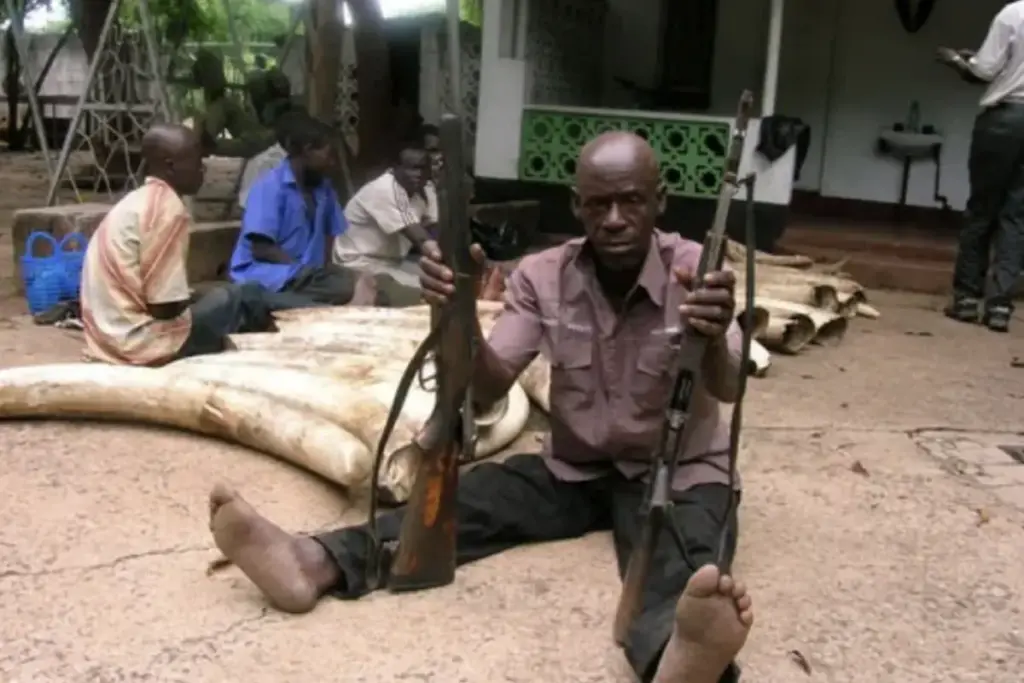
Deep within Zambia’s correctional facilities, a quiet crisis of conservation and human vulnerability plays out away from the public eye. Approximately 7% of the nation’s total prison population comprises individuals incarcerated for wildlife-related offenses—ranging from small-scale bushmeat harvesting to trafficking high-value contraband like elephant ivory, rhino horns, and pangolin scales. While international syndicates and heavily armed poaching rings orchestrate the most lucrative aspects of the illicit global wildlife trade, the machinery of these multi-billion-dollar criminal enterprises is heavily dependent on an easily replaceable tier of grassroots participants: local farmers, laborers, and opportunists.
To better understand what compels individuals on the lower rungs of the economic ladder to take their first steps into wildlife crime, researchers from the non-governmental organization Wildlife Crime Prevention (WCP) Zambia, in partnership with Copperbelt University, conducted an unprecedented empirical study. By interviewing 302 inmates across 32 correctional facilities, the research team sought to unpick the socioeconomic pressures, structural vulnerabilities, and psychological factors driving grassroots-level infractions.
The findings challenge conventional criminological models, illustrating that wildlife crime in Zambia is rarely the product of inherently malicious intent. Instead, it is heavily propelled by economic desperation, systemic voids in rural social safety nets, and sheer opportunity. As conservationists and penal authorities confront the limits of traditional enforcement—which captures low-level actors without dismantling international syndicates—this landmark study underscores an urgent need: to view grassroots poachers through a lens of human reality and design targeted post-release socioeconomic alternatives that break the cycle of recidivism.
Detailed Chronology & Investigative Insights: The Making of a Poacher
To map out how everyday individuals cross legal and moral boundaries into wildlife crime, the research team—led by wildlife criminologist Emma Richards—posed open-ended questions to inmates across 32 facilities. The resulting narratives reveal a consistent, sobering pattern: the journey into wildlife crime almost always begins with a localized financial crisis and an opportunistic encounter.
The Anatomy of Recruitment
Consider the testimony of one Zambian inmate serving time for an elephant-related offense. His path into criminal networks did not begin with a deep-seated desire to subvert conservation laws. Rather, he was approached by an intermediary claiming to have an uncle in the capital city of Lusaka who was actively buying ivory and pangolin scales.

The recruiter offered him a mobile phone and a direct contact number, dangling a promise that resonates deeply across rural Zambia:
"He promised that the money I would get would enable me to build a house and take my children to school."
For subsistence farmers whose livelihoods fluctuate wildly depending on seasonal rainfall, crop yields, and market access, such promises are intoxicating. Another inmate, interviewed while serving time for a pangolin-related offense, recounted stumbling upon the animal entirely by accident while traveling to Mozambique to sell tomatoes: "I heard from many people that pangolins bring money. I wanted to build a house."
Opportunity and Existential Necessity
According to the study’s quantitative breakdown, 40% of respondents cited "opportunity" as the primary driving factor behind their involvement in wildlife crime. Another 16% pointed directly to immediate existential necessities, such as procuring food or paying critical medical bills.
Zambia’s rural interior lacks robust financial infrastructure. Commercial banks are distant, formal credit and loans are virtually inaccessible to subsistence laborers, and community savings schemes are sporadic. When an unexpected medical crisis strikes or a family emergency arises, individuals have few places to turn.

"There’s no social safety net here," noted an anonymous researcher who helped conduct the study, speaking on the condition of anonymity to protect ongoing field investigations. "You can’t go to the bank and get a loan. People generally aren’t saving up. Unless you’ve got a wealthy relative in town, there’s really not many other opportunities."
Supporting Context & Metrics: The Scale of the Crisis in Zambia
Zambia occupies a precarious geographic and ecological position within southern and central Africa. Sharing borders with eight different nations, it functions simultaneously as a primary source country for wildlife products and a vital transit corridor for illegal contraband moving toward international markets.
Legal Landscapes and Penal Realities
The penalties for violating Zambia’s wildlife laws are severe, reflecting the government’s commitment to protecting iconic species. However, the legal weight of these sentences falls disproportionately on low-level perpetrators:
- Hunting in a Protected Area (First Offense): Convictions for hunting without a license can carry prison sentences ranging from 3 to 10 years.
- Protected Species & Trophy Crimes: Illegal possession of trophies, elephant ivory, or rhino-related infractions frequently lands offenders behind bars for 5 to more than 20 years.
- Pangolin Trafficking: Given the high demand for their scales in traditional Asian medicine, illegal possession of pangolin scales typically triggers mandatory minimum sentences of 5 years or more.
Despite these deterrents, the research revealed that roughly a third of the inmates had previously engaged in wildlife crime without getting caught, indicating that the perceived risk of apprehension was initially low compared to the immediate financial payout.
Demographic Profiles
The demographic data gathered from the 302 incarcerated respondents highlighted several key trends:

- Gender Disparity: All but nine of the respondents were men, reinforcing findings that direct poaching and harvesting remain heavily male-dominated fields. However, researchers noted that the gender dimensions of wildlife crime remain an under-tapped field of study.
- Age Distribution: Approximately half of the participants were middle-aged (over 41 years old), pointing to men bearing heavy family support burdens who resort to illegal means when traditional subsistence farming fails.
- Offense Categories: Bushmeat hunting constituted the most common category of infraction, followed closely by offenses involving high-value protected species like elephants, pangolins, and rhinos. Many cases involved overlapping charges, combining illegal firearm possession with wildlife harvesting.
Official Statements and Academic Perspectives
The study—officially titled "Recidivism, opportunity, and deterrence in wildlife crime: Evidence from Zambia" and published in the International Journal of Law, Crime and Justice—has sparked significant debate among international conservation scientists and criminologists.
Rethinking Criminological Models
Meredith Gore, an environmental crime researcher at the University of Maryland who was not directly involved in the study, praised the research for illuminating ground-level realities in Zambia. However, she raised critical questions regarding the applicability of traditional penology to environmental crimes.
"Should we be using standard recidivism models to understand wildlife crime in the first place?" Gore asked, pointing out that standard models fail to capture the unique socioeconomic drivers of environmental offenses.
Unlike traditional urban crimes, where social stigma heavily influences post-release reintegration, the study found that 80% of the men interviewed expressed little to no concern about community stigma or familial rejection upon release. For these men, returning to their home villages did not carry the social alienation typically associated with criminal convictions. Paradoxically, this lack of stigma could increase the likelihood of individuals sliding back into illicit networks out of sheer habit or economic familiarity.
The Human Element of Conservation
Lead author Emma Richards emphasized that viewing wildlife offenders purely as hardened criminals obscures the complex socioeconomic realities feeding the trade.

"They’re not just a group of evil people who kill elephants," Richards stressed.
This sentiment is echoed by field practitioners who argue that law enforcement—while essential for halting immediate poaching events—is merely treating the symptoms rather than the root causes of the illegal wildlife trade. Arresting a low-level poacher removes an operative from the ecosystem, but because that individual is easily replaceable within impoverished rural communities, the syndicates simply recruit a replacement.
Future Outlook: Breaking the Cycle Through Targeted Reintegration
Addressing the revolving door of grassroots wildlife crime requires moving beyond punitive incarceration and toward proactive, community-centric economic interventions. Recognizing this gap, WCP Zambia recently concluded a six-month pilot project aimed at bridging the dangerous void between prison life and post-release survival.
Beyond Prison Walls: The Pilot Reintegration Project
The initiative focused on connecting incarcerated individuals with their families before their release date. By opening lines of communication early, offenders could begin planning their reintegration, identifying realistic livelihood strategies, and preparing for the economic realities awaiting them outside prison walls.
However, researchers emphasize that providing generalized vocational training inside prison is insufficient if external structural support is missing. As Richards noted:

"You can have somebody doing a carpentry project in prison, but if they get out and they’ve got no access to carpentry tools, what have you really achieved?"
To combat this, WCP Zambia’s pilot program provided tangible material support to released offenders, including agricultural equipment for crop and livestock farming, as well as small-business start-up grants to open local grocery kiosks.
The Path Forward
Experts agree that reducing recidivism and dampening grassroots participation in wildlife crime hinges on listening to local communities and tailoring economic alternatives to individual needs. If rural residents have secure access to microloans, predictable agricultural markets, and reliable social safety nets, the siren song of international wildlife syndicates will lose its power.
As Zambia continues to battle the illegal wildlife trade on its frontlines, this groundbreaking study serves as both a wake-up call and a blueprint. By humanizing the actors at the base of the criminal pyramid and investing in their post-release futures, conservationists hope to achieve a dual victory: lifting vulnerable rural families out of poverty while permanently starving international syndicates of their disposable workforce.



