

Executive Overview
Years of unyielding drought, soaring temperatures, and escalating desertification have driven a profound humanitarian crisis in southern Angola, compelling thousands of rural families to abandon their ancestral lands. In communities across Cunene Province—where nearly 75% of the 1.8 million residents rely directly on subsistence farming and pastoralism—the landscape has grown utterly barren. With crops failing, livestock perishing, and water sources drying up to dust, vulnerable populations face a stark choice: remain and face acute hunger, or undertake a perilous journey across the border into neighboring Namibia in search of survival.
This cross-border exodus highlights a stark disparity in regional climate resilience. While Namibia has weathered the same punishing environmental shocks, its state-led interventions, comprehensive food assistance programs, and robust social protection frameworks have largely insulated its population from catastrophic food insecurity. Conversely, Angola’s lagging response has left its southern communities high and dry.
As climate scientists warn of intensifying El Niño cycles and a looming "supersized" climate future, human rights organizations like Amnesty International are urging regional governments to rethink their approaches. Experts argue that modern administrative borders artificially divide communities that share language, family ties, and centuries-old traditions of seasonal migration. Revisiting these colonial-era boundaries through flexible legal frameworks and permanent bilateral agreements may no longer be just a matter of policy—it is a humanitarian imperative.
Detailed Chronology: Anatomy of a Regional Crisis
To understand the current scale of displacement in southern Angola, one must examine the compounding environmental and policy failures that have unfolded over the past decade.
Pre-Colonial Resilience vs. Modern Borders
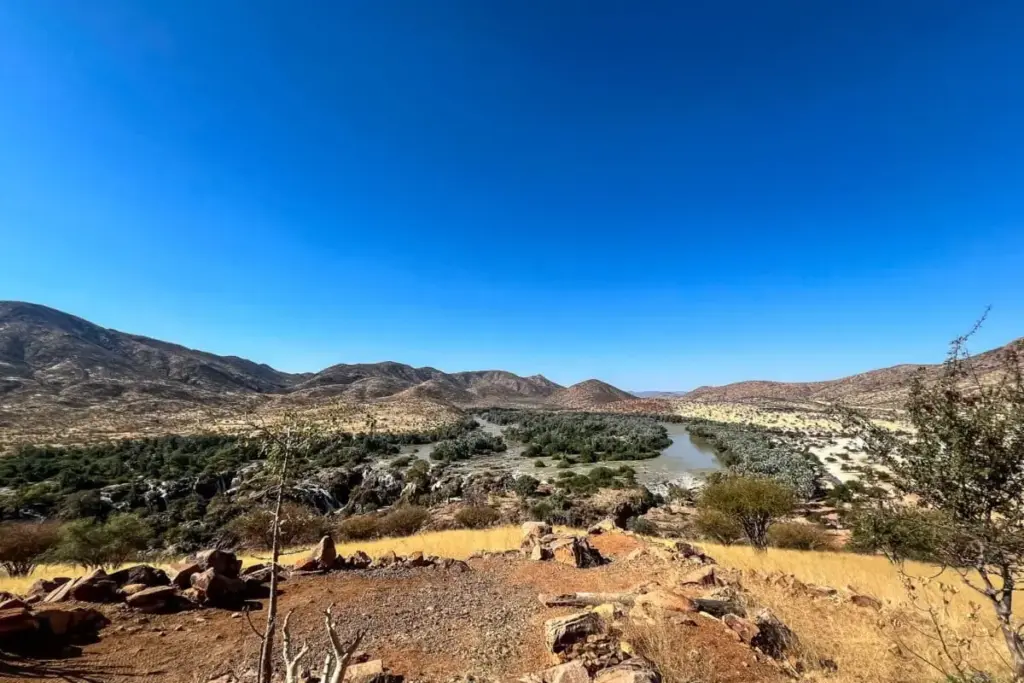
Long before European powers carved up southern Africa, the Indigenous communities inhabiting the Cunene River basin practiced fluid, seasonal mobility. Divided only by a river, these groups shared dialects, cultural practices, and familial bonds. During historic dry spells, pastoralists routinely crossed the natural watercourse to access alternative grazing lands and water sources. This customary practice served as a natural shock-absorber against regional droughts, effectively preventing mass famine and destitution.
However, the imposition of colonial borders fractured these traditional migratory routes. The artificial demarcation restricted movement, criminalized traditional nomadism, and left communities vulnerable when localized ecosystems failed.
The Turning Point: 2021 and the Testimonies of Cunene
By 2021, the cumulative toll of successive failed rainy seasons reached a breaking point in Cunene Province. Testimonies gathered by Amnesty International painted a grim picture of depopulation. Residents like Nghikembua—a pseudonym used to protect the speaker’s identity—recounted villages emptied of all able-bodied adults. Only the elderly and frail remained behind, unable to make the arduous trek southward. Those with remaining physical strength felt compelled to cross into Namibia simply to find drinking water and basic sustenance.
The 2023–2024 El Niño Cataclysm
The humanitarian situation deteriorated exponentially between 2023 and 2024, when a powerful El Niño event triggered the most severe drought the region had witnessed in over a century. Extreme heatwaves scorched the earth, evaporating remaining water tables and utterly destroying agro-pastoral livelihoods.
While international humanitarian frameworks tracked the unfolding catastrophe across Southern Africa, the stark contrast between the two sides of the Cunene River became glaringly apparent. Namibia mobilized federal agencies to expand food distribution, deliver emergency water supplies, support vulnerable livestock owners, and reinforce social safety nets. In contrast, Angola’s structural and institutional response remained inadequate, leaving its southern provinces effectively cut off from meaningful aid. Consequently, unauthorized and desperate border crossings surged, turning a climate shock into a profound human protection crisis.
Supporting Context & Metrics: Measuring the Human and Environmental Toll
The severity of the crisis in southern Angola is underscored by alarming empirical data regarding environmental degradation, economic vulnerability, and human rights risks.
Environmental Degradation and Desertification
According to findings published in Amnesty International’s recent reports, approximately 30% of Cunene Province’s land area has been severely degraded by desertification. This relentless creeping of arid conditions has stripped the soil of vital nutrients, preventing the natural regeneration of vegetation needed for livestock grazing.
Demographic Vulnerability
- Population Impact: More than 1.8 million people reside within Cunene Province.
- Rural Dependence: Nearly 75% of the total population is strictly rural, depending entirely on pastoralism and subsistence agriculture for daily survival.
- The Livestock Crisis: For pastoralist communities, cattle represent not only economic savings but social standing and nutritional security. Successive years of drought have decimated herds, wiping out entire family livelihoods in a matter of weeks.
The Shadow of Gender-Based Violence and Trafficking
Displacement across international borders without formal, secure pathways exposes vulnerable populations to severe exploitation. According to migration experts and human rights researchers, the journey forces migrants into precarious living conditions. For women and children—who make up a significant portion of those on the move—the lack of safe transit corridors heightens the risk of:

- Sexual and gender-based violence (SGBV)
- Human trafficking and forced labor
- Extreme physical exhaustion and dehydration along unregulated routes
Official Statements & Expert Perspectives
Human rights defenders, legal experts, and international monitors have increasingly spoken out against the systemic neglect facing Angolan climate migrants and the rigidity of current border policies.
The Disparity in State Response
Victor Nyamori, an Amnesty International researcher and migration lawyer who spearheaded the collection of testimonies in the region, emphasized the stark governance gap during a recent interview:
"Southern Angola has experienced repeated severe droughts, extreme heat and environmental degradation for quite a number of years, leaving families without water, crops, or livestock… Namibia has also suffered from drought, but the state has responded much better and has put solutions in place to prevent the population from falling into food insecurity and to ensure access to water."
Nyamori further highlighted how state inaction directly impacts vulnerable populations:
"Angola did not respond as well, which means that for Angolans, crossing the border has become a matter of survival. For Angolans, displacement also means living in extremely scarce and sometimes dangerous conditions. For women and children, this means risking sexual and gender-based violence and trafficking."
Reclaiming Indigenous Knowledge
Reflecting on the historical realities of the region, Nyamori points out that modern governments have much to learn from pre-colonial systems of resource management:
"The border is the Cunene River. On both sides, people speak the same language, have the same way of life, and are sometimes members of the same family. During the pre-colonial era, these communities crossed the river during periods of drought to find water. Perhaps, when responding to droughts, states should take this Indigenous knowledge into account, as it once helped prevent food crises, and allow these population movements to take place safely."
Future Outlook & Policy Recommendations
As the global climate crisis accelerates, the situation in southern Angola serves as a bellwether for climate-induced migration across the African continent. Without proactive adaptation policies, cross-border tensions and humanitarian emergencies will only intensify.
The Current Legal Framework and Its Limitations
Currently, a bilateral agreement exists between Angola and Namibia, permitting Angolan nationals to move freely within a 60-kilometer (37-mile) zone of the shared border. While this arrangement provides a vital safety valve for localized trade and temporary water access, it remains insufficient for a crisis of this magnitude. Many displaced families are forced to travel far beyond the 60-kilometer limit to find viable subsistence, rendering their presence legally precarious and exposing them to detention or deportation.
The Threat of "Supersized" El Niño Events
Climate projections from the World Meteorological Organization (WMO) and international meteorological agencies indicate that future El Niño cycles are becoming increasingly frequent, intense, and unpredictable. Climate scientists have warned of "supersized" El Niño patterns that threaten to trigger even more devastating, prolonged droughts across Southern Africa in the coming years.
Policy Recommendations for Regional Governments
Human rights organizations and migration advocates are calling for immediate, structural policy shifts to prevent further loss of life:
- Permanent and Expanded Bilateral Agreements: Namibia and Angola must expand the existing 60-kilometer border agreement into a more permanent, flexible framework that accounts for cyclical climate emergencies and allows for extended legal stays for displaced pastoralists.
- Integration of Indigenous Knowledge: State disaster-management agencies should incorporate traditional transhumance practices and local wisdom into national climate adaptation plans, recognizing historical resource-sharing routes.
- Enhanced Humanitarian Infrastructure: The Angolan government must urgently invest in climate-resilient infrastructure in Cunene and surrounding southern provinces—including boreholes, sustainable irrigation systems, and decentralized food reserves—to reduce the necessity of flight.
- Protection Mechanisms for Women and Children: Joint border patrols and regional humanitarian agencies must establish dedicated protection services to safeguard displaced women and children from exploitation, trafficking, and gender-based violence along transit routes.
Without immediate, coordinated regional cooperation and climate adaptation funding, the exodus from Cunene will likely accelerate, transforming a manageable environmental challenge into a permanent humanitarian tragedy along the Cunene River.



