

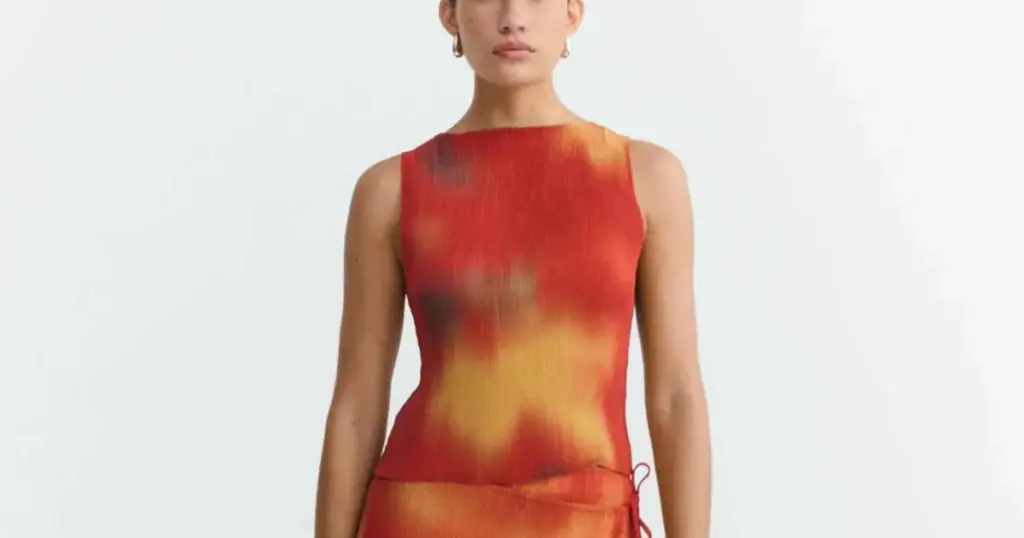
Editorial Note: Our editors curate highly rated brands that are first assessed by our rigorous ratings system. Buying through our links may earn us a commission—supporting the work we do. Learn more.
Executive Overview
For decades, the sustainable fashion movement suffered from a severe branding crisis. To the average consumer, eco-friendly apparel conjured images of stark minimalism, unbleached cotton, and an endless sea of muted beiges, oatmeal knits, and desaturated "greige." This visual monotony created a persistent myth: that to dress sustainably, one had to sacrifice personal style, vibrancy, and self-expression.
Fortunately, a paradigm shift is underway. Global independent designers, social enterprises, and forward-thinking apparel houses are shattering the monochrome mold. Today’s ethical fashion landscape proves that environmental consciousness and bold, saturated palettes are not mutually exclusive. From the sunset-inspired hues of Indian heritage labels to upcycled streetwear splashed in neon, sustainable fashion now covers every single hue in the rainbow.
This comprehensive guide introduces an expertly curated selection of highly rated, responsible brands that reject boring neutrals in favor of electrifying color. Whether you are looking to overhaul your wardrobe with statement pieces or simply inject a pop of emerald, crimson, or marigold into an otherwise minimalist outfit, these brands prove that you can wear your values on your sleeve without compromising on chromatic impact.
Detailed Chronology: The Evolution of Color in Ethical Fashion
To understand how we arrived at an era where sustainable clothes are as vibrant as their fast-fashion counterparts, it is helpful to look at how the industry evolved.
Phase One: The Ascetic Roots of Eco-Fashion (Late 20th Century)
When the modern eco-fashion movement began to take shape in the late 1980s and 1990s, it was largely driven by grassroots activists and niche outdoor brands. At the time, avoiding synthetic chemical dyes—which are notorious for polluting waterways—meant relying heavily on un-dyed organic cotton, raw linen, and unprocessed wool. While ecologically sound, this era established the aesthetic baseline of "eco-fatigue": clothes that looked earthy, unpolished, and strictly neutral.
Phase Two: The Synthetics Trap and the Rise of Greenwashing (2000–2015)
As fast fashion accelerated its race to the bottom, mass-market brands began adopting eco-friendly buzzwords while continuing destructive production practices. Concurrently, independent sustainable designers struggled with the high costs of non-toxic, low-impact reactive dyes. Achieving vibrant colors sustainably required heavy investments in closed-loop water systems and certified organic dyes—luxuries that small-scale ethical startups could rarely afford. Consequently, the divide widened: vibrant clothes were cheap and toxic; sustainable clothes were clean and drab.
Phase Three: The Chromatographic Revolution (2016–Present)
Driven by consumer demand for joyful self-expression and technological advancements in low-impact textile dyeing, the 2020s have birthed a new wave of color-forward ethical design. Brands are utilizing vegetable dyes, recycled fibers that hold color brilliantly, and upcycled deadstock fabrics that come pre-dyed in dazzling arrays. Today, sustainability is no longer defined by an ascetic uniform, but by creativity, circularity, and unabashed joy.
Supporting Context & Metrics: Why Trust Our Recommendations?
At Good On You, we provide trustworthy recommendations that align with your values and needs. Our core mission is to simplify informed choices while embracing the timeless motto: "Buy less, buy better."
To ensure absolute credibility, we aggregate comprehensive, transparent information on fashion sustainability. We assess brands using our leading methodology, developed by a diverse panel of experts across environmental science, labor rights, and animal welfare. Our ratings directory encompasses over 6,000 brands, employing a transparent five-point scale to curate a definitive list of "Good" or "Great" labels making significant, verifiable contributions to sustainable fashion.
Our editorial team reviews and approves each recommendation, upholding high standards of quality, longevity, and trend-transcendence. While we firmly recognize the immense value of reusing, mending, and secondhand shopping, our expert ratings system is designed to guide you toward new, responsible brands when you do need to make a purchase.
Curated Brand Spotlight: Vibrant, Responsible Fashion from Around the World
Below is a curated selection of standout brands from across the globe that prove ethical fashion is a kaleidoscope of color, culture, and craftsmanship.
1. OMNES (United Kingdom)
OMNES is a responsible, highly accessible UK-based brand creating high-quality womenswear that challenges conventional pricing in ethical retail. "We created OMNES to help change the way you shop, wear, and think about clothing—and to encourage the rest of the industry to do it, too," states the brand. Most items are available in inclusive sizes 6–20.
2. Printfresh (United States)
Founded in 2016 by textile designer Amy Voloshin and her husband Leo, Printfresh is a majority woman-owned US brand specializing in sleepwear, apparel, and lifestyle items. Inspired by the lush geometries of plants, animals, and bold home décor, their collections are a masterclass in playful, vibrant patterning. Available in an exceptionally inclusive size range from 2XS to 6XL.
3. I was a Sari (India)
Bridging rich cultural heritage with modern sensibilities, I was a Sari is an Indian social enterprise that transforms pre-loved saris and industrial deadstock fabrics into stunning, globally sought-after garments. Each piece is bursting with traditional Indian colorways, repurposed to prevent textile waste. Available in sizes S–L.
4. Up-Fuse (Egypt)
Headquartered in Cairo, Up-Fuse is a social enterprise operating under the powerful ethos that "one person’s trash is another’s fabric." By collaborating with Syrian, Ethiopian, and Sudanese female refugees living in Egypt, the brand turns discarded materials into vibrant, structural accessories and lifestyle goods.
5. Conscious Step (United States)
Conscious Step proves that even the smallest wardrobe essentials can pack a colorful punch. The US-based brand creates premium fair trade, organic vegan socks and casual wear that actively support charitable causes. Every stage of production prioritizes fair wages, safe facilities, and lower-impact materials. Socks are available in S–L, and apparel in 2XS–2XL.
6. Ucon Acrobatics (Germany)
For those seeking innovative, functional, and minimalist accessories with a chromatic edge, Berlin-born Ucon Acrobatics delivers. The brand utilizes a high proportion of eco-friendly materials, including organic cotton, while powering its direct operations with renewable energy.
7. Loop Swim (Global)
Co-founded by two women from the US and India, Loop Swim is dedicated to closing the loop on plastic waste. Headquartered in Shanghai, the brand transforms post-consumer plastic bottles into high-performance REPREVE UP50+ sun-protective swimwear. Their vibrant, trendless designs are engineered to retain their color and shape swim after swim. Available in sizes XS–XL.
8. Amble Outdoors (Australia)
Formerly known as Team Timbuktu, Australian brand Amble Outdoors crafts high-performance waterproof raincoats and sweat-wicking outdoor wear from recycled plastic bottles, proving that technical gear can be both colorful and eco-conscious. Offered in an inclusive size range from XS to 4XL.
9. SUI (India)
SUI—meaning "needle" in Hindi—is an Indian label dedicated to crafting gorgeous womenswear infused with nature-inspired hues and earthy vibrancy. Every garment is ethically produced in their workshop in Delhi. Available in sizes 2XS–2XL.
10. 4kinship (United States)
Founded by Diné creative Amy Denet Deal, 4kinship specializes in one-of-a-kind upcycled and restored vintage clothing, alongside contemporary handwoven garments. Deeply rooted in community and youth empowerment, the brand directs support toward initiatives like the Diné Skate Garden Project, creating spaces for Navajo youth to heal and create.
11. Mightly (United States)
Mightly champions children’s wear that doesn’t compromise on color or ethics. Utilizing GOTS-certified organic cotton and Fair Trade USA certified facilities, they produce vibrant tees, leggings, dresses, and hoodies built to withstand the rigors of childhood.
12. amt. (Spain)
Based in Spain, amt. studio produces local, highly creative womenswear utilizing recycled and lower-impact materials. Their collections are defined by artistic prints and expressive color palettes. Available primarily in sizes XS–L.
13. ID.EIGHT (Italy)
Born from the footwear expertise of founders Dong Seon Lee and Giuliana Borzillo, ID.EIGHT creates refined, highly colorful sneakers in Italy. Their innovative designs incorporate lower-impact materials derived from food industry waste—including apple peels, grape stalks and seeds, and pineapple leaves—alongside recycled cotton and polyester. Available in EU sizes 36–46.
14. The Summer House (India)
The Summer House creates elegant womenswear in India using locally sourced, lower-impact fabrics. Known for flowing silhouettes and sophisticated prints, the brand actively partners with local artisans and NGOs to foster regional economic opportunity. Available in sizes XS–XL.
15. Spell (Australia)
Rooted in Byron Bay, Australia, Spell draws inspiration from vintage treasures, distant travels, and childhood nostalgia. Their bohemian-inspired collections are famously rich in color and print, designed locally and produced responsibly in vetted factories worldwide. Available in sizes 2XS–2XL.
16. The ANJELMS Project (Australia)
This Australian label is on a mission to improve the livelihoods of its makers by celebrating traditional artisan techniques. The ANJELMS Project creates naturally dyed, hand-loomed garments in India, practicing strict low-waste production methods. Available in sizes XS–2XL.
17. Colorful Standard (Denmark)
True to its name, Danish label Colorful Standard rejects seasonal trends in favor of timeless, durable organic cotton essentials available in a vast array of vibrant shades. Their business model is specifically built to combat over-consumption through longevity. Available in sizes XS–2XL.
18. Flare Street (Australia)
Melbourne-based Flare Street captures the psychedelic exuberance of the 1960s and ’70s through premium fabrics and vintage-inspired prints. Utilizing lower-impact materials and locally sourced factory deadstock, they ensure living wages for makers during final production. Available in sizes 2XS–3XL.
- See the Flare Street rating
- Shop Flare Street with 10% off using code FS10GOUFLARESTREET at checkout
19. 9-jour (Japan)
Specializing in hyper-vibrant denim, Japanese brand 9-jour offers jeans dyed in virtually every hue imaginable. Utilizing exclusively selvedge denim dyed with natural, low-impact solutions, they manufacture locally and strictly to order, drastically cutting energy consumption and waste compared to conventional denim mills. Available in waists 69–90cm.
20. SeamsFriendly (Global)
SeamsFriendly combines functional utility with custom tailoring for all body types, utilizing organic cotton and linen. Uniquely, shoppers can customize garment lengths, sleeve styles, necklines, and fabrics. Offering free custom sizing for womenswear, menswear, and children’s wear, they ensure a zero-waste, perfect fit.
Future Outlook: Where is Sustainable Color Heading?
As material science advances, the future of colorful ethical fashion looks brighter than ever. Innovations in biotechnology—such as lab-grown pigments produced by microbes and bacteria—promise entirely non-toxic, closed-loop dyeing processes that require zero agricultural land and a fraction of the water used in traditional dyeing.
Furthermore, as mainstream consumers demand transparency, brands will no longer be able to hide behind vague "eco" marketing. The convergence of strict environmental regulations, radical supply chain traceability, and unapologetic stylistic vibrancy signals the definitive death of the "beige myth."
Dressing sustainably no longer requires blending into the background. By supporting brands that prioritize both people and the planet, consumers can build wardrobes that are as colorful, complex, and dynamic as the world we inhabit.
Feature image via Thinking Mu; all other brand images via respective mentioned brands. Good On You publishes the world’s most comprehensive ratings of fashion brands’ impact on people, the planet, and animals. Use our directory to search thousands of rated brands.
Article Updated: July 22, 2026. Our editors frequently update our content to reflect the latest brand ratings, new collection launches, and evolving industry standards.



