

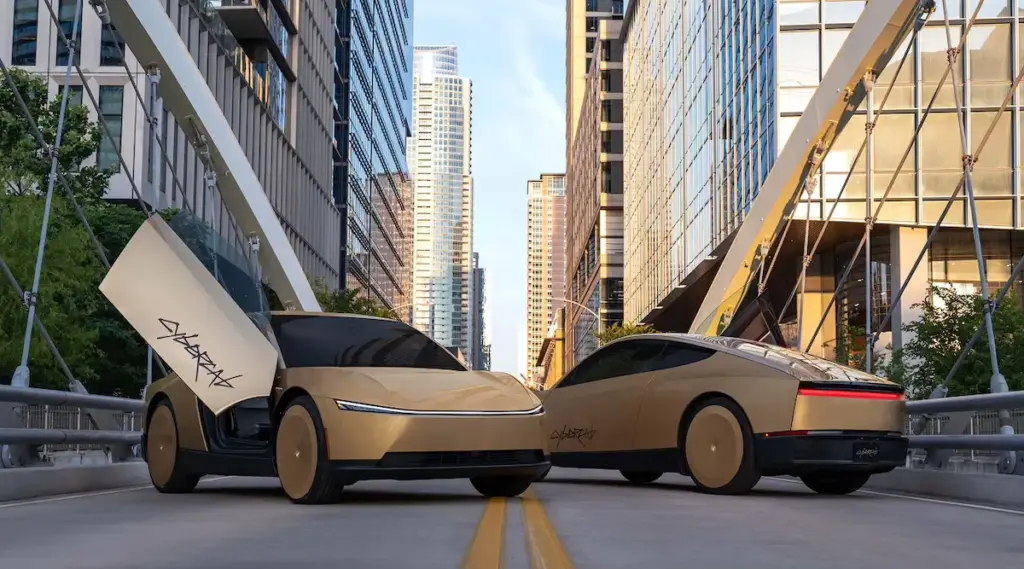
Tesla’s high-profile unveiling of its steering wheel-less, autonomous Cybercab in Austin, Texas, was designed to captivate the tech world and cement the company’s transition from a traditional automotive manufacturer into an AI and robotics powerhouse. Instead, the September 3 event generated a wave of industry-wide skepticism. Rather than clear momentum toward a driverless future, the presentation left fleet managers, safety regulators, and first responders scratching their heads over a glaring disconnect between marketing promises and operational realities.
At the center of the controversy is a fundamental question: Who is the Cybercab actually for? While Tesla has opened up digital contact forms to solicit outside fleet interest, the vehicle’s hardware constraints—most notably its total incompatibility with Level 1 or Level 2 home charging, requiring DC fast chargers exclusively—effectively lock individual gig-economy operators and decentralized fleets out of ownership. This creates an immediate paradox: if the Cybercab is positioned as a surefire, highly profitable asset, why is Tesla actively seeking outside buyers rather than monopolizing its own autonomous network?
Compounding these strategic ambiguities are severe safety and regulatory hurdles. Newly released emergency response documentation reveals that interacting with a post-collision Cybercab is a high-risk endeavor, fraught with dangers ranging from electrical shock and motor overheating to the ambiguity of whether autonomous modes are truly disabled. These vulnerabilities have already triggered federal scrutiny, with the National Highway Traffic Safety Administration (NHTSA) opening an immediate audit query into the vehicle’s self-certification process.
Simultaneously, the fallout from the Austin debut extends far beyond automotive engineering. Tesla CEO Elon Musk’s concurrent political commentary abroad—specifically his public endorsement of the far-right Alternative for Germany (AfD) party following a regional electoral breakthrough—has further complicated the brand’s global standing. As institutional investors digest the Cybercab’s technical limitations, regulatory headwinds, and deepening corporate controversies, the road to mass-market autonomy looks significantly rockier than Tesla’s stagecraft implied.
Detailed Chronology
September 3: The Austin Unveiling and Strategic Ambiguities
Tesla hosted its highly anticipated autonomous vehicle showcase in Austin, Texas, introducing the Cybercab to a global audience. Eschewing traditional driver controls like steering wheels and pedals, the compact two-seater was presented as the vanguard of Tesla’s autonomous ride-hailing network. However, the media buzz surrounding the lead-up to the event quickly gave way to technical scrutiny.
Immediately following the presentation, Tesla updated its corporate website with a dedicated contact portal titled "Help Us Build Our Robotaxi Network." The portal outlines four primary avenues for collaboration: Cybercab fleet vehicle purchasing, mobility hubs and infrastructure development, event partnerships, and general inquiries.
Yet, industry analysts quickly pointed out major operational barriers for prospective fleet buyers. By omitting Level 1 and Level 2 charging compatibility, Tesla rendered the Cybercab useless for home charging or standard overnight depot setups that rely on conventional alternating current (AC) infrastructure. Owners must rely exclusively on direct current (DC) fast chargers, a limitation that effectively eliminates small-scale entrepreneurs, individual gig-economy drivers, and traditional commercial fleets relying on distributed residential parking models.
September 4: Federal Intervention and Regulatory Scrutiny
The regulatory framework governing autonomous vehicles faced an immediate stress test the day after the launch. On September 4, the National Highway Traffic Safety Administration (NHTSA) announced an Audit Query targeting the Austin event and the foundational safety claims made by Tesla.
NHTSA’s inquiry specifically investigates whether the Cybercab genuinely complies with all applicable Federal Motor Vehicle Safety Standards (FMVSS) under Tesla’s self-certification model. Although the regulatory body is actively modernizing rules across eight distinct vehicle domains—including brake pedals, windshield wipers, exterior lighting, and rearview mirrors—NHTSA forcefully reiterated that ongoing rulemaking does not suspend current legal requirements. The agency’s intervention highlights the friction between Silicon Valley’s "move fast and break things" ethos and the rigorous safety baselines required for public roadways.
September 5: First Responder Alarm and Emergency Protocols
Safety concerns escalated sharply when journalists and emergency management experts examined Tesla’s newly published "Cybercab First Responder Interaction Plan." Released quietly alongside the vehicle’s rollout, the manual outlines hazardous conditions that could confront firefighters, police officers, and paramedics at accident scenes.
According to the documentation, attempting to manually clear a blocked lane by pushing the vehicle carries significant risks of electric shock and motor overheating if executed improperly. Furthermore, the guidance reveals that after a safety-critical collision, low-voltage power may fail entirely, leaving touchscreens dark and disabling conventional overrides. Tesla explicitly warns emergency personnel against attempting to reconnect low-voltage power post-accident due to the severe threat of electrical fires.
Most alarming to first responder unions is the vehicle’s autonomous status ambiguity. The manual cautions in bold text: “LACK OF MOVEMENT OR VISUAL INDICATION OF AUTONOMOUS MODE DOES NOT MEAN AUTONOMOUS MODE IS OFF. UNTIL THE VEHICLE IS FULLY SHUT OFF AND A TESLA REPRESENTATIVE GIVES THE ALL CLEAR, APPROACH CAUTIOUSLY.”
The reliance on corporate intervention presents a logistical nightmare for emergency services. The manual instructs responders to contact a dedicated "Tesla Robotaxi First Responder Support" line. However, recognizing that remote human or automated assistance may not always be available, page 13 of the guide advises personnel to physically "cage the vehicle" if support cannot be reached—a directive that assumes first responders possess specialized containment gear and training for rogue autonomous units.
September 6–7: International Controversy and Political Fallout
As technical and regulatory pressures mounted domestically, CEO Elon Musk triggered an international firestorm through his activity on the social media platform X (formerly Twitter). On September 6, Musk posted a congratulatory message—"Gut gemacht" ("Good job" in German)—celebrating the landslide victory of the far-right Alternative for Germany (AfD) party in the state of Saxony-Anhalt.
The regional election victory set off alarm bells across Europe. The AfD, a party whose leadership has frequently faced condemnation for utilizing Nazi-linked slogans, minimizing the Holocaust, and framing immigrants as second-class citizens, has been designated as a "suspected" extremist group by German domestic intelligence.

The online endorsement drew an immediate public reply from winning AfD candidate Ulrich Siegmund, who wrote: "Thank you, @elonmusk, for your support and for your clear and highly important perspective on the political developments of our time — including here in Germany."
As The New York Times and The Hill reported, mainstream European political parties immediately reaffirmed their refusal to form coalitions with the AfD. For Tesla, which relies heavily on progressive, environmentally conscious consumer bases in key European markets like Germany (home to Gigafactory Berlin), Musk’s public alignment with radical right-wing political movements risks exacerbating brand alienation at a time when fleet sales and consumer goodwill are already under immense strain.
Supporting Context & Metrics
The Ghost of Fleets Past: Historical Precedents in EV Leasing
Tesla’s push to enlist outside buyers for its Cybercab network arrives against a backdrop of turbulent commercial fleet partnerships. The economic viability of tying a commercial fleet exclusively to Tesla hardware has been severely tested in recent years, leaving commercial operators wary of sudden valuation drops and corporate strategy shifts.
- The Hertz Debacle (2021–2024): In October 2021, rental car giant Hertz announced a blockbuster commitment to purchase 100,000 Tesla electric vehicles, signaling a watershed moment for corporate fleet electrification. However, the initiative collapsed under the weight of inadequate public charging infrastructure, higher-than-expected repair costs, and plunging resale values. The situation deteriorated further when Elon Musk initiated aggressive price cuts—slashing vehicle prices by up to 30% across Tesla’s lineup. This maneuver instantly gutted the residual value of Hertz’s existing fleet, turning what was supposed to be a golden investment into a corporate financial catastrophe.
- The Mistergreen Collapse (2025): The perils of a Tesla-only commercial model were laid bare in December 2025, when European trade publication Fleets Europe reported the total collapse of Mistergreen, a Dutch auto-leasing startup. Mistergreen’s business model relied entirely on leasing Tesla EVs. The company was forced to sell off its remaining assets after suffering catastrophic financial losses driven directly by massive write-downs on its Tesla inventory—losses triggered by Tesla’s sudden discounting strategies throughout 2024.
These historical case studies explain why enterprise fleet managers are reacting to the Cybercab pitch with extreme caution. Commercial fleet operations rely on predictable depreciation curves, stable residual values, and reliable maintenance support—variables that historical interactions with Tesla have proven difficult to secure.
Financial and Market Sentiment
Wall Street’s reaction to the Austin reveal reflected these underlying anxieties. At the close of trading following the event, Tesla stock experienced a downward trend as institutional investors weighed the lack of concrete deployment timelines against the capital expenditures required for dedicated autonomous infrastructure.
While Tesla continues to pitch the Cybercab as a revolutionary profit engine, the market is increasingly demanding proof of regulatory clearance, scalable manufacturing metrics, and transparent operational cost analyses—none of which were comprehensively detailed during the September 3 showcase.
Official Statements
-
National Highway Traffic Safety Administration (NHTSA):
Emphasizing its supervisory role over vehicle safety standards during the ongoing audit query, the agency stated:"In the process means in the process," reminding manufacturers that existing Federal Motor Vehicle Safety Standards remain fully active and enforceable regardless of pending agency rule modernizations across lighting, mirrors, and control interfaces.
-
Tesla Cybercab First Responder Interaction Plan (Official Documentation):
Highlighting the complex operational protocols required during emergency interventions:“LACK OF MOVEMENT OR VISUAL INDICATION OF AUTONOMOUS MODE DOES NOT MEAN AUTONOMOUS MODE IS OFF. UNTIL THE VEHICLE IS FULLY SHUT OFF AND A TESLA REPRESENTATIVE GIVES THE ALL CLEAR, APPROACH CAUTIOUSLY.”
Furthermore, addressing post-collision electrical hazards:
“After a safety critical event, low voltage power may not be available and the touchscreen may not be operational. Trying to support low voltage power on a vehicle that has been in a collision could lead to a possible electrical fire. Tesla does not recommend attempting to reconnect low voltage power after an accident.” -
Ulrich Siegmund, Alternative for Germany (AfD) Candidate:
Responding publicly on X to Elon Musk’s electoral congratulations:“Thank you, @elonmusk, for your support and for your clear and highly important perspective on the political developments of our time — including here in Germany.”
Future Outlook
The trajectory of the Tesla Cybercab over the next 12 to 24 months will depend on how the company addresses three critical fronts: regulatory compliance, operational safety transparency, and market trust.
- Regulatory Roadblocks: The NHTSA’s Audit Query represents an immediate hurdle. If federal regulators determine that the steering wheel-less, pedal-less Cybercab fails to meet existing safety certifications, Tesla will be forced to either halt deployment plans or petition for extensive federal exemptions. Navigating this bureaucratic maze will test the limits of Tesla’s self-certification model.
- First Responder Integration: For autonomous robotaxis to achieve mass deployment in dense urban environments, municipal authorities and emergency services must trust the hardware. Tesla will likely need to revise its first responder protocols, providing more foolproof mechanical overrides, reliable automated support channels, and comprehensive hands-on training for municipal safety departments to alleviate fears of rogue vehicles blocking emergency corridors.
- Commercial Viability and Fleet Trust: To convince enterprise fleet managers to stock Cybercabs, Tesla must overcome the ghosts of Hertz and Mistergreen. This will require offering more flexible charging solutions (such as retrofitting compatibility with standard commercial AC depot chargers) and providing financial guarantees or residual value protections that insulate fleet buyers from unpredictable price cuts.
Until these foundational engineering, safety, and governance issues are definitively resolved, the Tesla Cybercab remains a high-stakes gamble—captivating in its technological ambition, yet deeply precarious in its practical execution.



